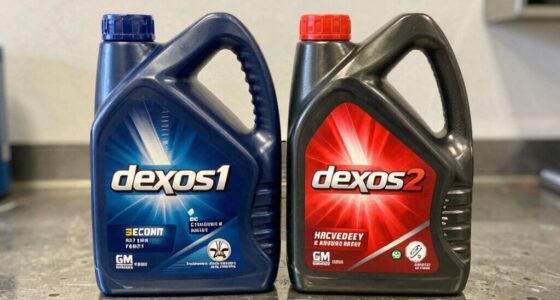

When a dealer uses house oil, politely ask whether it meets API standards and if it’s manufacturer-approved or industry-standard. Inquire about the oil’s brand, additives, and freshness to guarantee quality. If they hesitate or avoid answering, gently question their choice and request to see the product documentation. Being informed helps protect your vehicle’s engine and longevity—continue on to learn key questions that keep you in the driver’s seat of your car care.

Get business pricing on garage and car supplies
- Business-only prices and quantity discounts
- Tax-exempt purchasing
- Multiple users, one account, clear invoices
Key Takeaways
- Politely ask if the house oil meets industry standards like API SN or SN Plus.
- Inquire about the oil’s brand, additives, and whether it’s manufacturer-approved.
- Request to see the oil container or documentation for transparency.
- Confirm if the oil is fresh, properly stored, and compliant with your vehicle’s specifications.
- Watch for hesitations or vague answers as red flags indicating lower-quality or unknown oil use.

Many auto dealers are turning to “house oil” to cut costs and boost profits, often at the expense of vehicle performance and longevity. When your car needs an oil change, it’s natural to want the best for it, but some dealers might not be transparent about the type of oil they’re using. Understanding oil quality is essential because using subpar oil can lead to increased engine wear, decreased fuel efficiency, and even costly repairs down the line. Unfortunately, some dealers skip the details, leaving you in the dark about what’s going into your vehicle. That’s why it’s important to ask questions politely and assertively to guarantee your car gets the right care.
Start by asking about the oil type and quality. Dealers might offer “house oil,” a generic or lower-quality product, under the guise of a standard service. You should inquire whether the oil is synthetic, synthetic blend, or conventional, as each offers different levels of protection and performance. Express your preference for high-quality oil, emphasizing that your vehicle’s longevity depends on it. Dealers often prefer to keep quiet about the specifics, especially if they’re using cheaper options, so framing your questions around your vehicle’s health and your peace of mind can be effective.
Dealer transparency is key to making informed decisions. Politely ask if they use manufacturer-approved oils or if the oil meets industry standards like API SN or SN Plus. If the dealer hesitates or avoids providing clear answers, it’s a red flag. You have every right to request details about the brand, additives, and whether the oil is fresh and properly stored. Don’t hesitate to ask for the product’s specifications or even see the bottle. Being proactive shows that you care about the quality of service and your vehicle’s well-being. Additionally, understanding the importance of heat management in automotive systems can help you appreciate why using high-quality oil matters for engine temperature regulation.
If you’re uncomfortable with the answers or suspect they’re pushing lower-quality “house oil,” consider consulting your vehicle’s owner manual for recommended oil types and specifications. You can also bring your own high-quality oil to guarantee your car receives the best treatment. Remember, a straightforward, respectful approach typically encourages transparency. Asking about oil quality and dealer transparency isn’t just about protecting your investment—it’s about ensuring your vehicle runs smoothly and lasts longer. Never be shy about requesting detailed information; it’s your right as a car owner. Taking these steps helps you avoid the pitfalls of cheap, low-quality oils and guarantees you’re making informed choices every time your car needs service.
As an affiliate, we earn on qualifying purchases.
Frequently Asked Questions
How Can I Verify if House Oil Is Genuine?
To verify if house oil is genuine, start by checking its oil quality through sensory tests—look for clarity, color, and smell. Ask the dealer for proof of authenticity verification, such as certificates or lab reports. You can also compare the oil’s appearance and performance with trusted brands. Trust your senses and ask questions to guarantee you’re getting authentic, high-quality house oil that meets your expectations.
What Are the Legal Implications of Using House Oil?
Using house oil can lead to legal liabilities if the oil’s quality doesn’t meet safety standards or violates regulations. You might face fines or legal action if the oil causes damage or injury, as authorities hold you responsible for its safety. To avoid legal issues, always verify the oil’s quality and confirm it complies with local laws, protecting yourself from potential liabilities and ensuring safe use.
Does House Oil Affect Vehicle Warranties?
Using house oil can definitely affect your vehicle’s warranty coverage, so don’t be fooled into thinking it’s just a minor detail. Poor oil quality might save a few bucks now, but it risks voiding your warranty if it causes engine damage. Always ask about the oil quality, and remember, a good warranty relies on quality maintenance. Skimping on oil is a gamble you don’t want to take.
How Does House Oil Compare to Branded Oils?
House oil typically has lower oil quality compared to branded oils, which often undergo rigorous testing for consistency and performance. Branded oils usually have a better reputation for protecting your engine and maintaining warranty standards. When comparing, ask about the oil’s specifications and certifications. You’ll likely find that branded oils offer more reliable quality, helping prevent issues and ensuring your vehicle runs smoothly and stays protected over time.
Can I Request a Different Oil Type at the Dealership?
You can definitely request a different oil type at the dealership, but keep in mind, it’s a two-way street. You should ask about oil quality and dealership transparency upfront—don’t be shy. Think of it as steering your car in the right direction; they may accommodate your preference, especially if you politely explain your concerns. Remember, clear communication can help you get the oil you want without any surprises down the road.
manufacturer-approved car engine oil
As an affiliate, we earn on qualifying purchases.
As an affiliate, we earn on qualifying purchases.
Conclusion
So, next time a dealer pulls out the ‘house oil,’ don’t just nod and smile—ask every question under the sun! Don’t let them slip by with a mystery potion that could turn your engine into a ticking time bomb. You’re the boss here, and your car’s future depends on you. Stay sharp, stay curious, and demand transparency—because one tiny question could save you from a mountain of costly trouble down the road!
high-quality synthetic blend engine oil
As an affiliate, we earn on qualifying purchases.
As an affiliate, we earn on qualifying purchases.
automotive oil documentation viewer
As an affiliate, we earn on qualifying purchases.
As an affiliate, we earn on qualifying purchases.
Fall Picks
fall essentials
As an affiliate, we earn on qualifying purchases.