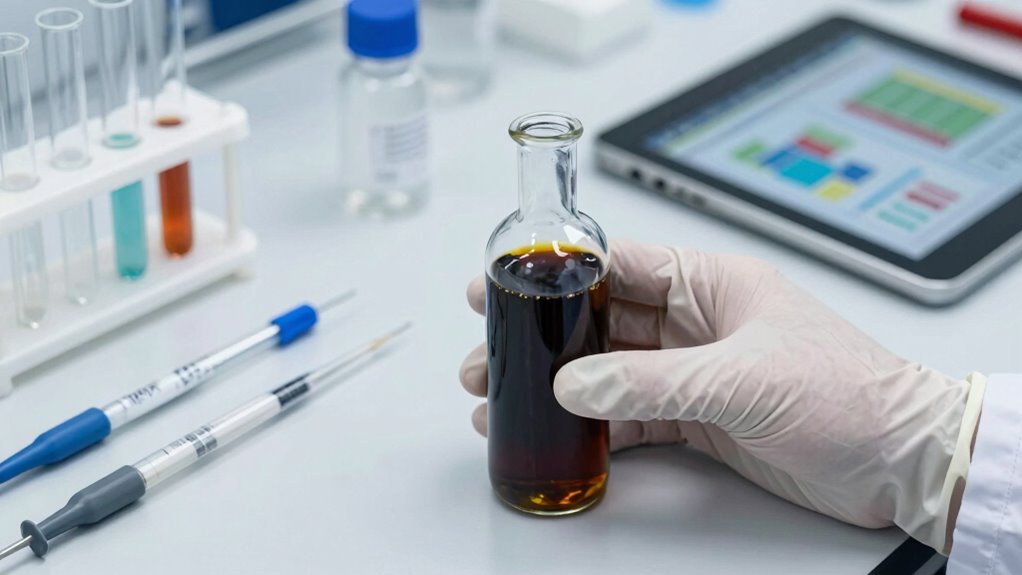

Used oil analysis helps you monitor equipment health by making sure you collect samples correctly from designated points, mixing oil well before sampling, and preventing contamination. Filtration removes debris, making your test results reliable. By tracking wear metals and contaminants over time, you can catch problems early and schedule maintenance efficiently. Mastering these practices ensures accurate insights, keeping your machinery running smoothly—keep exploring to learn how all these steps work together for ideal results.

Get business pricing on garage and car supplies
- Business-only prices and quantity discounts
- Tax-exempt purchasing
- Multiple users, one account, clear invoices
Key Takeaways
- Proper sample collection from designated points and thorough mixing ensure accurate, representative oil analysis results.
- Filtration of samples removes dirt and contaminants, improving the reliability of test outcomes.
- Regular testing and trend monitoring help detect early wear and contamination issues, preventing costly equipment failures.
- Analyzing metal particles and additives reveals component wear, oil degradation, and lubrication effectiveness.
- Consistent sample management practices support informed maintenance decisions and optimal equipment performance.

Used oil analysis is a essential process for monitoring the condition of your equipment and preventing costly failures. When performing this analysis, your first step is to guarantee proper sample collection. Accurate results depend heavily on collecting a representative sample, which means you need to follow specific procedures. Typically, you’ll draw the sample from a designated port or drain valve, making sure the oil is well-mixed beforehand to get a true picture of its condition. Avoid contamination by cleaning the sampling point thoroughly and using clean, dry containers. Proper sample collection is indispensable because any dirt, water, or debris can skew test results and lead to misinterpretations. Incorporating sample management best practices ensures consistent and reliable data over time.
Proper sample collection ensures accurate used oil analysis and reliable equipment monitoring.
Once you’ve collected the sample, oil filtration becomes an important step before testing. Filtering the sample helps remove large particles and contaminants that could interfere with the laboratory analysis. This process ensures that the test results reflect the oil’s true condition and not just surface debris. Using a fine filter or a membrane filter designed for oil samples helps you eliminate dirt, sludge, or other impurities that might be present. Remember, the goal is to analyze the oil’s chemistry and wear particles accurately, so removing extraneous matter improves the reliability of your data.
The analysis itself provides critical insights into your equipment’s health. It reveals the presence of metal particles, which indicate wear of specific components, and detects contaminants like water or dirt that could accelerate degradation. It also measures additive levels, showing whether the oil is still providing proper lubrication or if it’s breaking down. Interpreting these results helps you decide if you need to change the oil, perform maintenance, or take preventive measures.
Keeping a routine schedule for sample collection and analysis allows you to track trends over time. For example, increasing wear metals might signal an early-stage component failure, giving you the chance to intervene before a costly breakdown occurs. Regular testing also helps optimize oil filtration practices, ensuring that your lubrication system remains clean and effective.
As an affiliate, we earn on qualifying purchases.
Frequently Asked Questions
How Often Should Used Oil Analysis Be Performed?
You should perform used oil analysis based on your equipment’s oil sample frequency and testing schedule. Typically, testing every 3,000 to 5,000 miles or every 3 to 6 months works for most engines. However, if your equipment operates under harsh conditions or has high usage, you might need more frequent testing. Regular analysis helps catch issues early and guarantee peak performance, so adjust your schedule accordingly.
What Are the Cost Implications of Regular Testing?
Regular used oil testing can be cost-effective, helping you identify issues early and avoid costly repairs. While testing incurs some expenses, it promotes better maintenance planning and reduces unexpected downtime. Over time, these tests lead to significant cost savings by extending equipment life and optimizing oil change intervals. Investing in routine analysis ultimately pays off by minimizing repair costs and keeping your operations running smoothly.
Can Used Oil Analysis Predict Equipment Failure?
Think of used oil analysis as a crystal ball for your equipment. It can give you early warnings by tracking oil viscosity and additive depletion, which are indicators of potential failure. By catching issues early, you can prevent costly breakdowns. Regular testing helps you stay ahead, ensuring your machinery runs smoothly and prolongs its lifespan, saving you money and downtime in the long run.
What Are the Environmental Regulations for Used Oil Disposal?
You must follow environmental regulations for used oil disposal to guarantee compliance and avoid penalties. Regulatory standards typically require storing used oil properly, labeling containers, and using licensed disposal facilities. You should track your disposal practices carefully, maintain records, and stay updated on local and federal laws. Maintaining environmental compliance not only keeps your operations lawful but also protects our environment from pollution caused by improper used oil handling.
How Do I Interpret Abnormal Test Results Effectively?
Think of your oil test results as a weather forecast. When you see abnormal readings, it’s like a storm warning—indicating oil contamination or excessive wear metals. To interpret effectively, compare the levels to standard thresholds, identify patterns, and consider engine conditions. Elevated wear metals suggest internal issues, while contamination points to external factors. Address these signs promptly to avoid bigger problems and keep your machinery running smoothly.
oil sample collection containers
As an affiliate, we earn on qualifying purchases.
As an affiliate, we earn on qualifying purchases.
Conclusion
So, next time your engine’s telling you it’s tired, don’t ignore that little oil report. It’s funny—designed to make sense of chaos, yet often leaves you more confused. Think of it as a crystal ball, revealing secrets only a mechanic can decode. Ironically, what seems like just a strip of data could save your engine from becoming a pile of scrap metal. Embrace the analysis—you might just keep your machine running longer than expected.
As an affiliate, we earn on qualifying purchases.
As an affiliate, we earn on qualifying purchases.
Halloween Picks
halloween
As an affiliate, we earn on qualifying purchases.