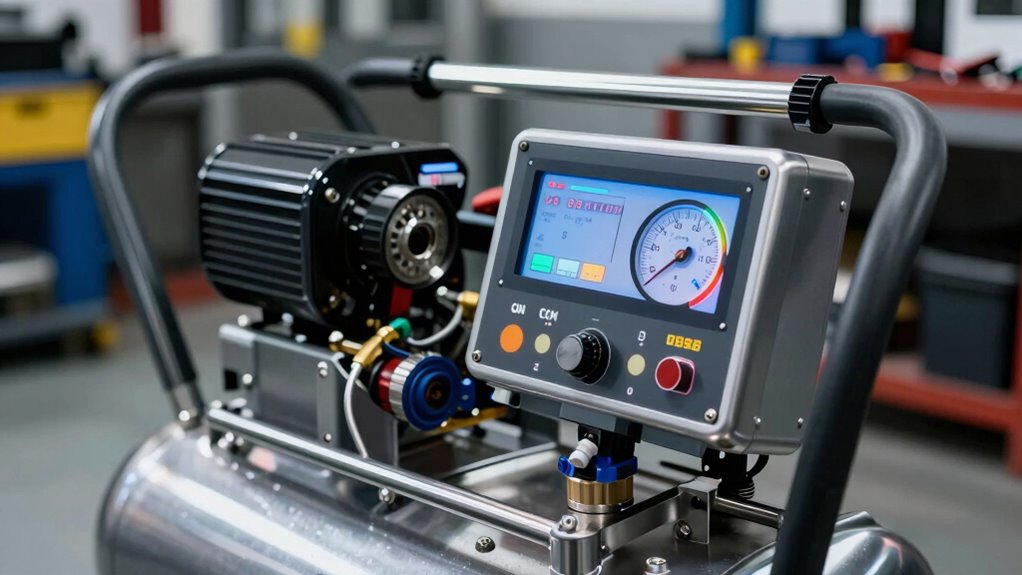

When sizing an air compressor for your mechanic shop, focus on CFM over PSI because airflow volume determines how well your tools perform consistently and efficiently. A high PSI alone doesn’t guarantee power or smooth operation—it’s the CFM that guarantees you get steady airflow for your equipment. Understanding your tools’ specific CFM needs helps you avoid underperforming or overloading your compressor. Keep going to discover how to match your shop’s exact requirements and keep your tools running right.

Get business pricing on garage and car supplies
- Business-only prices and quantity discounts
- Tax-exempt purchasing
- Multiple users, one account, clear invoices
Key Takeaways
- CFM measures airflow capacity, ensuring tools receive consistent power, unlike PSI which only indicates pressure.
- Proper CFM sizing prevents pressure drops, maintaining tool performance during extended or demanding tasks.
- Auto shop tools specify airflow needs in CFM; matching this ensures optimal operation and reduces inefficiency.
- Relying on PSI alone can lead to underpowered tools, whereas adequate CFM guarantees steady airflow and reliability.
- Calculating total CFM requirements with a safety margin ensures the compressor can handle all tools simultaneously.
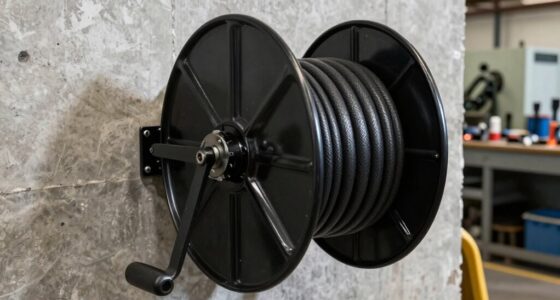
air compressor with high CFM for auto shop
As an affiliate, we earn on qualifying purchases.
As an affiliate, we earn on qualifying purchases.
What Do PSI and CFM Mean for Your Shop’s Tools?
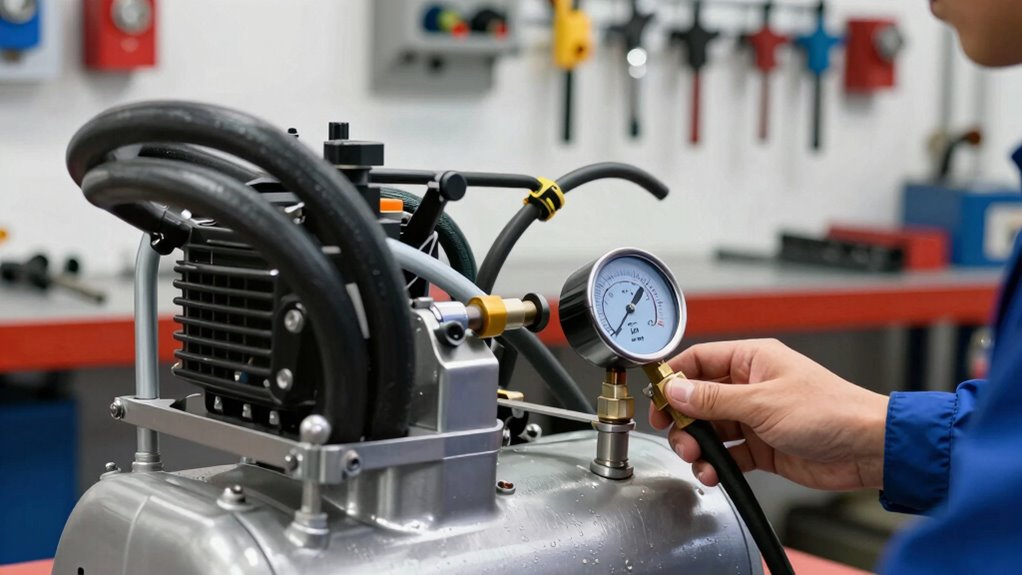
Understanding PSI and CFM is vital when selecting an air compressor for your shop. PSI, or pounds per square inch, measures the air pressure the compressor can generate, impacting how forcefully tools operate. CFM, or cubic feet per minute, indicates the compressor’s capacity to deliver air consistently. Your tools require a specific PSI to function properly, but without enough CFM, they won’t perform at their best. It’s important to match your compressor’s PSI to your tools’ requirements to guarantee proper operation. However, focusing solely on PSI can be misleading; the compressor’s capacity (CFM) determines whether it can keep up with your tools’ airflow demands. Proper understanding of both parameters helps you choose a compressor that provides enough air pressure and capacity for your shop’s needs. Additionally, airflow balance in your compressor’s output can influence the consistency and reliability of your tools’ performance over time. To ensure optimal performance, consider the airflow capacity alongside other specifications when selecting your compressor, as it directly impacts the tool efficiency and overall productivity.
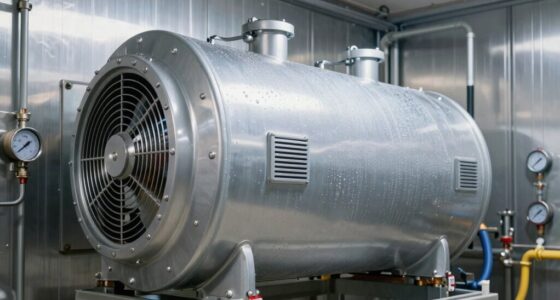
industrial air compressor 20 CFM
As an affiliate, we earn on qualifying purchases.
As an affiliate, we earn on qualifying purchases.
Why CFM Matters More Than PSI When Choosing a Compressor
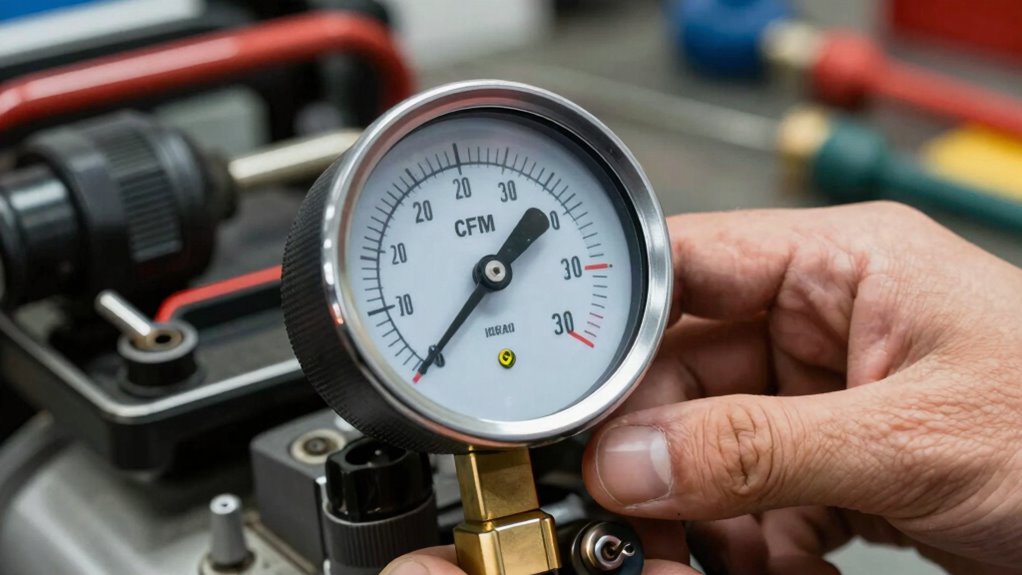
While high PSI ratings might catch your eye, CFM is actually more critical when choosing an air compressor for your shop. CFM directly impacts airflow efficiency, ensuring your tools receive consistent power during use. Without sufficient CFM, your tools won’t operate at full capacity, no matter how high the PSI. This means you could be wasting money on a compressor that can’t keep up with your tools’ demands. Tool compatibility depends on CFM because most air tools specify a required airflow rate. If your compressor doesn’t meet or exceed that, your tools won’t perform properly. Prioritizing CFM guarantees you get better airflow efficiency, making your shop more productive and reducing frustration caused by inadequate air supply. Additionally, considering air compressor maintenance can prolong the lifespan and efficiency of your equipment. Regular maintenance ensures your compressor operates at peak performance and prevents costly repairs. Understanding airflow dynamics is essential for selecting the right compressor to optimize your shop’s performance. Moreover, a comprehensive understanding of air delivery systems can help in maximizing overall shop efficiency and tool performance.
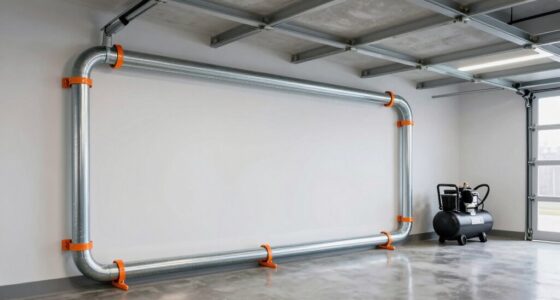
air compressor for mechanic tools
As an affiliate, we earn on qualifying purchases.
As an affiliate, we earn on qualifying purchases.
How CFM Levels Impact Your Auto Shop Tools’ Power

When your compressor provides consistent airflow, your tools perform at their best. Proper CFM levels guarantee you don’t experience pressure drops that slow down work. This consistency in airflow is essential for maintaining optimal tool performance, which directly influences your shop’s productivity. Additionally, understanding performance cookies can help you monitor and optimize your compressor’s efficiency for better results. Incorporating smart automation features such as leak detectors or air quality monitors can further enhance your shop’s safety and efficiency. Recognizing the importance of airflow management can also lead to more effective system maintenance and energy savings.
Consistent Airflow Delivery
Consistent airflow delivery is essential for ensuring your auto shop tools perform reliably and efficiently. When airflow remains steady, tools like impact wrenches and spray guns operate at peak performance without sudden drops in power. High airflow consistency helps maintain pressure stability, preventing fluctuations that could hinder precision or cause damage. If your compressor can provide a constant CFM level, your tools receive a steady stream of air, resulting in smoother operation and less downtime. Additionally, best vacuum systems can help maintain a clean work environment by removing dust and debris that could interfere with compressor performance. Proper air compressor maintenance is crucial for sustaining airflow quality and preventing performance issues. Inconsistent airflow can lead to inconsistent results and frustration. To keep your tools working at their best, choose an air compressor that delivers reliable airflow, minimizing pressure fluctuations and ensuring your shop runs smoothly. Consistency in airflow directly impacts your tools’ power and your overall productivity.
Tool Performance Optimization
Proper CFM levels are essential because they directly influence how much power your tools can deliver. When your compressor supplies adequate airflow, tools operate smoothly and efficiently, reducing frustration and downtime. Maintaining consistent CFM ensures high air quality, preventing moisture or debris from compromising tool performance. This stability also simplifies maintenance scheduling, as steady airflow reduces wear and tear on equipment. If CFM is too low, tools may lag or lose power, hampering productivity. Conversely, overestimating CFM can lead to unnecessary energy use and higher costs. By focusing on the right CFM, you optimize tool performance, extend equipment lifespan, and create a safer, more reliable work environment. Proper airflow management is key to maximizing your auto shop’s efficiency and tool longevity. Additionally, understanding and controlling airflow can help prevent air quality issues, which can further protect your tools and workspace. Effective air filtration is also vital for maintaining a clean and safe shop environment, reducing the risk of damage from contaminants. Regularly monitoring your compressor’s airflow output ensures consistent performance, and implementing proper maintenance routines can further ensure optimal airflow and prevent unexpected downtimes. Properly regulated airflow also helps in preventing moisture buildup, which is crucial for preserving tools and ensuring safety.
best air compressor for automotive repair
As an affiliate, we earn on qualifying purchases.
As an affiliate, we earn on qualifying purchases.
Common Mistakes Shop Owners Make Relying on PSI Alone
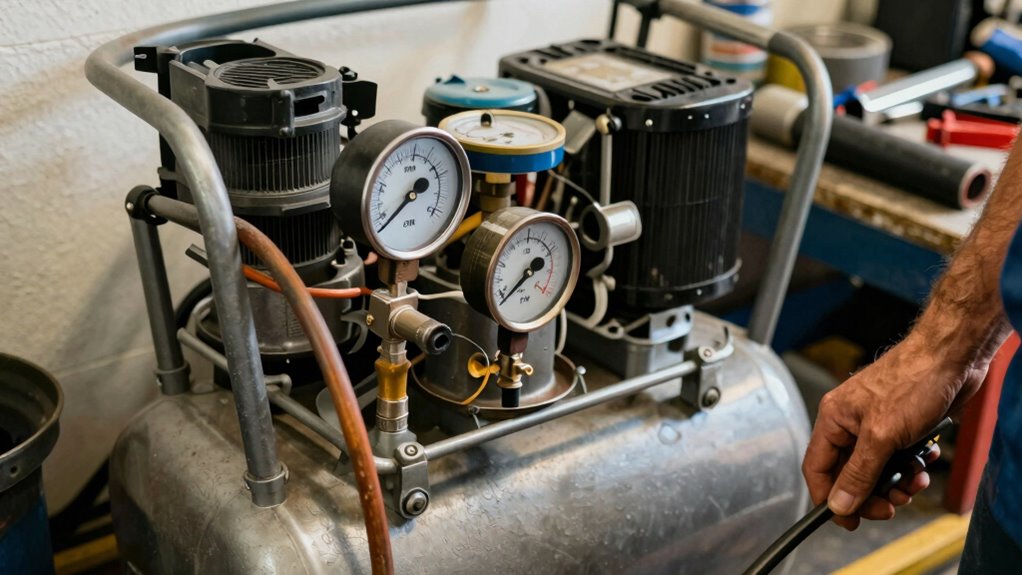
Relying solely on PSI can lead you to underestimate your air needs, but pressure doesn’t tell the whole story. Without considering CFM, you might find your tools underperforming or your compressor overworking. Remember, PSI isn’t a measure of power—flow rate is what truly keeps your shop running smoothly. Additionally, understanding how filter sizing and flow impact your system’s efficiency can prevent unexpected failures and ensure consistent performance. Properly managing airflow requirements is essential for maintaining optimal tool operation and prolonging compressor lifespan. Recognizing the importance of urban myths and folklore and their influence can help you avoid misconceptions that lead to improper system setup. Additionally, AI-powered monitoring tools can help you optimize system performance and avoid costly downtime. Being aware of system performance metrics enables proactive maintenance and better decision-making.
PSI Doesn’t Indicate Flow
Have you ever assumed that a higher PSI number means better airflow for your tools? Relying solely on your pressure gauge can be misleading because PSI doesn’t tell you about flow. Many shop owners focus on psi accuracy, thinking more pressure equals more power, but that’s not true.
Remember:
- A high PSI reading can hide low CFM, limiting tool performance.
- PSI measures pressure, not volume, so airflow might still be insufficient.
- Your pressure gauge may not be perfectly accurate, leading to false assumptions.
- Proper airflow depends on CFM, not just PSI, so don’t be fooled by a high pressure reading alone.
- Understanding airflow dynamics is essential for choosing the right compressor for your needs.
Always check CFM to ensure your tools get the airflow they need.
Overlooking CFM Needs
Many shop owners focus solely on PSI when selecting an air compressor, but neglecting the CFM needs can cause tools to underperform or break down unexpectedly. CFM measures the airflow required for your tools to operate efficiently, directly impacting air quality and performance. Ignoring CFM can lead to inconsistent tool power and increased wear. Additionally, focusing only on PSI might tempt you to choose a larger, noisier compressor, raising noise levels and compromising a comfortable work environment. Properly matching CFM ensures your tools get enough airflow, maintaining air quality and reducing unnecessary noise. Overlooking this critical factor can result in costly downtime and repairs. To keep your shop running smoothly, prioritize CFM alongside PSI for ideal air compressor selection.
Pressure Is Not Power
While a high PSI rating might suggest your air compressor is powerful enough, it doesn’t guarantee your tools will perform effectively. Relying solely on pressure vs volume can be misleading because compressor efficiency depends on both. High PSI alone doesn’t mean you have the power to complete jobs quickly or efficiently. Incorporating smart home integration features can help monitor compressor performance and optimize usage. Consider these common mistakes: 1. Believing PSI equals overall power—it’s just pressure, not volume. 2. Ignoring CFM needs for sustained tool performance. 3. Overestimating compressor capacity based on PSI ratings. 4. Overlooking how pressure stability affects tool operation. Focus on the true measure of power: CFM, which indicates volume and sustained airflow, not just pressure. A compressor with appropriate pressure vs volume balance ensures better efficiency and tool performance.
How to Calculate Your Shop’s CFM Needs
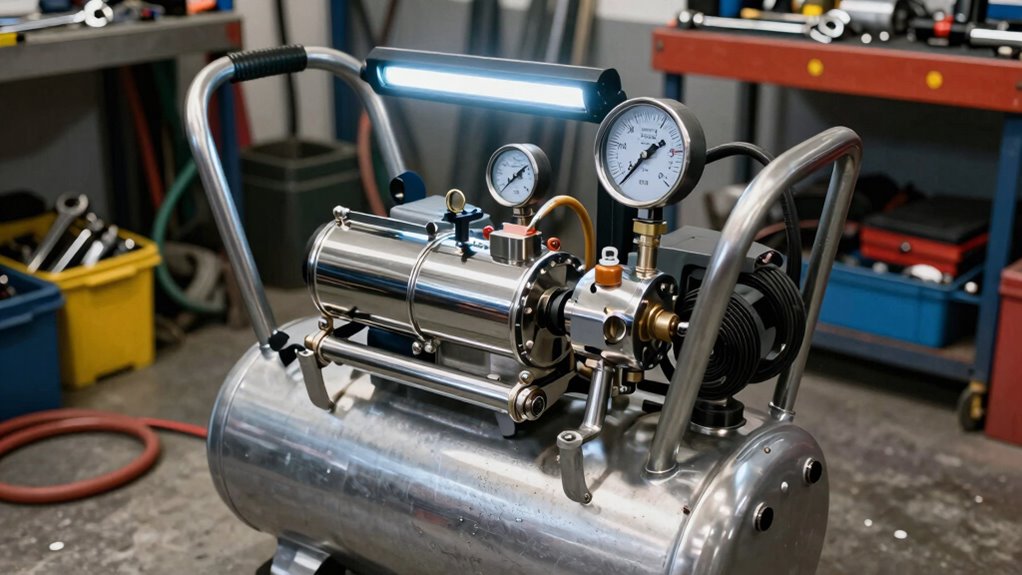
Figuring out your shop’s CFM needs is essential to guarantee your air compressor can handle all your tools efficiently. Start by listing each tool’s required airflow in CFM at maximum usage. Add these figures to determine your total CFM demand. Remember, selecting a compressor with higher airflow capacity enhances airflow efficiency and improves compressor durability over time. Use the table below to estimate your needs:
| Tool | CFM Requirement | Usage Frequency |
|---|---|---|
| Impact Wrench | 4 CFM | Heavy-duty, frequent |
| Spray Gun | 5 CFM | Continuous use |
| Air Ratchet | 3 CFM | Intermittent |
| Tire Inflator | 2 CFM | Occasional |
| Grinding Tool | 6 CFM | Heavy-duty, frequent |
Add 20-30% buffer for peak demand and airflow efficiency.
Reading Compressor Specs: What CFM and PSI Really Mean
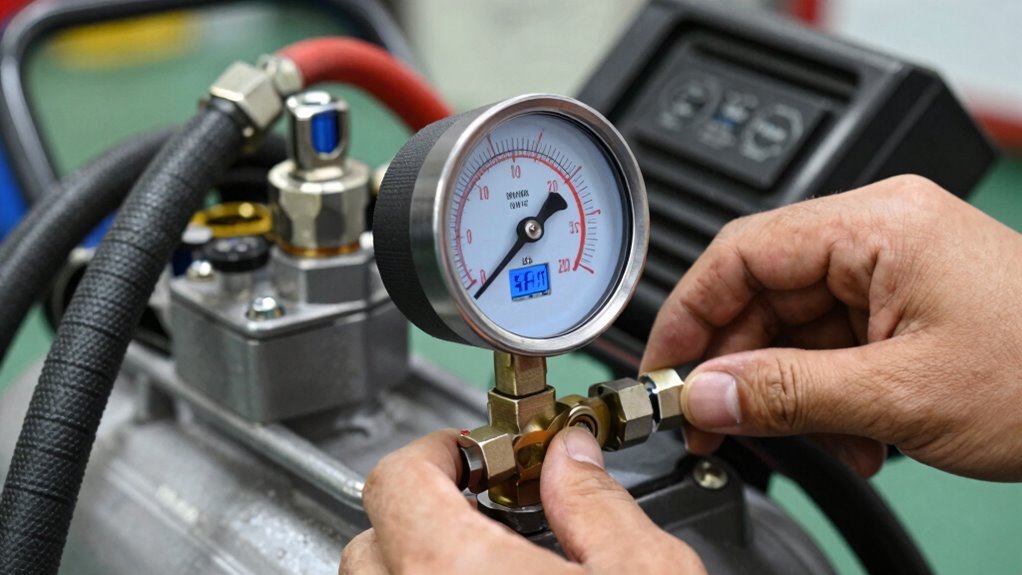
Understanding compressor specs is essential to guarantee you select the right equipment for your needs. When reading specs, focus on CFM and PSI—they reveal airflow efficiency and tool compatibility. Here’s what they really mean:
- CFM (Cubic Feet per Minute): Shows how much air the compressor delivers, impacting airflow efficiency.
- PSI (Pounds per Square Inch): Indicates pressure, but higher isn’t always better for your tools.
- Real-world performance: Specs are measured at specific conditions; actual airflow may vary.
- Maintenance impact: Proper compressor maintenance keeps airflow consistent and prolongs lifespan.
High PSI Isn’t Always Better for Your Tools
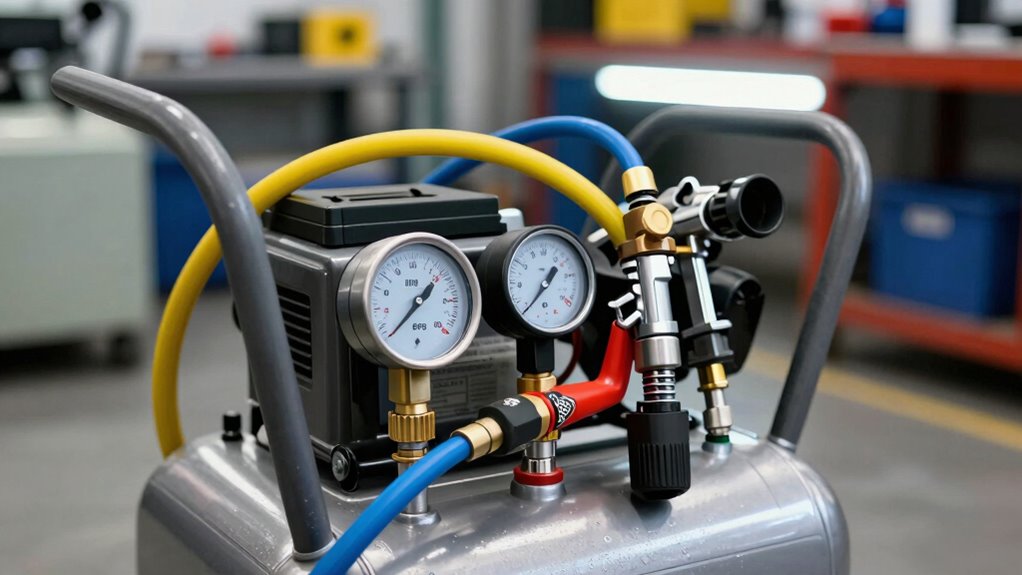
You might assume that higher PSI always means better performance, but that’s not necessarily true for your tools. Excessive air pressure can actually reduce tool efficiency and cause damage over time. Most pneumatic tools are designed to operate within a specific PSI range, and surpassing that can lead to inconsistent performance or premature wear. Instead of focusing solely on high PSI, it’s more important to take into account the right air pressure for your tools. Proper air pressure ensures ideal tool operation without risking damage or inefficiency. Remember, higher air pressure doesn’t automatically translate to better results; maintaining the manufacturer’s recommended PSI preserves your tools’ longevity and ensures they work as intended.
Choosing the Right CFM to Keep Your Tools Running Smoothly
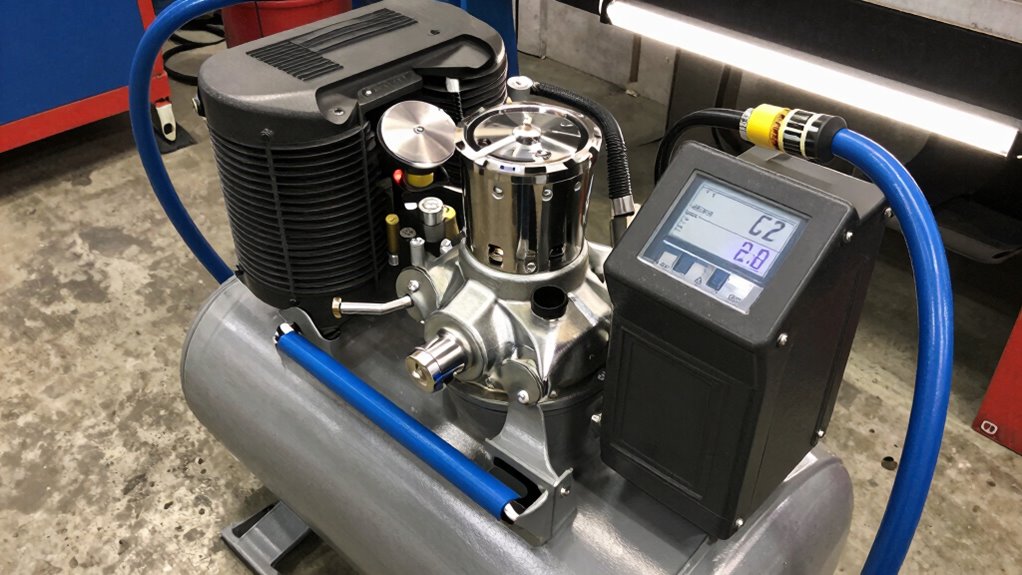
Choosing the right CFM (Cubic Feet per Minute) is essential for keeping your pneumatic tools operating smoothly and efficiently. When selecting a compressor, focus on airflow rather than just pressure. Proper CFM guarantees consistent power, improves air quality, and reduces noise levels, creating a safer, more comfortable workspace. Consider these key points:
- Match your tools’ CFM needs to prevent sluggish performance and frustration.
- Prioritize air quality to avoid moisture buildup that can damage tools.
- Opt for a compressor with ample CFM to accommodate multiple tools simultaneously.
- Choose quieter units to maintain a calmer shop environment and reduce fatigue.
Getting the right CFM helps your tools run smoothly, extends their lifespan, and makes your workday more enjoyable.
Real-World Examples: CFM Success Stories From Auto Shops
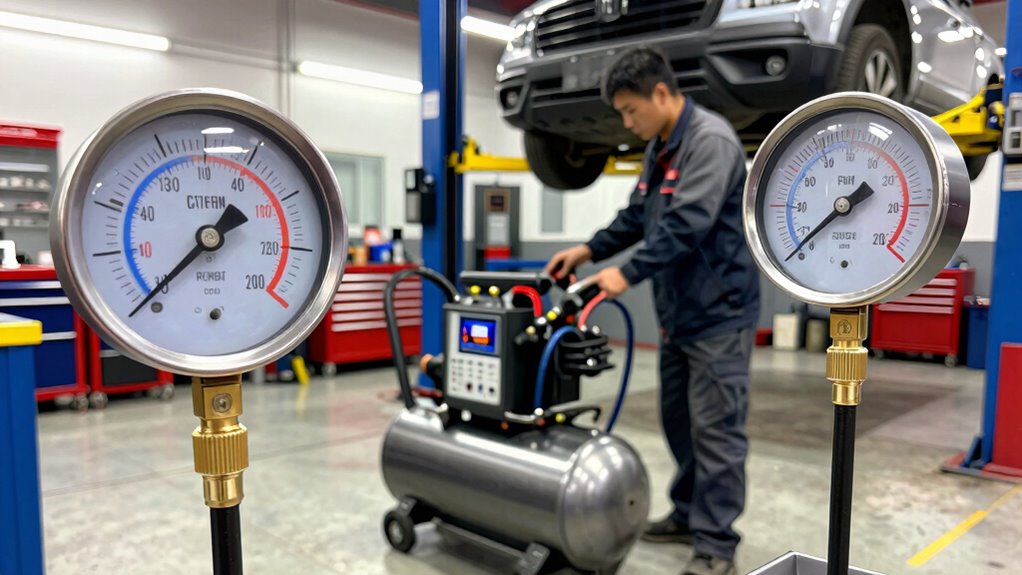
Auto shops that have invested in properly sized CFM compressors often see tangible improvements in productivity and tool longevity. For example, one shop upgraded to a compressor with higher CFM output, allowing consistent airflow even during peak demand. They adjusted hose diameter to optimize airflow and reduce pressure drops, especially in colder ambient temperatures, which can cause compressed air to contract and lower efficiency. This setup minimized tool lag and prevented overheating, extending tool lifespan. Another shop experienced fewer breakdowns and faster operation when they matched their compressor’s CFM to their specific needs, rather than relying solely on PSI ratings. These success stories highlight how focusing on CFM and considering factors like hose diameter and ambient temperature leads to better performance and long-term savings.
Final Tips for Selecting a Compressor Based on Your CFM Needs
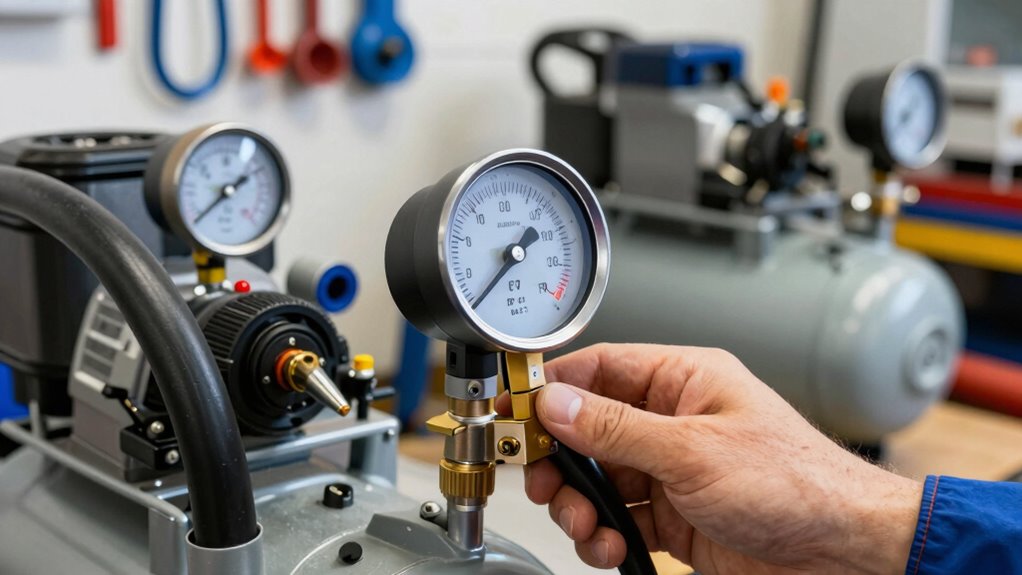
When selecting a compressor based on your CFM needs, making certain to match the airflow capacity to the demands of your tools and workflow is vital. Proper sizing guarantees consistent performance, improves air quality, and reduces downtime. Keep these tips in mind:
- Prioritize airflow over PSI—CFM directly impacts tool efficiency.
- Assess your workload—Choose a compressor with a slightly higher CFM to handle peak demands.
- Consider maintenance schedules—Regular upkeep ensures air quality remains high and compressor longevity.
- Avoid under-sizing—A smaller unit may seem cost-effective but leads to frustration and inconsistent results.
Frequently Asked Questions
Can a Compressor With High PSI Compensate for Low CFM?
A compressor with high PSI can’t fully compensate for low CFM because pressure fluctuation affects your tools’ performance. While high PSI might seem beneficial, it doesn’t increase compressor capacity, which is essential for continuous operation. You need adequate CFM to maintain steady airflow, especially under demanding conditions. Without enough CFM, tools may lag or stall, making high PSI alone insufficient for efficient work.
How Does Compressor Size Affect Energy Efficiency in My Shop?
You’re hitting the nail on the head when you consider compressor size’s impact on your shop’s energy efficiency. A properly sized compressor reduces energy consumption, saving you money and extending equipment lifespan. Oversized units waste power, while undersized ones strain to meet demand. Keep your compressor in check, and you’ll optimize efficiency, cut costs, and keep your tools running smoothly over the long haul.
Is It Better to Have Multiple Smaller Compressors or One Large Unit?
It’s better to have multiple smaller compressors because they improve air quality and reduce noise levels, making your shop safer and more comfortable. Smaller units can be turned off when not needed, conserving energy and maintaining consistent air pressure and quality. Plus, they’re easier to maintain and replace, minimizing downtime. This setup ensures cleaner, quieter operation, enhancing your overall workspace efficiency and worker safety.
How Often Should I Check and Maintain My Compressor’s CFM Output?
Imagine your compressor as a essential engine humming smoothly. You should check and maintain its CFM output weekly, ensuring peak performance. Follow a regular maintenance schedule that includes inspecting filters, belts, and hoses. During performance monitoring, look for drops in CFM, unusual noises, or temperature spikes. Staying vigilant keeps your compressor running efficiently, preventing costly breakdowns and ensuring you always have reliable airflow for your work.
What Are the Signs My Compressor Is Undersized for My Tools?
If your tools take longer to operate or frequently lose power, you’re experiencing an airflow mismatch caused by an undersized compressor. You might also notice pressure limitations, where the compressor struggles to reach needed PSI levels. These signs indicate your compressor can’t supply enough CFM for your tools, leading to inefficient work. Upgrading to a unit with higher CFM capacity guarantees consistent airflow and proper tool performance.
Conclusion
Remember, focusing on CFM rather than PSI guarantees your shop’s tools stay powerful and productive. By balancing benefits and basics, you’ll build a better, busier workspace. Don’t get caught in the confusion of pressure; prioritize precision in airflow. Properly sizing your compressor with the right CFM maintains your equipment efficient and effective. So, stay savvy, select smartly, and let consistent CFM create a comfortably capable, clutter-free shop.
Fall Picks
fall essentials
As an affiliate, we earn on qualifying purchases.