TL;DR

Get business pricing on garage and car supplies
- Business-only prices and quantity discounts
- Tax-exempt purchasing
- Multiple users, one account, clear invoices
Online coverage indicates Volkswagen’s electric ID. Buzz microbus will not reach US buyers until 2028, later than previously expected. The report is driving a spike in search interest, but the trigger and Volkswagen’s official confirmation are unverified.
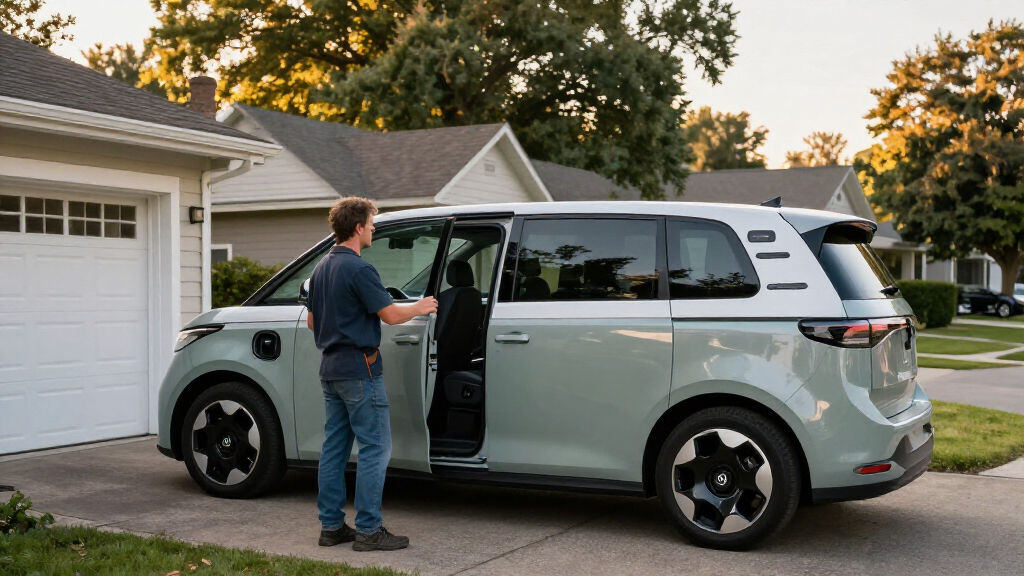
Reports circulating in automotive media say Volkswagen has pushed the US arrival of its electric ID. Buzz microbus back to 2028, extending the wait for American buyers who have followed the van since its revival of the classic Microbus nameplate. The claim is driving a sharp spike in search and coverage interest, but the reporting rests on a thin feed item, and Volkswagen has not publicly confirmed the delay through an official announcement reviewed for this article.
The core claim is a single, specific one: the ID. Buzz, Volkswagen’s battery-electric van inspired by the Type 2 Microbus, will not launch in the United States until 2028. That would place the US arrival several years after the vehicle’s European market launch, which began in 2023 for the standard-wheelbase version. The item was distributed through automotive RSS news feeds without a detailed primary statement attached.
What is firmly established as background: the ID. Buzz is built on Volkswagen’s MEB electric platform and has been sold in Europe since 2023. Volkswagen has long said the US market would receive a long-wheelbase version with three rows of seating, larger than the European model. The company has also publicly committed to a US production footprint for its next generation of electric vehicles in South Carolina, where its Ridgeville plant is slated to build VW-brand EVs.
What is not established: the reason for the reported 2028 timing, whether it reflects a formal internal decision, a regulatory certification issue, battery supply constraints, tariffs, or simply a revised product plan. No named Volkswagen executive, spokesperson statement, or dated announcement accompanies the report. Readers should treat the 2028 date as a claim, not a confirmed schedule, until Volkswagen or a named official addresses it directly.
Why American Buyers Are Watching the Date
The ID. Buzz is one of Volkswagen’s most emotionally charged models in the US, where the original Microbus carries deep cultural resonance. The company has marketed the van as a halo vehicle for its electric lineup, and a multi-year delay would test the patience of buyers who have already waited through the vehicle’s long development cycle — Volkswagen first showed a Buzz concept in 2017.
A 2028 arrival would also matter commercially. It would push the US launch deeper into a period when Volkswagen plans US-built electric models from its South Carolina plant, raising questions about whether the long-wheelbase Buzz would be imported or produced domestically, and how it would be priced against American-built rivals and tariffs on imported vehicles. For a company trying to rebuild US momentum, the timing of a flagship EV matters well beyond one model’s sales volume.
Top picks for "postpon return buzz"
As an affiliate, we earn on qualifying purchases.
The ID. Buzz’s Slow Road to America
: “Volkswagen unveiled the ID. Buzz concept in 2017 and put the production version on sale in Europe in 2023, initially as a two-row, standard-wheelbase van. The company consistently told US audiences they would get a longer, three-row version tailored to American family use, and it showed a US-spec prototype at the 2023 LA Auto period with a larger battery and more seating.
US timing has slipped repeatedly over the years. Early expectations centered on a 2024 arrival, which Volkswagen later moved toward 2025 and beyond. Against that backdrop, a reported 2028 date would represent the latest in a series of shifts — which is why even a thinly sourced report is drawing heavy reader interest.
What the Report Leaves Unverified
Several things remain unclear. First, whether Volkswagen has officially confirmed the 2028 date — no named executive statement or press release was attached to the report reviewed here. Second, the cause of the reported delay is unknown; candidate explanations circulating in coverage include certification timelines, battery supply, tariff pressures, and alignment with US production plans, but none is substantiated. Third, it is unclear whether the reported date applies to the three-row long-wheelbase US model specifically or to any US-market Buzz variant. Until Volkswagen comments, the 2028 figure should be treated as unconfirmed.
Signals That Could Settle the Timeline
Watch for a direct statement from Volkswagen of America or VW Group headquarters, which would settle whether the 2028 date is official. Other indicators include US-spec ID. Buzz sightings during road testing, EPA range filings, pricing announcements, and updates on production allocation between Germany’s Hanover plant and Volkswagen’s South Carolina facility. VW’s regular product briefings and US auto show appearances are the most likely venues for a confirmed schedule.
Key Questions
Has Volkswagen officially confirmed the 2028 US launch date?
Not in any statement reviewed for this article. The 2028 date comes from a circulating news report; treat it as unconfirmed until Volkswagen or a named executive addresses it.
Is the ID. Buzz available anywhere now?
Yes. The ID. Buzz has been on sale in Europe since 2023, initially as a standard-wheelbase two-row van built on VW’s MBE — MEB — electric platform. The US was slated to receive a larger three-row long-wheelbase version.
Why would the US launch be delayed?
That is unclear. Possible factors discussed in coverage include certification timing, battery supply, tariffs on imported vehicles, and alignment with VW’s planned US EV production in South Carolina, but no cause has been substantiated.
Will the US ID. Buzz be built in America?
Volkswagen has committed to building VW-brand EVs at its Ridgeville, South Carolina plant, but the company has not confirmed whether the three-row ID. Buzz would be produced there or imported from Germany.
Source: rss
Fall Picks
fall essentials
As an affiliate, we earn on qualifying purchases.