
TL;DR

Get business pricing on garage and car supplies
- Business-only prices and quantity discounts
- Tax-exempt purchasing
- Multiple users, one account, clear invoices
A battery powered grease gun can speed up routine lubrication on excavators, loaders, tractors, and trucks, especially when you service many fittings or work in tight spaces. Compare pressure and flow alongside battery capacity, hose reach, coupler design, grease compatibility, handling, and service support; follow the machine manual for the amount of grease and never treat maximum pressure as a target.
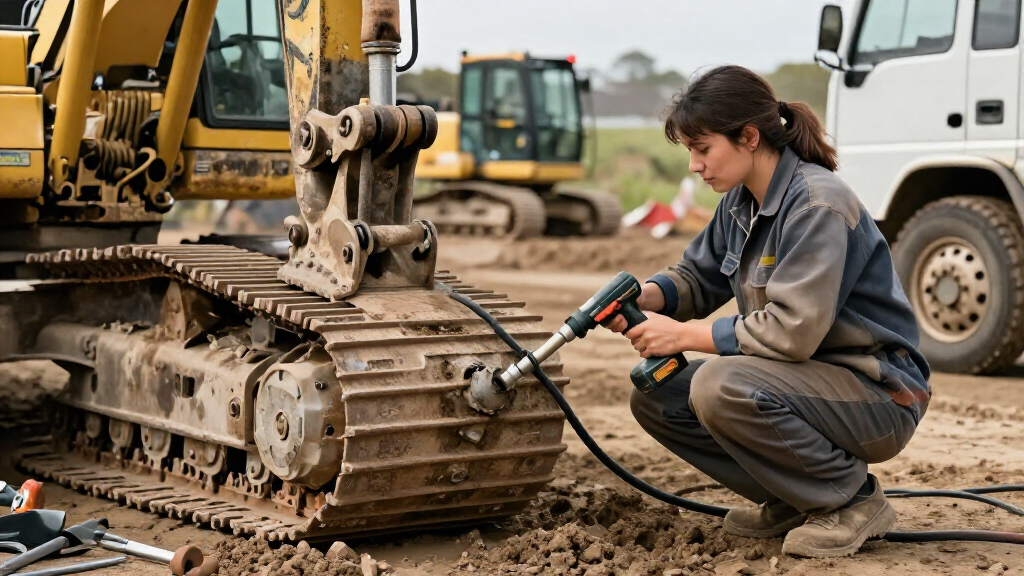
The excavator is still warm, mud is drying in ridges along the track frame, and the service sheet has more grease points than your manual lever gun has patience for. A cordless grease gun can turn that long, tiring round into a more manageable job—but the number stamped on the box won’t tell you whether it suits the machine in front of you.
This guide explains how to choose a battery powered grease gun for heavy equipment by matching pressure, flow, battery, hose, coupler, and grease-loading details to real maintenance work. You’ll also see how several listed cordless kits compare with a discontinued or possibly unavailable 2-in-1 kit, and how to avoid common problems such as air pockets, blocked fittings, and overgreasing.
Think of the gun as a delivery tool, not a permission slip to pump harder. Your equipment manual sets the lubrication quantity and procedure; the right gun simply helps you carry them out with less strain and fewer awkward contortions.
Use the machine’s service instructions to determine grease type, amount, and interval; maximum gun pressure is a tool rating, not a target.
Compare pressure and flow alongside hose length, coupler fit, battery capacity, loading method, handling, and parts support.
Treat listed battery runtime as an estimate because cold, thick grease, and pressure demands change how long a charge lasts.
When grease stops flowing, check loading, air, hose, coupler, and fitting condition instead of forcing the trigger.
For replacement kits, verify the exact model, batteries, charger, accessories, and current specifications before you buy.
What a cordless grease gun can do for your next service round
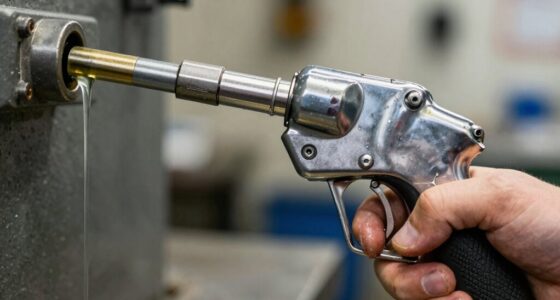
A battery powered grease gun for heavy equipment pushes lubricant from a cartridge or bulk reservoir through a hose and coupler into grease fittings, using a motor instead of repeated hand strokes. That power can save effort when you face many fittings across a loader, tractor, or excavator, while a flexible hose helps you reach around axles and joints. The actual benefit depends on the machine, grease, fitting condition, and maintenance routine.
Picture a crew servicing a loader at the end of a dusty shift. The operator has to reach pivot points around the bucket linkage and front axle, then check the machine’s service sheet before moving to the next point. A cordless gun can keep lubricant moving while the operator controls the hose and coupler, much like using a small powered pump instead of squeezing a stubborn bottle by hand. The time saving can add up over a round with many points, but it depends on how quickly the operator can position the hose and whether the fittings accept grease normally.
That convenience has limits. A gun rated to a high maximum pressure does not mean the fitting or joint should receive that pressure, and a motor can make it easier to overfill a point before you notice. Faster delivery changes the operator’s task: instead of counting slow hand strokes, you need a reliable procedure for quantity and a clear stopping point. Follow the machine maker’s lubrication instructions, and stop if a fitting resists or grease leaks from an unexpected place.
It can help to separate the job into three questions: Can the gun deliver the specified grease? Can you reach and connect to the fitting? Can you control the amount and keep the tool working through your service round? A good match answers all three without making the tool so heavy or awkward that you leave it in the truck. A tool that excels at one question can still slow the job if, for example, its battery runs down early or its coupler is difficult to release.
cordless heavy equipment grease gun
As an affiliate, we earn on qualifying purchases.
As an affiliate, we earn on qualifying purchases.
Compare pressure, flow, and reach before you choose
A battery powered grease gun for heavy equipment needs enough pressure capability and a suitable flow rate for your work, but neither number alone predicts success at a particular grease point. Pressure describes the force available to move grease; flow describes how quickly grease comes out. Hose length and coupler fit determine whether you can actually connect at the point you need to service. In practice, these features work together: a high flow rate can shorten a round, but only if the fitting and procedure allow that delivery rate and the operator can control the quantity.
The source specifications for the SOARFLY 2-in-1 kit list 12,500 PSI, a flow rate of 5.3 ounces per minute, a 39.4-inch hose, and two 2.0Ah batteries. The J-KU kit lists 12,000 PSI, the same stated flow rate and hose length, and two 4.0Ah batteries. Ecarke lists 12,000 PSI, up to 8 ounces per minute, and a 39-inch hose. Alloyman lists 12,000 PSI, 5.3 ounces per minute, and a 39.4-inch hose; Seesii lists 10,000 PSI, 5.8 ounces per minute, and a 48-inch hose.
Those are advertised or supplied specifications, not a promise about the pressure or delivery you’ll see at every fitting. For instance, a longer hose may help you reach an awkward pivot behind a guard, while a shorter, tidier setup may be easier to manage in a tight service bay. Extra hose also creates more length to control and protect from snags. Cold, thick grease and a restricted line can affect delivery, so a headline flow figure does not tell you how fast the gun will work in those conditions.
Use the comparison as a shortlist, then verify the current manufacturer or retailer listing and the instructions for your equipment. If a fitting will not accept grease, don’t treat the highest PSI number as the cure; the fitting may be blocked or damaged, and more force can create a dangerous situation. Pressure is useful as tool capacity, while safe and effective lubrication depends on the fitting and the prescribed procedure.
| Kit | Listed pressure | Listed flow | Hose | Battery information |
|---|---|---|---|---|
| SOARFLY 2-in-1 kit | 12,500 PSI | 5.3 oz/min | 39.4 in | Two 2.0Ah |
| J-KU cordless kit | 12,000 PSI | 5.3 oz/min | 39.4 in | Two 4.0Ah |
| Ecarke 20V tool | 12,000 PSI | Up to 8 oz/min | 39 in | Not specified in supplied details |
| Alloyman 2-in-1 kit | 12,000 PSI | 5.3 oz/min | 39.4 in | Two 4.0Ah |
| Seesii cordless gun | 10,000 PSI | 5.8 oz/min | 48 in | Not specified in supplied details |
Check the exact model documents before buying: listings can change, and a spec table cannot tell you which gun fits your own fittings, grease, and work habits. For a crew, even small differences in reach or battery capacity can affect how often the operator must reposition or pause, so test those against the actual maintenance route where possible.
As an affiliate, we earn on qualifying purchases.
Choose a replacement by matching the kit to your actual work
If the original 2-in-1 kit is hard to find, compare replacement candidates against the features you use rather than assuming any cordless model is interchangeable. The supplied alternatives include J-KU, Ecarke, Alloyman, and Seesii models with broadly similar pressure and flow figures, but their batteries, accessories, hose reach, and included equipment differ. Availability and specifications can change, so check the exact model listing before relying on any detail. The practical consequence is that two guns with similar headline ratings may have very different ready-to-work costs if one requires separate batteries, a charger, or adapters.
The J-KU kit is described with two 4.0Ah batteries and a 39.4-inch hose, plus a 90-degree adapter, three couplers, charger, gloves, shoulder strap, and case. That package may suit a crew that needs a ready-to-go kit and wants extra battery capacity on hand. The larger stated battery capacity may mean fewer charging interruptions than 2.0Ah packs under comparable conditions, though it does not establish a guaranteed runtime. Ecarke’s supplied details list up to 8 oz/min flow, a 39-inch hose, four couplers, shoulder strap, and hard case, while battery details are not specified here; confirm whether the exact listing is tool-only or includes power components. The listed higher flow may be useful for a high-volume routine, but it also makes a controlled dispensing method more important.
Alloyman’s supplied description includes two 4.0Ah batteries and the same 12,000 PSI and 5.3 oz/min figures as J-KU, while accessory details are not specified. Similar ratings do not establish that the kits have equal build quality, support, or field durability, so verify the parts and service options that matter to your crew. Seesii’s listed 48-inch hose may help when fittings sit farther back behind a frame or guard, though its 10,000 PSI rating and unspecified battery details deserve a closer look against your requirements. A longer hose can improve access but may snag more easily or be harder to keep clear of moving parts.
For example, a farm mechanic who already owns batteries from one platform might value compatibility more than a bundled charger, while a field crew working away from the shop may want spare batteries and a protective case. In the first case, platform compatibility can reduce the equipment carried between jobs; in the second, spare power and secure storage can reduce downtime when the nearest charger is far away. Treat these as candidates, not guaranteed replacements. Compare the exact model number, included battery and charger, loading method, hose, coupler style, warranty, and replacement-part support before choosing.
- J-KU: supplied details list two 4.0Ah batteries and several adapters and accessories.
- Ecarke: supplied details list up to 8 oz/min flow and four couplers; confirm battery inclusion.
- Alloyman: supplied details list two 4.0Ah batteries; verify package accessories.
- Seesii: supplied details list a 48-inch hose; confirm battery and charger details.
The useful question is not “Which one has the biggest number?” It is “Which exact package lets me service these machines, with the grease and fittings I use, and keep the tool running?” Answering that from the actual maintenance route helps avoid paying for accessories you will not use or discovering that a missing battery turns an apparent bargain into an incomplete kit.
heavy duty grease gun with long hose
As an affiliate, we earn on qualifying purchases.
As an affiliate, we earn on qualifying purchases.
Get more useful runtime from your batteries and grease choice
Battery capacity gives you a clue about how much stored energy a pack holds, but it cannot promise a fixed number of fittings per charge. Runtime changes with grease consistency, temperature, pressure demand, the amount dispensed, and how often the motor runs. A 4.0Ah battery carries more stated capacity than a 2.0Ah battery of the same voltage, but actual work time still depends on the tool and job. Capacity is therefore useful for comparing packs within a compatible system, while a real service round is the better basis for deciding how many spares to carry.
Cold mornings make this especially clear. Grease can stiffen in low temperatures, so the gun may work harder and deliver more slowly; battery performance can also shift with the conditions. If your crew services equipment before sunrise, keep spare packs charged and stored according to the battery maker’s instructions. Don’t assume the brochure’s runtime estimate will match a frozen yard and thick grease. Slower delivery can also lengthen the round, meaning battery planning should account for both reduced pack performance and increased time at each point.
A portable tool is most useful when you can carry it to the machine without hauling unnecessary gear. Check whether batteries can be removed and whether the tool shares a battery platform you already use. Shared packs may reduce the number of chargers you bring, but confirm compatibility with the exact tool and battery model; a familiar brand name does not guarantee that every pack fits. The tradeoff is that a bare tool may cost less if you own compatible packs, while a complete kit can be more practical for a crew that needs dedicated batteries and charging equipment.
For a real-world routine, imagine a technician greasing a tractor, a trailer, and a loader in one shift. Two charged packs can reduce interruptions if the work runs long, while a labeled charger in the service truck keeps the next shift ready. Track how many rounds your own crew completes under its usual conditions, then buy spare capacity based on that record instead of treating a general runtime claim as a guarantee. This also reveals whether pauses come from battery limits or from access, reloads, and fitting problems that extra capacity will not fix.
Also match the grease to the equipment. Check the machine manual for the required type and consistency, and confirm the gun supports the cartridge or bulk-loading method you plan to use. Mixing incompatible greases can cause lubrication problems, so a fresh cartridge is not automatically the right cartridge. Grease consistency matters to the tool as well: the right product supports the joint’s lubrication needs and is more likely to feed as expected under the conditions you work in.
automatic grease gun for excavators
As an affiliate, we earn on qualifying purchases.
As an affiliate, we earn on qualifying purchases.
Use hose, coupler, and loading details to avoid wasted effort
Hose reach and coupler security decide whether grease gets to the fitting cleanly, especially when equipment hides lubrication points behind a wheel, linkage, or guard. A flexible hose around 39 to 48 inches long can offer useful reach, but the best length depends on where your fittings sit and how much hose you can control in cramped spaces. A secure coupler helps limit leakage and the frustrating slip that leaves grease smeared across the machine. Poor access costs time because each failed connection means cleaning up, repositioning, and trying again; a good hose setup can make the whole round more predictable.
Take a loader bucket linkage as an example: the fitting may face inward, with a steel edge close enough to make a straight rigid pipe awkward. A flexible hose and 90-degree adapter can let you line up the coupler without putting your fingers against the joint. Check that the adapter and coupler match the fitting style, and keep the hose away from sharp edges or hot parts. The adapter is useful only if it improves alignment without adding a loose connection or putting the hose under strain.
Loading and priming matter just as much. A poorly loaded cartridge or trapped air can interrupt flow even when the battery is full. Follow the tool’s loading instructions, prime it as directed, and inspect for a kinked hose or loose connection if grease does not come through. Some kits include a rigid pipe, needle nozzle, hex flat nozzle, or several couplers; those accessories only help if they suit the fittings you service. Correct loading prevents wasted time diagnosing a tool that is simply air-bound, while compatible nozzles help you reach specific fittings without improvising an unstable connection.
Before a long service round, try the chosen hose and coupler at a representative point with the machine safely positioned. If you keep losing the coupler or fighting a bent hose, adjust the approach or select a suitable adapter rather than forcing the connection. A tidy hose path saves time and makes it easier to see leaks, damage, and grease buildup. It also reduces the chance that the hose catches on an edge while you are focused on the coupler.
Follow this routine to grease equipment without overfilling
To grease heavy equipment safely, follow the machine’s service instructions, connect the gun securely, deliver only the specified amount, and inspect the fitting when you finish. A meter or preset output can help track delivery where the machine procedure calls for a measured quantity, but the operator still needs to know the correct amount for each point. More grease is not automatically better. Overfilling can force grease past seals or create cleanup and maintenance issues, while too little can leave the joint without the lubrication the procedure requires.
- Park and prepare the machine. Follow the equipment manual for shutdown, access, and safe positioning. Clean dirt from around the fitting so grime does not enter the joint.
- Check the grease and gun. Confirm the grease type, cartridge compatibility, battery condition, hose condition, and coupler connection. Prime the gun as its instructions direct.
- Connect without forcing it. Seat the coupler on the fitting. If it will not attach, inspect the alignment and fitting rather than levering the hose sideways.
- Deliver the specified amount. Use the quantity and method given in the service instructions. If resistance rises unexpectedly or grease appears somewhere it should not, stop and investigate.
- Disconnect and inspect. Relieve pressure as directed before removing a stuck coupler, wipe away excess grease, and note any damaged or blocked fitting for repair.
Suppose a loader’s maintenance sheet calls for a set number of strokes or a specific procedure at each pivot. Follow that instruction even if the cordless gun can deliver grease much faster than your old manual tool. A digital counter may record output, but it cannot identify which point needs how much lubricant. The operator remains responsible for matching the reading to the machine’s requirements and stopping at the prescribed amount.
High-pressure grease can penetrate skin and cause a serious injection injury. Never test a suspected leak with your hand; stop, relieve pressure, and follow the tool maker’s instructions before servicing or disconnecting components. If grease enters the skin, seek emergency medical care immediately, even when the wound looks small.
Use the machine manual to set the amount. The gun’s maximum pressure rating describes its capability, not a target for every fitting.
Spot the signs that a fitting or gun needs attention
If grease will not come out, a fully charged battery is only one item to check. Common causes include an air pocket, incorrect loading, a clogged coupler or fitting, a kinked hose, or grease that has become too stiff in cold conditions. A blocked or damaged fitting can prevent lubricant from reaching the joint, so pressing the trigger harder may hide the real problem. Distinguishing between a feed problem and a blocked fitting matters: replacing the battery will not clear a blockage, and forcing pressure can turn a repairable issue into a damaged component or injury.
Imagine the gun motor runs, but the fitting stays dry and grease begins to ooze around the coupler. Stop, depressurize according to the instructions, and inspect the connection and hose. Check the loading and priming process, then examine the fitting for blockage or damage using the equipment maker’s procedure. Keep hands away from suspected leaks; pressurized grease can pierce skin. The visible grease at the coupler suggests the connection may not be sealing, but it does not prove that the fitting itself is clear.
Routine tool care can catch trouble before the next shift. Wipe dust and old grease from the housing, keep the hose stored without tight kinks, inspect the coupler for wear, and look for cuts, cracks, or leaks. Heavy equipment environments throw dust, moisture, vibration, and impacts at tools, so ask whether the maker supplies replacement hoses and couplers and how warranty service works. Parts support affects downtime: a worn coupler is a routine replacement, but if compatible parts are hard to obtain, a small failure can sideline the tool.
Also account for handling. A larger grease capacity can mean fewer reloads, but a heavy gun becomes tiring when you hold it overhead or reach around a machine frame. A shoulder strap may help carry it between service points, while a compact setup may be easier inside a tight bay. Choose a tool you can position steadily and safely through the jobs you actually perform. Fewer reloads save time only if the extra weight does not slow positioning or reduce control.
When a fitting repeatedly refuses grease, mark it and follow the service procedure or ask a qualified technician to inspect it. The fitting may need repair; the answer is not to keep increasing force until something gives. Recording repeat failures also helps the crew spot a developing lubrication issue before it affects the joint.
Frequently Asked Questions
How much pressure should a grease gun have for heavy equipment?
Compare the gun’s rated capability with the job, but use the equipment maker’s instructions to determine the correct lubrication procedure. A rating such as 12,000 PSI does not mean you should apply that pressure to every fitting. If a fitting resists, inspect it rather than forcing more grease.
Can a cordless grease gun handle excavators, loaders, and tractors?
Many cordless grease guns are designed for equipment maintenance, and they can reduce hand effort across a large service round. Suitability depends on the fittings, grease, hose and coupler setup, and the condition of the lubrication points. Confirm the tool and procedure against your machine manual.
How long will the battery last?
Runtime depends on battery capacity, temperature, grease consistency, pressure demand, and how much lubricant you dispense. Two 4.0Ah packs provide more stated capacity than two 2.0Ah packs at the same voltage, but they do not guarantee a set number of fittings. Track your crew’s own service rounds to plan spare batteries.
Can I use any grease cartridge in a battery powered grease gun?
No. Check that the cartridge and loading method match the gun, and confirm that the grease type and consistency suit the equipment. Follow both manuals, especially if you are changing grease types, since incompatible greases can cause lubrication problems.
Why is grease not coming out of my cordless grease gun?
Possible causes include an air pocket, incorrect cartridge loading, a clogged coupler or fitting, a kinked hose, or stiff grease in cold weather. Follow the tool instructions to depressurize and inspect it safely. Never use your hand to locate a suspected leak.
How do I avoid putting too much grease into a joint?
Follow the service manual’s quantity and interval for that point. A meter or preset feature can help track delivery when available, but it does not tell you the correct amount by itself. Stop if grease appears somewhere unexpected or resistance changes sharply.
Conclusion
Choose your cordless grease gun by matching the exact tool and kit to your equipment’s grease, fittings, service procedure, and workday. Compare the numbers, then check the hose, coupler, battery package, handling, and support details that determine whether the gun will work in your hands.
Keep the machine manual in charge of the amount, and treat a stubborn fitting as a problem to inspect—not an invitation to press harder. A clean coupler, a charged spare battery, and a quiet, well-lubricated machine make a satisfying end to a dusty service round.
Halloween Picks
halloween
As an affiliate, we earn on qualifying purchases.