
TL;DR

Get business pricing on garage and car supplies
- Business-only prices and quantity discounts
- Tax-exempt purchasing
- Multiple users, one account, clear invoices
Hyundai has not abandoned hydrogen fuel-cell passenger cars, but a senior Hyundai Australia executive says finding customers is a major challenge. The company’s second-generation Nexo, unveiled in 2025, points to continued development, while limited refueling access and high vehicle costs remain barriers.
Hyundai is continuing to pursue hydrogen fuel-cell passenger cars, but a senior executive at its Australian operation says the company’s immediate challenge is finding customers. The comments, reported by CarExpert and cited by InsideEVs, underline the gap between Hyundai’s continued investment in models such as the Nexo and the limited market for hydrogen vehicles.
“The biggest thing is you’ve got to find customers,” Scott Nargar, Hyundai Australia’s senior manager of future mobility and government relations, told CarExpert. Nargar also said hydrogen was not “dead for passenger vehicles,” signalling that Hyundai has not ruled out the technology even as it faces a small pool of potential buyers.
Hyundai unveiled the second-generation Nexo in 2025, describing it as a global model. The source report says it is rated for roughly 435 miles on a full hydrogen tank and uses a 110-kilowatt electric motor. A 2.64-kilowatt-hour high-voltage battery serves as a buffer between the motor and the hydrogen fuel-cell stack. The reported range and specifications describe the vehicle; they do not establish how widely it will be sold or how many customers will buy it.
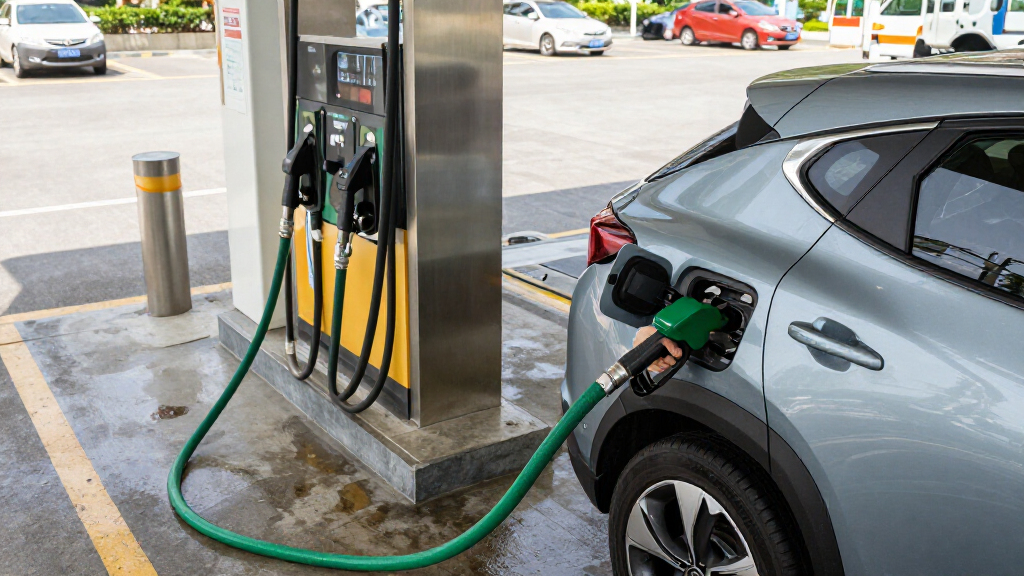
Hydrogen cars produce no tailpipe emissions while driving, and can be refueled rather than plugged in. But the report identifies two practical obstacles: few hydrogen refueling stations and vehicle prices that are higher than comparable gasoline and electric models. Those barriers make it harder for buyers to choose a Nexo when battery-electric cars and charging networks are more widely available in many markets.
Why Nexo Buyers Are Hard to Find
Hyundai’s position matters because automakers’ continued interest in hydrogen does not by itself create a workable market for passenger cars. Drivers need access to stations, while station operators need enough customers to support investment. With limited refueling access and higher vehicle costs, potential buyers may have little reason to choose a fuel-cell model over a battery-electric car or a conventional vehicle.
For consumers, the issue is less about whether hydrogen cars can travel substantial distances and more about whether they can be refueled conveniently and affordably. The Nexo’s reported range is one part of that equation, but it does not resolve the availability of stations or the total cost of ownership. Hyundai’s remarks suggest that customer demand remains a barrier alongside infrastructure.
The company’s continued development also reflects a broader strategic question for automakers: whether to keep investing in more than one alternative to gasoline and diesel. Hyundai’s public comments indicate that it sees a potential role for hydrogen, but the source material does not provide sales figures, a customer target or evidence that demand is growing.
Products Worth Considering

Chemical Guys 17-Piece Car Detailing Kit

Milwaukee M12 Fuel 1/4 Hex Impact Driver Kit

Autel MaxiCharger AC Home Level 2 EV Charger, 50A, Hardwired J1772, Wi-Fi, 25-Foot Cable
As an affiliate, we earn on qualifying purchases.
Hyundai’s Nexo and Hydrogen Strategy
Fuel-cell electric vehicles use hydrogen to generate electricity for an electric motor. They differ from battery-electric cars, which store electricity in a rechargeable battery and rely on charging stations. Hydrogen vehicles can be refueled, but drivers need a dedicated hydrogen station; without one nearby, the car’s advertised range offers limited practical benefit.
Hyundai is not alone in testing the technology. The source report points to Toyota’s Mirai and hydrogen work by BMW, General Motors and Honda, while noting that automakers have had varying results. Hyundai’s passenger-car effort has included real-world trials, and the 2025 Nexo reveal showed that the company was still developing a new model. The report does not detail the timing or scale of a broader retail rollout.
The market has also changed as battery-electric cars and charging infrastructure have expanded. InsideEVs describes electric charging access as much more developed, with additional chargers expected. That comparison helps explain why hydrogen’s refueling speed alone has not been enough to secure a large passenger-car market.
Sales Plans and Demand Remain Unclear
The source material does not give Nexo sales totals, Hyundai’s expected customer numbers, the vehicle’s market-by-market availability or a schedule for a wider commercial rollout. It also does not quantify how many hydrogen stations are operating in the relevant markets or how station access varies by region. Those details are needed to gauge the size of the practical market.
Nargar’s comments describe a challenge, but do not establish that demand is absent everywhere or that Hyundai will stop selling or developing hydrogen cars. The report also does not provide a price for the new Nexo or a direct cost comparison with specific electric and gasoline vehicles. Hyundai’s future investment and customer plans remain unclear from the material available.
Nexo Rollout Will Test Buyer Interest
The next test will be whether Hyundai makes the second-generation Nexo available to customers at meaningful scale and whether buyers are willing to purchase it despite the infrastructure and price barriers described in the report. A clearer picture will depend on regional availability, pricing, station access and published sales results.
Hyundai has not supplied those details in the source material. Until it does, the company’s continued commitment establishes that hydrogen passenger cars remain part of its stated plans, not that a broad market has emerged. Updates on the Nexo’s launch, customer uptake and refueling network would show whether that commitment can translate into sustained demand.
Key Questions
Has Hyundai abandoned hydrogen passenger cars?
No. Hyundai executive Scott Nargar said hydrogen is not “dead for passenger vehicles,” and Hyundai unveiled a second-generation Nexo in 2025.
What is the main challenge Hyundai identified?
Nargar said Hyundai needs to find customers. The report also points to limited hydrogen refueling access and higher vehicle costs as barriers.
How far can the second-generation Hyundai Nexo travel?
The source report gives a figure of roughly 435 miles on a full hydrogen tank. That is the reported range; real-world results and availability details are not provided in the material.
Why might drivers choose a battery-electric car instead?
The report says electric charging infrastructure is more developed and that battery-electric vehicles are more accessible to buyers. Hydrogen drivers also need nearby hydrogen stations, which remain limited according to the report.
Is Hyundai planning a broad Nexo rollout?
The Nexo was described as a global model when unveiled in 2025, but the source material does not specify sales targets, availability by market or a rollout schedule.
Source: insideevs.com