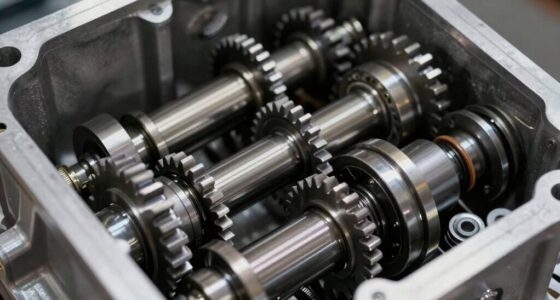
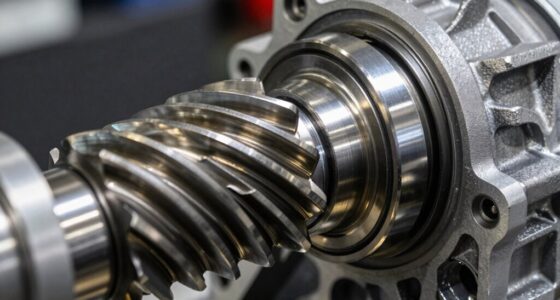
Gear oil additives come in mainly two types: EP additives, which form protective layers under heavy loads, and friction modifiers that promote smoother, quieter operation by reducing resistance and forming natural boundary films. ‘Magic’ bottles claim quick fixes but often lack scientific backing and may interfere with oil chemistry. Understanding when and how to use these can extend gear life; explore further to get the best results for your vehicle.

Get business pricing on garage and car supplies
- Business-only prices and quantity discounts
- Tax-exempt purchasing
- Multiple users, one account, clear invoices
Key Takeaways
- EP additives protect gears under heavy, high-pressure loads by forming durable protective layers, especially in industrial or heavy-duty applications.
- Friction modifiers reduce internal resistance, promote smoother gear operation, and naturally form boundary films to minimize wear.
- ‘Magic’ bottles often claim quick performance boosts but may offer limited or short-term benefits and can interfere with oil chemistry.
- Use EP additives in demanding conditions like towing or high-torque environments, while friction modifiers enhance efficiency and noise reduction.
- High-quality gear oils typically include essential additives; additional products should be chosen based on specific gear conditions and manufacturer recommendations.
What Are Gear Oil Additives and How Do They Improve Your Gears?
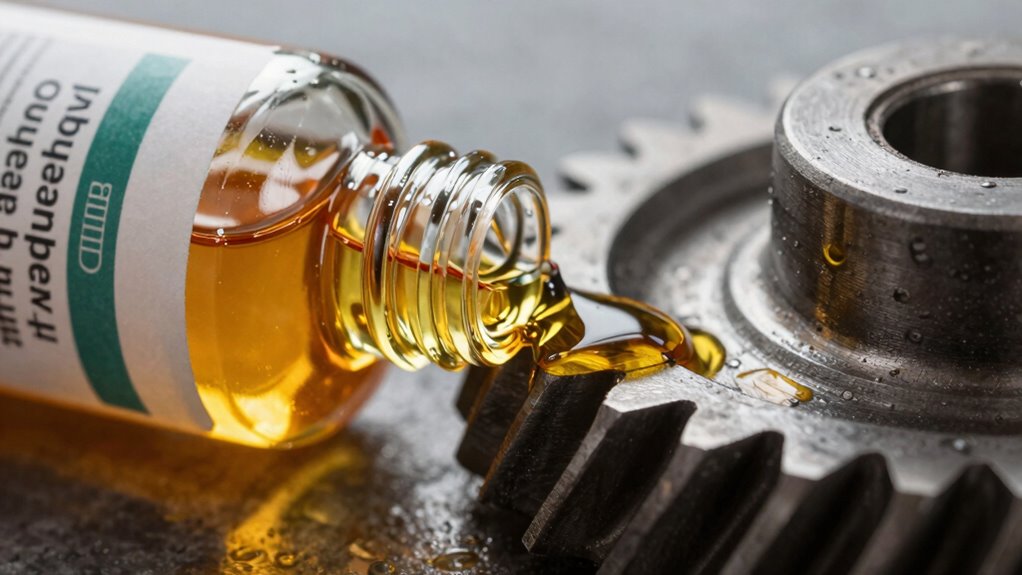
Gear oil additives are specialized chemicals mixed into your gear oil to enhance its performance. They work by improving lubrication, reducing friction, and preventing wear inside your gears. Some additives create a protective film on gear surfaces, minimizing metal-to-metal contact. Others help maintain the oil’s viscosity at different temperatures, ensuring consistent performance. Certain additives combat oxidation and corrosion, extending the oil’s lifespan and protecting your gears from rust. By improving lubrication and reducing friction, these chemicals can make your drivetrain operate more smoothly and quietly. They also help prevent metal fatigue and wear, which can lead to costly repairs over time. In essence, gear oil additives optimize gear operation, increase efficiency, and contribute to the longevity of your gear system. Additionally, the effectiveness of these additives can depend on the contrast ratio of your lubrication system, affecting overall performance and durability. Understanding additive chemistry can help you select the right formulation for your specific needs, ensuring optimal protection and performance. Furthermore, selecting the appropriate lubricant formulation is crucial for maintaining consistent gear performance under varying operating conditions. Proper formulation can also influence the compatibility with gear materials, helping to prevent adverse reactions that could compromise your gear system’s integrity.
Why Use Gear Oil Additives? Benefits and Key Considerations
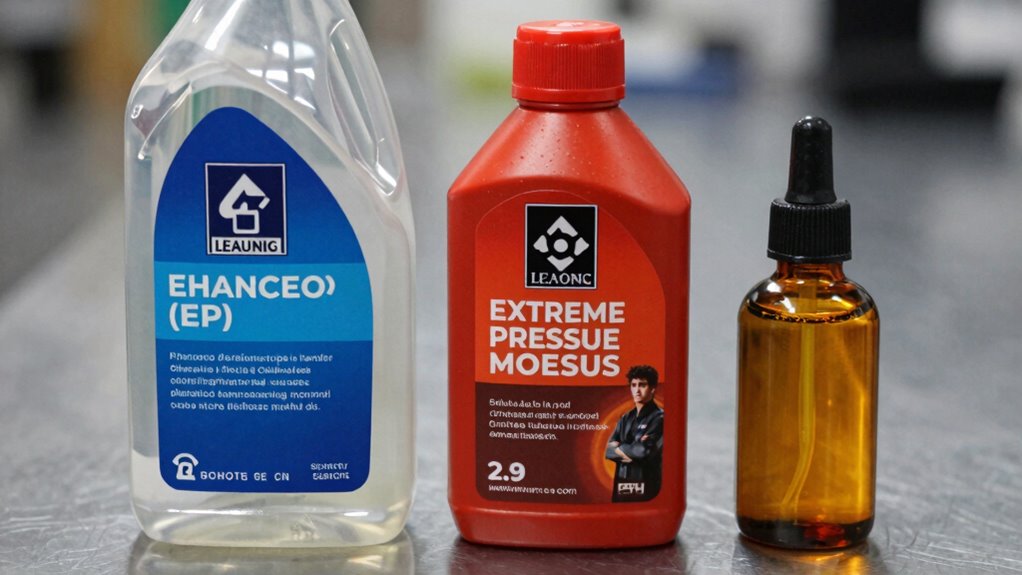
Using gear oil additives offers several benefits that can substantially enhance your vehicle’s performance and longevity. They help reduce friction, prevent wear, and improve gear efficiency, ensuring smoother operation. Plus, additives can extend the lifespan of your gears by forming protective layers and resisting corrosion. They can also act as friction modifiers, which are specially formulated to reduce metal-to-metal contact under load. They are designed to optimize the lubrication properties of gear oil, providing additional protection. Another advantage is that some additives can help restore and maintain optimal gear performance in older or worn components, effectively refreshing gear conditions. They’re also a cost-effective way to maintain excellent gear performance without replacing entire components. Additionally, selecting the right additive can optimize your gear’s performance characteristics and prevent issues down the line. Proper use ensures you get maximum benefits without risking damage or reduced effectiveness. Ultimately, gear oil additives can be a valuable tool in maintaining a quieter, more efficient, and longer-lasting drivetrain.
What Are Extreme Pressure (EP) Additives, and When Do They Help?
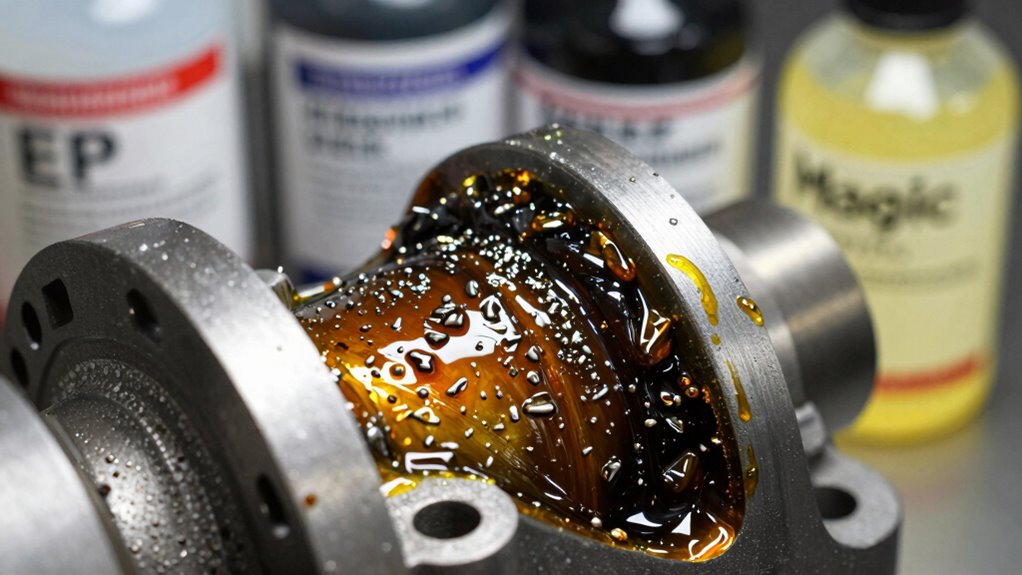
You should consider using EP additives when your gear operates under heavy loads or high pressure. They form a protective layer that prevents metal-to-metal contact and reduces wear. This is especially important in demanding applications like industrial machinery or heavy-duty transmissions. In such cases, the metal-to-metal contact can lead to rapid component degradation without proper EP additives. Additionally, these additives are designed to withstand extreme pressure conditions, ensuring longevity and optimal performance.
When To Use EP Additives
Extreme Pressure (EP) additives become vital when gears operate under high loads and severe conditions that can cause metal-to-metal contact. If you’re pushing your gear system to its limits, EP additives help form a protective film, preventing wear and damage. You’ll want to use them when:
- Heavy machinery handles intense, continuous loads
- Gears run at high speeds with significant torque
- Operating in harsh environments with contaminants
- Using gear oils designed for extreme conditions
- When manufacturer recommends EP formulations for specific equipment
These additives are your safeguard during demanding operations, ensuring longevity and reliability. Remember, EP additives are not needed for everyday light-duty gear use but are essential when stress levels spike, and normal lubrication isn’t enough to prevent damage. Recognizing application-specific requirements helps determine the appropriate use of EP additives for optimal gear protection.
Benefits Under Heavy Loads
When gears operate under heavy loads, EP additives provide a crucial layer of protection by forming a durable film that reduces metal-to-metal contact. This film prevents scoring, pitting, and wear by dispersing pressure across gear surfaces. You benefit most in demanding situations like towing, hauling, or high-torque applications, where standard oils might falter. EP additives work by reacting with metal surfaces under extreme pressure, creating a protective layer that withstands intense friction. Without them, gears risk damage that can lead to costly repairs or premature failure. By choosing gear oils with EP additives, you guarantee your transmission or differential can handle heavy loads confidently, extending gear life and maintaining smooth operation even under the most strenuous conditions. Understanding the chemistry of EP additives can help you make informed choices about gear lubrication for extreme conditions.
How Do Friction Modifiers Boost Gear Performance Naturally?
Friction modifiers reduce the amount of resistance between gear surfaces, helping your gears operate more smoothly. They also cut down on wear, extending the life of your gear system. By promoting a natural boundary film, they improve lubrication and keep everything running efficiently. Additionally, they can contribute to a more responsive and consistent gear engagement, which is essential for optimal automotive performance parts. Incorporating proper additives can further enhance gear longevity and performance. Understanding how these additives influence gear system dynamics can help users select the most effective options for their specific needs, especially when considering balance and motivation in maintenance routines. Recognizing the importance of inclusive casting in manufacturing can also lead to more innovative and effective additive formulations that benefit a diverse range of vehicles and applications.
Reduces Friction and Wear
Friction modifiers in gear oil actively form protective layers on gear surfaces, reducing direct metal-to-metal contact. This process helps prevent surface damage and extends gear life. They work by creating a thin film that slides smoothly between gear teeth, lowering friction during operation. As a result, you’ll notice quieter operation and less energy loss. These modifiers are especially effective at high pressures, preventing wear even under heavy loads. Plus, they help maintain consistent gear performance over time. When gears experience less friction, they stay cooler and last longer, saving you money on repairs. Additionally, these additives can contribute to Free Floating systems, enhancing overall efficiency and longevity of the gear assembly. Incorporating friction reduction techniques can further optimize gear performance and durability. Using appropriate additives in your gear oil ensures optimal protection and smooth operation. Proper use of gear oil additives can also help reduce the need for frequent maintenance and minimize downtime.
Enhances Lubrication Properties
Friction modifiers in gear oil don’t just reduce wear; they also considerably boost the oil’s ability to lubricate moving parts. They do this by forming a thin, protective film that improves the contact between gear surfaces, reducing direct metal-to-metal contact. This film helps maintain consistent lubrication even under extreme pressures and high temperatures. As a result, the oil flows more smoothly across gears, minimizing internal resistance and friction. Enhanced lubrication means your gears operate more efficiently, with less heat buildup and lower energy consumption. Friction modifiers also help prevent metal fatigue and extend gear life by maintaining ideal lubricating conditions. Moreover, they can help prevent gear noise and vibration, contributing to quieter operation. Additionally, these additives can improve the market reputation of gear oils by providing superior performance in demanding environments. Overall, they make your gear oil more effective at keeping your drivetrain running quietly, smoothly, and reliably.
Promotes Natural Boundary Film
Because they naturally form a protective layer, friction modifiers help gear oils promote a stable boundary film that enhances gear performance. This boundary film reduces metal-to-metal contact, minimizing wear and extending gear life. By creating a thin, durable layer, friction modifiers guarantee smoother operation under high pressure and load. They also help maintain consistent friction levels, preventing slips or excessive heat buildup. This natural boundary film acts as a shield, protecting gears from damage during start-up and extreme conditions. You’ll notice quieter operation and less metal fatigue over time. Plus, because the film forms naturally, it adapts to varying conditions, providing ongoing, reliable protection without needing constant reapplication. Understanding boundary film formation is key to optimizing gear oil performance.
Do Magic Gear Oil Additives Really Work? Separating Fact From Fiction
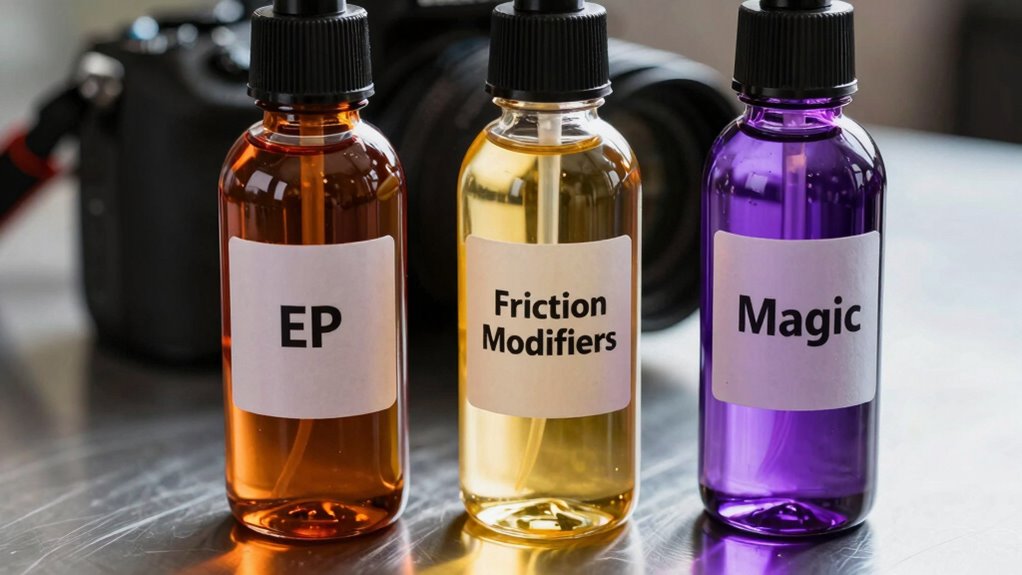
Many gear oil additives claim to deliver dramatic improvements in gear performance, but it’s worth asking whether these “magic” solutions truly live up to their promises. Often, these additives are marketed as quick fixes that can turn an average gear oil into a powerhouse. However, most reputable gear oils already contain essential additives designed to protect and lubricate your gears effectively. Adding a “magic” bottle may not provide noticeable benefits and can sometimes interfere with the oil’s chemistry. In some cases, these products are more marketing hype than a genuine solution. The best approach is to use high-quality gear oils suited to your vehicle’s needs and follow the manufacturer’s recommendations, rather than relying on unproven “miracle” additives. Emphasizing effective storytelling in product marketing can help consumers make more informed decisions about their gear oil choices.
Comparing Gear Oil Additives: Which Is Best for Your Vehicle?
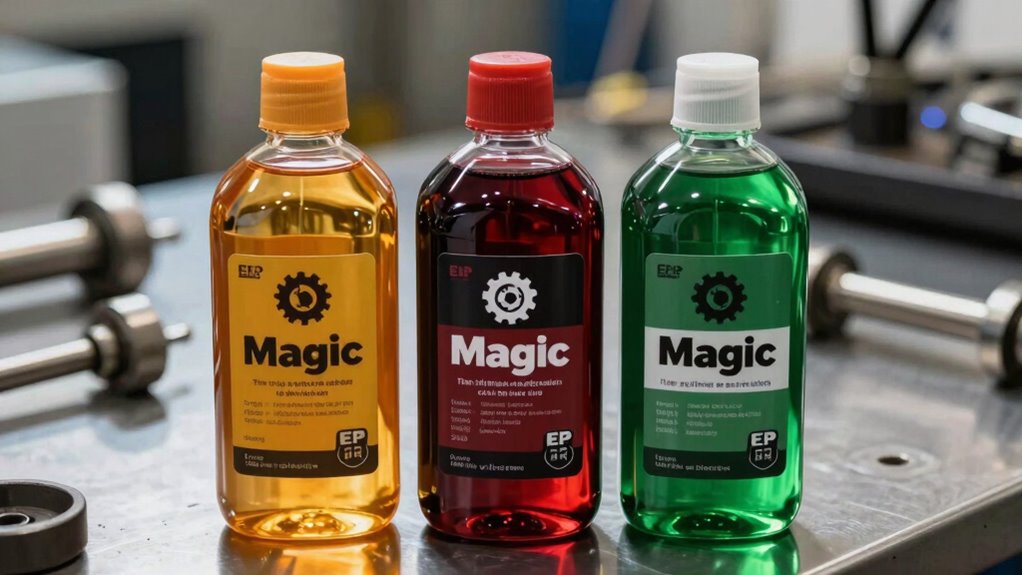
Choosing the right gear oil additive depends on your vehicle’s specific needs and your driving conditions. You’ll want to take into account factors like climate, load, and driving style. For heavy-duty use or towing, EP additives can protect gear surfaces under pressure. If you prefer smoother shifts and reduced friction, friction modifiers might be your best bet. For those curious about quick fixes or temporary improvements, “magic” bottles can provide a short-term boost but aren’t a long-term solution. To help decide, think about:
- How often you drive in extreme temperatures
- Whether your vehicle experiences heavy loads
- Your priority: protection or performance
- Your budget for maintenance
- Recommendations from your vehicle manufacturer
Matching additives to your needs ensures better performance and gear longevity. Additionally, understanding the impact of microplastics in dust can help maintain cleaner components and extend the life of your lubricants.
How to Pick the Right Gear Oil Additive and Avoid Common Mistakes
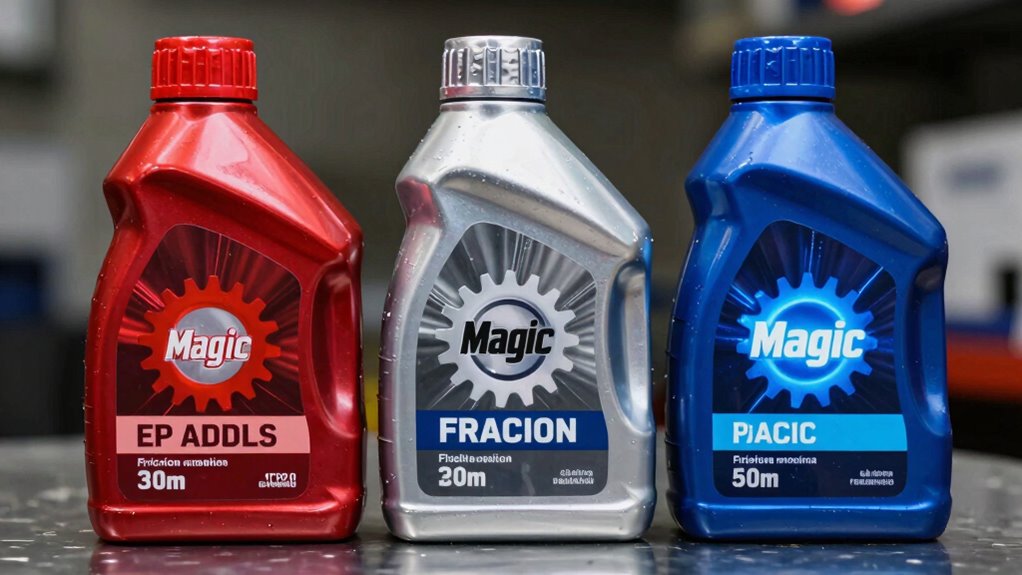
Selecting the right gear oil additive requires understanding your vehicle’s specific needs and how you drive. First, check your owner’s manual for manufacturer recommendations. Don’t assume that any additive will work; compatibility is key. Avoid mixing different types of additives, as this can cause chemical reactions that degrade your gear oil’s performance. Be cautious of “magic” bottles promising quick fixes—many lack scientific backing and may do more harm than good. Instead, focus on proven solutions like EP additives or friction modifiers suited for your gear type. Finally, always follow the correct dosage instructions. Over-adding can cause foaming or increased wear, while under-adding might leave your gears unprotected. Proper selection and careful application help extend gear life and maintain ideal performance.
Frequently Asked Questions
Are Gear Oil Additives Compatible With All Types of Gear Oils?
Yes, gear oil additives can be compatible with most gear oils, but you should always verify the manufacturer’s recommendations first. Some additives work better with specific oil types or viscosities, so mixing incompatible products might reduce effectiveness or cause damage. Always read labels carefully and consult your gear manufacturer to guarantee the additive won’t negatively affect your gear oil’s performance or longevity.
Can Using Additives Void My Vehicle’s Warranty?
Using additives might be seen as a little “extra,” but it usually won’t void your warranty if you choose reputable products and follow the manufacturer’s guidelines. It’s best to check your vehicle’s warranty details or talk to your dealer before adding anything, just to be safe. When used properly, additives can enhance your gear oil’s performance without risking your warranty coverage.
How Often Should Gear Oil Additives Be Reapplied or Replaced?
You should replace or reapply gear oil additives only when recommended by your vehicle’s manufacturer or if you notice issues like unusual noise, slipping, or poor shifting. Usually, additives are included during initial oil changes or during service intervals, which vary between 30,000 to 60,000 miles. Don’t overuse them, as too much can cause problems. Always follow your owner’s manual or consult a mechanic for specific guidance.
Do Additives Affect Fuel Efficiency or Emissions?
Additives can improve fuel efficiency by reducing friction and wear in your vehicle’s transmission. Friction modifiers, for example, help the gears slide smoothly, saving fuel. Some additives also lower emissions by ensuring your engine runs cleaner. However, the impact varies depending on the additive’s quality and application. Always follow manufacturer recommendations, as improper use can harm your vehicle or negate potential benefits.
Are There Any Safety Concerns or Handling Precautions for Additives?
Additives are like potent potions, so handle them with care. You should wear gloves and work in a well-ventilated area to avoid fumes or skin contact. Store them away from children and open flames, as some can be flammable or irritate skin and eyes. Always read the label for specific precautions, and dispose of any leftovers responsibly. Safety first keeps your engine, and you, in top shape.
Conclusion
Choosing the right gear oil additive can extend your gear life and boost performance. Did you know that proper additives can reduce wear by up to 30%? By understanding EP additives, friction modifiers, and the so-called ‘magic’ bottles, you can make informed decisions that save you money and prevent costly repairs. Trust your instincts, avoid gimmicks, and keep your gears smoothly running for miles to come.
Fall Picks
fall essentials
As an affiliate, we earn on qualifying purchases.