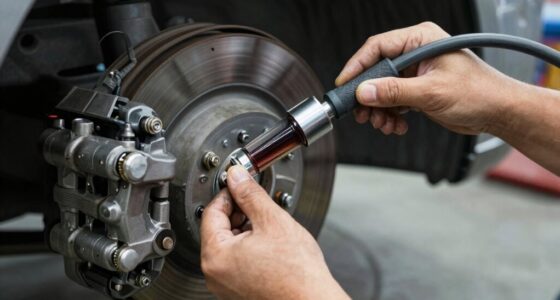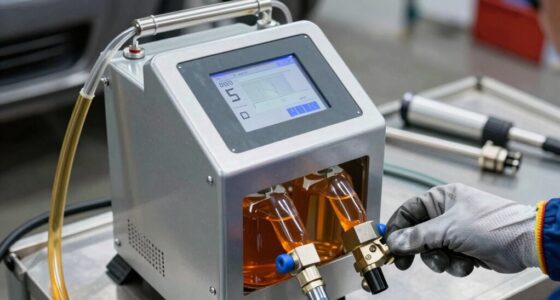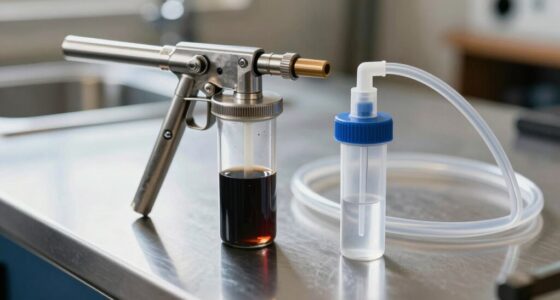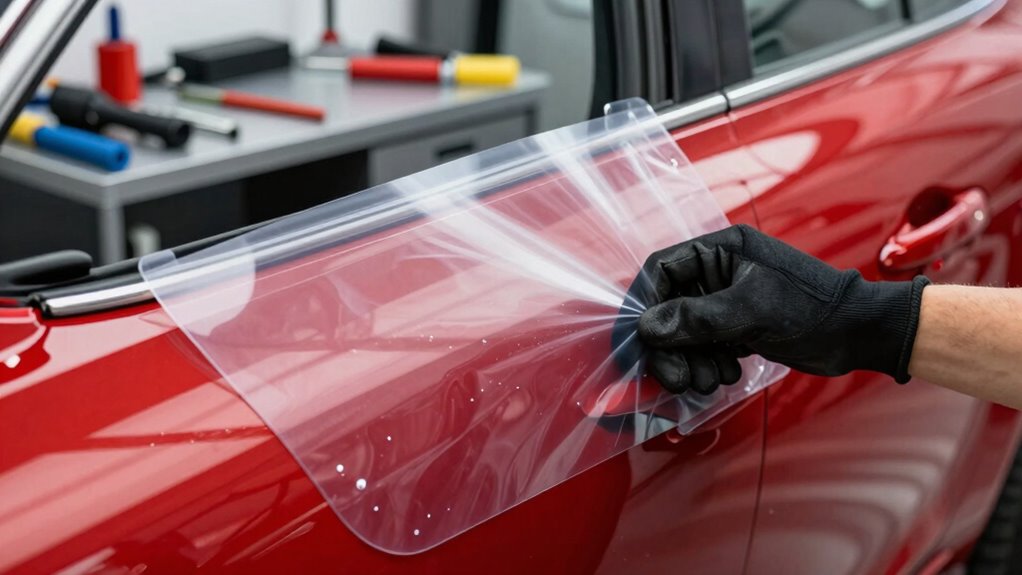

To keep brake fluid off your paint, handle brake system repairs carefully and use protective measures like painter’s tape and plastic sheeting around critical areas. Always use proper tools and keep a spill kit nearby to clean up any drips immediately with water or a mild automotive cleaner. Regularly inspect brake lines and seals to prevent leaks, and if a spill happens, act fast to dilute and wash it away. Continuing this guide helps you protect your car’s finish effectively.
Key Takeaways
- Use painter’s tape and plastic sheeting to shield painted surfaces before working near brake components.
- Handle brake fluid with care, using proper tools to prevent spills and splashes onto paint.
- Immediately rinse any brake fluid spills on paint with water to dilute and minimize damage.
- Keep spill kits nearby during maintenance for quick cleanup of accidental fluid leaks.
- Regularly inspect brake lines and reservoirs to catch leaks early and prevent fluid from contacting paint.
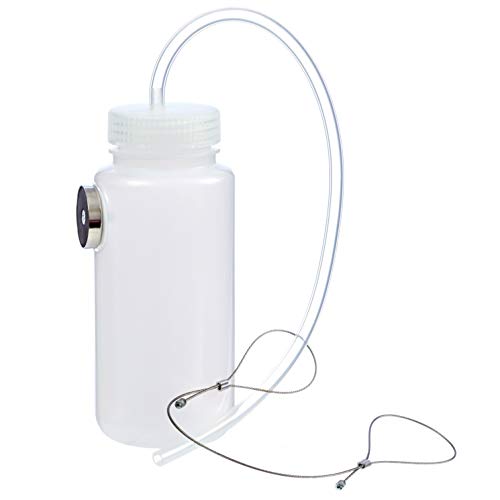
Mission Automotive Brake Bleeder Kit – 16 Oz, White – Brake Fluid Bleed Kit & Magnetic Bleeder Bottle with Lanyard
Efficient Brake Maintenance: The Mission Automotive One-Man Brake Bleeder Kit simplifies brake system maintenance for cars and motorcycles….
As an affiliate, we earn on qualifying purchases.
As an affiliate, we earn on qualifying purchases.
Why Brake Fluid Damages Car Paint and How It Happens
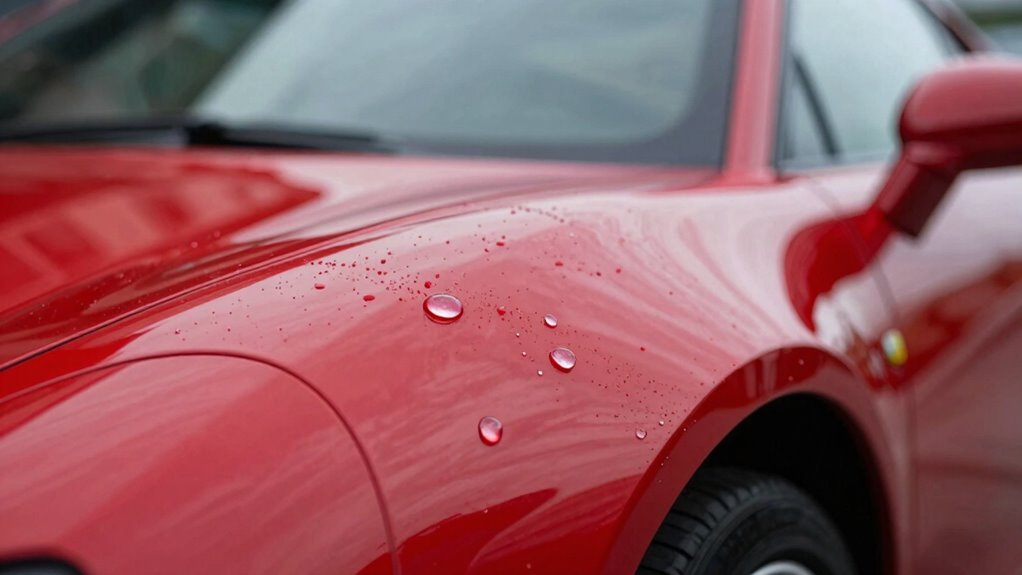
Brake fluid can quickly damage your car’s paint because it’s a highly corrosive substance. Its composition includes chemicals like glycol ethers, which are effective for braking but harmful to paint. When brake fluid leaks onto your car’s surface, it begins to cause paint corrosion by breaking down the clear coat and underlying layers. This process happens rapidly, especially if the fluid is exposed to sunlight or left uncleaned. The corrosive nature of brake fluid allows it to penetrate the paint’s protective barrier, resulting in dull spots, discoloration, or even bubbling paint. That’s why it’s vital to clean any brake fluid spills immediately and avoid contact with painted surfaces whenever possible. Chemical properties of brake fluid can help you understand why it’s so destructive to paint surfaces and how to prevent damage effectively. Additionally, understanding the composition of brake fluid can assist you in recognizing the risks involved and taking appropriate precautions. Recognizing the chemical composition of brake fluid emphasizes the importance of handling it carefully to prevent damage. Being aware of potential damage can guide you in taking swift action to minimize harm if a spill occurs.

Tangibay Pre-Taped Masking Film for Painting – 22" x 66' Painters Plastic Sheeting with Automotive Paint Tape and Drape for Covering Cars, Walls, Windows and Furniture Protection (2 Rolls)
【Masking Tape & Film 2 in 1】Combines ¾-Inch painter's tape and plastic sheeting into one product, quicker and…
As an affiliate, we earn on qualifying purchases.
As an affiliate, we earn on qualifying purchases.
Common Causes of Brake Fluid Leaks That Can Harm Your Car
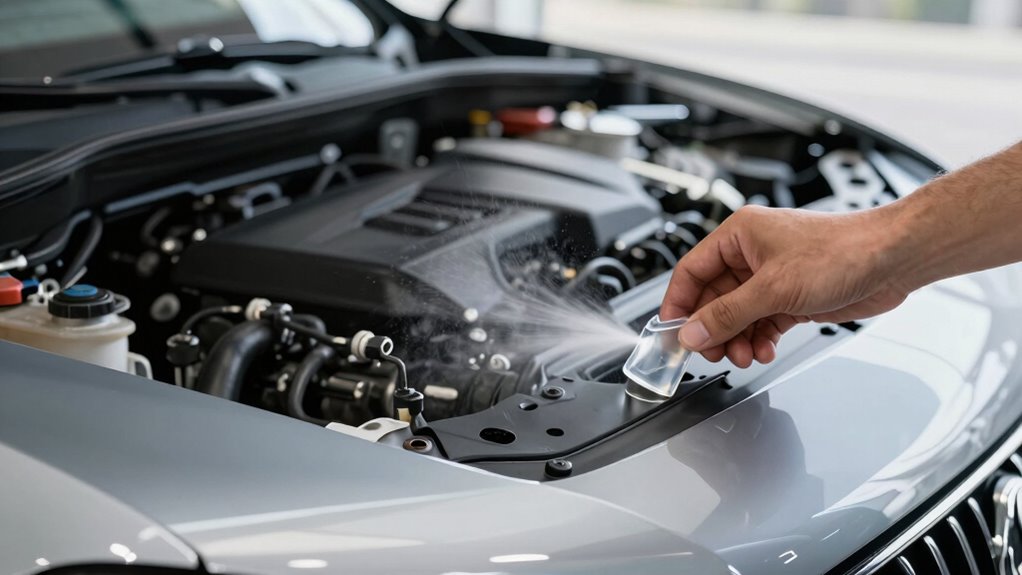
Leaks often occur when brake system components wear out or become damaged over time. Brake fluid properties, like its ability to absorb moisture and its corrosive nature, can worsen leaks if seals and hoses degrade. Common causes include cracked or worn master cylinders, damaged brake lines, or faulty wheel cylinder seals. These issues allow brake fluid to escape, risking damage to your car’s paint. To identify leaks early, you should use leak detection techniques such as visual inspections for wet spots or brake fluid stains, and pressure tests to pinpoint the leak source. Recognizing the signs of a leak guarantees you can address issues promptly, preventing fluid spills that can harm your car’s finish and maintaining safe braking performance. Additionally, understanding Brake fluid properties can help you better assess potential risks and preventive measures. For instance, brake fluid’s corrosive nature makes it especially damaging to paint if spilled. Regular maintenance and prompt repairs are essential to avoid costly damage and ensure your vehicle’s safety. Being aware of leak detection methods can further assist in early identification and prevention.
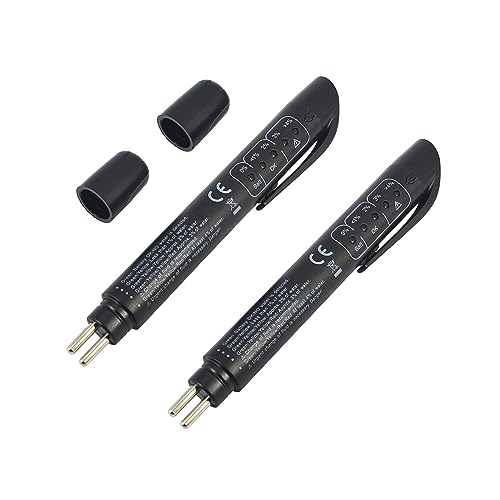
Brake Fluid Liquid Tester Pen,2PCS DOT 3 DOT 4 DOT 5.1 Brake Fluid Liquid Tester Pen, Car Diagnostic Testing Tool with 5 LED Indicators, Hydraulic Fluid Liquid Oil Moisture Analyzer
High quality: This brake fluid tester is made of nickel-plated metal probe, which is resistant to oil and…
As an affiliate, we earn on qualifying purchases.
As an affiliate, we earn on qualifying purchases.
How to Prevent Brake Fluid From Spilling on Your Car’s Paint
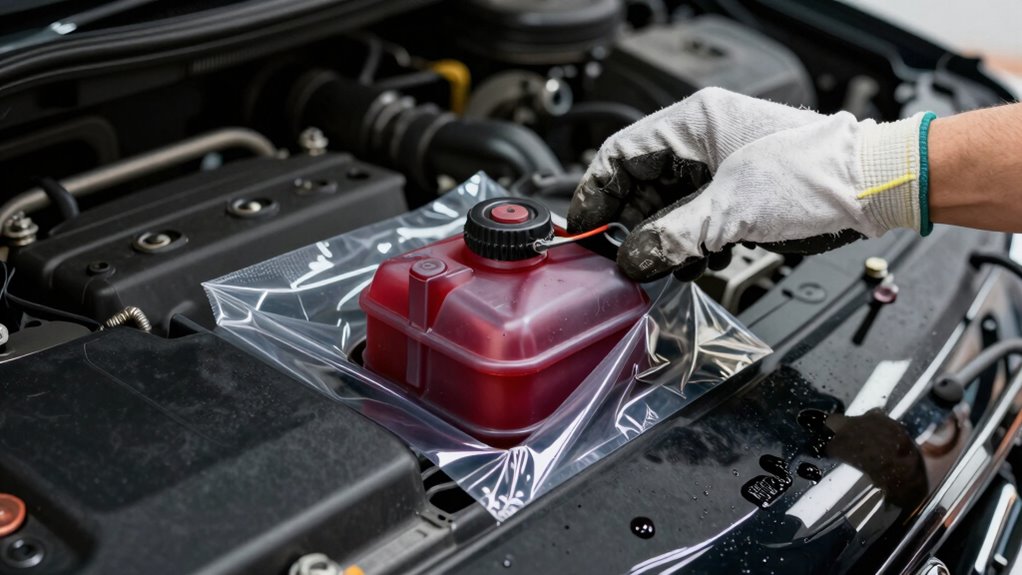
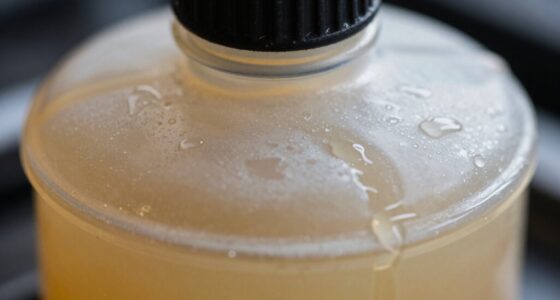
To keep brake fluid from spilling onto your car’s paint, start by handling brake system components carefully during maintenance or repairs. Use a clean, lint-free cloth to catch any drips and work slowly to avoid splashes. Remember, brake fluid composition is corrosive, and its color—usually clear to amber—can make leaks hard to spot. Regularly inspect brake lines and reservoirs for leaks or cracks. Keep a spill kit nearby for quick cleanup if a spill occurs. Use the table below to identify typical brake fluid colors and their sources:
| Brake Fluid Color | Common Source |
|---|---|
| Clear | New brake fluid |
| Amber | Used or aged brake fluid |
| Dark brown/black | Contaminated or degraded fluid |
This helps you recognize leaks early and prevent paint damage. Additionally, understanding brake fluid color can assist in diagnosing issues before they cause significant damage. Being aware of fluid color changes can alert you to potential problems in your brake system early on. Monitoring fluid contamination levels is essential for maintaining brake system health and avoiding costly repairs. Recognizing signs of fluid deterioration can help prevent brake failure and maintain safe driving conditions. Regularly testing brake fluid with a fluid test kit can also provide insights into its condition and help prevent damage.

Dura-Gold 16' x 350' Pure Blue Protective Masking Film Cover – Overspray Paintable Sheeting Roll, Painters Plastic (10 Micron, .4 Mil) – Plastic Painting Protection for Auto & Household Paint Covering
Premium 16' x 350' Overspray Paintable Masking Plastic: Durable 10 micron (0.4mil) thick transparent blue protective masking film….
As an affiliate, we earn on qualifying purchases.
As an affiliate, we earn on qualifying purchases.
Essential Tools and Materials to Protect Your Car During Repairs
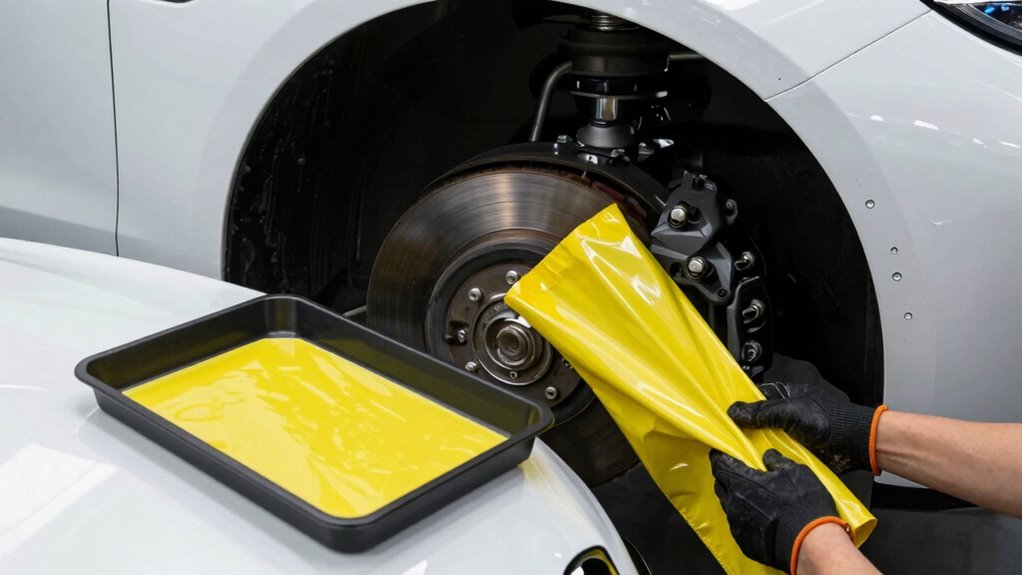
Protecting your car during brake repairs requires having the right tools and materials on hand. Start with high-quality gloves and safety goggles to prevent brake fluid contamination on your skin and eyes. Use painter’s tape and plastic sheeting to shield nearby paintwork from splashes. A clean, lint-free cloth or microfiber towels will help you wipe away any accidental spills immediately. Keep a designated container for brake fluid to avoid cross-contamination. Having a small brush or syringe helps apply brake fluid precisely, preventing messes that could damage your paint. Additionally, using proper disposal methods ensures environmental safety and keeps your workspace clean. Incorporating safe handling practices is crucial for minimizing risks to your vehicle’s finish and ensuring smooth paint restoration later. Being aware of potential hazards associated with brake fluid handling can further enhance your safety procedures. Proper preparation and understanding of chemical safety are essential for minimizing risks to your vehicle’s finish and ensuring smooth paint restoration later. Familiarity with contamination prevention techniques can help maintain your vehicle’s appearance during repairs. These tools are essential for minimizing risks to your vehicle’s finish and ensuring smooth paint restoration later. Proper preparation saves you time and effort, keeping your car looking its best after repairs.
How to Quickly Remove Brake Fluid Stains From Your Car Paint
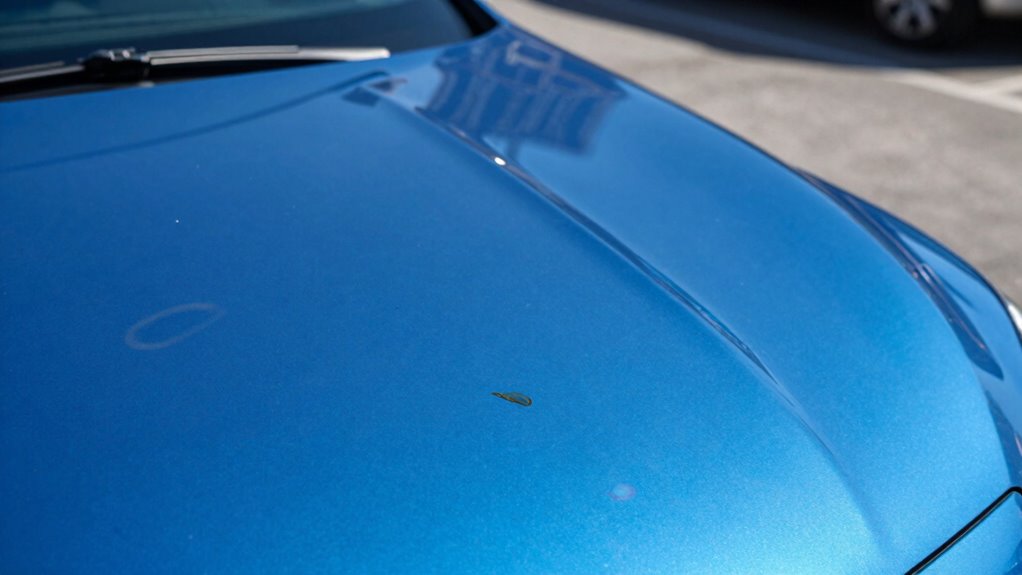
Brake fluid can quickly cause unsightly stains on your car’s paint if not cleaned promptly. Its composition, mainly glycol ethers and oils, weakens paint adhesion, leading to discoloration and damage. To remove stains fast, grab a clean, damp cloth and gently wipe the affected area to dilute the brake fluid. Avoid scrubbing aggressively, as this can worsen paint adhesion issues. If the stain persists, apply a gentle automotive cleaner or soap designed for paint surfaces. Rinsing thoroughly with water will help remove any residual brake fluid and minimize damage. Acting quickly minimizes the risk of lasting damage, since brake fluid’s solvent properties can break down clear coat and paint if left too long. Additionally, understanding how automotive paints and coatings can be affected helps you take better preventative measures. Being aware of paint protection techniques can further help prevent such stains from occurring in the future. Applying protective coatings can add a barrier that makes cleaning easier and reduces the risk of damage from spills.
Step-by-Step: Cleaning Brake Fluid Off Your Car Safely
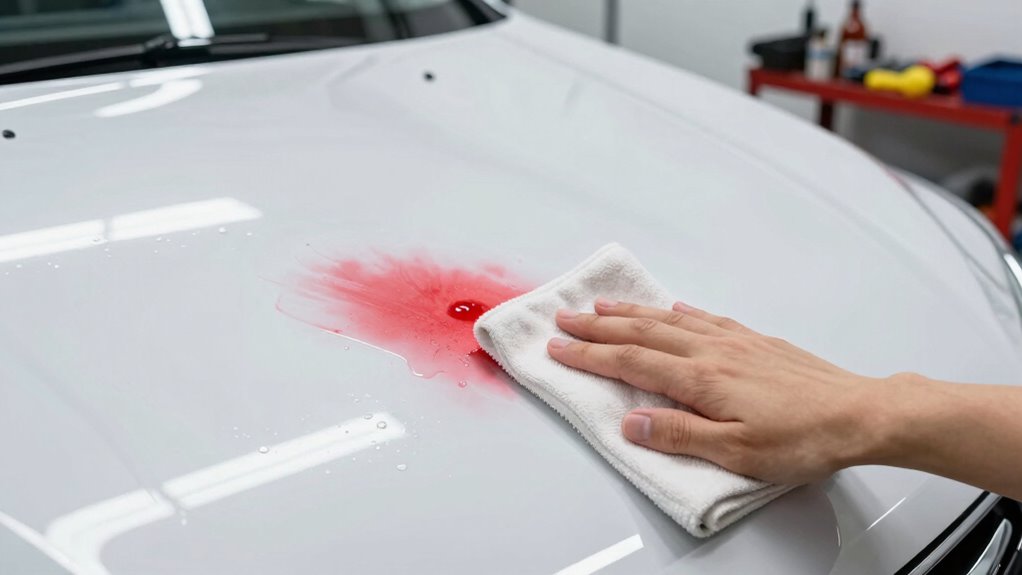
Wondering how to clean brake fluid off your car safely? First, gather your supplies: mild soap, water, a soft cloth, and a gentle cleaner. To guarantee brake fluid safety and preserve your car paint, act quickly. Begin by rinsing the area with water to dilute the fluid. Then, gently wipe with a soft cloth soaked in soapy water, avoiding abrasive materials. Remember, understanding your car’s paint protection is key to preventing damage from chemical spills. Being aware of your vehicle’s chemical resistance can further help in choosing the right cleaning methods. Incorporating appropriate measurement tools can also aid in assessing the extent of chemical exposure and ensuring proper cleanup. Additionally, consulting your vehicle’s owner’s manual can provide specific recommendations for chemical spills. Recognizing the importance of early detection can help prevent further damage to your vehicle’s finish. Visualize this process:
| Step | Action |
|---|---|
| 1 | Rinse with water to dilute brake fluid |
| 2 | Gently wipe with soapy cloth |
| 3 | Use a soft brush for stubborn spots |
| 4 | Rinse and dry thoroughly |
This step-by-step approach minimizes damage, protecting your car’s finish while ensuring brake fluid safety.
Repairing or Restoring Paint Damage From Brake Fluid
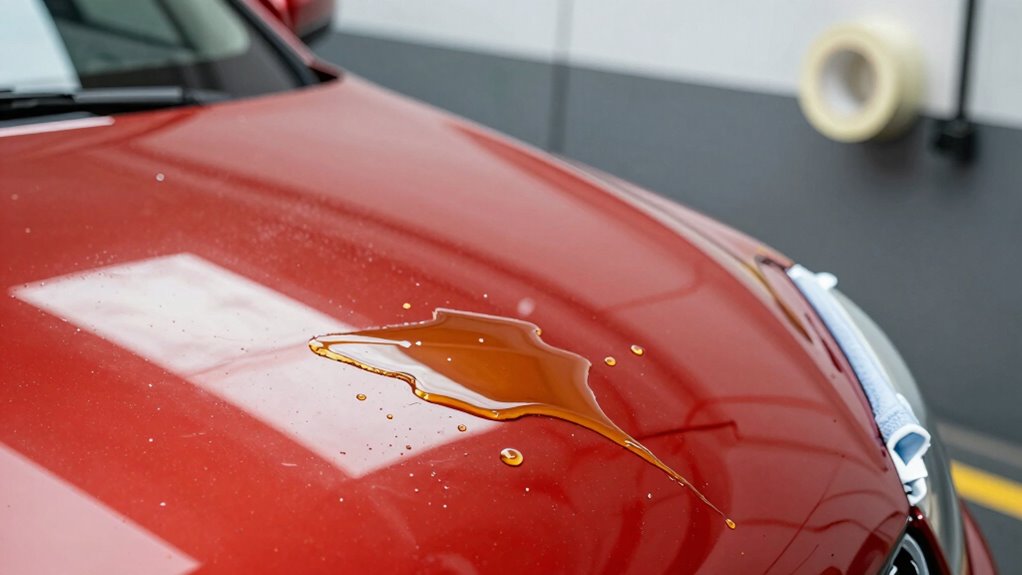
If brake fluid has caused paint damage on your car, prompt action can make a significant difference in restoring its appearance. Start by evaluating the affected area for signs of brake fluid contamination, such as discoloration or bubbling paint. For minor damage, you can attempt paint restoration using a gentle abrasive or polishing compound to remove the damaged layer and smooth the surface. If the damage is deeper or extensive, consider sanding the area lightly and applying touch-up paint that matches your vehicle’s color. Always clean the area thoroughly before painting to ensure proper adhesion. Keep in mind that brake fluid contamination can weaken the paint’s integrity, so addressing damage quickly helps prevent further deterioration and restores your car’s finish effectively.
Signs You Should Consult a Professional for Brake Fluid Damage
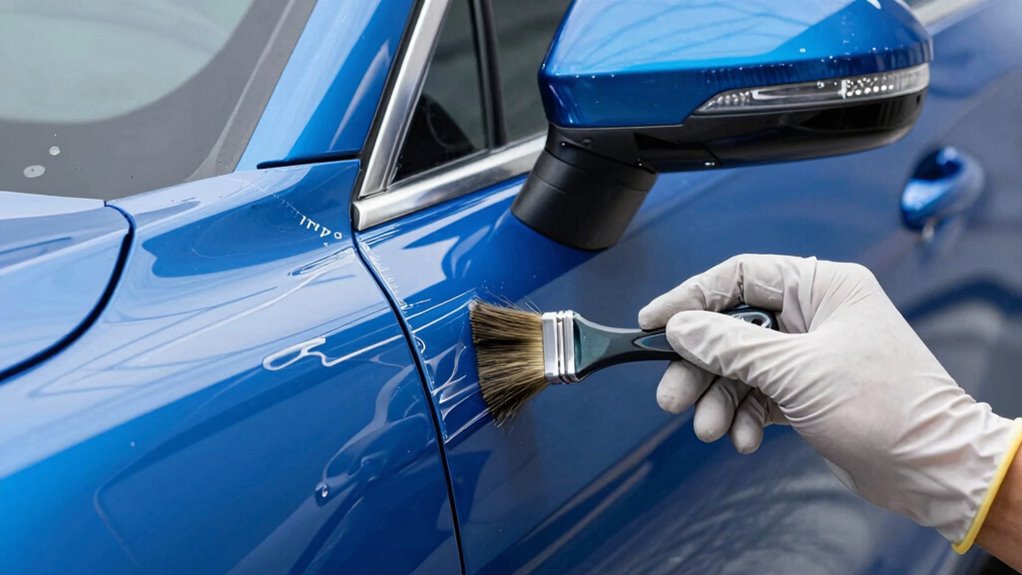
If you notice paint peeling or discoloration around your brake components, it’s a clear sign of damage. Persistent brake fluid leaks that won’t stop also indicate a problem that needs professional attention. Don’t ignore these signs—they can worsen and cause more costly repairs if left unchecked.
Visible Paint Damage
Visible paint damage is one of the clearest signs that brake fluid has leaked onto your vehicle’s surface. When brake fluid contacts paint, it can cause discoloration, peeling, or bubbling, compromising your car’s appearance. If you notice these signs, it’s essential to act quickly to protect your paint and prevent further damage. Proper paint protection can help minimize the risk, but once damage occurs, professional leak detection is necessary to identify the source of the fluid leak. Ignoring visible damage can lead to deeper corrosion and costly repairs. If you see signs of paint deterioration, don’t delay—consult a professional to assess the damage and guarantee your vehicle’s surface is properly protected moving forward.
Persistent Brake Fluid Leaks
Persistent brake fluid leaks can cause serious damage to your vehicle if left unchecked. If you notice fluid pooling under your car, it’s a clear sign of leaking brake lines or other issues. Brake fluid contamination can occur when leaks persist, quickly damaging nearby paint and components. Continuous leaks not only compromise braking performance but also increase the risk of further damage to your braking system. If you see wet spots, a drop in brake fluid levels, or a spongy brake pedal, it’s time to consult a professional. Ignoring these signs can lead to costly repairs and safety hazards. Addressing leaking brake lines promptly helps prevent brake fluid from contaminating other parts and ensures your vehicle remains safe and paint stays protected.
Tips to Keep Your Brake System From Leaking and Causing Paint Damage
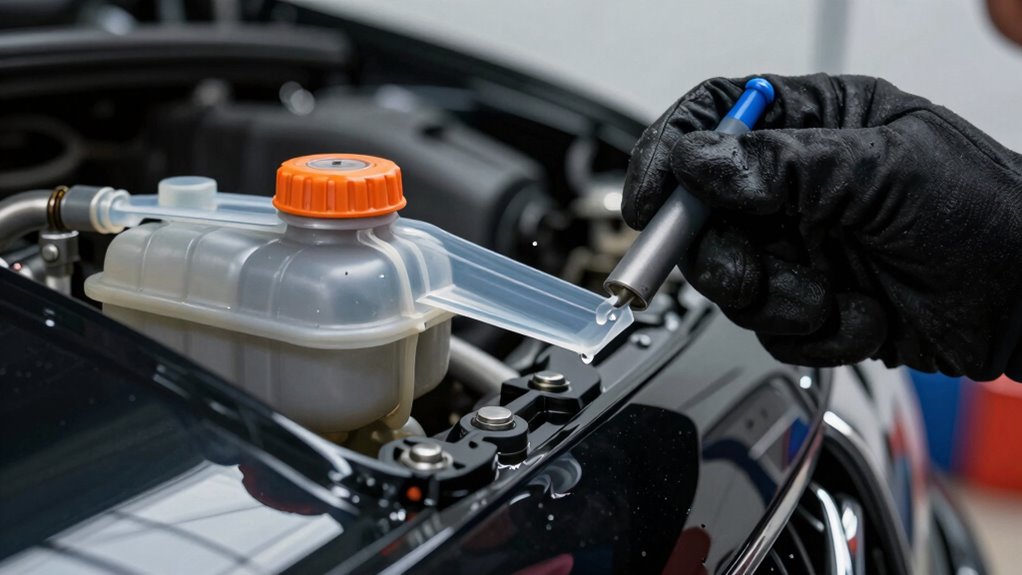
To prevent brake fluid leaks that can damage your paint, you need to stay on top of regular brake fluid checks. Maintaining your brake system properly guarantees any issues are caught early before they cause leaks. By staying proactive, you can protect your vehicle’s finish and keep your brake system functioning smoothly.
Regular Brake Fluid Checks
Regular brake fluid checks are essential for preventing leaks that can damage your vehicle’s paint. By inspecting the fluid, you catch issues like brake fluid contamination early, avoiding costly repairs and paint surface damage. To stay proactive, consider these steps:
- Check the brake fluid level regularly to ensure it’s within the recommended range, preventing leaks that could secrete fluid onto your paint.
- Inspect for discoloration or debris in the fluid, which signals contamination that could compromise brake performance and lead to leaks.
- Examine the brake lines and master cylinder for signs of corrosion or cracks, reducing the risk of fluid leaks that threaten your vehicle’s paint surface protection.
Consistent checks help you maintain a clean brake system and safeguard your car’s paint from damage caused by fluid leaks.
Proper Brake System Maintenance
Maintaining your brake system properly is key to preventing leaks that can damage your vehicle’s paint. Regular inspection of brake system components, like brake lines, calipers, and the master cylinder, helps catch issues early. Understanding brake fluid composition is essential; using the correct type ensures compatibility and reduces corrosion risks. Keep an eye out for signs of leaks, such as fluid spots or spongy brake pedal feel. Replace worn or damaged components promptly, and always top off brake fluid with the manufacturer-recommended type. Proper maintenance prevents pressure build-up and leaks that can spill onto your paint. By staying proactive and attentive to brake system health, you markedly reduce the risk of brake fluid leaks causing costly paint damage.
Simple Prevention Tips to Keep Brake Fluid Away From Your Car’s Paint
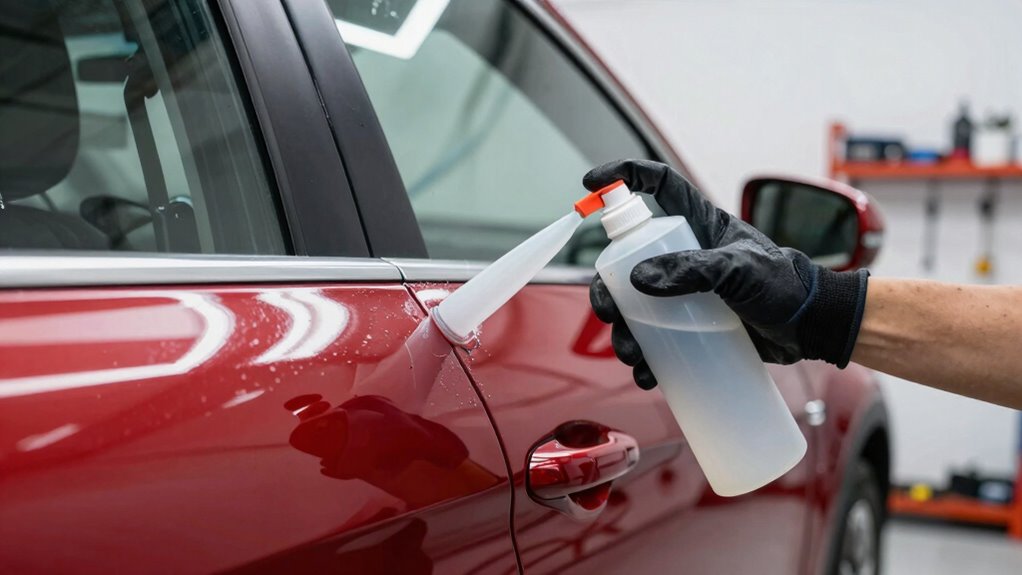
Brake fluid is highly corrosive and can quickly damage your car’s paint if it spills or leaks. To prevent brake fluid contamination and paint deterioration, follow these simple tips:
Brake fluid spills can quickly harm your car’s paint; handle with care and stay vigilant.
- Always check and maintain your brake lines and master cylinder regularly to catch leaks early.
- Use a funnel when topping off brake fluid to avoid spills on your vehicle’s exterior.
- Keep a clean rag nearby to quickly wipe away any drips before they reach your paint.
Frequently Asked Questions
Can Brake Fluid Damage Other Vehicle Components Besides Paint?
Yes, brake fluid can damage other vehicle components besides paint. It causes brake fluid corrosion, which can weaken metal parts like brake lines, calipers, and master cylinders. Additionally, it can lead to vehicle coating damage on various surfaces if it leaks and isn’t cleaned promptly. To prevent this, always handle brake fluid carefully and wash off any spills immediately, safeguarding your vehicle’s critical components from corrosion and damage.
What Are the Long-Term Effects of Brake Fluid Exposure on Car Paint?
Brake fluid exposure can cause long-term damage to your car paint, leading to paint deterioration and color fading. When brake fluid contacts the paint surface, it breaks down the clear coat, making the paint vulnerable to environmental factors. Over time, this results in dull, faded colors and even peeling. To protect your vehicle’s appearance, clean any brake fluid spills immediately and avoid letting it sit on the paint surface.
How Often Should I Inspect for Brake Fluid Leaks to Prevent Paint Damage?
You should inspect for brake fluid leaks at least once a month to prevent paint damage. Regular inspection frequency helps you catch potential leaks early through leak detection, so you can address issues before fluid contacts your car’s paint. Keep an eye on brake lines, master cylinders, and the area around the wheels. Promptly fixing leaks minimizes brake fluid exposure, safeguarding your vehicle’s paint and maintaining ideal brake performance.
Are There Specific Types of Brake Fluid That Are Less Harmful to Paint?
You might think all brake fluids are equally harmful, but some are actually more paint-safe than others. Look for brake fluid compatibility labels that specify “paint safe fluids” or low-corrosive formulas. These types reduce the risk of damaging your vehicle’s paint. Always choose brake fluids designed to be less aggressive, especially if you’re concerned about paint preservation. Trust this knowledge to keep your car looking its best without sacrificing brake performance.
Can DIY Repairs Fully Restore Severely Damaged Paint From Brake Fluid?
DIY repairs can help restore severely damaged paint from brake fluid, but they might not fully recover the original finish. You should start by cleaning the area thoroughly, then use a suitable paint restoration kit or touch-up paint. If damage is extensive, consider professional repair to ensure a seamless finish. Remember, quick action minimizes damage, but for deep corrosion, expert help often delivers the best results.
Conclusion
Think of your car’s paint like a delicate canvas—once stained by brake fluid, it’s hard to erase. By staying vigilant and taking simple precautions, you can keep this toxic liquid from leaving lasting scars. Regular checks, quick cleanups, and proper tools are your shield against damage. Don’t let brake fluid be the villain in your car’s story; instead, be the hero who keeps your ride shining bright and protected, mile after mile.