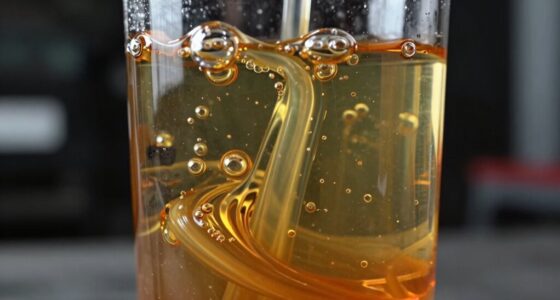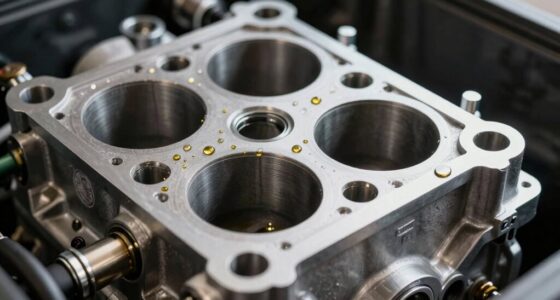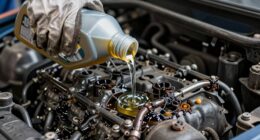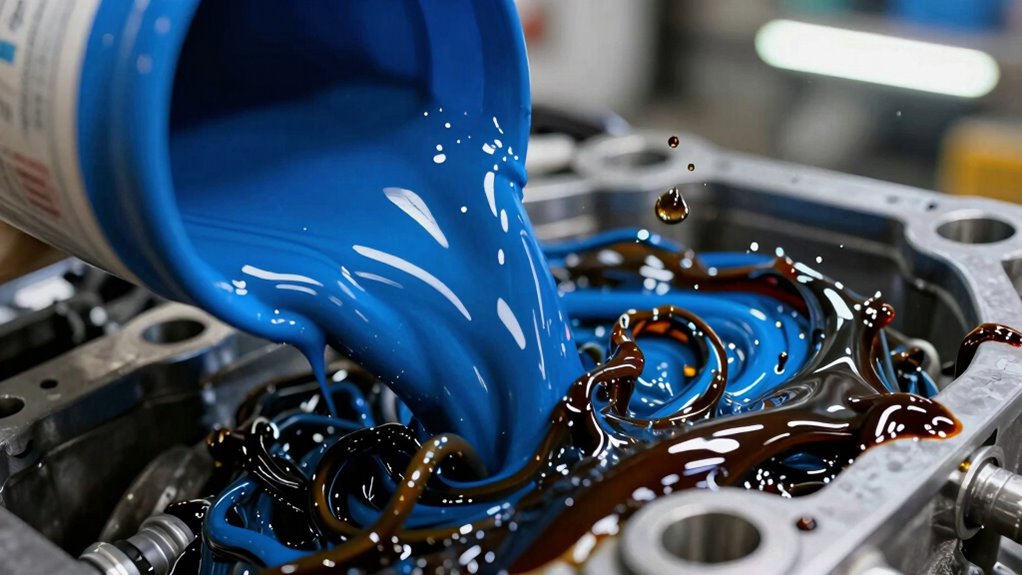
When coolant leaks into your oil due to radiator damage, it creates an emergency because the coolant forms a harmful emulsion with the oil, drastically reducing lubrication. This can cause severe engine wear, warped pistons, or even complete engine failure if ignored. Spotting foamy or milky oil, a sweet smell, or engine overheating signals immediate trouble. To protect your vehicle, understanding how to handle this situation is vital—learn more to stay ahead of costly repairs.
Key Takeaways
- The most critical emergency is coolant leaking into the oil due to radiator or hose failure.
- This contamination causes engine oil to become milky, frothy, and reduces lubrication.
- Immediate action is necessary to prevent engine damage, including stopping the vehicle and inspecting for leaks.
- Ignoring coolant-oil mixing can lead to engine overheating, warped components, and complete engine failure.
- Prompt repair, oil replacement, and possibly an engine flush are essential to prevent costly damage.
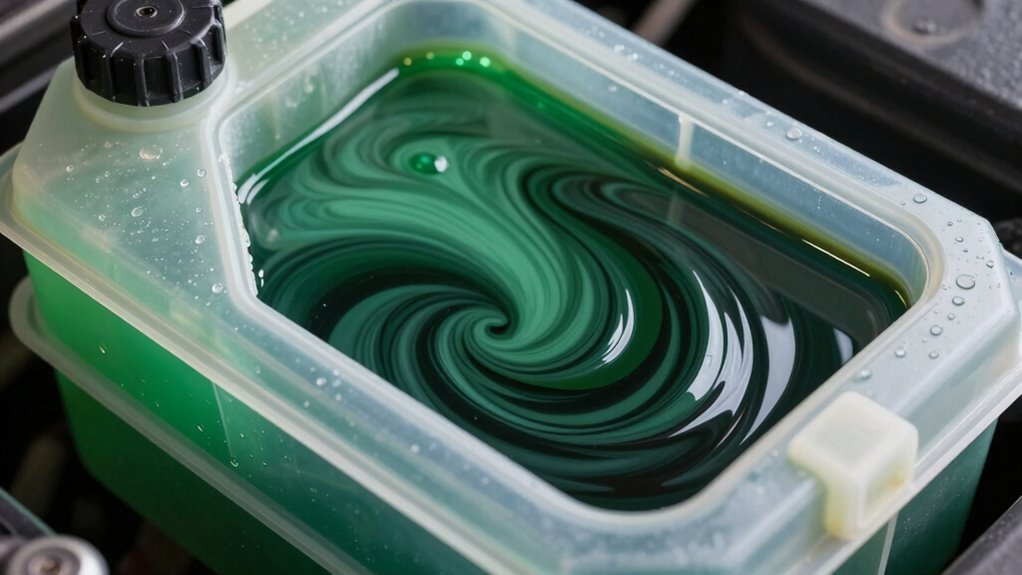
Have you ever wondered what happens if coolant and oil mix in your vehicle? It’s a serious concern that can lead to engine damage if not addressed promptly. The most common cause of this dangerous mixture is a radiator leak, which allows coolant to seep into the oil pan. When coolant leaks into the oil system, it contaminates the oil, creating a sludgy, frothy mess that hampers lubrication. This contamination reduces the oil’s ability to properly coat engine parts, increasing friction and wear. Over time, this can cause severe engine damage, including warped pistons, damaged bearings, and even complete engine failure if ignored.
Radiator leaks are often subtle at first, making it easy to overlook the warning signs. You might notice a sweet smell from the engine bay or observe a milky, frothy appearance on the oil dipstick or under the oil fill cap. These symptoms indicate oil contamination caused by coolant intrusion. If you spot these signs, it’s *vital* to stop driving immediately and have your vehicle inspected by a mechanic. Continuing to operate with contaminated oil accelerates engine wear and can lead to costly repairs.
The problem worsens because coolant and oil aren’t meant to mix. Coolant’s job is to regulate engine temperature, while oil’s role is to lubricate moving parts. When they combine, the mixture creates a damaging emulsion that impairs both functions. The contaminated oil won’t properly lubricate engine components, leading to increased heat and friction. This can cause overheating, especially if the radiator leak isn’t fixed quickly. Overheating can warp engine components and result in a breakdown that’s costly and inconvenient. Understanding engine cooling systems is essential to grasp how such leaks develop and how to prevent them.
Addressing radiator leaks promptly is essential. If you notice any signs of coolant and oil mixing, don’t delay in seeking professional help. Mechanics will typically perform a thorough inspection, which may include checking for leaks, testing the coolant system, and inspecting the oil for signs of contamination. Fixing a radiator leak usually involves replacing the faulty radiator or repairing the damaged hoses, depending on the cause. Once the radiator leak is repaired, the contaminated oil must be drained and replaced to prevent long-term damage. Sometimes, a complete engine flush is recommended to remove residual coolant from the oil system.

Visbella Radiator Stop Leak Sealer Conditioner Radiator Repair Kit Car Heater Core, Freeze Plugs, Cooling System & Radiator Repair (Tube, pcs, 1)
Engineered by automobile and chemistry experts, this Radiator Stop Leak Sealer ensures your car's cooling system runs smoothly
As an affiliate, we earn on qualifying purchases.
As an affiliate, we earn on qualifying purchases.
Frequently Asked Questions
Can Mixing Coolant and Oil Cause Immediate Engine Failure?
Mixing coolant and oil can cause immediate engine failure because it accelerates engine oil breakdown and coolant corrosion. When these fluids mix, the oil loses its lubricating properties, leading to increased friction and potential engine seizure. Coolant corrosion damages engine parts, compromising performance. If you notice mixing, stop driving immediately and get your engine inspected. Ignoring this can result in costly repairs or complete engine failure.
What Are the First Signs of Coolant and Oil Contamination?
You’ll notice coolant leak signs like puddles under your car and a sweet smell, while oil discoloration shows as a foamy, milky appearance on the dipstick or engine parts. These symptoms indicate contamination, alerting you to a problem. Ignoring these signs risks engine damage. Stay vigilant: check for coolant leaks and oil discoloration regularly, and address issues promptly to avoid costly repairs or engine failure.
How Long Does It Take for Coolant and Oil to Damage an Engine?
You might notice engine corrosion and oil degradation within a few hundred miles if coolant and oil mix. The chemicals react quickly, damaging engine parts and reducing lubrication efficiency. Prolonged exposure accelerates wear, risking severe engine failure. So, if you suspect contamination, address it immediately. Ignoring these signs can cause irreversible damage, making timely repairs essential to prevent costly repairs or engine replacement.
Is It Safe to Drive With Mixed Coolant and Oil?
Driving with mixed coolant and oil is like walking a tightrope over a canyon. It’s risky because coolant corrosion and oil contamination symptoms can quickly worsen engine damage. You might notice overheating, loss of power, or strange noises. Don’t risk further damage—stop driving immediately, check for leaks, and get a mechanic to fix the issue. Ignoring these signs can lead to costly repairs or complete engine failure.
What Repairs Are Necessary After Coolant and Oil Mix Occurs?
If coolant and oil mix, you’ll need to repair a coolant leak and thoroughly clean or replace contaminated components. The mixture causes oil contamination, which can damage your engine’s bearings and seals. You should drain and flush the oil, replace the oil filter, and inspect the cooling system for leaks. Addressing these issues promptly prevents more severe engine damage and guarantees your vehicle runs smoothly again.

Liqui Moly Pro-Line Engine Flush | 500 ml | Oil additive | SKU: 2037
Easy way to clean and flush the oil systems of gasoline and diesel engines
As an affiliate, we earn on qualifying purchases.
As an affiliate, we earn on qualifying purchases.
Conclusion
Remember, mixing coolant and oil isn’t just messy—it’s a serious emergency that can damage your engine beyond repair. Did you know that even a small amount of coolant in your oil can reduce lubrication efficiency by up to 50%? That’s like trying to run a marathon with a broken leg. So next time you notice any mixing or leaks, don’t delay—address it immediately. Your engine’s health depends on quick action, so stay vigilant!

Robinair 75134 Econo-Clean Coolant Test Strip – 50 Piece
Robinair's Econo-Clean Coolant Test Strips allow you to test your vehicle's coolant to ensure it will provide adequate…
As an affiliate, we earn on qualifying purchases.
As an affiliate, we earn on qualifying purchases.
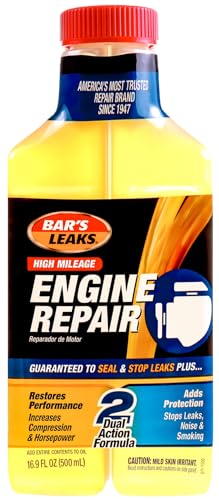
Bar's Leaks 1000 High Mileage Engine Repair, 16.9 oz | Restores Performance, Increases Compression & Horsepower, Stops Leaks, Noise & Smoking
RESTORES PERFORMANCE: Contains a combination of the best performance additives to repair the most common oil-related problems
As an affiliate, we earn on qualifying purchases.
As an affiliate, we earn on qualifying purchases.