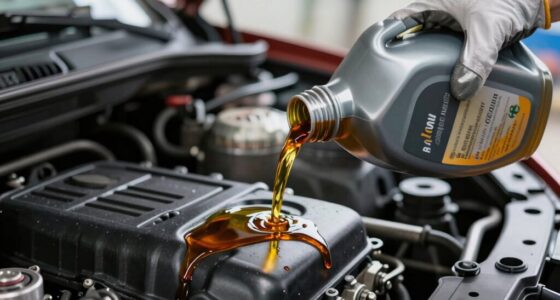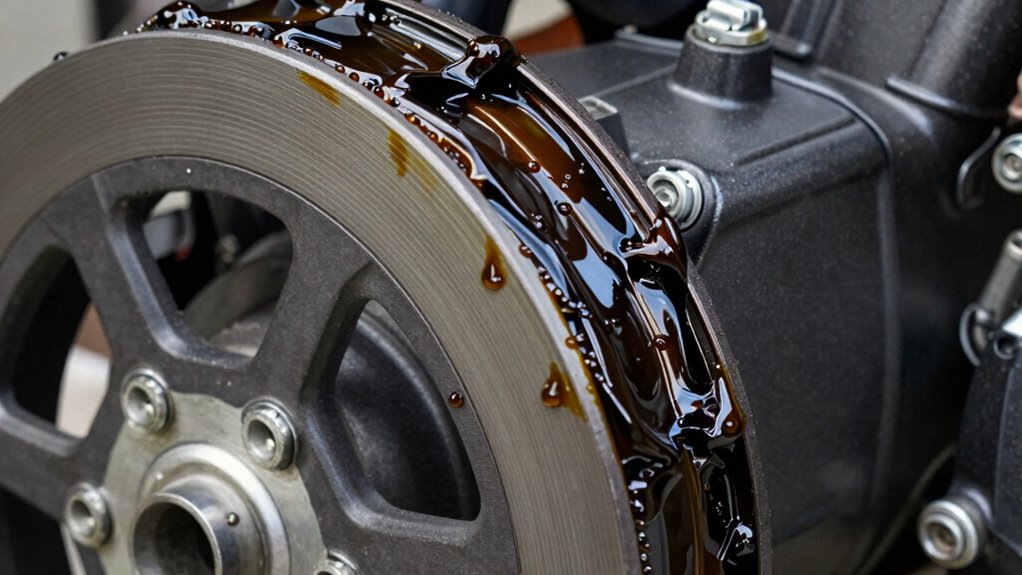
Using heavy-duty diesel oil in your motorcycle is not recommended because it’s formulated for diesel engines and contains additives that can cause clutch slipping and damage your wet clutch system. Diesel oils also have different viscosity and additive packages that aren’t suited for motorcycle engines, potentially leading to increased wear or engine issues. To keep your bike running smoothly, it’s best to stick with the recommended motorcycle-specific oil—there’s more to contemplate if you continue exploring.
Key Takeaways
- Diesel oils contain additives that can cause clutch slipping in wet clutch motorcycle systems.
- They are formulated for diesel engine specs, not optimized for motorcycle engine and transmission needs.
- Using heavy-duty diesel oil may lead to improper viscosity during temperature changes, risking engine wear.
- Diesel oils are not compatible with motorcycle lubricants, potentially damaging engine and transmission components.
- Stick to motorcycle-specific oils to ensure proper clutch function, engine protection, and warranty compliance.
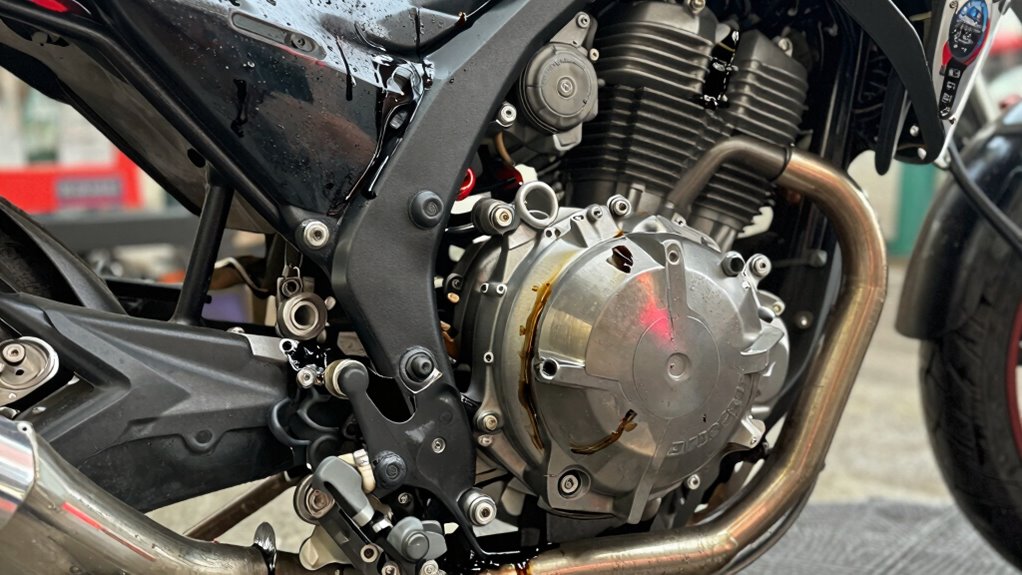
Many motorcycle owners wonder if heavy-duty diesel oil can be a suitable alternative to regular motorcycle oils. The short answer is that, generally, it’s not recommended. Diesel oils are formulated differently, primarily to meet the demands of heavy-duty engines, and they often contain additives that aren’t suitable for motorcycle transmissions, especially those with wet clutches. But to understand why, you need to look into what makes motorcycle oils unique, particularly in terms of synthetic blending and oil viscosity.
Using diesel oil in motorcycles is generally not recommended due to incompatible additives and viscosity.
Synthetic blending involves mixing synthetic oils with conventional base oils to enhance performance, durability, and temperature stability. Motorcycle oils with a good synthetic blend are designed to provide ideal lubrication while maintaining the right oil viscosity across a wide temperature range. This viscosity is vital because it determines how well the oil flows and protects engine components at startup and during operation. Heavy-duty diesel oils tend to have different viscosity ratings and additive packages tailored for diesel engines, which operate under higher loads and different combustion conditions. Using diesel oil in a motorcycle can result in inadequate lubrication during cold starts or excessive thinning at high temperatures, potentially causing increased wear.
Another essential factor is the formulation of diesel oils, which often include detergents and dispersants suited for diesel engine deposits and soot control. These additives can be detrimental to a motorcycle’s wet clutch. Since motorcycle transmissions often share the same oil as the engine, the additives in diesel oil might cause slipping, reduced clutch grip, or even damage over time. Diesel oils are also typically designed to withstand the high compression ratios of diesel engines, which means they might have a different oil viscosity profile incompatible with motorcycle needs.
Furthermore, using diesel oil might lead to increased engine wear or reduced performance because it’s not engineered for the specific dynamics of motorcycle engines. Manufacturers specify particular oil standards and viscosity grades precisely for their bikes. Deviating from these recommendations can compromise lubrication, especially during rapid acceleration or heavy loads. Even if heavy-duty diesel oils appear similar in viscosity, their additive packages and base oils are often incompatible with motorcycle engines and wet clutch systems.
Additionally, heavy-duty diesel oils often contain detergents and dispersants that can cause clutch slipping or reduced grip, which are not suitable for wet clutch systems. In short, while it might seem convenient or cost-effective to use heavy-duty diesel oil, it’s safer and smarter to stick with oils formulated for motorcycles. They are tailored to guarantee proper viscosity, compatibility with wet clutches, and overall engine protection. Using the right oil helps maintain your bike’s performance, longevity, and the smooth operation of your wet clutch.

Lucas Oil 10767 High Performance Conventional SAE 10W-40 Motorcycle Oil – 1 Quart
Lower oil temperatures
As an affiliate, we earn on qualifying purchases.
As an affiliate, we earn on qualifying purchases.
Frequently Asked Questions
Does Heavy-Duty Diesel Oil Improve Motorcycle Engine Performance?
Using heavy-duty diesel oil in your motorcycle doesn’t improve engine performance. It can actually cause increased engine wear because it’s thicker and may not flow properly at engine operating temperatures. Additionally, it can reduce fuel efficiency, as the engine has to work harder to circulate the oil. Stick to motorcycle-specific oils designed for wet clutches to guarantee ideal performance, longevity, and protection against wear.
Are There Specific Motorcycle Brands That Recommend Heavy-Duty Diesel Oil?
Did you know only about 20% of motorcycle brands specify oil types? Generally, you should follow manufacturer recommendations for brand compatibility. Some brands like Harley-Davidson and BMW recommend specific oils, but most advise against heavy-duty diesel oil because it can harm the wet clutch. Always check your owner’s manual; using oils not recommended might void warranties or cause engine issues.
How Does Diesel Oil Affect Wet Clutch Operation Over Time?
Using diesel oil with high viscosity can cause clutch slip over time, affecting your motorcycle’s performance. Diesel oils are thicker and may not flow as easily through the clutch system, leading to increased wear and potential slipping. Over prolonged use, this can reduce clutch responsiveness and lifespan. It’s best to stick with recommended motorcycle oils to guarantee proper lubrication and smooth operation, avoiding issues caused by incompatible oil viscosity.
Is Heavy-Duty Diesel Oil More Cost-Effective Than Motorcycle-Specific Oils?
Heavy-duty diesel oil isn’t typically more cost-effective than motorcycle-specific oils because of the cost comparison and oil longevity. Motorcycle oils are formulated to protect wet clutches and maintain ideal lubrication, extending oil longevity. Using diesel oil may save money initially, but it can lead to quicker oil breakdown and potential damage, ultimately costing more. For the best balance of cost and performance, stick with oils designed specifically for motorcycles.
Can Using Diesel Oil Void My Motorcycle’s Warranty?
Using diesel oil can void your motorcycle’s warranty if it causes damage, due to warranty concerns and oil compatibility issues. Manufacturers specify oils that meet certain standards; diesel oil may not meet these, especially for wet clutch systems. Always check your owner’s manual or consult your dealer before using non-recommended oils, as improper oil can lead to warranty denial and potential engine problems.

Valvoline 4-Stroke Motorcycle Full Synthetic 10W-40 Motor Oil 1 Quart
Up to 10X better friction protection vs. JASO T903:2016 friction std. and up to 5X better wear protection…
As an affiliate, we earn on qualifying purchases.
As an affiliate, we earn on qualifying purchases.
Conclusion
Using heavy-duty diesel oil in your motorcycle isn’t recommended, especially for wet clutch systems, as it can cause slipping and wear. Notably, studies show that improper oil choices can reduce engine lifespan by up to 20%. Stick to the manufacturer’s recommended oils to guarantee peak performance and longevity. Your motorcycle’s health depends on the right lubrication—so choose wisely and avoid potential damage that could cost you more in the long run.

ULTRA 1PLUS 4T 10W-40 Motorcycle Oil Synthetic Blend API SL JASO MA2-10W40 Motor Oil, 1 Gallon
EXTENDED ENGINE LIFE & REDUCED WEAR – Formulated to reduce internal friction and protect against engine wear, this…
As an affiliate, we earn on qualifying purchases.
As an affiliate, we earn on qualifying purchases.

Klotz 6 Quart 20W-40 Synthetic Oil Change Kit for Indian™ Thunderstroke Motorcycle
Klotz Synthetic Motor Oil is designed specifically for the unique performance requirements of Indian V-Twin motorcycles to provide…
As an affiliate, we earn on qualifying purchases.
As an affiliate, we earn on qualifying purchases.