Mixing CVT fluids without proper knowledge is riskier than you think because incompatible fluids can cause harmful chemical reactions, foaming, and breakdown of transmission components. These issues lead to poor lubrication, increased wear, and potential transmission failure. Using the wrong fluid or mixing different types can escalate problems quickly, often requiring costly repairs. To protect your vehicle, understanding the importance of fluid compatibility is vital—continue to explore so you can keep your transmission safe.
Key Takeaways
- Mixing incompatible CVT fluids can cause chemical reactions that damage transmission components.
- Incompatible blends may lead to foaming, reducing lubrication efficiency and potentially causing slipping.
- Combining old, contaminated, or degraded fluids with new fluid worsens lubrication and promotes wear.
- DIY mixing increases the risk of introducing incompatible fluids, risking costly transmission failures.
- Proper fluid selection and routine maintenance are essential to prevent damage from fluid incompatibility.
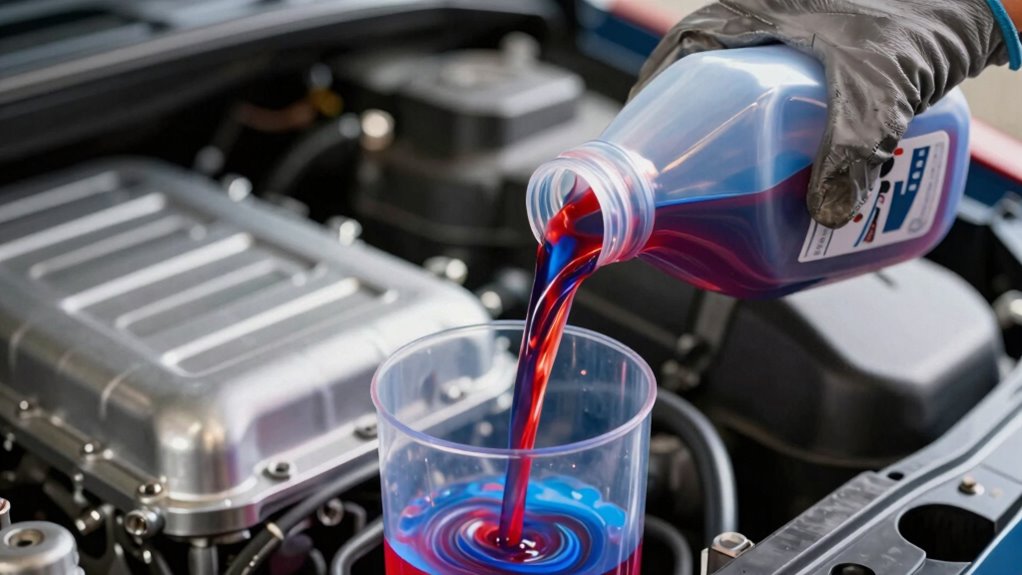
Understanding how CVT fluid mixing works is essential for maintaining your vehicle’s transmission performance. When you’re dealing with continuously variable transmissions, fluid plays a fundamental role in ensuring smooth operation and longevity. Proper transmission maintenance involves using the correct type of CVT fluid specified by your vehicle manufacturer. If you mix incompatible fluids, you risk disrupting the delicate balance that keeps your transmission functioning correctly. Fluid compatibility isn’t just about brand or color; it’s about chemical composition, additives, and viscosity. Using the wrong fluid can lead to poor lubrication, increased wear, and even transmission failure.
Mixing incompatible CVT fluids can cause transmission damage and failure.
Many car owners assume that topping off the fluid with any similar-looking fluid will do no harm. However, CVT fluids are designed with specific formulations to work with particular transmission systems. Mixing incompatible fluids can cause chemical reactions that break down lubricants or cause foaming, which reduces the transmission’s ability to operate smoothly. This can result in slipping, hesitation, or abnormal shifting patterns. Over time, these issues can escalate into costly repairs or complete transmission replacement. That’s why paying close attention to fluid compatibility is a vital part of ongoing transmission maintenance. Always refer to your owner’s manual or consult with a professional mechanic before adding or replacing CVT fluid.
Another common mistake is relying on old or contaminated fluid. If your CVT fluid becomes contaminated with dirt, debris, or old, degraded fluid, it can impair the transmission’s performance. When you attempt to mix new fluid with contaminated or incompatible fluids, it can compound the problem, creating a thick, ineffective mixture that hampers proper lubrication. This mixture may cause excessive heat, increased friction, and accelerated wear on internal components. Regularly checking your transmission fluid level and condition can help you catch issues early before they become serious. Additionally, understanding the importance of fluid compatibility can help prevent unintended damage from improper mixing.
In addition, it’s tempting to save money by mixing fluids yourself, but this approach often backfires. Professional transmission maintenance involves using the right fluid, ensuring it’s clean, and replacing it at recommended intervals. By neglecting these practices, you increase the risk of fluid incompatibility and transmission damage. Remember, your vehicle’s transmission relies on precise fluid chemistry to operate efficiently. Any deviation from the recommended fluid type can compromise this delicate balance, making fluid mixing riskier than many realize. To protect your investment, always prioritize proper fluid selection and maintenance routines that respect the manufacturer’s specifications.

MEMOEO RE0F10D CVT Transmission Filter Oil Pan Gasket Kit 31728-29X0D Compatible With Nissan 16-24 Murano 3.5L,16-23 Maxima 3.5L,16-18 Altima,17-20 Pathfinder,2016-2017 Quest 3.5L
【HIGH PERFORMANCE】The CVT transmission oil pan plays a vital role in maintaining the efficiency, longevity, and reliability of…
As an affiliate, we earn on qualifying purchases.
As an affiliate, we earn on qualifying purchases.
Frequently Asked Questions
Can I Mix Different Brands of CVT Fluid Safely?
You shouldn’t mix different brands of CVT fluid because fluid compatibility varies, and brand interchangeability isn’t guaranteed. Mixing fluids can cause chemical reactions that damage your transmission or reduce its lifespan. Always check your vehicle’s manual or consult a professional before switching brands. For safety and peak performance, stick to the recommended CVT fluid type and avoid mixing brands unless explicitly approved by the manufacturer.
How Often Should CVT Fluid Be Replaced?
You should replace your CVT fluid every 30,000 to 50,000 miles, depending on your vehicle’s manufacturer recommendations. Regular fluid changes help prevent fluid degradation, which can impair transmission performance. It’s essential to use the correct, compatible fluid to avoid issues caused by fluid incompatibility. Don’t delay fluid replacements, as neglecting them can lead to transmission damage and costly repairs. Stay proactive to keep your CVT running smoothly.
What Signs Indicate CVT Fluid Contamination?
Like a warning bell ringing, signs of CVT fluid contamination are hard to ignore. You’ll notice transmission slipping, delayed shifts, or strange noises—symptoms of fluid contamination and transmission sludge. Dark, burnt-smelling fluid or metal shavings signal trouble ahead. Keep an eye on fluid color and consistency, because neglecting these signs risks severe damage. Regular checks help you catch issues early, preventing costly repairs down the line.
Is It Necessary to Flush the Transmission Before Adding New Fluid?
Yes, you should flush the transmission before adding new fluid to guarantee fluid compatibility and prevent additive effects that could harm your CVT. Flushing removes old or contaminated fluid, reducing the risk of damage and maintaining smooth operation. Skipping this step might cause mixing issues, leading to poor performance or costly repairs. Always follow your vehicle manufacturer’s recommendations to keep your transmission in ideal condition.
Are There Specific CVT Fluids for Specific Vehicle Models?
Yes, there are specific CVT fluids for different vehicle models. You need to follow the manufacturer specifications to guarantee fluid compatibility. Using the wrong fluid can cause transmission issues or damage, so always check your vehicle’s manual or consult with a professional. Sticking to the right CVT fluid helps maintain your transmission’s performance and longevity, reducing the risk of costly repairs down the line.

Nissan Genuine OEM CVT-3 Transmission Fluid 999MP-NS300P (5 Quarts)
The exact original equipment manufacturer fluid that your vehicle came with; use where nissan cvt ns-3 fluids are…
As an affiliate, we earn on qualifying purchases.
As an affiliate, we earn on qualifying purchases.
Conclusion
So, next time you think mixing CVT fluids is no big deal, remember it’s riskier than you assume. You might be saving a few bucks now, but you could end up paying a lot more in repairs later. Ironically, what seems like a simple fix can actually cause serious damage. So, don’t gamble with your transmission—trust the experts and stick to the right fluids. After all, a little caution now saves a lot of trouble later.

Brake Fluid Liquid Tester Pen,1PC DOT 3 DOT 4 DOT 5.1 Brake Fluid Liquid Tester Pen, Car Diagnostic Testing Tool with 5 LED Indicators, Hydraulic Fluid Liquid Oil Moisture Analyzer
High quality: This brake fluid tester is made of nickel-plated metal probe, which is resistant to oil and…
As an affiliate, we earn on qualifying purchases.
As an affiliate, we earn on qualifying purchases.

Orion Motor Tech 200mL Manual Fluid Extractor and Filler, Syringe Style Pump for Power Steering Transmission Gear Oil & Brake Fluid Changes, Hand Vacuum Pump for ATV Boat Automotive Fluid Extraction
Manual Fluid Transfer Made Easy: This 200 mL fluid extractor by Orion Motor Tech easily extracts, stores, and…
As an affiliate, we earn on qualifying purchases.
As an affiliate, we earn on qualifying purchases.