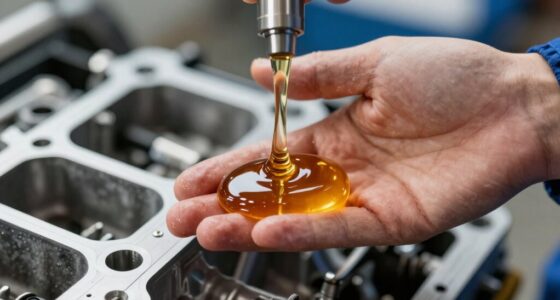

When you blend 2-stroke oil and gas correctly, you’ll notice changes like less smoke, smoother engine performance, and fewer deposits inside your power equipment. Poor mixing can cause excessive smoke, engine fouling, and increased wear, while the right ratio guarantees proper lubrication and cleaner burning. Using synthetic oil may reduce smoke and deposits even further. If you want to understand how different ratios or oil types affect these issues, there’s more to discover.

Get business pricing on garage and car supplies
- Business-only prices and quantity discounts
- Tax-exempt purchasing
- Multiple users, one account, clear invoices
Key Takeaways
- Incorrect oil-to-gas ratios can cause excessive smoke, engine fouling, and deposits, impacting performance and longevity.
- Using synthetic oil generally reduces smoke and deposits compared to mineral oils.
- Proper mixing ensures consistent lubrication, minimizing engine deposits and preventing misfires.
- Overly rich mixes (more oil) increase smoke and carbon buildup, while lean mixes (less oil) risk engine damage.
- Accurate measurement and adherence to recommended ratios are essential for optimal engine performance and reduced emissions.
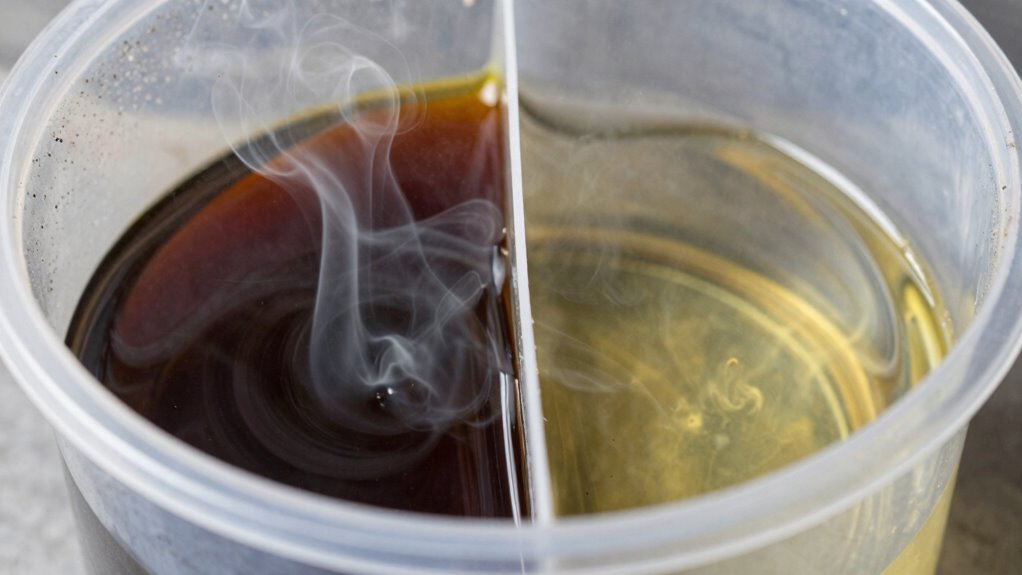
Mixing 2-stroke oils correctly is essential to guarantee your engine runs smoothly and lasts longer. One of the most important aspects of proper mixing is understanding the right oil to gas ratios. These ratios determine how much oil you add to your fuel, directly affecting engine performance, emissions, and longevity. Typically, ratios like 50:1 or 40:1 are common, but you should always check your equipment’s manual to verify the correct mixture. Using too little oil can cause inadequate lubrication, leading to increased wear and potential engine failure. Conversely, adding too much oil can lead to excessive smoke, fouled spark plugs, and deposits that clog your engine’s components. Getting the ratio right is vital to balance power, cleanliness, and durability.
When choosing your oil, you’ll encounter synthetic and mineral options. Synthetic oils are engineered with advanced chemical processes, offering superior lubrication, cleaner burning, and better stability at high temperatures. Mineral oils, on the other hand, are derived from refining crude oil and tend to be more affordable but less refined. Synthetic oils generally produce less smoke and deposits, which means your engine stays cleaner over time and operates more efficiently. If you’re looking for peak performance and longer intervals between oil changes, synthetic oils are typically the better choice. However, if you’re on a budget or using older equipment, mineral oil can still provide adequate lubrication when mixed at proper ratios.
Mixing these oils requires precision. Always measure carefully to verify the correct oil to gas ratios, regardless of whether you’re using synthetic or mineral oil. Using a clean, dedicated container makes it easier to mix accurately. Pour the oil into your fuel container first, then add the gas, and shake thoroughly to get a uniform mixture. Remember, improper mixing can lead to inconsistent lubrication, which might cause your engine to smoke excessively or develop deposits on pistons and spark plugs. These deposits can impair compression and misfire, ultimately reducing the lifespan of your equipment. Additionally, understanding oil stability and how it affects your engine’s performance can help you choose the right type of oil for your needs.
2-stroke oil gas mixing container
As an affiliate, we earn on qualifying purchases.
As an affiliate, we earn on qualifying purchases.
Frequently Asked Questions
How Does Oil Mixing Affect Engine Noise?
Mixing 2-stroke oils can impact your engine noise, causing inconsistency in engine noise and piston sound variations. If you use the wrong oil mix ratio, your engine might run louder or rougher, as the oil’s lubrication quality alters. Properly mixed oil guarantees smooth piston movement and consistent engine noise, while improper mixing can lead to increased noise, knocking, or vibrations, affecting your engine’s overall performance.
Can Mixing Different Brands of 2-Stroke Oils Cause Issues?
Think of mixing different brands of 2-stroke oils like blending colors; if the shades clash, your masterpiece suffers. Oil compatibility varies, and inconsistent brand choices can cause deposits, smoke, or engine damage. To keep your engine running smoothly, stick with a consistent brand or guarantee the oils are compatible. This way, you maintain harmony inside your engine, avoiding unwanted surprises and ensuring ideal performance.
What Is the Best Ratio for Mixing 2-Stroke Oils?
You should follow the manufacturer’s recommended ratio for mixing 2-stroke oils, usually found in your equipment’s manual. This guarantees oil compatibility and maintains mixture stability, preventing problems like excessive smoke or deposits. Typically, a 50:1 ratio (50 parts gasoline to 1 part oil) works well, but always double-check your specific engine’s guidelines. Using the correct ratio helps your engine run smoothly and prolongs its lifespan.
How Often Should I Change the Oil Mixture?
Like a trusty sidekick, you should change your oil mixture every 25 to 50 hours of use to guarantee peak engine performance. Regularly swapping out the mixture helps maintain oil stability and reduces mixing hazards like deposits and smoke. Skipping this step is like ignoring the warning signs on a vintage radio—eventually, trouble strikes. Stay proactive, and your equipment will thank you with smooth, reliable operation.
Does Oil Mixing Impact Engine Temperature?
Yes, mixing different 2-stroke oils can impact engine temperature by affecting engine cooling and heat transfer. If the oil doesn’t burn cleanly or lubricate properly, it can cause increased heat buildup, potentially leading to overheating. Using the correct oil mixture guarantees ideal heat transfer, helps maintain proper engine cooling, and prevents excess heat that could damage your engine. Always follow manufacturer recommendations for the best results.
As an affiliate, we earn on qualifying purchases.
Conclusion
Mixing 2-stroke oils might seem simple, but it’s a dance that demands precision. Remember, every drop counts—like a tiny spark igniting a powerful engine. When you get it right, your engine runs smoother, cleaner, and longer. But ignore the details, and you risk smoke, deposits, and costly repairs. So, treat your mixture like a secret recipe—crafted with care—because in the world of 2-strokes, precision is your best fuel.
2-stroke oil ratio measuring tools
As an affiliate, we earn on qualifying purchases.
As an affiliate, we earn on qualifying purchases.
outdoor equipment fuel mix ratio
As an affiliate, we earn on qualifying purchases.
As an affiliate, we earn on qualifying purchases.
Fall Picks
fall essentials
As an affiliate, we earn on qualifying purchases.