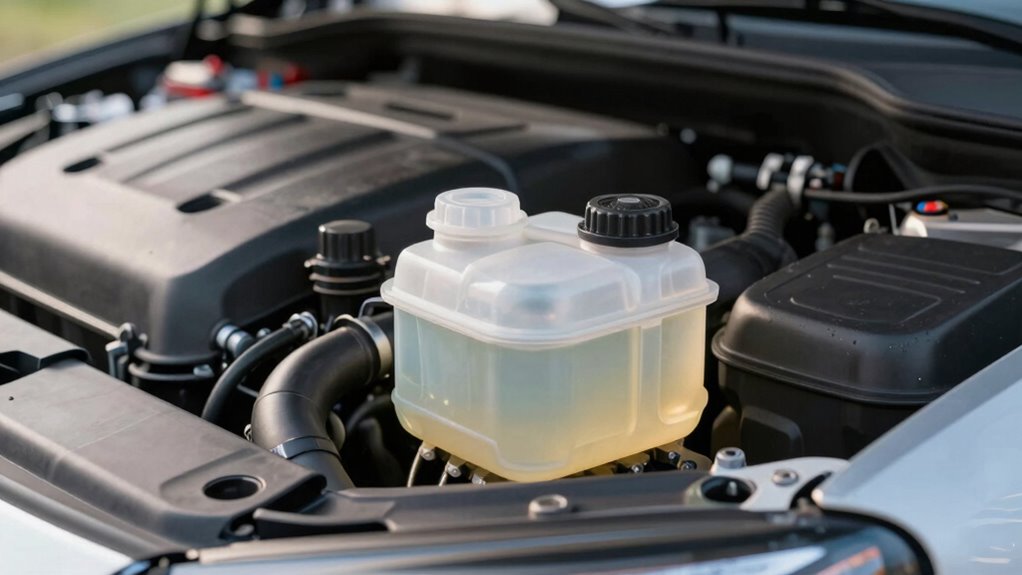

Whether you need to reset adaptations after a fluid change depends on your vehicle. Resetting helps your transmission’s computer recognize the improved fluid conditions, ensuring better shifting, responsiveness, and longer lifespan. Some vehicles do this automatically, but others require a manual reset using a scanner or specific steps. Not resetting can cause your transmission to operate based on outdated data, leading to rough shifts and potential damage. Keep going to discover how to do it correctly for your car.

Get business pricing on garage and car supplies
- Business-only prices and quantity discounts
- Tax-exempt purchasing
- Multiple users, one account, clear invoices
Key Takeaways
- Resetting adaptations helps the transmission system recognize the new, improved fluid conditions for optimal performance.
- Not resetting can cause the system to operate based on outdated data, leading to rough shifting.
- Some vehicles automatically reset adaptations after fluid change, while others require manual procedures.
- Proper reset enhances shifting smoothness, responsiveness, and prolongs transmission lifespan.
- Always check your vehicle’s manual to determine if a reset is necessary after a fluid change.
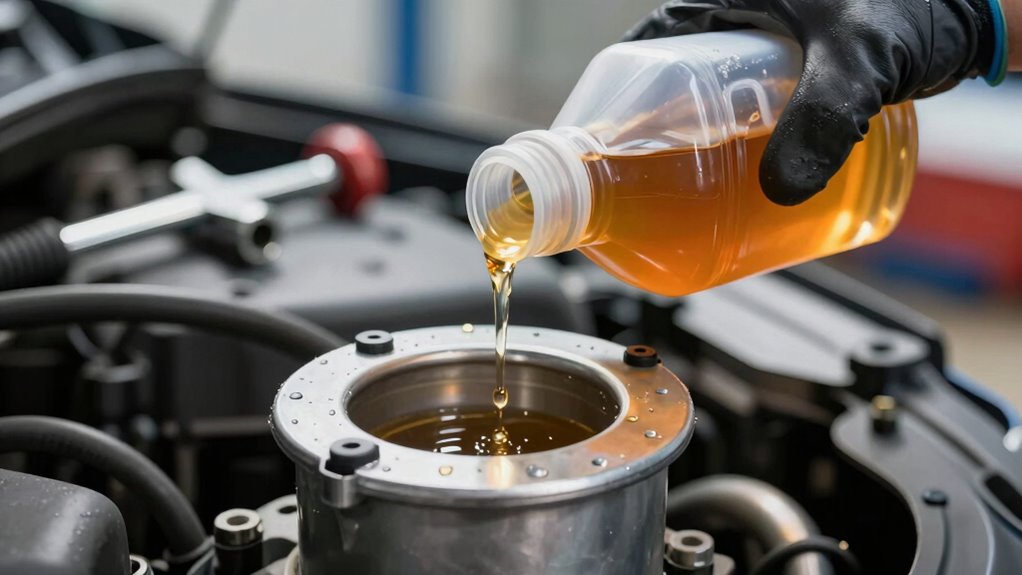
After changing your vehicle’s transmission or engine fluid, resetting the adaptations is essential to guarantee peak performance. When you perform a fluid change, it’s not just about replacing old, contaminated fluid with fresh, high-quality fluid; it’s also about ensuring your vehicle’s systems recognize and adapt to these new conditions. Resetting adaptations helps your car’s computer recalibrate its parameters, which is critical for maintaining ideal transmission health. If you don’t reset these adjustments, your vehicle might continue to operate based on outdated data, potentially leading to less efficient shifting, increased wear, or even premature component failure. Properly resetting adaptations allows the transmission to learn from the new fluid’s improved fluid quality, enhancing overall shifting smoothness and responsiveness. Additionally, some vehicles utilize adaptive learning to optimize performance, making resetting adaptations even more crucial after fluid changes.
Fluid quality plays an important role in keeping your transmission functioning properly. Over time, transmission fluid degrades due to heat, friction, and contaminants, losing its lubricating and cooling properties. When you replace the fluid, you’re giving your transmission a fresh start, but the vehicle’s control modules need to recognize this change. If adaptations aren’t reset, the transmission might continue to operate under the assumption that it’s still dealing with old, degraded fluid, which can cause inconsistent performance or rough shifting. Resetting helps the vehicle’s computer reset its learned behaviors, aligning transmission operation with the current fluid quality. This process minimizes the risk of slipping, harsh shifts, or delayed engagement that could compromise transmission health.
You might wonder if resetting is always necessary after a fluid change. The answer depends on your vehicle’s make and model. Some modern cars automatically reset adaptations after maintenance, while others require manual intervention through a scanner or specific procedures. If your vehicle’s manual recommends resetting, neglecting this step could hinder your transmission’s performance and longevity. It’s a straightforward step that can greatly impact how well your transmission responds and how long it stays in good shape. Remember, a well-maintained transmission with fresh fluid and properly reset adaptations will operate more efficiently, save fuel, and reduce long-term repair costs.
OBD2 scanner for resetting transmission adaptations
As an affiliate, we earn on qualifying purchases.
As an affiliate, we earn on qualifying purchases.
Frequently Asked Questions
How Often Should I Reset Adaptations After a Fluid Change?
You usually don’t need to reset adaptations after a fluid change unless your vehicle’s engine learning or adapts calibration feels off. If you notice rough idling, poor acceleration, or decreased fuel efficiency, resetting the adaptations can help. Typically, resetting is done once after the fluid change, then the engine’s learning process takes over, adjusting itself as you drive. Trust your vehicle’s behavior and reset only if necessary.
Can Resetting Adaptations Improve Vehicle Performance?
Resetting adaptations can improve your vehicle’s performance by ensuring ideal engine tuning and sensor calibration. Studies show that recalibrating the ECU after a fluid change enhances fuel efficiency by up to 10%. When you reset adaptations, you help the engine relearn correct parameters, reducing lag or hesitation. This process allows your vehicle to operate more smoothly, responding better to driving conditions and ultimately extending its lifespan.
Is Resetting Adaptations Necessary for All Vehicle Types?
Resetting adaptations isn’t necessary for all vehicle types, especially if you have an automatic transmission or recent engine tuning. These systems often adjust naturally over time. However, if your vehicle’s performance feels off after a fluid change or tuning, resetting adaptations can help optimize the automatic transmission and engine response. Check your owner’s manual or consult a mechanic to determine if a reset benefits your specific vehicle.
How Do I Know if My Adaptations Need Resetting?
Your adaptive behavior is like a car needing a tune-up when it’s not running smoothly. If your vehicle’s responses feel inconsistent, sluggish, or if sensors aren’t calibrated properly, you likely need a reset. Pay attention to warning lights or strange engine behavior. Resetting adaptations helps recalibrate sensors and restore peak performance, ensuring your vehicle adapts smoothly to driving conditions without unnecessary strain.
What Tools Are Required to Reset Adaptations?
You don’t need special tools to perform reset procedures for adaptations. Typically, diagnostic tools like an OBD-II scanner are used to access your vehicle’s ECU, allowing you to reset adaptations. Connect the scanner, navigate to the reset adaptations menu, and follow the prompts. In some cases, disconnecting the battery for a period can also reset some adaptations, but using diagnostic tools guarantees a proper and complete reset process.
automatic transmission fluid change reset tool
As an affiliate, we earn on qualifying purchases.
As an affiliate, we earn on qualifying purchases.
Conclusion
So, do you need to reset your adaptations after a fluid change? Sometimes, it can make a difference in how your vehicle performs, especially if you’ve noticed rough shifting or odd behavior. Resetting isn’t always necessary, but it might help your car adapt better to the new fluid. Isn’t it worth trying a simple reset to see if it improves your driving experience? After all, a little maintenance could go a long way in keeping your vehicle running smoothly.
manual transmission adaptation reset device
As an affiliate, we earn on qualifying purchases.
As an affiliate, we earn on qualifying purchases.
vehicle transmission reset scanner
As an affiliate, we earn on qualifying purchases.
As an affiliate, we earn on qualifying purchases.
Fall Picks
fall essentials
As an affiliate, we earn on qualifying purchases.