
Before switching to a higher viscosity oil, verify your vehicle’s owner’s manual for the recommended oil specifications and guarantee this viscosity suits your engine’s design and climate. Next, examine how the new oil may affect cold starts and engine performance, especially in colder weather. Finally, consult with a trusted mechanic to confirm compatibility and prevent potential engine damage. Continuing further will help you understand the essential steps to make the switch safely and effectively.
Key Takeaways
- Check your vehicle owner’s manual to confirm if higher viscosity oils are recommended for your engine.
- Ensure the higher viscosity oil is compatible with your engine’s design and operating conditions.
- Consider the climate; thicker oils may hinder cold start lubrication in colder temperatures.
- Verify that the oil’s viscosity rating meets or exceeds manufacturer specifications for your vehicle.
- Be aware of potential increased engine strain or wear; consult a mechanic before switching viscosities.
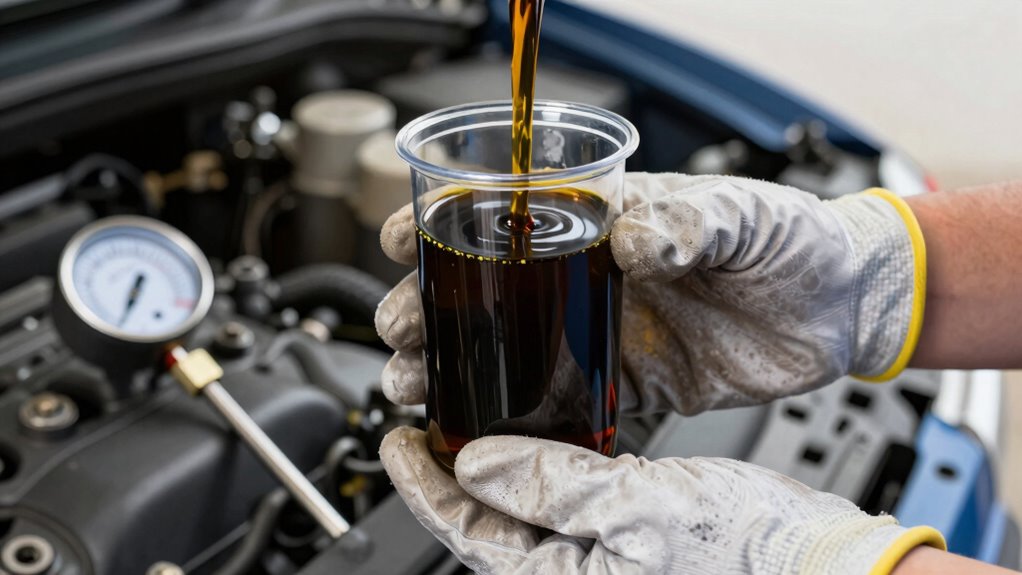
Have you ever wondered why switching to a higher viscosity oil might benefit your engine? It’s a common consideration, especially when your vehicle ages or operates under demanding conditions. Before making the switch, it’s essential to understand the importance of oil compatibility and viscosity ratings. These factors determine whether a higher viscosity oil will work effectively without causing harm or reducing performance.
First, check your vehicle’s manufacturer recommendations. These are typically found in the owner’s manual and specify the ideal viscosity ratings for your engine under normal operating conditions. Manufacturers test their engines with specific oil viscosities to ensure optimal lubrication, fuel efficiency, and longevity. Deviating from these recommendations without proper consideration can lead to inadequate lubrication or increased wear.
Next, consider the oil compatibility of different viscosity ratings. Not all oils are created equal, and increasing viscosity isn’t as simple as pouring in a thicker oil. Higher viscosity oils are thicker and flow less easily at lower temperatures, which can be problematic if your engine isn’t designed for it. Conversely, in colder climates, thicker oils might not circulate quickly enough during startup, leading to increased engine wear. Ensuring that the oil’s viscosity ratings are compatible with your engine’s design and operating environment is crucial.
This is where understanding viscosity ratings becomes vital. Viscosity ratings, such as those defined by SAE (Society of Automotive Engineers), tell you how thick or thin an oil is at specific temperatures. For instance, a 5W-30 oil flows differently at cold start compared to a 10W-40. When considering a switch to a higher viscosity, like moving from 5W-30 to 10W-40, you need to evaluate whether your engine can handle that change without compromising performance. Higher viscosity oils are generally better at maintaining film strength and protecting moving parts under high temperatures or heavy loads, but they might not be suitable for every engine.
Additionally, the engine design plays a critical role in determining the appropriate viscosity. Different engines are engineered to operate with specific oil viscosities, and choosing the wrong one can affect overall performance and durability. Using oil with a viscosity rating outside the recommended range can lead to issues such as poor circulation at startup, increased engine strain, or even damage over time. Consult with a trusted mechanic or refer to your vehicle’s specifications before making any changes.

Liqui Moly 2331 Leichtlauf High Tech 5W-40 Engine Oil – 1 Liter
Rapid oil delivery at low temperatures, high lubrication reliability at high and low temperatures
As an affiliate, we earn on qualifying purchases.
As an affiliate, we earn on qualifying purchases.
Frequently Asked Questions
Can Switching Viscosities Void My Vehicle’s Warranty?
Switching to a higher viscosity oil can affect your warranty if it goes against manufacturer guidelines. Always check your vehicle’s manual for recommended oil types, as using the wrong viscosity might lead to warranty implications. If you switch oils without approval and it causes engine issues, the manufacturer could deny warranty claims. To stay safe, follow the guidelines closely and consult your dealer if unsure.
Will Higher Viscosity Oil Improve My Engine’s Fuel Efficiency?
Switching to higher viscosity oil can improve your engine performance in certain conditions, especially during cold starts or heavy loads. However, it doesn’t always boost fuel efficiency and might even hinder it if the oil isn’t compatible with your engine. Always check your vehicle’s manual for oil compatibility and consider how the viscosity change aligns with your engine’s design. Properly selected oil can optimize performance without sacrificing efficiency.
Are There Any Long-Term Risks Using Higher Viscosity Oil?
Using higher viscosity oil can pose long-term engine effects if you’re not careful. It may cause increased engine wear, reduced fuel efficiency, or oil pump strain. Always consider oil compatibility considerations, ensuring it meets your engine manufacturer’s specifications. Regularly check for leaks or unusual noises, and consult your owner’s manual. Staying informed helps prevent potential damage and keeps your engine running smoothly over time.
How Often Should I Change Oil After Switching to Higher Viscosity?
A stitch in time saves nine, so you should change your oil more frequently after switching to higher viscosity. Typically, you’ll want to perform an oil change every 3,000 to 5,000 miles, depending on your driving habits and manufacturer recommendations. Higher viscosity oil can protect against engine wear better, but regular oil changes are essential to keep your engine running smoothly and prevent long-term damage.
Does Climate Affect the Choice of Oil Viscosity?
Yes, climate considerations impact your viscosity selection. In colder climates, you should choose a lower viscosity oil to guarantee easier startup and better flow at low temperatures. Conversely, in hot climates, higher viscosity oils protect your engine from thinning and overheating. Always assess your local climate when selecting oil viscosity, as it helps maintain ideal engine performance and longevity throughout the year.

3-IN-ONE-10045 Motor Oil, 3 OZ (pack of 1)
Lubricates the moving parts in small electric motors to extend the motor's life by reducing wear and tear
As an affiliate, we earn on qualifying purchases.
As an affiliate, we earn on qualifying purchases.
Conclusion
Before you change to a higher viscosity oil, remember it’s like tuning a fine engine—every adjustment matters. Make certain your vehicle’s manual confirms the switch, check with a trusted mechanic, and consider your driving conditions. Rushing into it is like adding seasoning without tasting—risky and unpredictable. Taking these steps ensures your engine runs smoothly, like a well-orchestrated symphony. Don’t let haste turn your upgrade into a discordant note—be thorough, and enjoy the harmony.

Engine Oil Tester & Motorcycle Oil Change Kit- Gasoline/Diesel Diagnostic Tool, 31.5in Probe, Temp Test, 2.8in Display (4 Batteries)
【WHY NEED IT】Our engine oil tester features an advanced optical probe that measures light transmittance within the oil…
As an affiliate, we earn on qualifying purchases.
As an affiliate, we earn on qualifying purchases.

Pennzoil 10W-30 Motor Oil, 1 Quart
10W-30 motor oil formulated to keep engines clean and responsive
As an affiliate, we earn on qualifying purchases.
As an affiliate, we earn on qualifying purchases.