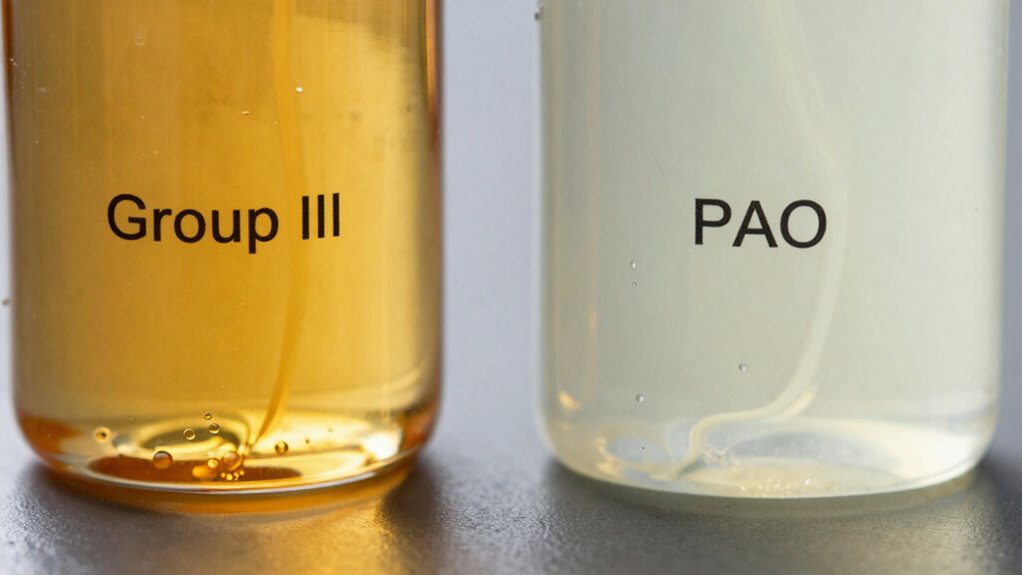

If you’re wondering what ‘Group III’ and ‘PAO’ oils mean, here’s the scoop: Group III oils are highly refined base oils produced through hydrocracking, which removes impurities and improves stability, making them a cost-effective option with high performance. PAO, or polyalphaolefin, oils are synthetic lubricants made through chemical processes, offering exceptional stability, thermal resistance, and engine protection. Understanding these types helps you choose the best oil to keep your engine running smoothly and efficiently.
Key Takeaways
- Group III oils are highly refined mineral oils produced via hydrocracking, offering performance close to synthetic oils.
- PAO (Polyalphaolefin) oils are synthetic, made through chemical polymerization, providing superior stability and oxidation resistance.
- Hydrocracking and hydroprocessing are advanced refining techniques that convert heavy fractions into high-quality, purified base oils like Group III.
- Group III oils are considered “synthetic” in some regions due to their refining process, but they are technically highly refined mineral oils.
- PAO oils are true synthetics, engineered from petrochemical bases, delivering consistent molecular structure and enhanced engine protection.

Mobil 1 Extended Performance Full Synthetic Motor Oil 5W-30, 5 Quart
Mobil 1 Extended Performance full-synthetic motor oil 5W-30 helps protect critical engine parts for up to 20,000 miles…
As an affiliate, we earn on qualifying purchases.
As an affiliate, we earn on qualifying purchases.
What Are Base Oils and Why Do They Matter?

Base oils are the fundamental ingredients in many lubricants, powering everything from engines to industrial machinery. You rely on these oils to reduce friction, prevent wear, and protect crucial components under extreme conditions. They serve as the primary medium that carries additives, enhancing performance and stability. Without quality base oils, lubricants would break down quickly, leading to equipment failure and costly repairs. Different base oils offer varying properties like viscosity, oxidation resistance, and low-temperature performance. Choosing the right type impacts the longevity and efficiency of your machinery. Essentially, base oils form the backbone of lubrication technology, ensuring that machines operate smoothly and reliably over time. Your choice directly affects maintenance costs and operational safety.

Mobil 1 Extended Performance Full Synthetic Motor Oil 0W-20, 5 Quart
Mobil 1 Extended Performance full-synthetic motor oil 0W-20 helps protect critical engine parts for up to 20,000 miles…
As an affiliate, we earn on qualifying purchases.
As an affiliate, we earn on qualifying purchases.
An Overview of Base Oil Classifications

You should understand that base oils are classified into different categories by the API, which helps determine their quality and applications. Synthetic oils are engineered for consistency and high performance, while mineral oils are derived directly from crude oil. Recognizing these differences can guide you in choosing the right base oil for your needs. Additionally, understanding indoor air quality and humidity control can impact the performance and longevity of your engine oils. For example, advanced filtration systems in synthetic oils can help reduce contaminants and improve engine health, much like how the contrast ratio in projectors influences image depth and clarity, much like how the quality of base oils affects engine efficiency and durability. Moreover, awareness of oil stability under various operating conditions can further optimize your engine’s lifespan and performance, emphasizing the importance of selecting oils suited to specific climatic factors for optimal results.
API Base Oil Categories
Have you ever wondered how different types of motor oils are classified? The API (American Petroleum Institute) groups oils into categories based on their quality and performance. These categories are designated as SN, SM, SL, and so on, with SN being the current standard for passenger vehicles. The classifications also include base oil groups from I to IV, which indicate the refining process and purity level. API ratings help you understand how well an oil will protect your engine and perform under various conditions. They guarantee that oils meet specific standards for cleanliness, stability, and additive compatibility. base oil groups from I to IV are determined by the refining process, affecting their purity and performance. Understanding base oil group classifications can assist you in selecting oils that maximize engine longevity and efficiency. By knowing these categories, you can better select the right oil that aligns with your vehicle’s requirements and driving habits.
Synthetic Versus Mineral
Synthetic and mineral oils differ primarily in their composition and manufacturing process, which directly impacts their performance and longevity. Mineral oils are derived directly from crude oil through refining, containing more impurities and varying molecular structures. This results in less stability and shorter-lasting lubrication. Synthetic oils, on the other hand, are chemically engineered, offering uniform molecular structures that provide better performance under extreme temperatures and stress. They resist oxidation, sludge buildup, and viscosity breakdown more effectively. As a result, synthetic oils typically last longer, improve engine efficiency, and protect components better than mineral oils. While they often cost more upfront, their durability can lead to reduced maintenance and longer intervals between oil changes. Your choice depends on your vehicle’s demands and your maintenance preferences. Understanding base oil classifications helps you make an informed decision about which oil type is best for your needs.

Mobil 1 Extended Performance High Mileage Full Synthetic Motor Oil 5W-30, 5 Quart
Mobil 1 Extended Performance High Mileage full-synthetic motor oil 5W-30 is designed for engines with over 75,000 miles…
As an affiliate, we earn on qualifying purchases.
As an affiliate, we earn on qualifying purchases.
What Is Group III Oil and How Is It Made?
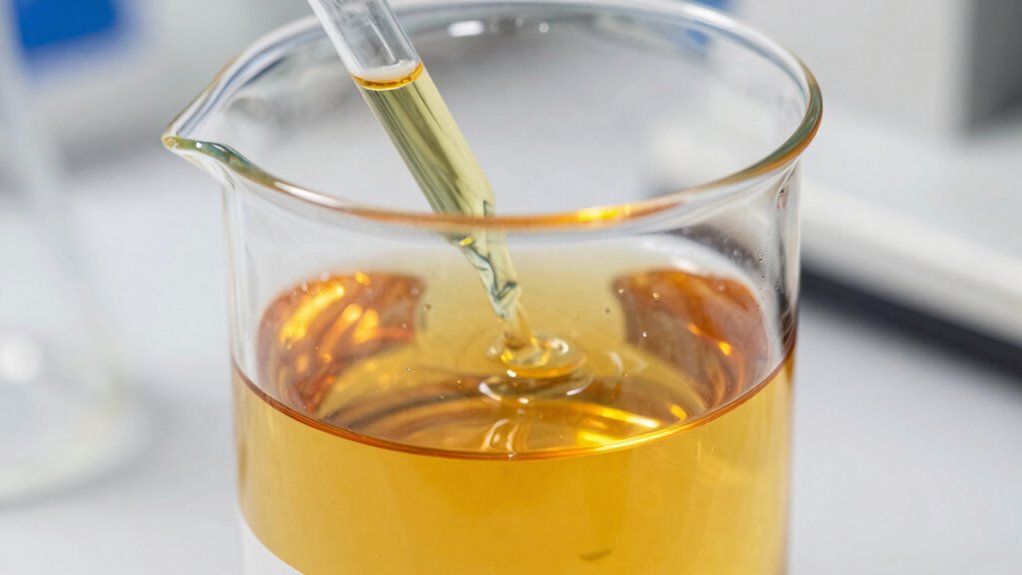
Group III oil is made through advanced refining processes like hydrocracking and hydroprocessing, which improve its quality. During refining, crude oil undergoes multiple stages to remove impurities and enhance its base properties. These methods result in a highly refined oil suitable for modern engine lubricants. Additionally, refining techniques play a crucial role in producing the consistent quality needed for high-performance applications. This meticulous process ensures that the final product meets strict quality standards required for demanding engine environments. Moreover, the development of base oil classifications helps consumers better understand the differences between oil types and their performance characteristics.
Base Oil Manufacturing Process
To understand how Group III base oils are produced, it’s important to know that they undergo a highly advanced refining process called hydroprocessing. This process involves treating crude oil fractions with hydrogen under high pressure and temperature, removing impurities and saturating molecules. The result is a clear, stable oil with improved performance characteristics. During hydroprocessing, the oil is subjected to different stages, including hydrocracking and hydrotreating, which refine the base oil further. Here’s a quick overview:
| Step | Purpose |
|---|---|
| Hydrocracking | Breaks larger molecules into smaller ones |
| Hydrotreating | Removes sulfur, nitrogen, and other impurities |
| Isomerization | Improves viscosity index and flow properties |
| Finishing | Final quality checks and adjustments |
This process creates a high-quality, stable base oil suitable for advanced lubricants.
Crude Oil Refining Stages
Crude oil refining involves multiple stages that transform raw petroleum into various usable products, including high-quality base oils like Group III. First, the crude is heated in a distillation column, separating it into different fractions based on boiling points. Heavier fractions, such as lubricating oils, are then subjected to further processing. These processes remove impurities like sulfur and aromatics, ensuring the oil meets strict quality standards. During refining, treatments like hydrotreating are used to improve stability and viscosity. The goal is to produce a base oil with high purity, uniform molecular structure, and excellent performance characteristics. Each refining step is carefully controlled to optimize the quality and properties of the final product, ultimately enabling the production of premium base oils like Group III.
Hydrocracking and Hydroprocessing
Hydrocracking and hydroprocessing are essential refining techniques that help transform heavy, less valuable fractions into high-quality base oils like Group III. During these processes, you expose the crude oil fractions to hydrogen at high pressure and temperature, breaking down molecules and removing impurities. This results in a cleaner, more refined oil with better viscosity and stability. You can think of hydrocracking as a molecular makeover, turning heavier oils into lighter, more desirable products.
| Process Type | Key Benefit | Main Outcome |
|---|---|---|
| Hydrocracking | Converts heavy fractions | High-quality base oils |
| Hydroprocessing | Removes impurities, improves quality | Better stability and performance |
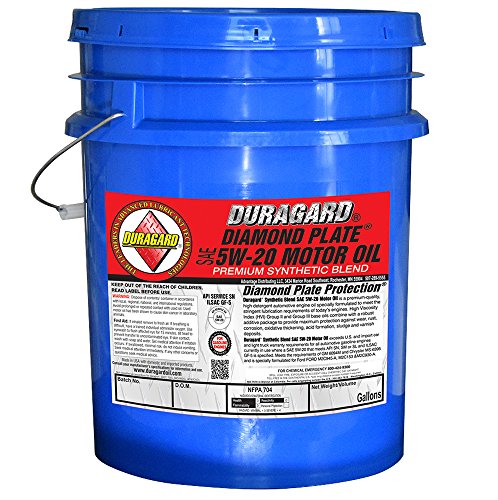
Duragard Diamond Plate Synthetic Blend 5w20 Engine Oil – 5 Gallon Pail
Provides reduced internal friction, drag, and heat to htend engine life while providing continual fuel savings
As an affiliate, we earn on qualifying purchases.
As an affiliate, we earn on qualifying purchases.
What Are PAO Oils and Why Are They Beneficial?
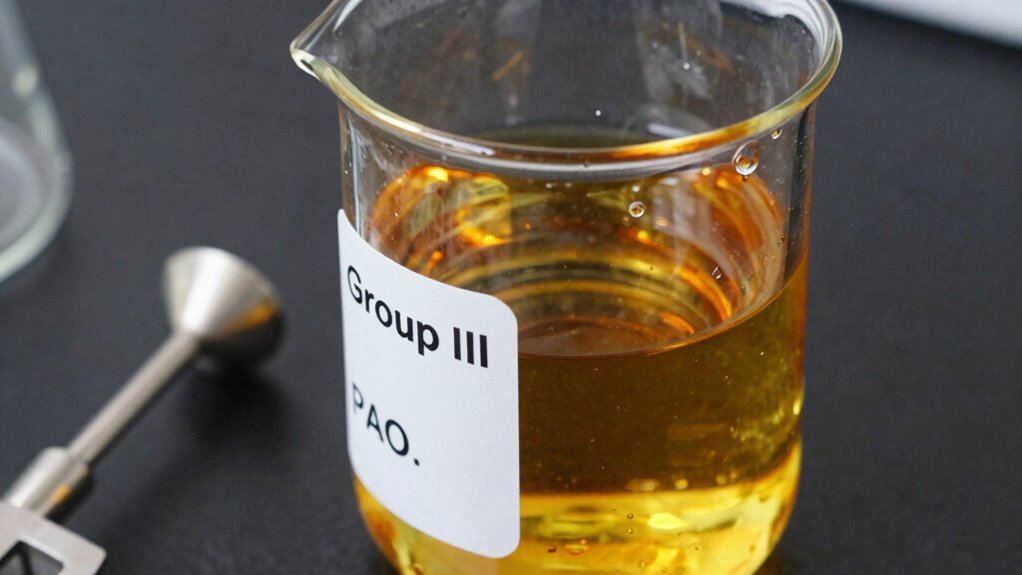
Polyalphaolefin (PAO) oils are synthetic lubricants known for their excellent stability and performance. They resist oxidation, breakdown, and thermal degradation better than conventional oils, ensuring your engine runs smoothly under demanding conditions. PAO oils have a uniform molecular structure, which reduces viscosity fluctuations and improves flow at low temperatures. This means easier starts and better protection during cold starts. They also maintain their lubricating properties longer, leading to fewer oil changes and less engine wear over time. Because of their high purity and consistency, PAO oils perform reliably in extreme heat and cold. Overall, choosing PAO-based oils helps extend your engine’s lifespan, enhances efficiency, and provides peace of mind with superior protection.
How Do Base Oil Types Impact Engine Performance?
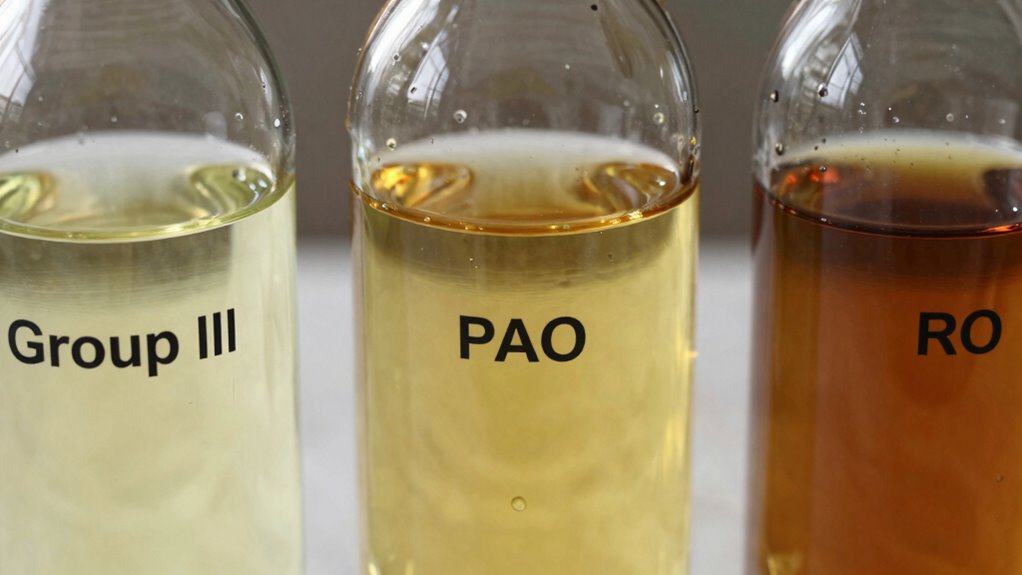
The type of base oil in your engine lubricant plays a crucial role in determining overall engine performance. Different base oils have unique properties that affect how well your engine runs, especially under various conditions. For example, highly refined oils like PAO provide excellent stability, reducing wear and tear, which extends engine life. Group III oils, derived from crude oil but processed extensively, offer good performance at a lower cost. Conversely, mineral oils may offer less protection but can be suitable for older engines. The viscosity and chemical stability of your base oil influence cold start performance, fuel efficiency, and oil consumption. chemical stability is particularly important in resisting breakdown under high temperatures and oxidative stress. Additionally, the processing methods used to produce these oils impact their overall quality and performance. Choosing the right base oil helps ensure your engine runs smoothly, stays clean, and resists breakdown over time. Understanding base oil types can help you select the best lubricant for your vehicle’s needs.
Choosing the Right Oil for Your Engine: What You Need to Know
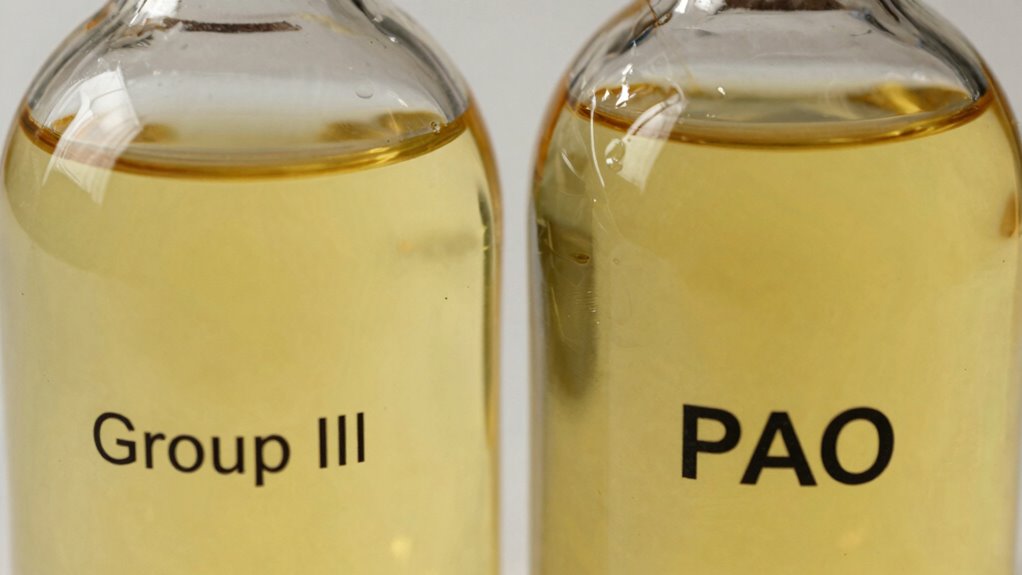
Choosing the right oil for your engine starts with understanding your vehicle’s specific needs and how different oil properties impact performance. First, check your owner’s manual for the recommended viscosity and specifications. Consider your driving conditions—do you drive long distances, in extreme temperatures, or stop-and-go traffic? These factors influence whether you need a synthetic, conventional, or blended oil. Synthetic oils, like PAO or Group III, often provide better protection and performance in demanding conditions. If your engine is older or has high mileage, you might benefit from oils formulated for wear protection. Additionally, understanding cybersecurity tactics can help you safeguard your vehicle’s digital systems from potential threats. Always choose oils that meet or exceed your manufacturer’s standards. Making an informed choice helps guarantee your engine runs smoothly, lasts longer, and performs at its best.
Frequently Asked Questions
How Do Base Oil Groups Affect Engine Wear and Longevity?
You can reduce engine wear and extend its longevity by choosing the right base oil group. Group III oils, made from highly refined mineral sources, offer excellent stability and film strength, protecting engine parts better. PAO oils, synthetic and highly pure, provide superior lubrication and durability under extreme conditions. By selecting oils with advanced base groups, you help minimize friction, wear, and engine breakdown, ultimately boosting your engine’s lifespan.
Are There Environmental Differences Between Group III and PAO Oils?
Think of it like choosing between two paths in a forest: Group III oils are more refined, producing fewer emissions and waste, making them slightly more eco-friendly. PAO oils, derived from synthetic processes, often have cleaner combustion impacts and better biodegradability. While both reduce environmental harm compared to older oils, PAO’s synthetic nature generally offers a greener footprint, aligning with modern sustainability goals.
Can I Mix Different Base Oil Groups in One Engine?
You can mix different base oil groups in your engine, but it’s not always recommended. Mixing may affect the oil’s performance, stability, and protective qualities. For ideal engine health, stick to the same group or follow the manufacturer’s recommendations. If you choose to mix, do so carefully and be aware that it could impact lubrication, wear protection, and oil longevity, potentially leading to engine issues over time.
How Does Base Oil Purity Influence Oil Performance?
You’ll notice that higher purity in base oils leads to better performance because it reduces impurities that can cause engine wear and oxidation. Pure oils flow more smoothly, protect engine parts more effectively, and maintain their viscosity longer. When you choose oils with higher purity, you get improved fuel efficiency, cleaner engine operation, and extended oil change intervals, making your engine run more reliably and efficiently over time.
Are Synthetic Base Oils More Expensive Than Mineral Oils?
Like a rare gem, synthetic base oils shine brighter and cost more than mineral oils. You’ll find that synthetics typically cost 30-50% more because they’re refined more thoroughly and offer superior performance, especially under extreme conditions. Their advanced properties reduce engine wear and last longer, making them a smart investment despite the higher price. So, if you want better protection and efficiency, synthetics are worth the extra cost.
Conclusion
Understanding the differences between Group III and PAO base oils is like knowing the ingredients in a recipe; it helps you choose what’s best for your engine’s health. While Group III oils offer solid performance, PAOs are often the crème de la crème, providing superior protection and longevity. By knowing what these oils mean, you can make informed choices that keep your engine running smoothly—like a finely tuned orchestra under your command.