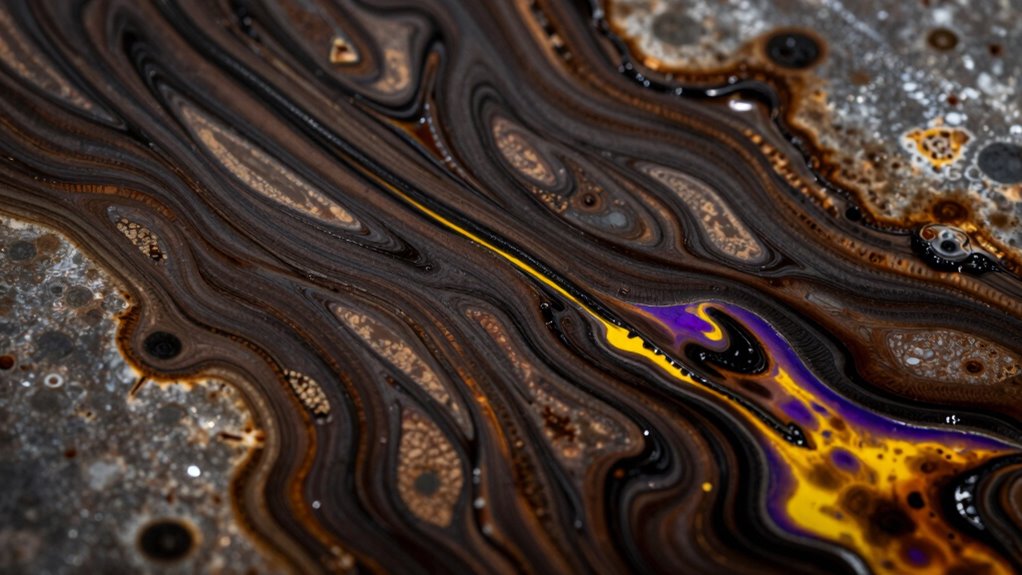

As you explore how oil darkens, you’ll see that oxidation, nitration, and heat play key roles in changing its chemistry. Exposure to air and heat causes molecules to break down, form polymers, and develop darker compounds, while nitration introduces nitrogen-based substances that absorb more light. Heating speeds up these reactions, accelerating discoloration. Continuing further reveals more about these complex processes and how they impact oil stability and preservation.
Key Takeaways
- Oxidation breaks down oil molecules, forming peroxides and darker compounds that lead to discoloration.
- Nitration introduces nitrogen groups, creating chromophores that absorb more light and darken the oil.
- Heat accelerates chemical reactions like oxidation and nitration, speeding up the darkening process.
- Elevated temperatures promote polymerization, forming larger, darker molecules in the oil.
- These combined reactions cause oil to shift from golden to brown shades, affecting art preservation and material stability.

Buffer Polisher, SPTA 5-Inch 125mm Dual Action Random Orbital Car Polisher,Car Detailing Kit, 4Pcs 5inch & 4Pcs 6Inch Polishing Pad,Packing Bag for Car Polishing and Waxing--DAPSET-US
EXCELLENT PERFORMANCE - The SPTA DAPSET-US is a 110V 6.5A dual-action polisher. With powerful motor, this random orbital...
As an affiliate, we earn on qualifying purchases.
What Causes Oil to Darken Over Time?
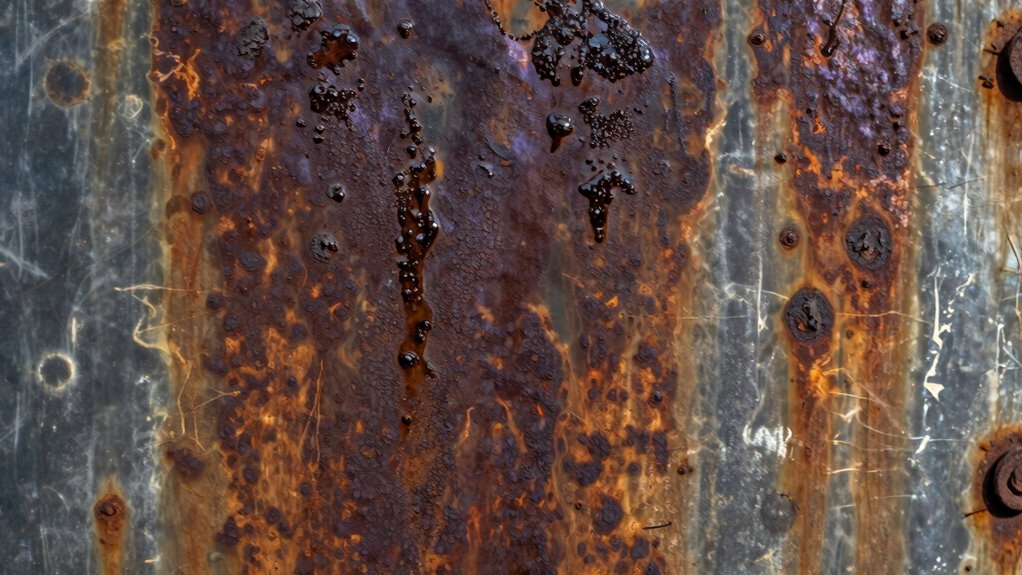
Oil darkens over time mainly because of chemical changes that occur as it ages. When exposed to air, heat, and light, the oil undergoes natural reactions that alter its composition. Initially, the oil’s clear or amber color starts to deepen. This process is driven by the breakdown of complex molecules into smaller, darker compounds. As these reactions unfold, substances like polymers and residues form, giving the oil a more opaque, darker appearance. Over time, accumulated impurities and byproducts from oxidation also contribute to the color change. These chemical transformations happen gradually, making the oil look visibly darker. The process is natural and inevitable, reflecting the oil’s ongoing chemical evolution as it ages and interacts with its environment. Understanding these chemical reactions can help in developing better storage and preservation methods for oils, including strategies to slow down oxidation and extend shelf life. Additionally, factors like temperature and exposure to light can accelerate these changes, emphasizing the importance of proper storage conditions. Proper storage techniques, such as airtight containers and cool, dark places, can significantly reduce the rate of chemical deterioration.

Chemical Guys TORQX Dual-Action Random Orbital Polisher Detailing Kit – 13-Piece Kit With Arsenal Range Bag, Pads, Accessories for Paint Correction, Premium Buffer
Complete Kit Bundle (HOL351) - 13-piece detailing kit includes TORQX Random Orbital car buffer polisher, pads, and Arsenal...
As an affiliate, we earn on qualifying purchases.
How Does Oxidation Change Oil’s Chemistry and Color?
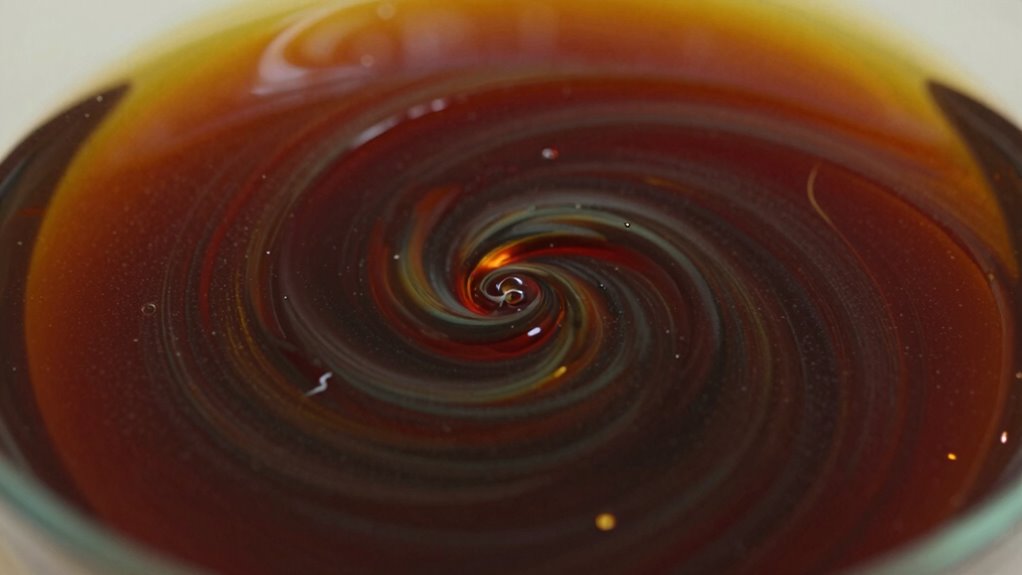
When oxidation occurs, it triggers a series of chemical reactions that fundamentally alter the oil’s composition and appearance. You’ll notice the color darkening as new compounds form. These reactions break down fats, producing peroxides and free radicals. Over time, these unstable molecules combine into larger, complex substances called polymers. This process shifts the oil’s color from clear or golden to darker shades like amber or brown. The table below highlights key changes:
| Chemical Change | Effect on Oil | Visual Change |
|---|---|---|
| Formation of Peroxides | Initiates further breakdown | Slightly darker hue |
| Polymerization | Creates larger molecules | Deepens the color |
| Breakdown of Fats | Produces darker, oxidized compounds | Brownish tint |
| Accumulation of Byproducts | Darker, thickened oil | Overall darkening |
Additionally, the presence of oxidation products accelerates the discoloration process, making the oil appear darker more quickly.
AOBEN Car Buffer Polisher,6 inch Dual Action Polisher,Random Buffer Polisher kit with 6 Variable Speed 1000-4500rpm,Detachable Handle,4 Buffing Pads for Car detailing Polishing and Waxing
🚗【6 SPEED ELECTRIC BUFFER 】120V,60Hz ,700W,6-Inch polisher; dual action Random orbital copper motion for optimal movement to achieve...
As an affiliate, we earn on qualifying purchases.
How Does Nitration Contribute to Oil Darkening?
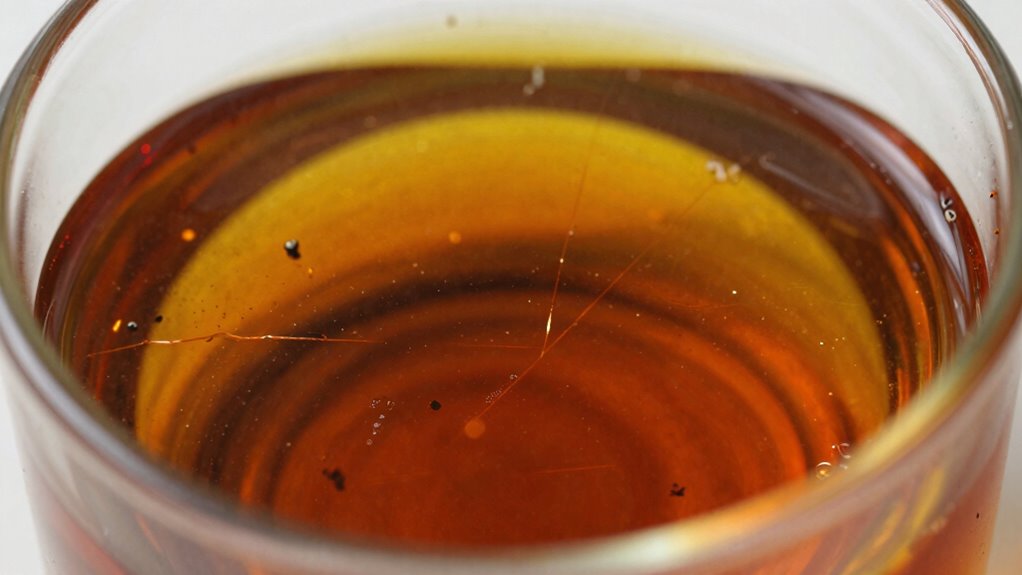
Nitration introduces nitrogen-based compounds into the oil, leading to chemical reactions that accelerate darkening. These reactions modify the oil’s molecules, creating darker, more complex substances. Here’s how nitration contributes:
Nitration causes chemical changes that darken and complexify oil over time.
- Nitrogen groups attach to existing molecules, forming nitro compounds that absorb more light.
- These compounds undergo further reactions, creating pigments similar to those in aged or burnt oil.
- The process increases the presence of conjugated systems, which give the oil a darker appearance.
- Nitration also promotes polymerization, leading to larger, darker molecules that deepen the oil’s color.
- Additionally, nitration can influence the formation of complex chemical structures, further contributing to the oil’s discoloration.
- The reaction pathways involved in nitration are essential to understanding how these chemical changes occur over time.
Understanding these chemical reactions helps explain the gradual darkening process. In essence, nitration adds new chemical structures that absorb and reflect light differently, making the oil look darker over time. This process is a key factor in the aging and discoloration of oils exposed to nitrogen-rich environments.

Protmex 1200W Car Buffer Polisher - 6 Inch Dual Action Polisher w/Constant Power - 6 Variable Speed 2500-6000RPM Orbital Polisher -Comfortable Grip Car Wax Buffer Polisher for Car Detailing Polishing
【𝐂𝐎𝐍𝐒𝐓𝐀𝐍𝐓 𝐏𝐎𝐖𝐄𝐑 𝐒𝐘𝐒𝐓𝐄𝐌 -- 𝐅𝐔𝐋𝐋 𝐓𝐎𝐑𝐐𝐔𝐄, 𝐙𝐄𝐑𝐎 𝐒𝐓𝐀𝐋𝐋】— The Protmex car polishers and buffers use an advanced Constant...
As an affiliate, we earn on qualifying purchases.
How Does Heat Speed Up These Chemical Reactions?
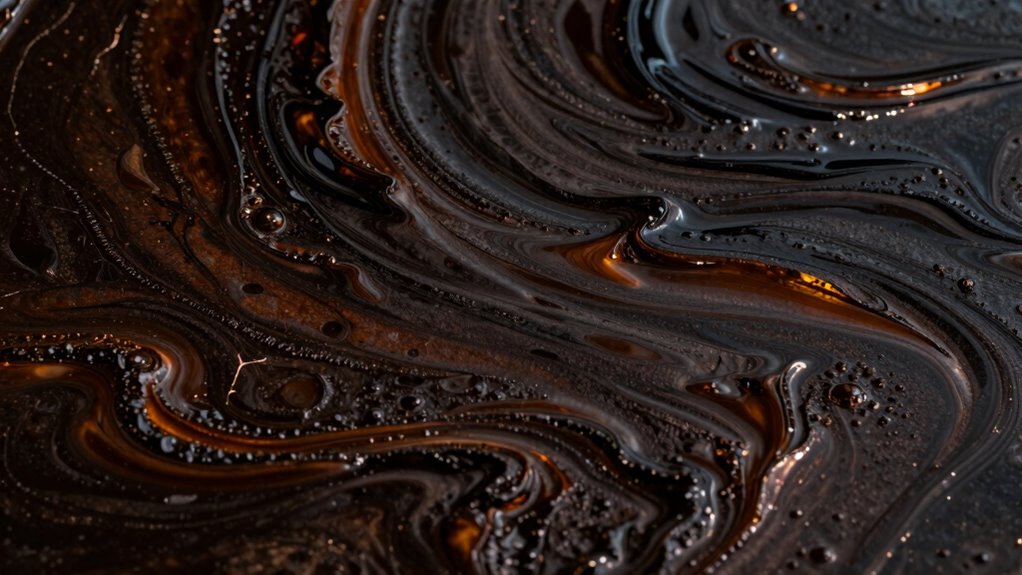
Heat accelerates chemical reactions by providing the energy needed for molecules to overcome activation barriers. When you increase temperature, molecules move faster and collide more frequently and forcefully. These energetic collisions make it easier for bonds to break and new ones to form, speeding up processes like oxidation and nitration. Virtually, heat lowers the energy threshold required for reactions to occur, making them happen more quickly. In the context of dark oil formation, higher temperatures allow oxidative and nitrative reactions to proceed rapidly, leading to the accumulation of complex, dark-colored compounds. Without heat, these reactions would proceed slowly or stall altogether. So, by raising the temperature, you effectively turn slow, stubborn reactions into rapid transformations that darken the oil more quickly.
How Do These Processes Affect Art Preservation and Industry?
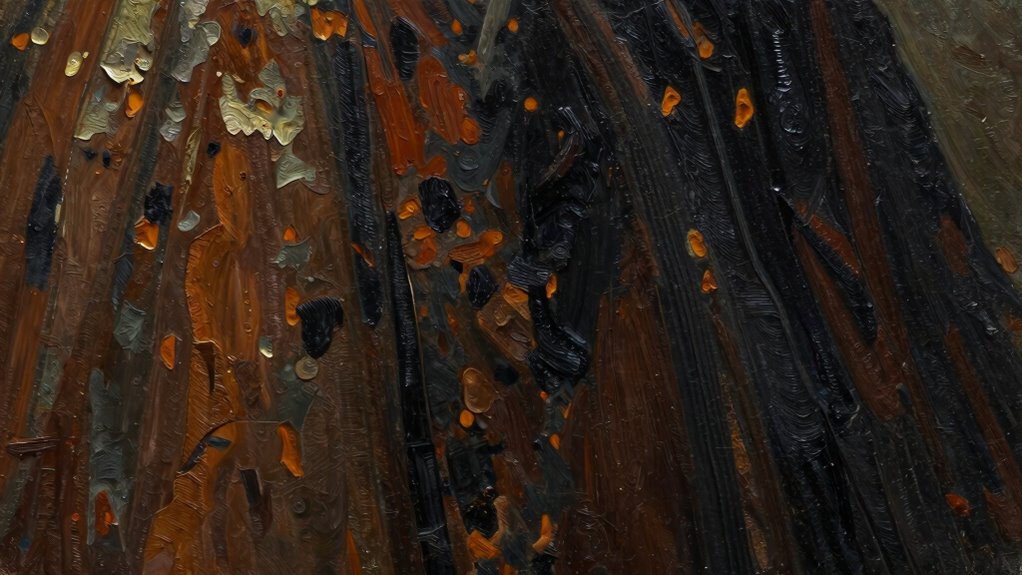
The chemical processes that produce dark oils can considerably impact art preservation and industry. You need to understand how oxidation, nitration, and heat cause deterioration. Understanding these processes is essential for developing effective preservation strategies. 1. Fading and discoloration: Artistic works may lose their original vibrancy as dark oils develop, making maintenance challenging. 2. Structural damage: In industrial settings, these processes weaken materials like paints or varnishes, risking cracks or peeling. 3. Conservation challenges: Restorers must carefully remove or neutralize dark oils without harming the original artwork. 4. Increased costs: Protecting and restoring affected items demands specialized treatments, raising expenses for museums and industries. Additionally, oxidative reactions can accelerate material degradation if not properly managed, especially when exposure to heat intensifies these chemical changes. Recognizing the role of chemical stability can help in designing better preservation methods to slow down the deterioration process.
Furthermore, understanding chemical reactions can aid in developing protective coatings that resist such deterioration, thereby extending the lifespan of valuable artifacts and industrial products.
Frequently Asked Questions
Can Additives Prevent Oil Darkening Caused by Oxidation and Nitration?
Yes, additives can prevent oil darkening caused by oxidation and nitration. You should look for antioxidants and anti-nitration agents in the additive package, as these chemicals help neutralize free radicals and slow down chemical reactions that lead to darkening. When you add these to your oil, you extend its lifespan, maintain its performance, and keep it looking cleaner longer. Proper additive use is a smart way to protect your engine oil.
Are There Visual Indicators to Detect Early Chemical Changes in Oil?
Imagine catching a faint, smoky haze in your oil before it turns dark. Yes, you can spot early chemical changes through visual cues like a slight color shift, a cloudy or hazy appearance, or the emergence of bubbles and sediment. These signs act like warning lights, helping you catch issues early. Regular inspection of your oil’s clarity and color can save you from more serious problems down the road.
How Do Different Types of Oils React Differently to Oxidation and Heat?
Different oils react uniquely to oxidation and heat based on their chemical makeup. For example, polyunsaturated oils like flaxseed break down faster, turning darker and developing off-flavors quickly. In contrast, saturated oils like coconut oil resist oxidation longer and stay clearer. You’ll notice these differences in how quickly they darken, smoke point changes, or develop rancid odors, helping you gauge their freshness and stability during cooking or storage.
What Role Do Metal Contaminants Play in Accelerating Oil Darkening?
Metal contaminants act as catalysts in the oil, speeding up the darkening process. When metals like iron or copper are present, they promote oxidation reactions, which produce darker compounds and sludge. You might notice that oils with metal traces turn darker faster. To slow this, keep contaminants out through proper storage and filtration. Regular maintenance helps reduce metal-induced acceleration, keeping your oil clearer and more effective longer.
Can Controlled Oxidation or Nitration Be Used Beneficially in Industry?
A stitch in time saves nine, and the same applies to controlled oxidation or nitration in industry. You can use these processes beneficially, such as in manufacturing rubber, plastics, and pharmaceuticals, where they help modify material properties. Proper control guarantees safety and product quality, turning what’s often seen as a flaw into an advantage. When managed correctly, oxidation and nitration become powerful tools for innovation and efficiency.
Conclusion
Understanding oxidation, nitration, and heat reveals why oil darkens over time. These reactions transform the oil’s chemistry, much like turning a blank canvas into a masterpiece of decay. By controlling these factors, you can preserve art and industry products longer. Remember, neglecting these processes is like ignoring the ticking clock of time—eventually, even the finest works succumb. Stay vigilant, and you’ll keep the beauty intact, resisting the inevitable march of darkening.