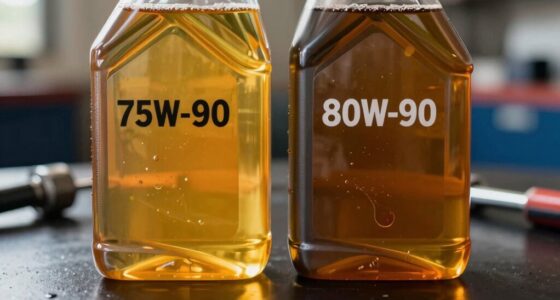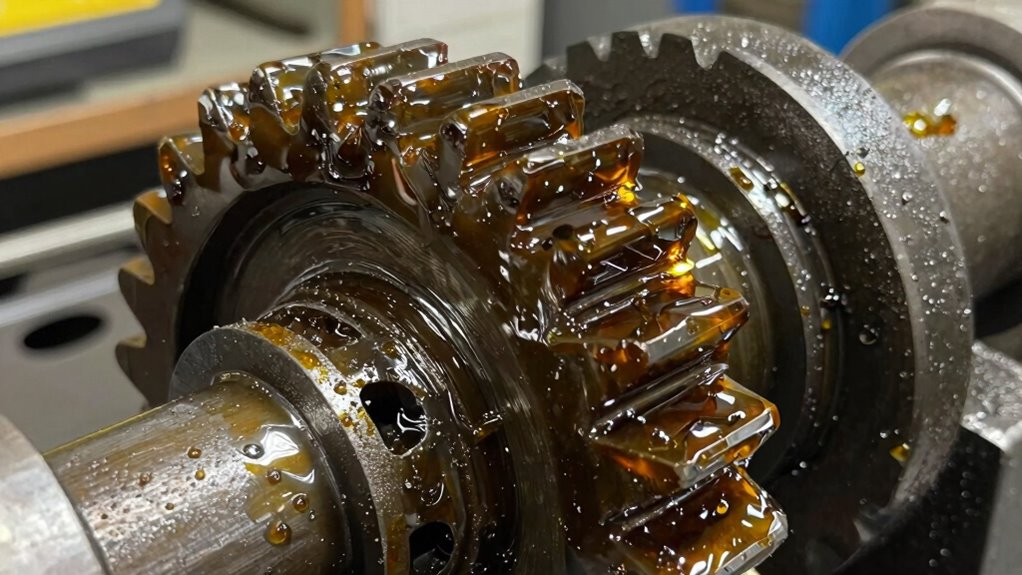

When gear oil smells strong and pungent, it usually signals chemical reactions from heat, wear, or contamination. Sulfur compounds and additives create that sharp odor, which can intensify if gears overheat or if debris and water mix into the oil. Unusual smells may warn you of excessive wear, burnt components, or leaks. If you notice persistent or foul odors, it’s a sign to check your gear system carefully—more details will help you determine what action to take.
Key Takeaways
- The strong smell is caused by sulfur compounds and additives in gear oil releasing fumes during heating.
- A metallic or burnt odor indicates gear oil contamination, excessive wear, or overheating components.
- Changes in smell, such as sour or acrid scents, can signal water intrusion, corrosion, or contamination.
- Persistent or unusual odors often suggest the need for oil replacement or mechanical inspection.
- Regular smell monitoring helps detect early signs of gear wear or failure, preventing costly repairs.

Automotive Transmission Fluid Tester Oil Quality Analyzer – High Precision Diagnostic for Gasoline & Diesel Gearbox Oil Tool 31.5" Probe, Backlight Display, 4 Batteries
1.【WHY NEED IT】Our Transmission Fluid Tester features an advanced optical probe that measures light transmittance within the oil…
As an affiliate, we earn on qualifying purchases.
As an affiliate, we earn on qualifying purchases.
Why Does Gear Oil Smell So Strong and Pungent?
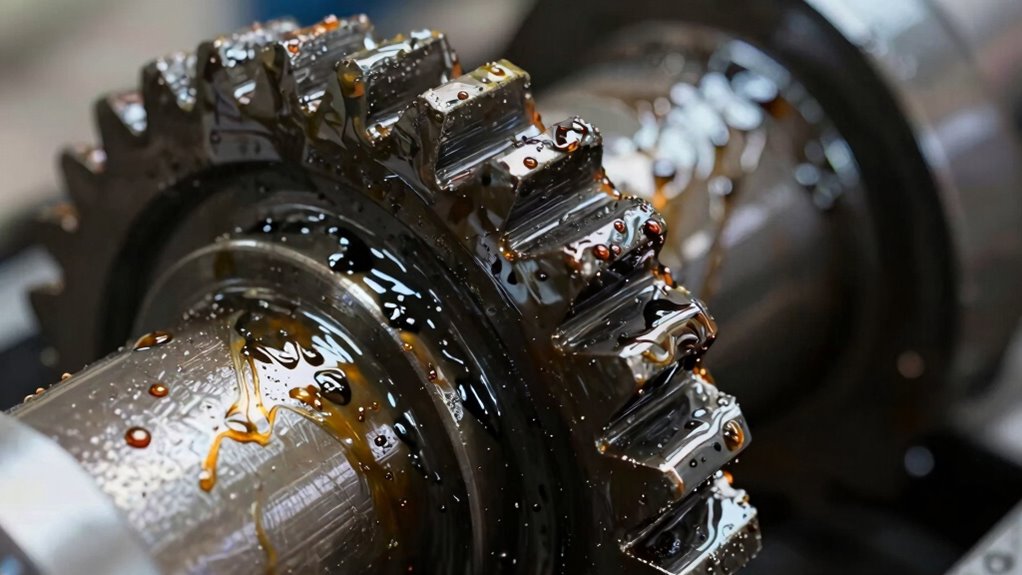
Gear oil often smells strong and pungent because it contains sulfur compounds and additives that produce a distinct odor during operation. These sulfur compounds help improve the oil’s lubricating properties and protect against rust and corrosion. As the gear oil heats up inside your transmission or differential, these chemicals release volatile fumes, intensifying the smell. Additives like extreme pressure agents and anti-wear chemicals also contribute to the strong odor. This scent acts as a byproduct of the chemical reactions happening under high pressure and heat. This process is a chemical reaction that is typical during operation, but it becomes more noticeable in enclosed spaces or when the oil is old. Additionally, proper maintenance practices can help manage and monitor these odors to ensure system health. Regularly checking for signs of oil breakdown can prevent potential problems before they escalate. Recognizing the chemical processes involved can help you determine whether the smell indicates normal operation or a potential issue. Understanding this helps you recognize that a strong odor is typical, but it shouldn’t be overwhelmingly foul or persistent when the system is functioning correctly.
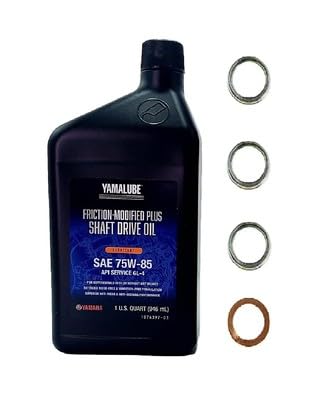
Grizzly 700 (2007-2024) all Models Differential/Gear Oil Change Kit 1 Quarts ACC-SHAFT-PL-32/ Washers
Grizzly 700 (2007 – 2024) all Models Front and Rear Differential Oil Change Kit
As an affiliate, we earn on qualifying purchases.
As an affiliate, we earn on qualifying purchases.
What Causes Gear Oil to Have That Sharp Odor?
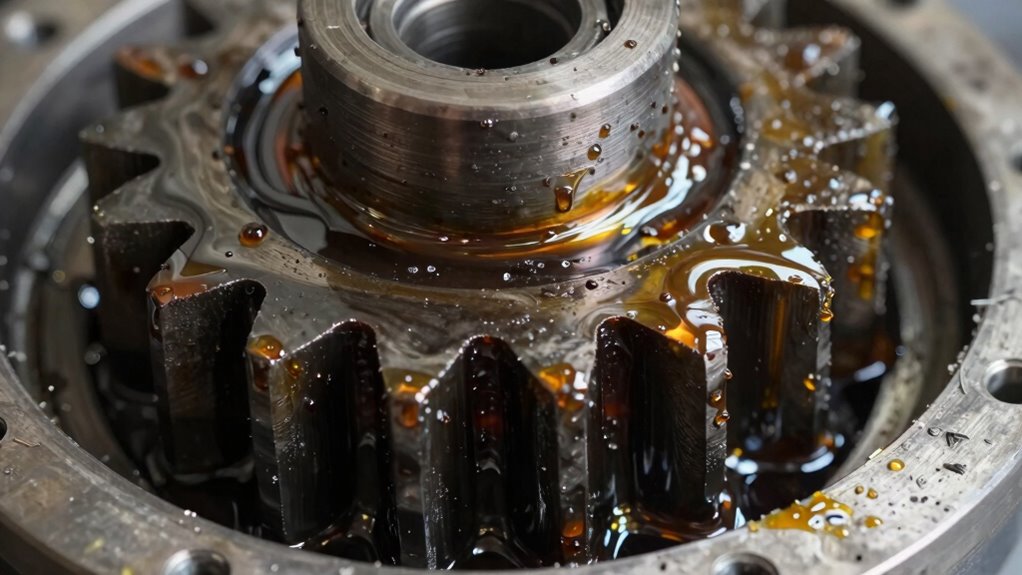
The sharp odor of gear oil primarily results from chemical reactions occurring under high pressure and temperature conditions inside your transmission or differential. These conditions cause the oil’s additives and base oil to break down, producing volatile compounds like sulfur and sulfur derivatives. When these compounds evaporate, they release strong, pungent fumes that give gear oil its distinctive sharp smell. Additionally, oxidation during operation accelerates chemical changes, further intensifying the odor. Over time, heat and pressure cause more breakdown products to form, making the smell more noticeable. This sharp scent is a sign of ongoing chemical reactions in the oil, which can signal normal wear or, if persistent and strong, potential issues that need attention. chemical reactions during operation are the main cause of the odor, and understanding these processes can help in diagnosing potential problems with your vehicle’s transmission system. Moreover, regular monitoring of the odor intensity can serve as an early warning for potential mechanical failures, which can be linked to oxidation processes, that may require maintenance. Recognizing changes in the smell can also help you identify oil degradation before more serious damage occurs.

Lucas Oil 10047 SAE 75W-90 Synthetic Gear Oil/Transmission and Differential Lube – 1 Quart
Fit type: Vehicle Specific
As an affiliate, we earn on qualifying purchases.
As an affiliate, we earn on qualifying purchases.
How Do Wear and Contamination Change Gear Oil’s Smell?
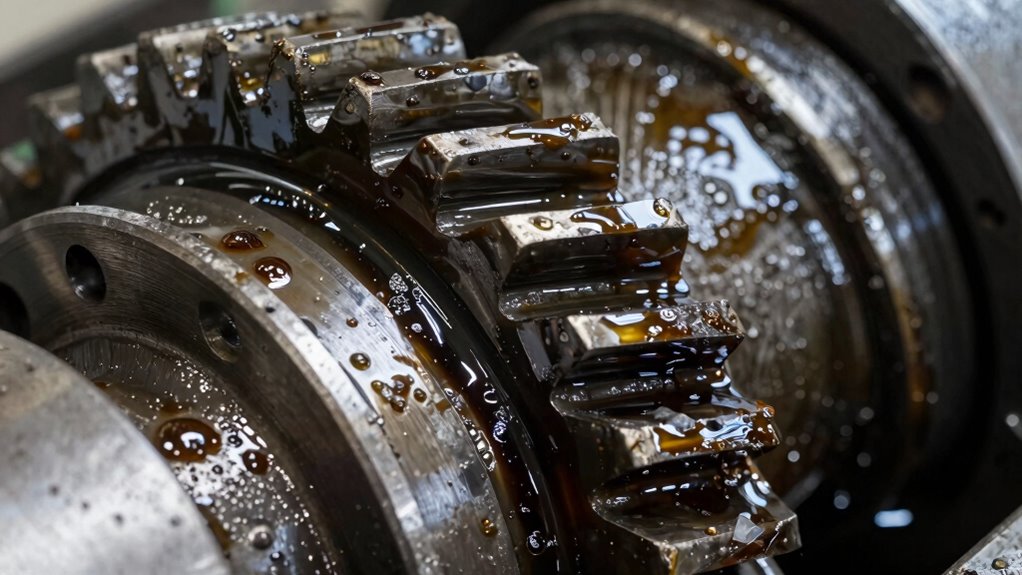
As wear and contamination build up in your transmission or differential, they cause noticeable changes in the smell of the gear oil. Increased friction from worn gears releases metallic particles and debris, which can give the oil a burnt or acrid odor. Contaminants like dirt, water, or old lubricant can also alter its smell, making it sour or stale. These changes indicate that the oil’s lubricating properties are diminishing, and the system is working harder. The presence of burnt or sour smells suggests that overheating or chemical breakdowns are occurring, which can damage components. Recognizing these smell changes helps you identify when the oil’s lubricating properties are no longer effective and needs replacement, preventing further wear and costly repairs. Additionally, understanding how high-quality lubricants maintain their properties can help prevent premature deterioration of the oil. Proper maintenance also involves monitoring for signs of oil degradation, which can be indicated by smell and other visual cues. Regularly inspecting the oil’s condition and using appropriate additives can also extend its service life and keep your transmission functioning smoothly. Being aware of smell changes can alert you early to potential issues before more serious damage occurs.

A/C Pro Certified Auto Pro Oil and Fuel System UV Dye Leak Detection for Cars & Trucks & More, 1 Oz, 374CS, Universal
One application of oil and fuel system UV leak detection dye
As an affiliate, we earn on qualifying purchases.
As an affiliate, we earn on qualifying purchases.
What Does It Mean When Your Gear Oil Smells Different?

When your gear oil starts smelling different, it’s a sign something’s not right. A burnt smell usually means your components are overheating, while a metallic odor often points to contamination or wear. Recognizing these smells helps you catch issues early before they cause major damage. Understanding oil additives and their roles can also provide insight into the health of your gear system. Additionally, being aware of oil oxidation processes can help you determine if the oil has degraded and needs replacing. Monitoring water contamination is also crucial, as moisture can lead to corrosion and decreased lubricant effectiveness.
Unusual Odors Indicate Problems
If your gear oil develops a strange or strong smell, it’s a clear sign that something’s wrong inside your transmission or differential. Unusual odors often indicate contamination, overheating, or the presence of burnt components. A sour or acrid smell might suggest water intrusion or corrosion, which can damage internal parts. A rotten or decayed odor could point to failed seals or accumulated debris causing breakdowns. In some cases, a metallic or chemical smell signals excessive wear or the breakdown of gear materials. Ignoring these smells can lead to serious damage or costly repairs. Pay attention to any new, unusual scents in your gear oil, and have it inspected promptly to prevent further problems and keep your drivetrain running smoothly. Regular gear oil maintenance can help identify issues early and extend the life of your vehicle’s transmission system. Recognizing smell abnormalities early is crucial for effective troubleshooting and timely repairs. Additionally, understanding the causes of gear oil odors can help prevent future issues and improve overall vehicle performance. Being aware of the cultural significance of traditional masks can also enhance your appreciation for Indonesian decor and its artistic value. Properly identifying and addressing these odors can also prevent the development of more serious mechanical failures down the line.
Burnt Smell Signifies Overheating
A burnt smell in your gear oil clearly indicates that your transmission or differential is overheating. When this happens, it means the lubricant has broken down due to excessive heat, risking damage to essential components. Here’s what overheating and the burnt smell could mean:
- Insufficient Lubricant: Not enough gear oil leads to increased friction and heat.
- Overloaded Vehicle: Carrying heavy loads strains the gears, raising temperatures.
- Cooling System Failure: Malfunctioning cooling mechanisms cause heat buildup.
- Prolonged Heavy Use: Extended off-road or towing sessions generate excessive heat.
If you notice this smell, address the issue promptly. Ignoring it can cause severe damage, costly repairs, or complete gear failure. Always ensure your gear oil is clean and at the proper level.
Metallic Smell Reveals Contamination
A metallic smell in your gear oil often signals contamination that can damage your transmission or differential. This smell indicates metal particles or debris mixing with the oil, usually from worn or broken components. When gears or bearings grind or wear down, tiny metal fragments are released into the oil, causing the distinct metallic odor. If you notice this smell, it’s a sign that your system might be deteriorating and needs inspection. Regularly checking your gear oil’s smell and condition helps catch contamination early, preventing further damage and ensuring your vehicle runs smoothly. Free Floating contaminants can also be carried into other parts of your vehicle, exacerbating the problem. Using a conversion tool can help you understand the scale of contamination or damage, especially if you’re comparing measurements or diagnosing issues. If you detect this smell, consider getting a professional diagnosis promptly.
Can a Bad Smell in Gear Oil Signal Transmission Damage?
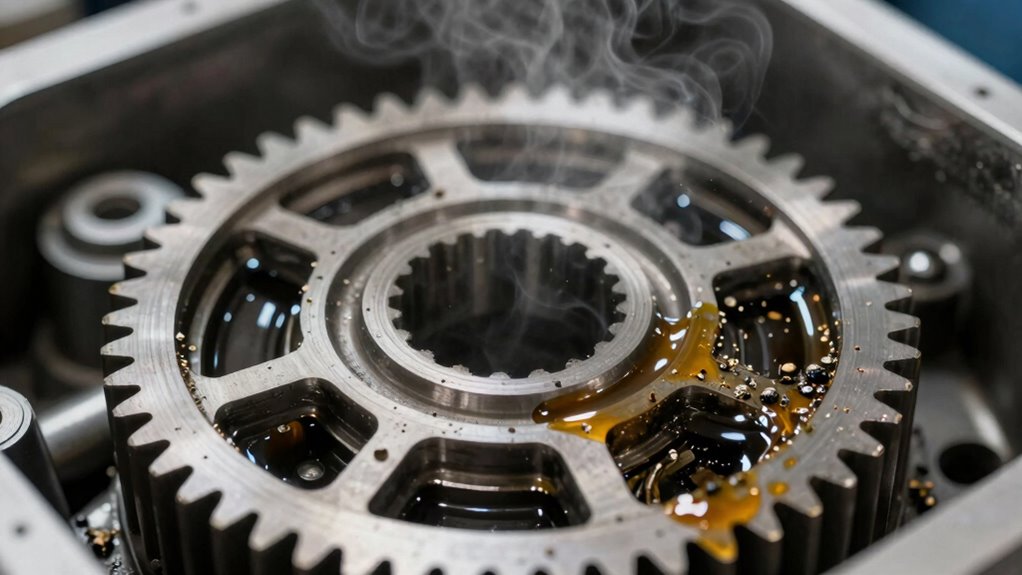
A bad smell in your gear oil often signals underlying problems that could threaten your transmission’s health. When the oil smells burnt or sour, it’s a sign that damage may already be occurring. Here’s what it could mean:
- Overheating – Excess heat can break down the oil, leading to increased wear.
- Friction and Wear – Contaminants or degraded oil can cause parts to grind.
- Seal Damage – Leaking seals can allow dirt and moisture, accelerating corrosion.
- Component Failure – Persistent bad smells may indicate internal parts are deteriorating.
- Monitoring Accessibility Features can help identify issues early by enabling easier inspection of transmission components.
Ignoring these signs can result in costly repairs or complete transmission failure. If you notice a strong or unusual smell, it’s best to inspect and address the issue promptly.
How Often Should You Smell and Check Your Gear Oil?
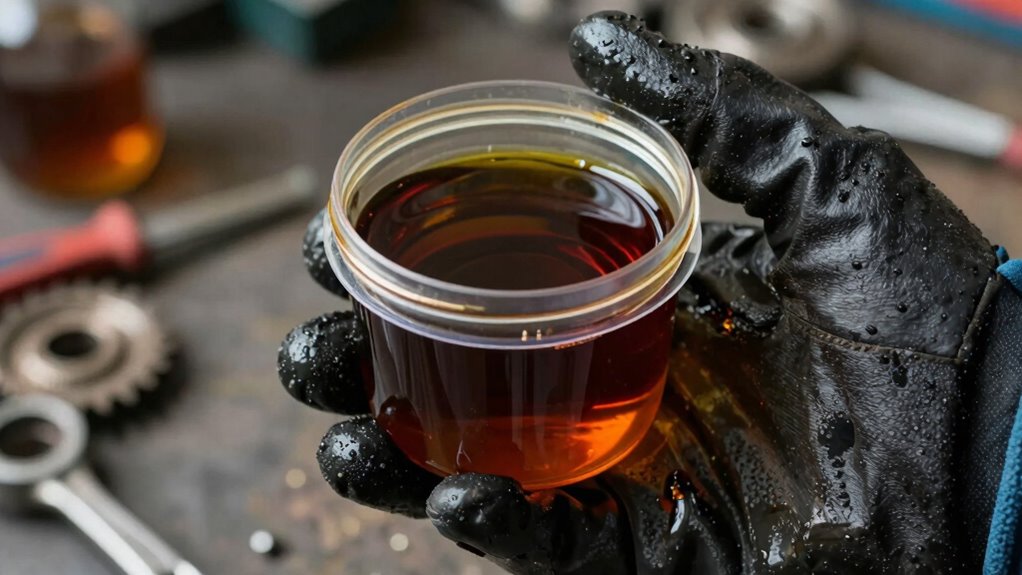
Regularly smelling and checking your gear oil is an essential part of vehicle maintenance that shouldn’t be overlooked. You should do this at least every 3,000 to 5,000 miles or during routine oil changes. If you notice a strong or unusual smell between checks, it’s a sign you need to inspect the gear oil immediately. Consistent monitoring helps catch early signs of contamination, oxidation, or breakdown before they cause damage. For vehicles with high mileage or harsh operating conditions, more frequent checks—every 1,500 to 2,500 miles—are advisable. Keep a record of your inspections and any changes in smell or color. Regular checks ensure your gear system stays lubricated and functioning properly, preventing costly repairs down the line. Additionally, understanding the importance of proper lubrication and preventing mechanical issues can save you from expensive repairs and ensure your vehicle’s longevity. Monitoring gear oil health is also crucial for early detection of potential problems and maintaining vehicle safety.
What Should You Do If Your Gear Oil Smells Off or Unusual?
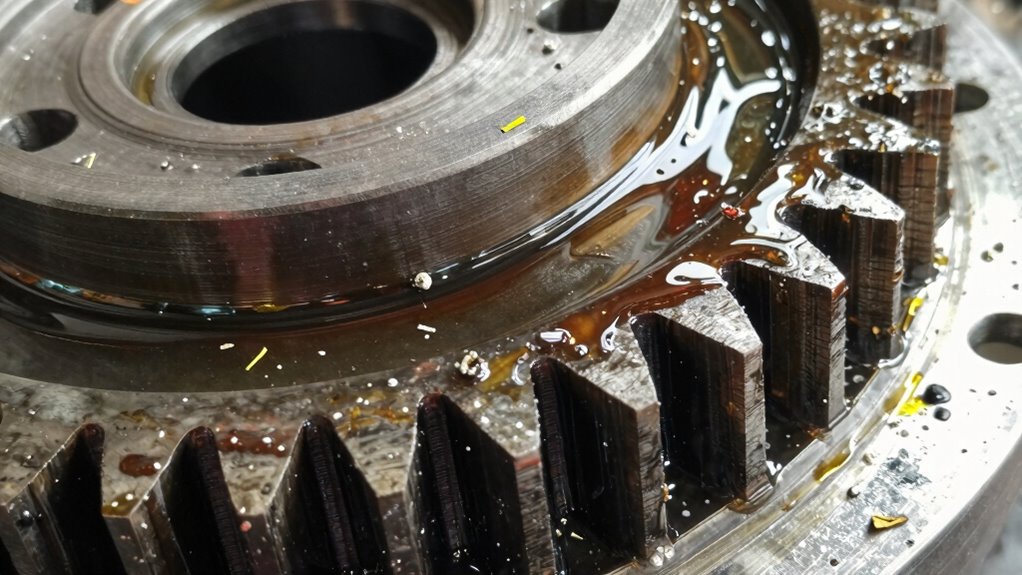
If your gear oil smells off or unusual, you should start by checking for a burning odor, which could indicate overheating. Next, inspect the oil for contamination or debris that might signal a problem. If you find any issues, replacing the gear oil is often necessary to prevent further damage.
Check For Burning Smell
When you notice a burning smell coming from your gear oil, it’s a clear sign that something’s wrong. You should act quickly to prevent further damage. First, stop driving immediately to avoid worsening the issue. Next, check the gear oil level to see if it’s low, which can cause overheating. Then, inspect the surrounding area for any signs of leaks or burnt components. Finally, consult your vehicle’s manual or a mechanic to diagnose the problem accurately. Ignoring a burning smell can lead to severe damage, costly repairs, or complete transmission failure. Addressing the issue promptly helps ensure your vehicle stays safe and reliable on the road. Remember, a burning smell isn’t normal—treat it seriously.
Inspect For Contamination
A strong or unusual smell from your gear oil often indicates contamination, which can compromise lubrication and cause damage. You should inspect the oil closely for signs of foreign substances or discoloration. Check for water, dirt, or metal particles that may have entered the system. Contaminants can accelerate wear and lead to component failure if not addressed promptly. Use the table below to identify potential causes and their sources:
| Contamination Type | Possible Source |
|---|---|
| Water | Seal leaks, condensation |
| Dirt/Debris | Poor sealing, dirty environment |
| Metal Particles | Excessive wear, gearbox damage |
Regular inspection helps catch contamination early, preventing costly repairs and maintaining gear health.
Replace If Necessary
Unusual or strong smells from your gear oil often signal that a replacement is necessary. If you notice a foul or burnt odor, don’t delay. Here’s what to do:
- Check the oil’s color and consistency—dark, gritty oil needs changing.
- Confirm the smell persists after a recent oil change—stale oil may cause lingering odors.
- Inspect for signs of contamination or metal particles, which indicate wear.
- Replace the gear oil promptly if it smells burnt or has contaminants, to prevent damage to your gears and prolong their lifespan.
Ignoring these signs can lead to costly repairs. When in doubt, follow your vehicle’s maintenance schedule and replace gear oil as recommended. Proper care keeps your gears running smoothly.
Frequently Asked Questions
Can Gear Oil Smell Indicate Impending Transmission Failure?
Yes, your gear oil smell can indicate impending transmission failure. If you notice a strong, burnt odor, it often means the oil is overheating, which can lead to damage. Persistent or unusual smells suggest the gear oil may be breaking down or contaminated, reducing lubrication and risking transmission issues. Regularly check your gear oil and address any strong or strange odors promptly to prevent costly repairs and guarantee smooth operation.
Are Certain Gear Oils More Prone to Strong Odors?
Think of gear oil as a messenger carrying signals from your transmission. Some gear oils are more prone to strong odors due to their formulation, additives, or if they are older. Synthetic oils tend to have milder smells, while mineral oils may emit stronger, more pungent odors. Regularly check for unusual smells, as they can indicate the oil’s condition and potential issues, helping you stay ahead of costly repairs.
Does Temperature Affect the Smell Intensity of Gear Oil?
Yes, temperature affects the smell intensity of gear oil. When it gets hotter, the oil’s fumes become more volatile, making the smell stronger and more noticeable. You might notice a faint odor when the gear oil is cool, but as it warms up, the scent intensifies. This is normal, but if the smell becomes overpowering or changes suddenly, it could indicate a problem that needs checking.
How Does Gear Oil Smell Differ Between Types of Transmissions?
You notice the distinct smell differences between transmission types. Manual gear oil often has a sharper, chemical odor, reflecting its higher friction additives. Automatic transmission fluid tends to smell more fragrant, almost sweet, due to its detergents. Continuously variable transmissions (CVTs) usually emit a milder scent. While these variations help identify issues, a sudden strong or burnt smell signals trouble, regardless of the transmission type.
Is a Strong Smell Always a Sign of Contamination?
A strong smell isn’t always a sign of contamination, but it can indicate overheating or breakdown of the oil. If you notice a sharp, burnt odor, it’s likely a problem. Regularly check your gear oil’s smell and appearance. If the smell is unusually strong or changes suddenly, it’s best to have a mechanic examine your transmission to prevent further damage. Trust your senses and stay proactive.
Conclusion
Don’t ignore that strong smell from your gear oil—it’s your warning sign. While it might be tempting to dismiss it as normal, paying attention can save you costly repairs. Think of it like your vehicle’s way of telling you something’s off. Checking and changing your gear oil when needed isn’t a hassle and keeps your transmission running smoothly. Trust me, a little effort now prevents big headaches later.