TL;DR
Formula 1, the FIA, teams and power-unit manufacturers have unanimously agreed to introduce 2.1-liter turbocharged V8 hybrid engines in 2030, one year earlier than the current engine cycle was scheduled to end. The proposal retains limited hybrid power and must still go to the FIA World Motor Sport Council; details of the final technical rules have not been announced.
Formula 1, the FIA, its teams and power-unit manufacturers have reached a unanimous agreement to introduce 2.1-liter turbocharged V8 hybrid engines in 2030, cutting the current engine-regulation cycle short by one season. The plan would replace the present 1.6-liter V6 hybrid units, but still needs to be presented to the FIA World Motor Sport Council, so the agreement is not yet final technical approval.

Get business pricing on garage and car supplies
- Business-only prices and quantity discounts
- Tax-exempt purchasing
- Multiple users, one account, clear invoices
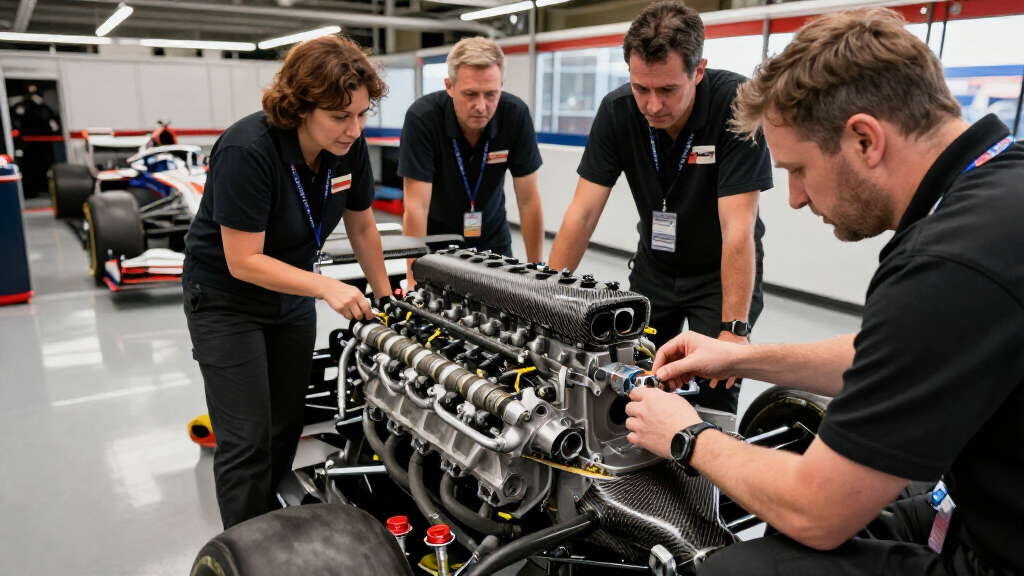
The FIA said the proposed V8s would be lighter, less complex and more cost-effective than the current power units. They would retain limited hybridization, with an overtaking boost feature intended to support attack-oriented racing. The FIA also cited producing a sound that resonates with fans among the aims of the new design. The report does not provide a finalized engine specification or explain how the proposed boost would operate.
The agreement followed a meeting in London on Tuesday involving the FIA, Formula 1 and power-unit manufacturers. The FIA said the proposal will be presented to the World Motor Sport Council in Shanghai next month. The group’s unanimous agreement signals support among the parties involved, but the report does not describe the council’s decision-making process or confirm that it has approved the plan.
The move comes amid criticism of the current power units, introduced this year. Their rules require nearly half of peak power to come from the battery, and drivers have complained that managing energy affects how they drive. The governing body and championship have already agreed to adjustments to the hybrid rules, with further changes planned before the proposed V8 era begins.
A Shift From Battery-Heavy Power
The proposed change would alter the balance between electric and combustion power that has defined the current engine cycle. For drivers, the stated aim is racing that rewards attack rather than requiring extensive energy management. For fans, the FIA has presented engine sound and a return to V8s as part of the appeal, although the new units would be turbocharged and are not expected to sound like the previous generation of naturally aspirated V8s.
The decision also matters to manufacturers and teams because the current rules helped draw new or returning power-unit partners into the series. Audi joined for the current season, Honda returned to supply Aston Martin, and Ford partnered with Red Bull’s in-house powertrains operation, according to the report. The agreement points toward a shorter lifespan for the present formula, but the source does not say how each manufacturer views the proposed 2030 change or what it means for their longer-term commitments.
FIA President Mohammed Ben Sulayem framed the direction as an effort to combine competition, affordability and sustainability. Those are stated objectives, not demonstrated outcomes: the report provides no cost estimates, emissions analysis or performance data for the proposed V8s.
Products Worth Considering

Vantrue N4S 3-Channel Dash Cam with STARVIS 2 Night Vision

Vantrue S1 Pro DMS 2.7K Dash Cam Front and Inside with STARVIS 2 AI

Autel MaxiCheck MX808S Bidirectional OBD2 Diagnostic Scanner
As an affiliate, we earn on qualifying purchases.
How F1 Reached the V8 Proposal
The current 1.6-liter V6 turbo-hybrid regulations were introduced in 2026 with a roughly even split between electrical and internal-combustion power at peak output. Their emphasis on electrification was intended to keep Formula 1 relevant to road-car technology and attract manufacturers. The new cycle was initially set to continue through 2030; the agreement described in the report would bring the next engine formula forward by a year.
Drivers criticized the energy demands early in the season. Max Verstappen called the regulations “anti-racing” when they arrived, while Fernando Alonso described the competition after the second race in China as a “battery world championship.” The FIA and Formula 1 later agreed to adjust rules to limit unusual hybrid-system behavior by the Miami round. Further changes are planned over the next two seasons, shifting the power split to 60% internal-combustion and 40% electric by 2028.
V8 engines were last used in Formula 1 in 2013. That generation used a mild hybrid boost system called Kinetic Energy Recovery System. The proposed 2030 engines differ in being turbocharged, and the report says they are not expected to reproduce the volume or high-pitched note associated with the earlier V8s.
“This agreement marks a significant milestone in shaping the future of Formula 1.”
— Mohammed Ben Sulayem, FIA president
Technical Rules Still Await Approval
The agreement sets a proposed direction, but the World Motor Sport Council has not yet considered the plan, according to the report. The precise technical regulations, including the extent of hybrid power, engine performance limits, weight targets, costs and implementation timetable, are not specified. It is also unclear whether the council will approve the proposal as presented or require changes.
The expected sound and racing effects remain unverified. The FIA says the units are intended to produce a sound that resonates with fans and to support attack-oriented racing, but no acoustic measurements, simulation results or on-track evidence are reported. The source also does not detail how the move could affect manufacturers that joined under the current rules, or provide data to assess its cost and sustainability claims.
Council Review in Shanghai
The next stated milestone is the proposal’s presentation to the FIA World Motor Sport Council in Shanghai next month. The report does not give a meeting date or say when a council decision is expected. If the proposal proceeds, further technical details will be needed to establish the final engine rules and how teams and manufacturers will prepare for 2030.
Until then, the current power-unit regulations remain in force, alongside the planned adjustments to the hybrid power balance through 2028. The council’s response and any published technical regulations will clarify whether the agreed V8 direction becomes the confirmed basis for Formula 1’s next engine cycle.
Key Questions
When would Formula 1 introduce the V8 engines?
The agreement proposes introducing them in 2030, one year before the current engine-regulation cycle was due to end.
Will the proposed engines be fully combustion-powered?
No. The FIA says limited hybridization will remain, although the report does not give the final electric-power specification.
Has the 2030 engine plan received final approval?
Not yet, based on the report. The proposal is due to be presented to the FIA World Motor Sport Council in Shanghai next month.
Why is Formula 1 considering a return to V8 engines?
The FIA says the proposed engines would be lighter, simpler and more affordable, with limited hybrid power and an overtaking boost intended to support attack-oriented racing. Drivers have criticized the current rules for requiring extensive energy management.
Will the new V8s sound like the engines used before 2014?
That is not expected. The proposed engines will be turbocharged, and the report says they are not expected to be as loud or high-pitched as the previous V8 generation.
Source: espn.com