TL;DR

Get business pricing on garage and car supplies
- Business-only prices and quantity discounts
- Tax-exempt purchasing
- Multiple users, one account, clear invoices
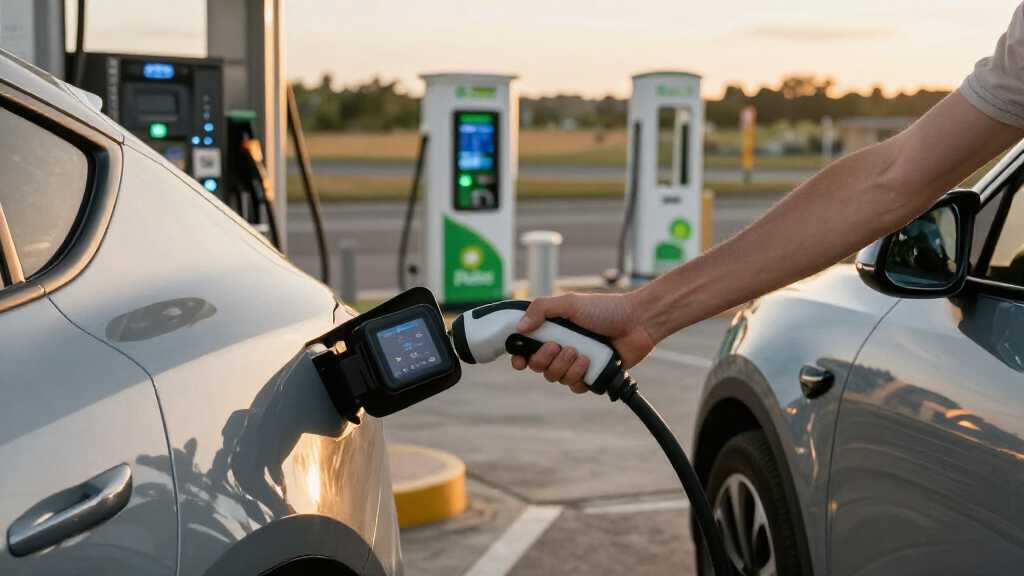
BP Pulse’s 874 DC fast-charging ports in the United States have been integrated into ChargeHub’s roaming network. Drivers can use ChargeHub to locate BP Pulse chargers, check connector and availability details, and pay for charging, alongside stations from other operators.
BP Pulse’s 874 U.S. DC fast-charging ports are now integrated into ChargeHub’s roaming network, allowing drivers to use the ChargeHub app to find the company’s chargers, check port information and pay for charging. The update gives EV drivers an alternative to the BP Pulse app and puts the network’s stations alongside chargers from other operators.
ChargeHub’s app displays real-time availability and connector types for BP Pulse locations, according to the report. Drivers can use the platform to find, access and pay for charging sessions. ChargeHub says its network lets users find and pay at more than 40 operators in the United States and Canada; more than 70 additional networks, including Tesla, Ionna and Electrify America, can also be found on the app.
BP Pulse’s network has a mix of connectors. Roughly one-third of its 874 fast chargers have NACS connectors, while most use CCS1; some have CHAdeMO plugs. The chargers also have on-site credit-card readers, so drivers do not have to use a smartphone app to start a session. The ChargeHub integration is an additional way to locate and use the network, not the only payment option.
The report lists three types of BP Pulse equipment: Tritium chargers rated up to 150 kilowatts, ABB dispensers rated at 180 kW, and Alpitronic stalls rated at 400 kW. Some stations have two stalls, while the largest listed site, in Inglewood, California, has 48, according to DCFC Tracker. Reported prices range from 33 to 65 cents per kilowatt-hour; rates can vary by location.
One App Across More Charging Networks
For drivers, the practical change is that they can look for BP Pulse stations within an app that also covers other charging providers. Network roaming can reduce app switching when planning a route or beginning a session, particularly for drivers who use multiple operators. Live port availability and connector information can also help drivers check whether a station is a fit before arriving.
The addition does not change the physical chargers or guarantee that every location will have an available port. It broadens how drivers can discover and pay for BP Pulse charging. Because the network includes several connector types and charger speeds, checking the station details remains useful before setting out.
Products Worth Considering

Autel MaxiCharger AC Home Level 2 EV Charger, 50A, Hardwired J1772, Wi-Fi, 25-Foot Cable

Chemical Guys 10-Piece Car Wash Kit with Foam Gun

NOCO Boost X GBX155 4250A UltraSafe Jump Starter
As an affiliate, we earn on qualifying purchases.
BP Pulse Access and Charger Options
BP Pulse is the EV-charging subsidiary of BP, the oil and gas company. Its U.S. network includes DC fast chargers with different power ratings and plugs, so the charging experience can differ by site and vehicle. The ChargeHub listing is intended to bring those locations into a broader roaming platform rather than requiring drivers to search only within BP Pulse’s own app.
BP Pulse also supports Plug & Charge, but the report says the feature is limited to Ford and BMW vehicles and is enabled only at the fastest stalls. That limitation is separate from the ChargeHub integration. Drivers can also pay at the chargers using credit-card readers, while ChargeHub offers an app-based option for finding and paying across participating networks.
““We’re focused on making charging simple, reliable, and easy to access wherever drivers need it.””
— Sujay Sharma, BP Pulse vice president of EV charging
Availability, Pricing and App Details
The report does not specify when the integration became available, whether access differs by individual station, or whether all ChargeHub payment methods work at every BP Pulse location. It also does not explain whether app-based session prices match the rates shown at the charger or vary by payment method. The quoted 33-to-65-cent range is a reported network range, not a single nationwide rate.
Station availability can change, and listed connector details do not establish that a port will be working when a driver arrives. The report also does not provide a complete list of BP Pulse locations included in the integration or say whether the partnership will extend to other countries.
Check the App Before Travelling
Drivers planning to use a BP Pulse station can search for it in ChargeHub and check the displayed connector and real-time availability information before travelling. They can also use a credit-card reader at the charger; drivers with eligible Ford or BMW vehicles may be able to use Plug & Charge at qualifying BP Pulse stalls.
BP Pulse and ChargeHub have not provided further rollout milestones in the source report. Any changes to station coverage, supported payment options or charger information will depend on updates from the companies and the data shown for individual locations.
Key Questions
Can I use ChargeHub to find BP Pulse chargers?
Yes. The report says BP Pulse’s 874 U.S. DC fast-charging ports have been integrated into ChargeHub’s roaming network, where drivers can look up locations and port information.
Do I need the ChargeHub app to charge at BP Pulse?
No. BP Pulse chargers have on-site credit-card readers, according to the report. ChargeHub provides an additional app-based way to find and pay for charging.
Which connectors are available at BP Pulse stations?
The network has a mix of NACS, CCS1 and CHAdeMO connectors. The report says roughly one-third of the ports have NACS connectors, most have CCS1, and some have CHAdeMO; check the individual station listing before travelling.
What does BP Pulse charging cost?
The report gives a range of 33 to 65 cents per kilowatt-hour. Prices vary, and it does not provide a single rate that applies to every station or payment method.
Does Plug & Charge work at every BP Pulse charger?
No. The report says Plug & Charge is limited to Ford and BMW vehicles and is enabled only at BP Pulse’s fastest stalls.
Source: insideevs.com