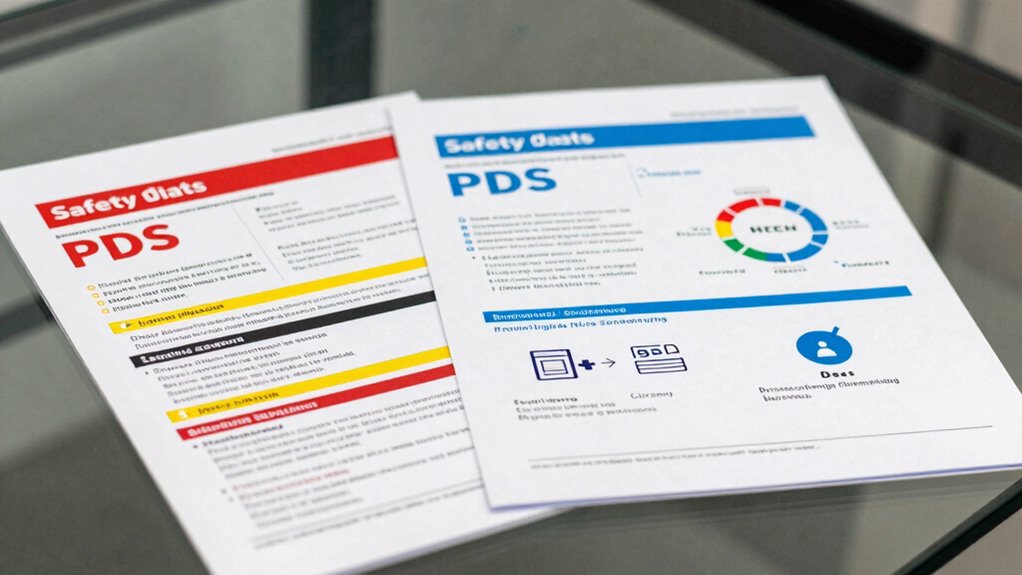

If you want to choose the right fluid, understanding the differences between SDS and PDS is key. The SDS focuses on safety hazards, handling, disposal, and emergency measures, helping you stay compliant and protect workers and the environment. The PDS provides technical details like pH, viscosity, and recommended applications to guarantee superior performance. Knowing how both documents complement each other helps you make safer, more informed choices—learn more to improve your decision-making process.
Key Takeaways
- PDS provides detailed technical specifications to evaluate product performance and suitability for specific applications.
- SDS highlights safety hazards, handling instructions, and regulatory info critical for safe fluid selection.
- PDS helps compare physical and chemical properties like viscosity or pH to find the best fit.
- SDS ensures compliance and safe usage, preventing health and environmental risks during handling.
- Using both documents together ensures you select a fluid that is both technically appropriate and safe to use.
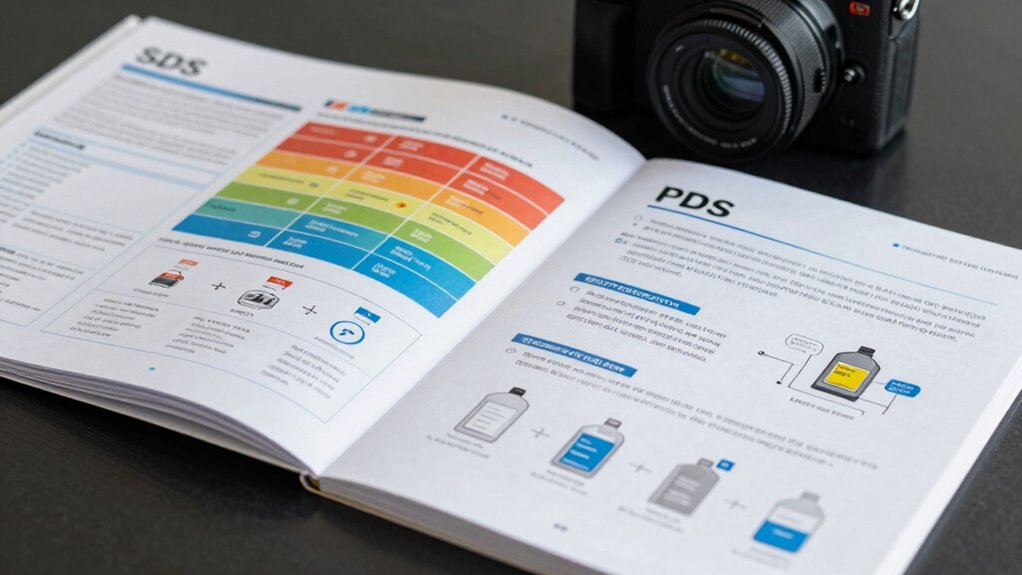
Are SDS (Safety Data Sheets) and PDS (Product Data Sheets) truly different, or do they serve similar purposes? At first glance, they might seem interchangeable, but understanding their distinct roles is essential for maintaining chemical safety and achieving regulatory compliance. When you’re selecting the right fluid for your operation, knowing what each document offers helps guarantee you’re making informed, compliant decisions.
An SDS is a detailed document designed to communicate the hazards associated with a chemical substance. It provides detailed information on safe handling, storage, disposal, and emergency measures. Its primary goal is to protect workers and the environment by offering critical safety data. For you, this means understanding the potential health risks, such as toxicity or flammability, and knowing how to mitigate those risks effectively. Regulatory compliance hinges on having accurate SDSs, as OSHA and other agencies require businesses to have accessible, up-to-date safety information for every chemical used on-site. Failing to maintain proper SDS documentation can lead to legal penalties and increased safety risks.
An SDS communicates chemical hazards and safety measures to protect workers and ensure regulatory compliance.
In contrast, a PDS focuses more on the product’s technical specifications and performance characteristics. It details the physical and chemical properties, recommended applications, and instructions for proper use. Think of the PDS as your technical guide to ensure maximum performance of the fluid in your specific process. While it may include some safety information, its primary purpose is to help you select the right product for your needs and use it correctly. When choosing a fluid, the PDS enables you to compare different products based on properties like viscosity, pH, or compatibility with other materials, ensuring you meet your operational requirements.
Both documents complement each other in your decision-making process. The SDS ensures you understand the safety aspects and legal obligations, while the PDS helps you evaluate the technical suitability of a product. Relying solely on one can lead to gaps—missing safety risks or selecting an unsuitable fluid for your application. For chemical safety, it’s essential to review the SDS thoroughly, especially when handling or storing new chemicals. For regulatory compliance, having updated SDSs and PDSs on hand demonstrates your commitment to safety standards and legal requirements.
Ultimately, both documents are tools that serve different but interconnected purposes. Recognizing their differences and how they support your safety and operational goals ensures you choose the right fluid confidently, complying with regulations while maintaining a safe, efficient environment.

How To Read A Safety Data Sheet (SDS/MSDS) Poster, 24 x 33 Inch, UV Coated Paper (Poster)
Promotes Workplace Safety: Features a detailed safety brief, offering essential guidance for workers handling hazardous chemicals, ensuring familiarity…
As an affiliate, we earn on qualifying purchases.
As an affiliate, we earn on qualifying purchases.
Frequently Asked Questions
How Often Should SDS and PDS Be Updated?
You should update SDS and PDS whenever there’s a change in chemical compatibility or hazard communication info, or at least every three years to guarantee accuracy. Regular updates help you stay compliant and keep safety data current. Keep an eye out for new safety regulations or product modifications, and promptly revise the documents to reflect these changes, ensuring you always have the latest info for safe handling and decision-making.
Can SDS and PDS Be Used Interchangeably?
You can’t use SDS and PDS interchangeably because they serve different purposes. SDS provides detailed safety information, including chemical classification and labeling standards, to protect workers. PDS offers product-specific details like usage instructions and benefits. Relying on the correct document guarantees you follow proper chemical classification and labeling standards, keeping safety and compliance in check. Always use the appropriate document based on your needs to avoid confusion or hazards.
Who Is Responsible for Maintaining SDS and PDS?
Imagine a well-organized library where safety and product details are kept alive. You are responsible for maintaining SDS and PDS through clear responsibility assignment and diligent document management. This means regularly updating information, ensuring accessibility, and training staff on handling these documents. By actively managing these materials, you safeguard your team and ensure compliance, turning complex safety data into a reliable resource that guides safe, informed decisions every day.
Are SDS and PDS Required by Law?
Yes, SDS and PDS are required by law to guarantee chemical compliance and meet regulatory requirements. You must provide these documents to inform users about safe handling, hazards, and proper disposal of chemicals. Regulations vary by country, but compliance is essential for legal operations. By maintaining accurate SDS and PDS, you help protect workers, the environment, and ensure your business adheres to all safety standards.
How Do SDS and PDS Impact Safety Training?
You use SDS and PDS to enhance safety training by teaching employees about chemical labeling and emergency procedures. These documents provide crucial information on safe handling, hazards, and first aid steps. By reviewing SDS and PDS, you guarantee your team understands how to respond quickly and correctly to incidents, reducing risks. Incorporating this info into training helps everyone stay prepared, confident, and compliant in managing chemical-related emergencies effectively.
Product Data Sheet PDS for chemical fluids
As an affiliate, we earn on qualifying purchases.
As an affiliate, we earn on qualifying purchases.
Conclusion
Remember, choosing the right fluid starts with understanding SDS and PDS. Did you know that nearly 60% of workplace accidents involve improper handling due to lack of proper documentation? By reviewing both, you guarantee safety and compliance. So, make it a habit to consult these documents before handling any chemical. Doing so not only protects you but also prevents costly mistakes. Stay informed, stay safe—your well-being depends on it.
chemical safety and performance datasheets
As an affiliate, we earn on qualifying purchases.
As an affiliate, we earn on qualifying purchases.

Machinery's Handbook Pocket Companion: Quick Access to Basic Data & More from the 31st Edition
As an affiliate, we earn on qualifying purchases.
As an affiliate, we earn on qualifying purchases.