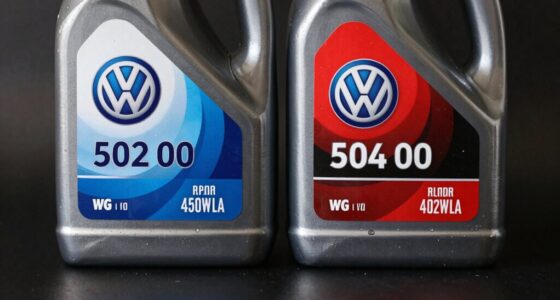

You’ll see both GM approval and API categories on motor oil labels because they serve different purposes. GM approval confirms the oil meets GM’s specific standards for their engines, ensuring peak performance and compatibility. API categories, on the other hand, show that the oil meets industry-wide benchmarks for quality and performance. When both are listed, it means the oil is tailored for your vehicle while also meeting broad safety and efficiency standards. Keep going to understand why this dual certification matters more than you might think.

Get business pricing on garage and car supplies
- Business-only prices and quantity discounts
- Tax-exempt purchasing
- Multiple users, one account, clear invoices
Key Takeaways
- GM approval confirms the oil meets GM-specific engine standards, while API categories reflect industry-wide performance benchmarks.
- Both can be listed to show the oil satisfies vehicle-specific needs and general industry quality standards.
- GM approval ensures compatibility with GM engines, API categories provide assurance of broad performance characteristics.
- Listing both certifications helps consumers select oils that are tailored for their vehicle and meet universal safety and quality norms.
- The dual listing indicates the oil passes rigorous GM tests and adheres to current industry performance standards for wider applicability.

When choosing motor oils, understanding the difference between GM approval and API categories is essential for guaranteeing your vehicle’s ideal performance. Both serve as indicators of quality and suitability, but they focus on different aspects of regulatory compliance and product classification. GM approval is a specific certification that confirms the oil meets General Motors’ requirements for their vehicles, especially those with specific engine designs or operating conditions. On the other hand, API categories are broader standards set by the American Petroleum Institute, reflecting the oil’s general performance characteristics, such as viscosity, fuel efficiency, and wear protection. Recognizing why both can be listed on a label helps you make informed decisions and select oils that are both compatible with your car and compliant with industry standards. Additionally, many oils undergo independent testing to verify their performance claims, ensuring reliability for consumers. GM approval is primarily about ensuring the oil meets the automaker’s stringent specifications. GM has unique requirements for its engines, especially with newer models that demand specific formulations to optimize performance and durability. When an oil bears GM approval, it indicates that the product has undergone rigorous testing and has been verified to meet these standards. This approval is particularly important if your vehicle requires oils formulated explicitly for GM engines, as using non-approved oils might compromise engine performance or longevity. It also helps ensure that the oil adheres to regulatory compliance standards, which can include safety, emissions, and environmental regulations. API categories, meanwhile, are designed to establish a universal benchmark for motor oils across the industry. They provide a product classification system that helps consumers and mechanics identify oils that meet minimum performance requirements. These categories are updated periodically to reflect new technology, environmental standards, and consumer needs. For example, API SN or SP oils denote oils that meet recent performance standards, ensuring good wear protection, sludge control, and fuel economy. Because the API’s standards are internationally recognized, oils with API ratings are generally suitable for a wide range of vehicles, including those not specifically approved by GM. It’s entirely possible to find oils that display both GM approval and an API category on their labels. This dual listing indicates that the oil meets specific automaker standards while also conforming to industry-wide benchmarks. This combination provides peace of mind, showing that the product is both tailored for your vehicle and adheres to high-performance standards. Ultimately, understanding both aspects empowers you to choose oils that not only fit your car’s needs but also comply with regulatory standards, ensuring top-notch performance and protection.
As an affiliate, we earn on qualifying purchases.
Frequently Asked Questions
Can an Oil Meet Both GM Approval and API Category Simultaneously?
Yes, an oil can meet both GM approval and API category simultaneously. This is because of product compatibility and certification overlap, allowing oils to be certified under multiple standards. When you choose such oils, you benefit from broader approval, ensuring better performance and compatibility with your vehicle. Always check the labels to confirm the oil meets both GM approval and API categories, providing you with thorough protection and peace of mind.
Are GM Approval Standards More Strict Than API Categories?
You might think GM approval standards are more strict than API categories, but it’s not necessarily true. Investigating industry standards reveals that GM sets specific certification differences tailored to their vehicles, which can be more demanding in certain aspects. However, API categories follow broader, internationally recognized standards. Both certifications guarantee high quality, but GM approval emphasizes manufacturer-specific requirements, making it potentially more stringent in certain areas.
How Often Are GM and API Standards Updated?
You should know that both GM approval standards and API categories are updated periodically, usually in response to certification timelines and regulatory changes. GM updates may occur every few years or as needed to meet industry shifts, while API standards are revised more frequently, often annually. Staying informed on regulatory changes helps you anticipate these updates, ensuring your products remain compliant and up-to-date with the latest certification requirements.
Is One Certification More Recognized Globally Than the Other?
You’ll find that API certification tends to have broader global recognition, especially in international markets, because it aligns with widespread industry standards. GM approval is highly valued within North America, particularly among automotive manufacturers. While both certifications are respected, API standards often carry more weight internationally due to their status as global standards. Your choice depends on your target market; for global reach, API certification generally offers greater recognition.
Do All Vehicle Manufacturers Require Both GM Approval and API Category?
Like a Swiss Army knife, not all vehicle manufacturers require both GM approval and API category; it depends on brand differences and certification compatibility. Some brands prioritize one standard over the other, while others list both to meet various regional regulations. You should check each manufacturer’s specific requirements, as requirements vary widely. Ultimately, understanding these differences helps you verify your vehicle’s oil meets the necessary certifications for best performance.
As an affiliate, we earn on qualifying purchases.
Conclusion
Think of GM approval and API category like two roads leading to the same destination. Just like a traveler might take either route to reach the mountain summit, you can navigate either pathway to guarantee product safety and compliance. Both routes have their unique signs and landmarks, but ultimately, they guide you to the same peak. Embracing both means you’re equipped to reach your goals faster and more confidently, no matter which path you choose.
synthetic motor oil for GM vehicles
As an affiliate, we earn on qualifying purchases.
As an affiliate, we earn on qualifying purchases.
high performance API rated engine oil
As an affiliate, we earn on qualifying purchases.
As an affiliate, we earn on qualifying purchases.
Fall Picks
fall essentials
As an affiliate, we earn on qualifying purchases.