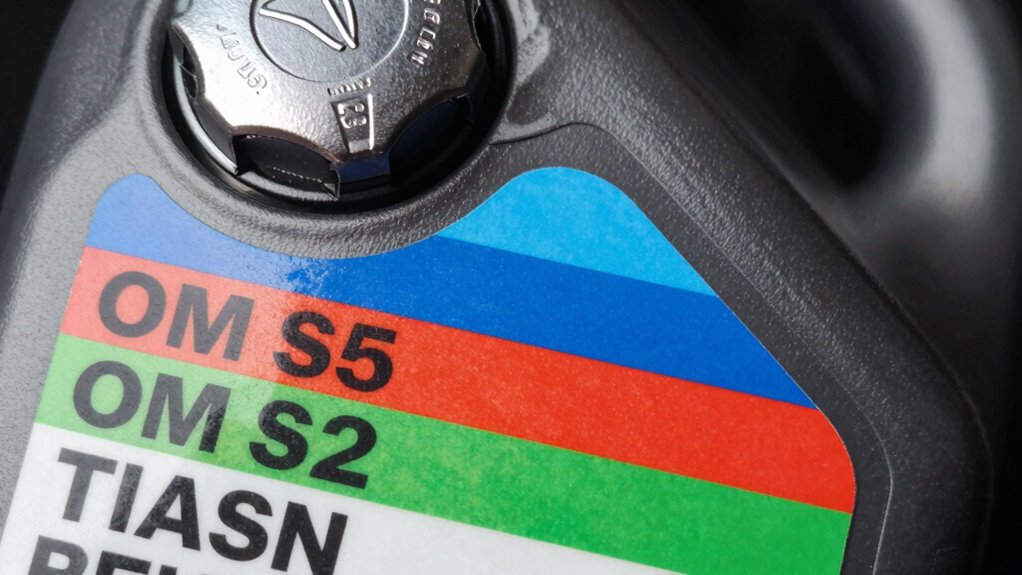

When you examine an OEM oil specification line, start by identifying the viscosity grade, like 5W-30, which indicates cold-start and hot-temperature performance. Next, check for compliance labels such as API SN or ILSAC standards, which show industry approval. Look for additional details like additive packages and manufacturer recommendations. Knowing how to interpret these codes helps you pick the right oil for your engine’s needs and conditions. Keep exploring to learn more about making the best choice.
Key Takeaways
- Identify the viscosity grade (e.g., 5W-30) to understand cold start and high-temperature performance.
- Check for industry standards or certification labels like API SN/CF for additive and performance compliance.
- Review the additive package details to ensure compatibility with your engine’s requirements.
- Look for OEM-specific codes or recommendations indicating suitability for your vehicle model.
- Decode the spec line to match climate conditions and driving habits for optimal engine protection.
Have you ever wondered what those numbers and letters on an oil container really mean? When you look at an OEM oil spec line, those characters aren’t just random symbols—they tell you crucial information about the oil’s performance and suitability for your engine. Understanding this code helps guarantee you choose the right oil, maintaining engine health and efficiency. One of the first things to decode is the oil viscosity, often represented by a dual number like 5W-30. The viscosity rating indicates how thick or thin the oil is at different temperatures. The first number, followed by a ‘W,’ stands for winter viscosity; it shows how the oil flows in cold weather, meaning a lower number like 0W or 5W indicates better cold start performance. The second number reveals the oil’s behavior at operating temperature; a higher number, such as 40 or 50, means thicker oil at higher temperatures, providing better lubrication under load. Recognizing these viscosity ratings helps you match the oil to your climate and driving conditions, preventing engine wear caused by improper lubrication. Additionally, the high-temperature stability of the oil is an important factor in maintaining engine performance over time. Equally important is the additive package detailed in the spec line. This part of the code gives insight into the oil’s formulation, including detergents, dispersants, anti-wear agents, and corrosion inhibitors. These additives work together to keep your engine clean, prevent sludge buildup, and protect essential components from wear and tear. For example, an oil with a robust additive package might be labeled as “SN/CF” or “API SN Plus,” indicating compliance with specific industry standards that guarantee performance in cleaning, oxidation stability, and wear protection. Some OEMs specify certain additive packages to meet their engines’ unique demands, especially in modern engines with tight tolerances and complex systems. When you see these designations, you can be confident that the oil has been formulated to provide paramount protection and performance.

Castrol GTX Full Synthetic 5W-30 Motor Oil, 5 Quarts
6X better wear protection on critical engine parts than industry standards**
As an affiliate, we earn on qualifying purchases.
As an affiliate, we earn on qualifying purchases.
Frequently Asked Questions
Can OEM Oil Specs Vary Between Different Vehicle Models?
Yes, OEM oil specs can vary between different vehicle models due to manufacturer variations and regional standards. You’ll find that each manufacturer designs specific oil requirements to maximize performance for their engines. Regional standards, such as climate and regulations, also influence these specifications. Always check your vehicle’s manual or the oil spec line to verify you’re using the correct oil tailored to your model and region, guaranteeing ideal engine health.
Are OEM Oil Specifications Consistent Across Global Markets?
Ever wondered if OEM oil specs stay consistent worldwide? They often don’t, due to market consistency and regional standards. Manufacturers tailor oil formulations to meet regional climate, fuel quality, and regulatory requirements, so specs can vary across global markets. This means you should always check the specific OEM oil spec line for your region or vehicle model, ensuring peak performance and compliance with local standards.
How Often Should I Verify OEM Oil Specifications for My Vehicle?
You should verify OEM oil specifications during every oil change, typically every 3,000 to 5,000 miles or as recommended by your manufacturer. Check your vehicle’s owner’s manual for specific oil change intervals and OEM recommendations. Staying updated guarantees you’re using the right oil for peak engine performance and longevity. Regularly reviewing these specs helps you maintain your vehicle according to manufacturer guidelines and avoid potential issues.
Do Aftermarket Oils Meet OEM Specifications?
You’ll find that many aftermarket oils, including synthetic blends and full synthetics, do meet OEM specifications, but you should always check the label. Look for specific OEM approval or certification marks, and review the additive packages to verify they match the required standards. It’s essential to confirm that the oil’s formulation aligns with your vehicle’s requirements to maintain ideal performance and warranty compliance.
What Are the Risks of Using Non-Oem Approved Oils?
Using non-OEM approved oils can jeopardize your vehicle’s oil compatibility, leading to poor lubrication and increased wear. It may also void your warranty, as manufacturers often require oils that meet specific standards. You risk engine damage and costly repairs if the oil doesn’t match OEM specifications. Always check the oil’s specs to confirm it aligns with your vehicle’s requirements, protecting both performance and warranty coverage.

Castrol GTX High Mileage 5W-30 Synthetic Blend Motor Oil, 5 Quarts
Phosphorus Replacement Technology helps extend emission system life
As an affiliate, we earn on qualifying purchases.
As an affiliate, we earn on qualifying purchases.
Conclusion
Now that you can decipher OEM oil specs, you’re basically a secret agent decoding oil codes. Picture yourself as a spy unraveling ancient scrolls—except instead of treasure, you find the perfect lubricant. So next time someone hands you a bottle with confusing numbers, you’ll smile knowingly, like you’ve cracked the Da Vinci Code. Remember, mastering oil specs isn’t just smart; it’s the difference between a smooth ride and a fiery crash. Happy decoding!

STP Premium Small Engine 4 Cycle Oil Formula, SAE10W-30 Small Engine Oil Engine Care Formula Reduces Wear for Lawnmower, Push Mower, Tractor, 32 Oz, STP
SAE 10W-30 MOTOR OIL FOR SMALL ENGINES: One 32 fl oz bottle of STP Premium Synthetic Blend 4…
As an affiliate, we earn on qualifying purchases.
As an affiliate, we earn on qualifying purchases.
Castrol GTX High Mileage 5W-30 Synthetic Blend Motor Oil, 5 Quarts
Phosphorus Replacement Technology helps extend emission system life
As an affiliate, we earn on qualifying purchases.
As an affiliate, we earn on qualifying purchases.