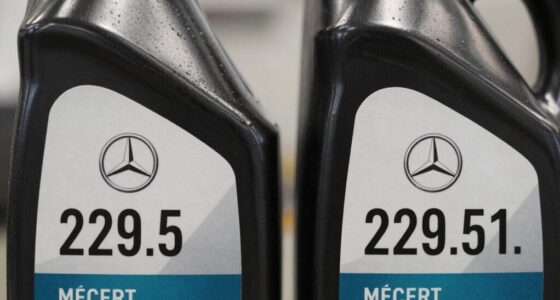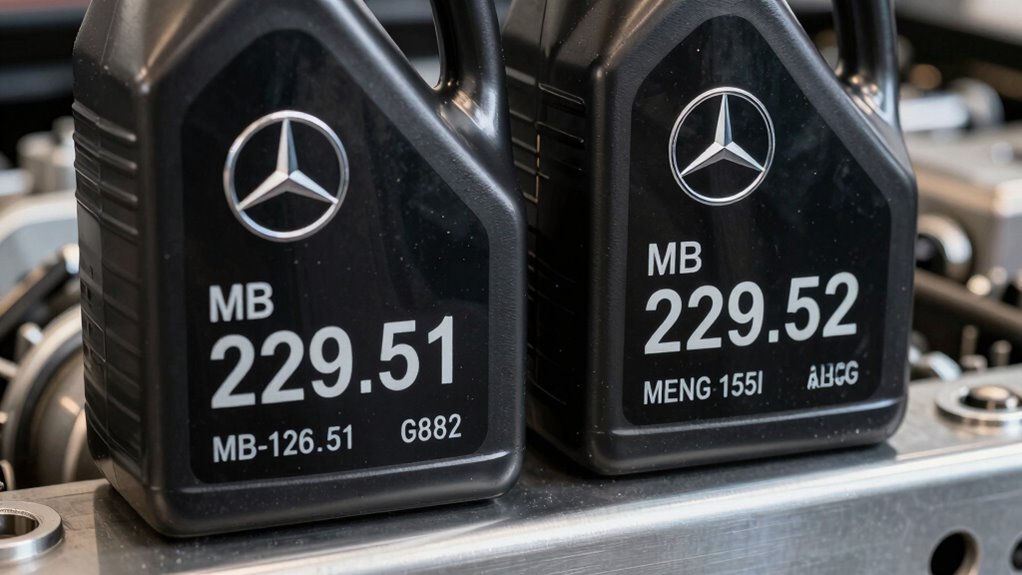

If you’re choosing between MB 229.51 and MB 229.52, it’s important to know that 229.52 offers higher protection for severe driving conditions, including better sludge control and thermal stability. While 229.51 is sufficient for regular use, 229.52 is designed for demanding situations, extending engine life and performance. The small difference in standards can impact your engine’s health over time—exploring these details further will help you make the best choice for your vehicle.
Key Takeaways
- MB 229.52 offers higher protection standards, especially for severe driving conditions, compared to MB 229.51.
- The main difference lies in deposit control and sludge prevention capabilities.
- MB 229.52 provides better thermal stability and engine cleanliness over extended intervals.
- MB 229.52 is generally more expensive and suited for demanding engine environments.
- Using MB 229.52 where MB 229.51 is recommended may provide extra protection but isn’t always necessary.
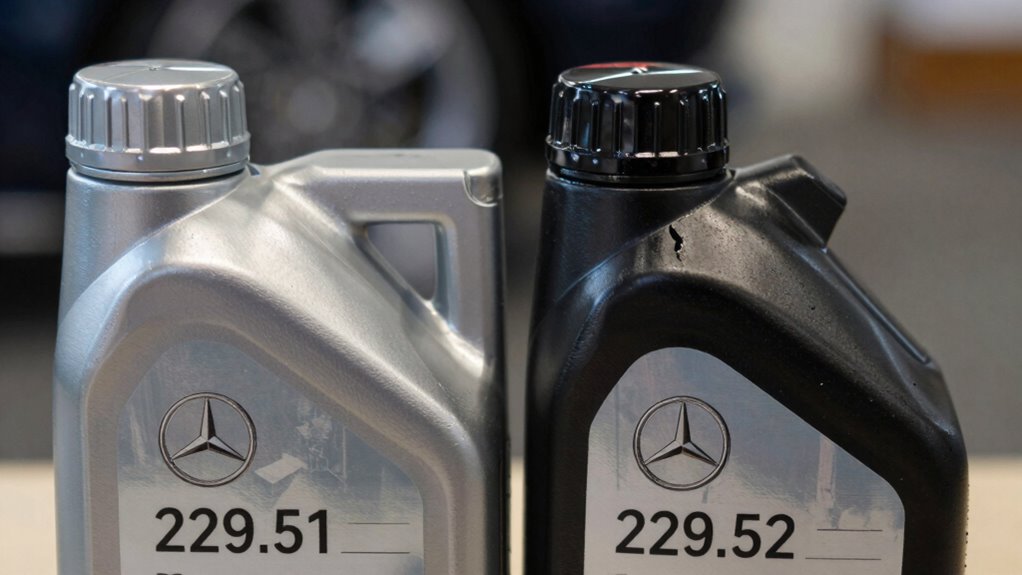
When choosing the right engine oil for your Mercedes, understanding the differences between MB 229.51 and MB 229.52 is essential. These two specifications are often confused, but they serve different purposes and impact your vehicle’s performance in subtle yet significant ways. If you’re considering synthetic oil compatibility, it’s important to note that both MB 229.51 and MB 229.52 oils are fully synthetic, designed to meet high-performance standards. However, the key lies in the engine performance differences they bring about. MB 229.51 oils are formulated primarily for vehicles that require extended oil change intervals and improved fuel efficiency. They deliver excellent engine cleanliness, oxidation resistance, and wear protection, making them suitable for engines that operate under demanding conditions. Conversely, MB 229.52 oils are tailored for engines that need even higher standards of protection, especially in vehicles exposed to severe driving conditions like frequent short trips, high speeds, or heavy loads. They provide enhanced sludge and deposit control, ensuring your engine remains clean and efficient over time. Additionally, high thermal stability**** is a notable feature of MB 229.52 oils, supporting better performance under extreme temperatures.
In terms of synthetic oil compatibility, both standards are compatible with the latest synthetic formulations, but it’s crucial to stick to the recommended specifications for your specific model. Using an oil that meets MB 229.52 on a vehicle designed for MB 229.51 might offer extra protection, but it’s not always necessary and could be more expensive. Conversely, using an MB 229.51 oil in an engine that requires MB 229.52 might compromise performance and longevity, especially under severe conditions. That’s why consulting your owner’s manual or a trusted mechanic is vital before making a switch. They can help you determine whether your driving habits and engine requirements align better with one specification over the other.
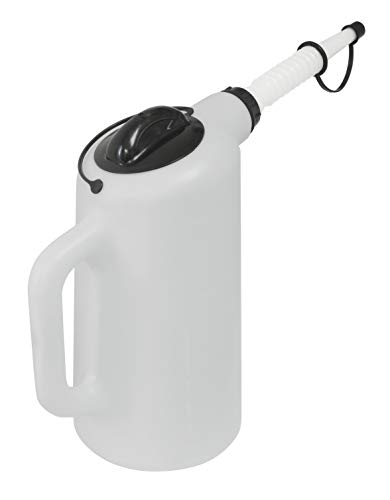
Lisle 19702 8 Quart Dispenser With Lid And Cap
Now With a Spout Cap and Lid to Keep Out Contaminants.
As an affiliate, we earn on qualifying purchases.
Frequently Asked Questions
How Do MB 229.51 and 229.52 Compare in Fuel Efficiency?
You’ll notice that MB 229.52 offers slightly better fuel economy compared to 229.51, thanks to its improved formulation. This means your engine performance stays strong while consuming less fuel. The change helps you save money at the pump without sacrificing power. Overall, choosing 229.52 can give you a more efficient driving experience, balancing fuel economy and engine performance effectively, especially over long-term use.
Are There Specific Vehicle Models Compatible With Both Oils?
You might wonder if both oils suit your vehicle. The answer is yes—many Mercedes models, especially recent ones, are compatible with both MB 229.51 and 229.52 oils. Checking your vehicle’s manual confirms model applicability and guarantees the right fit. Always verify vehicle compatibility because specifications can vary, and using the correct oil preserves ideal engine performance and longevity. Stay informed, stay protected.
What Are the Long-Term Effects of Using Each Oil Type?
Using MB 229.51 or 229.52 oil, you may notice differences in long-term effects. 229.52’s enhanced additive stability helps slow oil degradation, maintaining better engine protection over time. Meanwhile, 229.51’s formulation might see quicker additive breakdown, possibly leading to increased wear. Choosing the right oil impacts engine longevity, so consider how each type’s stability and degradation rate align with your driving habits for ideal long-term performance.
Can Switching Between MB 229.51 and 229.52 Cause Engine Issues?
Switching between MB 229.51 and 229.52 generally won’t cause engine issues if your oil change intervals are maintained properly. Unlike synthetic vs conventional oils, these specifications are designed for similar performance levels, but it’s best to stick to one type for consistency. Changing oils too frequently or mixing them might affect engine efficiency, so follow the manufacturer’s recommendations to keep your engine running smoothly.
Which Oil Offers Better Protection Under Extreme Driving Conditions?
Think of your engine as a wild horse needing a strong saddle. Synthetic blends with ideal oil viscosity provide better protection under extreme driving conditions, resisting breakdown and maintaining lubrication. They form a resilient shield that adapts to high heat and stress, keeping your engine smooth and safe. Choosing the right synthetic blend ensures your engine’s durability, even when you’re pushing it to the limit on demanding roads.

Roughneck Air-Operated Oil Dispenser - 8-Gallon, 145 PSI
Works anywhere without continuous connection to a compressed air line
As an affiliate, we earn on qualifying purchases.
Conclusion
You now know that the switch from Mercedes MB 229.51 to 229.52 isn’t just a minor update—it’s designed to enhance engine protection and efficiency. Did you know that 78% of Mercedes owners report smoother engine performance after upgrading to 229.52? That small change truly makes a big difference. So, if you’re aiming for peak engine health, opting for the latest specifications could be a smart move to keep your vehicle running at its best.

Heavy Duty Air Operated Oil Transfer Pump Digital Petrol Motor Oil Fluid Dispenser Pump Control Valve Meter Nozzle (US Stock)
[Digital Oil Control Valve] The digital oil pump with rigid tube and manual tip or flexible hose and...
As an affiliate, we earn on qualifying purchases.
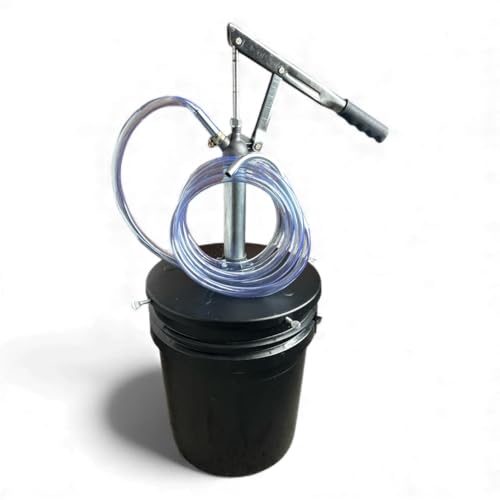
5-Gallon Lever Bucket Pump, Self-Priming Lubricant Pump, 1 Qt/12 Strokes, 5 ft Oil-Resistant Hose & Curved Nozzle, Fits 10–12.25" Bucket Openings
POWERFUL LEVER ACTION PUMP: Delivers smooth, consistent pumping for oils, lubricants, ATF, gear oils, and hydraulic fluids—built for...
As an affiliate, we earn on qualifying purchases.