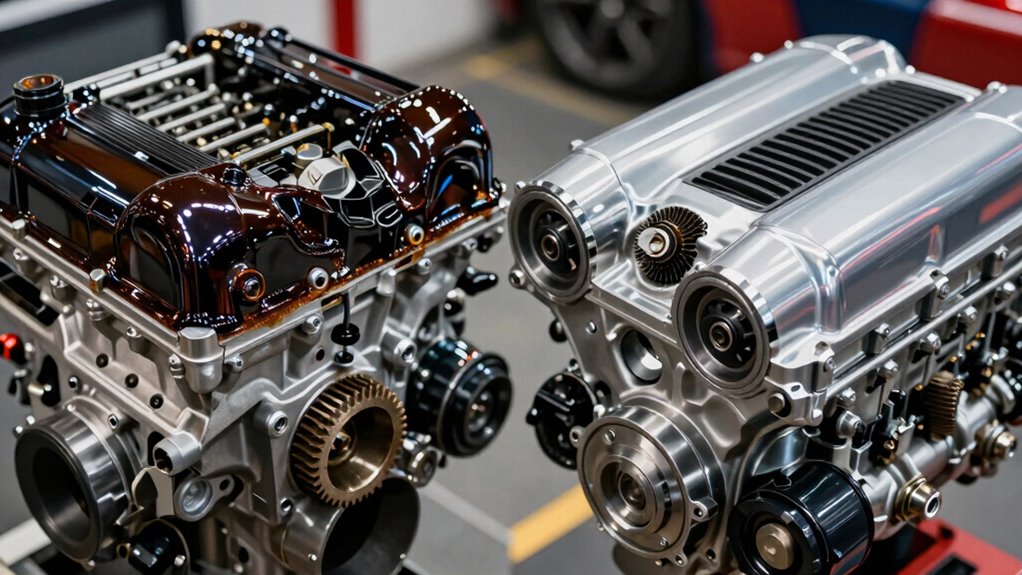

Porsche approvals guarantee that your engine oil meets strict quality and performance standards, beyond just viscosity ratings. Viscosity indicates how thick the oil is, but it doesn’t reveal if the oil contains essential additives or if it’s compatible with your engine. Using an approved oil assures proper protection, lubrication, and longevity. If you stay informed, you’ll understand why selecting the right oil involves more than just its viscosity—and there’s more to discover.

Get business pricing on garage and car supplies
- Business-only prices and quantity discounts
- Tax-exempt purchasing
- Multiple users, one account, clear invoices
Key Takeaways
- Viscosity indicates oil thickness but doesn’t guarantee the presence of essential additive packages.
- Approved oils meet Porsche’s quality standards beyond just matching viscosity ratings.
- Viscosity alone doesn’t ensure proper engine protection or compatibility with specific vehicle requirements.
- Synthetic blends offer benefits like stability and wear protection that viscosity ratings can’t reflect.
- Following Porsche approvals ensures oils provide comprehensive performance, safety, and warranty coverage.
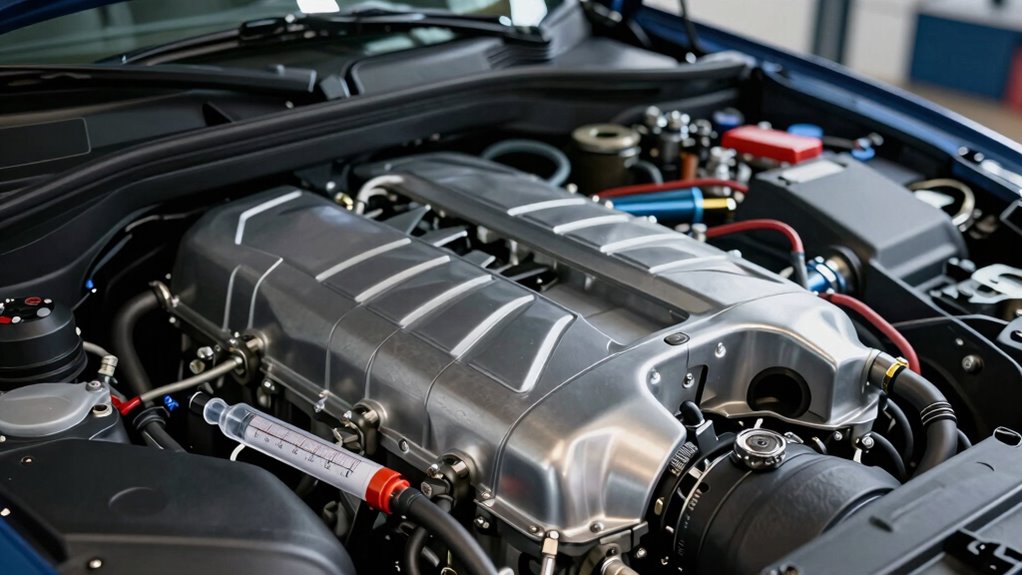
Are you wondering how Porsche approvals streamline the process of customizing and modifying your vehicle? When you’re looking to enhance your car, whether through aftermarket parts or performance upgrades, the approval process guarantees everything aligns with Porsche’s strict standards. One vital aspect often overlooked is the type of oil you choose. While viscosity ratings provide a quick reference, they never tell the whole story. That’s because modern engines rely on more than just oil thickness to perform at its best and stay durable over time.
Porsche’s approval system emphasizes the importance of using oils that meet specific quality standards, especially synthetic blends. Synthetic blends combine the best features of conventional oils and full synthetics, offering improved stability, better temperature resistance, and enhanced lubrication. These qualities are essential because they help maintain peak engine performance under demanding conditions. When your engine runs smoothly with the right oil, it reduces wear and tear, which directly contributes to engine longevity. Using approved synthetic blends means you’re giving your Porsche’s engine the protection it needs to last longer, even when subjected to high speeds or extended driving periods.
Viscosity alone can be misleading. An oil might have the right viscosity number but still lack the necessary additives or properties required by Porsche’s engineering standards. Approvals ensure that the oil contains specific additive packages that protect against corrosion, reduce sludge buildup, and maintain proper flow at various temperatures. This is especially important if you modify your vehicle or push it to its performance limits. The approval process not only confirms compatibility but also guarantees that the oil supports your engine’s health over time. It’s a safeguard against potential damage caused by using inferior or untested oils.
Oil viscosity isn’t enough; approvals ensure essential additives for engine protection and performance.
Additionally, oil specification verification helps ensure that the product matches the manufacturer’s recommended standards, providing further confidence in your choice. Moreover, Porsche approvals simplify your decision-making. Instead of guessing whether a particular oil is suitable, you can rely on approved products that meet the brand’s rigorous criteria. This saves you time and potential costs down the line, as using the wrong oil can lead to increased engine wear or even void your warranty. The approval process also ensures that your modifications are within the parameters that guarantee the car’s reliability and performance. When you follow these guidelines, you’re not just complying with regulations—you’re proactively caring for your vehicle’s longevity, guaranteeing it performs as intended for years to come.
Porsche approved synthetic engine oil
As an affiliate, we earn on qualifying purchases.
As an affiliate, we earn on qualifying purchases.
Frequently Asked Questions
How Do Porsche Approvals Differ From Other European Automakers?
You’ll notice Porsche approvals differ from other European automakers because they focus on strict approval standards and specific oil formulations. Porsche requires oils to meet higher criteria, ensuring ideal engine performance and longevity. Unlike some brands that emphasize viscosity alone, Porsche considers factors like additive packages and formulation details. This thorough approach guarantees the oil supports your vehicle’s unique engineering and performance needs, providing better protection and efficiency.
Are Synthetic Oils Always Preferred for Porsche Engines?
Synthetic oils are generally preferred for Porsche engines because their advantages include better engine lubrication, higher stability, and cleaner oil composition. You’ll find that synthetic oils flow more smoothly at extreme temperatures, protecting your engine like a shield. While not always mandatory, they often meet Porsche’s strict standards, ensuring ideal performance and longevity. So, yes, synthetic oils usually serve as the best choice for your Porsche’s health and efficiency.
How Often Should I Change My Porsche-Approved Oil?
You should change your Porsche-approved oil every 10,000 to 15,000 miles, or roughly once a year, depending on your driving habits. Check your maintenance schedule for specific recommendations, especially if you often drive in harsh conditions. Regular oil changes help guarantee peak engine performance and longevity. Keep an eye on oil levels and quality, and follow your Porsche’s guidelines to maintain top performance and avoid unnecessary repairs.
Do Porsche Approvals Include Environmental Considerations?
Yes, Porsche approvals do consider environmental impact and fuel efficiency. They guarantee oils meet strict standards that reduce emissions and lessen environmental harm, helping your vehicle run cleaner. By choosing approved oils, you support better fuel economy and lower your carbon footprint. Porsche emphasizes sustainable practices, so their approvals aim to balance performance with environmental responsibility, giving you confidence that your car’s oil contributes positively to both engine health and the planet.
Can I Use Non-Approved Oils in My Porsche Safely?
Using non-approved oils in your Porsche is like risking your engine’s life—it’s not worth it. You should always prioritize oil compatibility and stick to those with manufacturer endorsements. These oils meet strict standards, ensuring peak performance and longevity. Straying from approved options can lead to damage, voiding warranties, and costly repairs. Trust only approved oils for peace of mind and to keep your Porsche running smoothly for miles to come.
high performance engine oil with Porsche approval
As an affiliate, we earn on qualifying purchases.
As an affiliate, we earn on qualifying purchases.
Conclusion
Remember, choosing the right oil isn’t just about viscosity—imagine it as selecting the perfect brush for a masterpiece. Viscosity alone can’t paint the full picture of your engine’s needs; other factors like additives and approvals matter just as much. So, don’t settle for a one-color solution. Instead, see the full palette. When you understand the deeper layers of oil approvals, you’re not just maintaining your Porsche—you’re elevating it to artful performance.
synthetic blend motor oil for Porsche
As an affiliate, we earn on qualifying purchases.
As an affiliate, we earn on qualifying purchases.
engine oil additives for Porsche engines
As an affiliate, we earn on qualifying purchases.
As an affiliate, we earn on qualifying purchases.
Fall Picks
fall essentials
As an affiliate, we earn on qualifying purchases.