
To verify an OEM approval without trusting marketing claims, start by checking official certification databases or the OEM’s website for authentic documents. Contact the OEM directly using verified contact details to confirm the certification’s validity. Use digital tools like QR code scanners or verification apps for quick confirmation. Be wary of red flags like suspicious logos or vague info, and consider third-party validation reports. If you’re curious for more tips, there’s plenty to learn about ensuring certification authenticity.
Key Takeaways
- Cross-reference certification documents with official OEM databases or certification portals for authenticity.
- Verify contact details and reach out directly to OEM using verified contact information.
- Check certification labels, signatures, seals, or QR codes and validate them via OEM’s official verification tools.
- Confirm certification scope, issue, and expiry dates to ensure current and relevant approval.
- Beware of inconsistent branding, suspicious logos, or unverifiable claims; conduct thorough source research.
OEM certification verification tools
As an affiliate, we earn on qualifying purchases.
As an affiliate, we earn on qualifying purchases.
Why OEM Approval Is Critical for Your Equipment
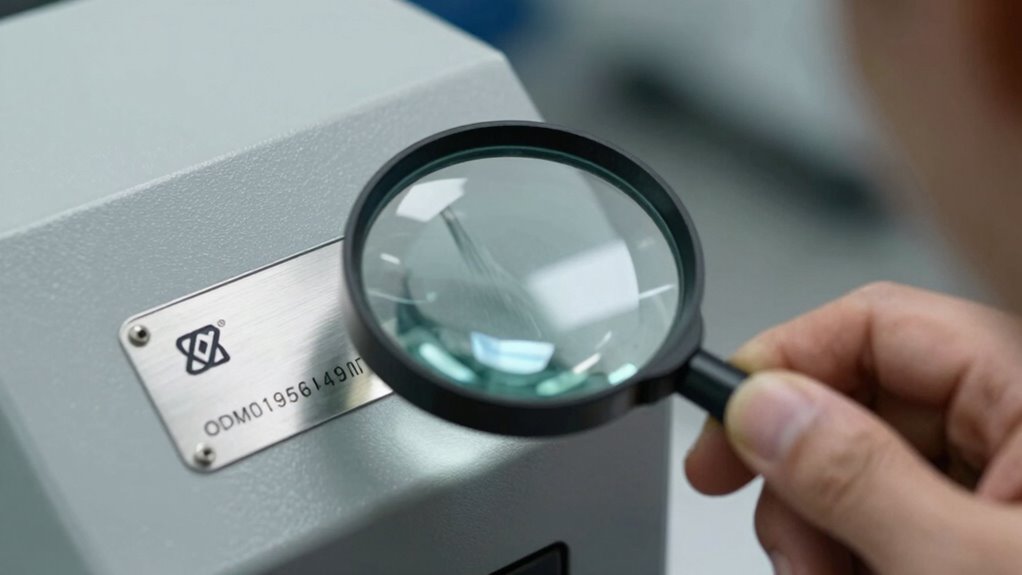
OEM approval is crucial because it guarantees that your equipment meets the manufacturer’s strict standards for safety, performance, and reliability. When a product carries official OEM approval, you can trust that it has been tested and certified according to high-quality benchmarks. This certification often involves adherence to industry-specific quality standards that ensure consistent performance. It also helps reduce the likelihood of product recalls caused by substandard components. It reduces the risk of equipment failure, accidents, and costly repairs down the line. Additionally, certification processes help verify that the product aligns with industry regulations, further safeguarding your investment. Without OEM approval, you may unknowingly use substandard parts that don’t fit properly or perform as expected, compromising safety and efficiency. Relying on approved components ensures compatibility and longevity, protecting your investment. Manufacturers’ standards also serve as a vital indicator of a product’s overall quality and safety in industries like automotive, aerospace, or electronics, where OEM approval isn’t just a formality—it’s a critical indicator that your equipment adheres to the highest standards set by the manufacturer.

QR Code Reader – Fast QR Code Scanner
View a history list of all of your past scans
As an affiliate, we earn on qualifying purchases.
As an affiliate, we earn on qualifying purchases.
How to Find Official OEM Certification Documents
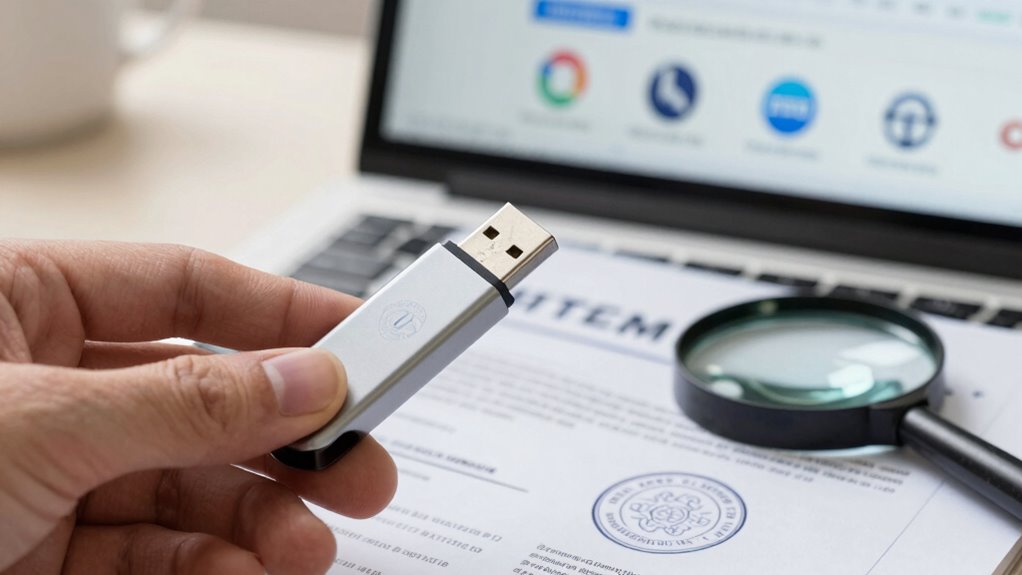
To find official OEM certification documents, start by checking the manufacturer’s official certification databases or websites. Make sure to verify that the documents you locate are authentic by comparing them to official sources. This way, you can confidently confirm the approval status of your equipment. Additionally, official certification databases often provide the most reliable and up-to-date information on OEM approvals. Consulting digital content verification methods can further ensure the legitimacy of the documentation you find. To enhance your verification process, consider using authentication tools that cross-reference certification data with manufacturer records. Implementing verification protocols based on recognized standards can also improve accuracy and trustworthiness. Conducting documentation audits can help identify any discrepancies or outdated certifications, further strengthening your confidence in the approval status.
Locating Certification Databases
Wondering where to find official certification documents for OEM approvals? Your best bet is to visit the manufacturer’s official website or certification portals. Many OEMs maintain dedicated databases or sections where they publish their certifications, test reports, and approval records. Use specific search terms like “certification database,” “approved products,” or “compliance records” along with the OEM’s name. You can also check industry-specific certification bodies or government regulatory agencies that often host centralized certification databases. These sources are reliable and regularly updated, making them ideal for verifying authenticity. Additionally, official certification databases often include search filters and verification tools that streamline the process for consumers and professionals alike. Keep in mind that some OEMs partner with third-party certification platforms, so it’s worth cross-referencing multiple sources if you can’t find what you need initially. Verification tools can further assist in confirming the legitimacy of certifications.
Verifying Document Authenticity
Ever question whether a certification document is genuine? The key is to verify its authenticity directly through official channels. Start by examining the document closely for official seals, signatures, and watermarks that are difficult to replicate. Next, check for unique serial numbers or QR codes that link to the OEM’s official database. Use these identifiers to verify the document’s legitimacy—scanning QR codes or entering serial numbers on the OEM’s website often reveals confirmation of authenticity. Additionally, contact the OEM directly if you’re unsure. They can verify whether the certificate they issued matches their records. Never rely solely on visual inspection or marketing claims. Authentic documents are verifiable through official, authoritative sources, ensuring you’re not misled by counterfeit certifications.
official OEM certification database access
As an affiliate, we earn on qualifying purchases.
As an affiliate, we earn on qualifying purchases.
Confirm OEM Approval Authenticity by Contacting the OEM Directly
To confirm OEM approval authenticity, you should verify the contact details carefully before reaching out. Request official documentation proof directly from the manufacturer to guarantee it’s legitimate. Always check for a valid manufacturer contact to avoid falling for false or outdated information. Additionally, understanding bank SWIFT/BIC codes can help ensure secure and legitimate communication channels during your verification process. Being familiar with seasons and timing considerations in astrophotography can also assist in confirming the credibility of the manufacturer’s claims related to equipment suitability or performance. Moreover, verifying the OEM’s reputation through customer reviews and industry reputation can provide further assurance of authenticity. Incorporating website performance metrics analysis can help identify official online sources and prevent misinformation during your verification efforts. Recognizing official certification standards can further reinforce the authenticity of the approval.
Verify Contact Details Carefully
How can you be sure that the OEM approval is genuine? The first step is to verify the contact details provided. Check the phone numbers, email addresses, and physical addresses carefully. Look for official websites or directories to confirm that the contact information matches what the OEM publicly shares. Be wary of discrepancies, such as outdated contact info or suspicious email domains. Reach out directly using the verified details, rather than any links or contact info provided by third parties. Authentic OEM contacts typically have consistent, professional contact methods. If anything seems off or inconsistent, don’t hesitate to double-check through other trusted sources. Accurate contact details are vital to ensure you’re communicating with the real OEM and not a scammer. Additionally, verifying the vetting process used by the OEM can help confirm their legitimacy. Confirming the OEM’s certification status can provide further assurance of authenticity. Cross-referencing the OEM’s credentials with industry certification bodies can also verify their credibility. Also, reviewing the OEM’s customer reviews and feedback can offer insights into their authenticity and reputation. Conducting a comprehensive background check can further strengthen your confidence in their legitimacy.
Request Official Documentation Proof
After verifying the contact details, the next step is to request official documentation that proves the OEM’s approval. Reach out directly to the OEM and ask for certification or approval letters. Authentic documents should include official headers, signatures, and dates. Confirm that these documents match the product specifications and OEM branding. To better understand what to look for, consider this table:
| Document Type | Key Features | Purpose |
|---|---|---|
| Certification | Official seal, signature, date | Confirm product approval |
| Approval Letter | OEM letterhead, detailed info | Verify OEM authorization |
| Test Reports | Lab results, standards compliance | Ensure safety and compliance |
| Warranty Proof | Manufacturer’s warranty info | Validate OEM backing |
| Product Labels | Authentic branding, serial # | Confirm genuine approval |
Always cross-check details to avoid counterfeit claims. Additionally, document authenticity can be further verified by comparing the provided materials with publicly available information from the OEM’s official website or contact channels.
Check for Manufacturer Contact
Have you confirmed the OEM’s contact information before trusting any documentation? It’s essential to verify that the contact details are legitimate and match the information listed on the manufacturer’s official website. Avoid relying solely on email addresses or phone numbers provided in documents or marketing materials. Instead, look up the OEM’s official contact channels directly through their website or trusted industry directories. Call or email the manufacturer to verify the approval and ask specific questions about the product or certification. Genuine OEMs are usually responsive and willing to confirm authenticity. To further ensure market manipulation or counterfeit claims, consider cross-referencing multiple sources of verification. This step helps you avoid counterfeit claims and ensures the approval is legitimate. Verification methods are crucial for ensuring the authenticity of OEM approval beyond marketing claims. Direct contact is one of the most reliable ways to authenticate OEM approval beyond marketing claims. Additionally, understanding the manufacturer’s reputation can help assess the trustworthiness of the OEM’s certifications. Confirming the OEM’s credibility can also be supported by checking industry standards, which often set benchmarks for certification processes.

NQUO Rental Billing Software (Unit Pos)
FOR Small Facility, Complex, Housing, Arcade
As an affiliate, we earn on qualifying purchases.
As an affiliate, we earn on qualifying purchases.
Check Certification Details for Validity and Scope

Are the certification details truly current and applicable to the scope of your equipment? Verify the certification issue and expiry dates to guarantee they’re up-to-date. Check if the certification covers the specific standards relevant to your product’s use and environment. Look for detailed scope descriptions within the certification documents—these specify exactly what equipment or processes are covered. Confirm that the certification applies to the model or type you have, not just a broader category. If the scope is vague or overly generic, it may not guarantee compliance for your specific application. Always cross-reference the certification details with the official documentation to ensure accuracy. Valid, scope-specific certification confirms that the OEM approval is legitimate and relevant to your needs.
Use Digital Tools to Verify OEM Certifications Easily
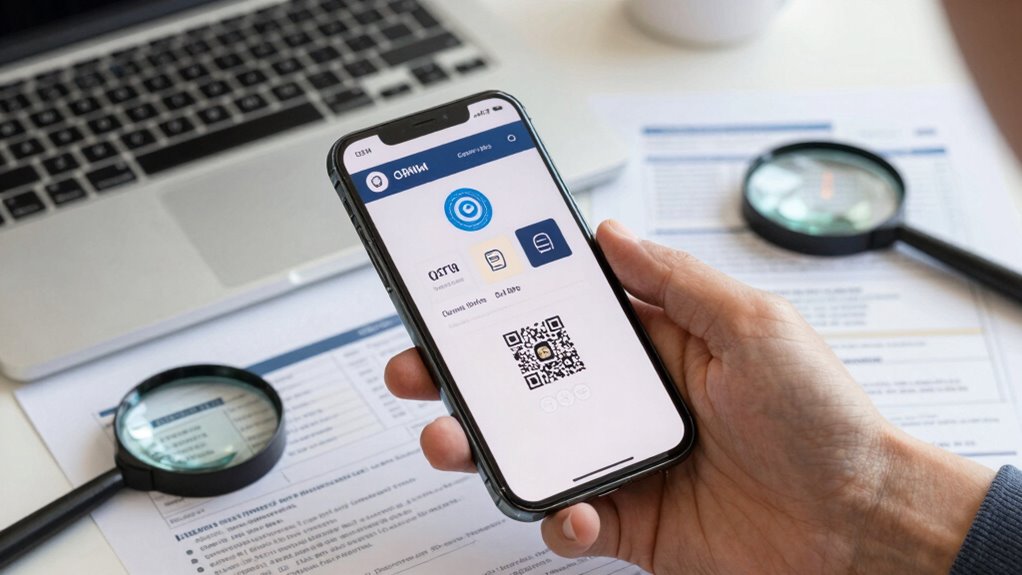
Digital tools have made verifying OEM certifications faster and more accurate than ever before. You can now access official databases, upload certification documents, or scan QR codes to confirm authenticity instantly. These tools reduce manual effort and eliminate guesswork, giving you confidence in the OEM’s claims. Imagine a digital dashboard that shows certifications in real-time, with clear status indicators. Here’s a visual:
| Tool Type | Functionality |
|---|---|
| Certification Databases | Search OEM records quickly |
| QR Code Scanners | Verify certifications via smartphone |
| Verification Apps | Cross-check data with official sources |
| Online Portals | Access certification validity info |
| Automated Alerts | Get notified of updates or issues |
Using these digital resources streamlines your verification process, making trust more data-driven and less reliant on marketing language.
Look for Third-Party Testing and Validation Reports
Third-party testing and validation reports serve as unbiased evidence of a product’s performance and compliance. These reports come from independent organizations, not the manufacturer, ensuring objectivity. To verify an OEM’s approval effectively, look for:
Independent testing reports verify product performance and compliance objectively.
- Clear documentation from reputable testing labs
- Certifications aligned with industry standards
- Test results that match product specifications
- Transparent reports accessible for review
Assess the Manufacturer’s Reputation and History
Evaluating a manufacturer’s reputation and history provides critical insight into their reliability and commitment to quality. You should research their track record by checking customer reviews, industry reports, and case studies. Look for consistent product quality and timely delivery, which indicate reliability. Investigate how long they’ve been in business; established companies tend to be more trustworthy. Consider their relationships with suppliers and partners, as strong connections often reflect stability. Also, see if they’ve faced significant legal issues or recalls, which could suggest underlying problems. A manufacturer with a solid reputation and a proven history shows they prioritize quality and customer satisfaction. This background check helps you make an informed decision and reduces the risk of relying on unverified OEM claims.
Spot Red Flags and Fake OEM Certifications

While a manufacturer’s reputation offers valuable insights, it’s equally important to be vigilant for red flags that indicate potential fakery. Look out for these warning signs:
- Suspicious Certification Logos – blurry, poorly printed, or inconsistent logos suggest fake documents.
- Unverifiable Certification Numbers – check if certification numbers match official records; fake ones often don’t.
- Missing or Altered Details – missing signatures, dates, or inconsistent fonts can indicate tampering.
- Unrecognized Certification Bodies – certifications from obscure or unrecognized organizations are a big red flag.
If you notice any of these signs, proceed with caution. Authentic OEM certifications are issued by reputable bodies and follow consistent, verifiable standards.
Final Tips to Ensure OEM Approvals Are Legitimate
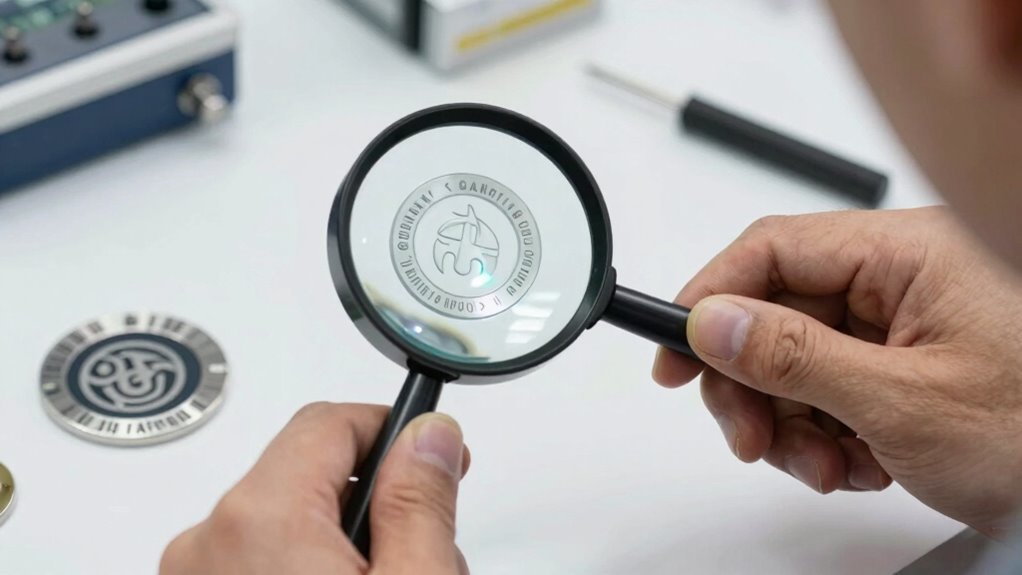
To guarantee OEM approvals are legitimate, always verify the certification directly with the issuing authority whenever possible. Contact the OEM or the certifying body to confirm the approval’s authenticity, rather than relying solely on certificates or online claims. Check official databases or websites for verification options. Be wary of documents that lack official stamps, signatures, or contact details. Cross-reference the approval number or code with official records. Additionally, seek out third-party validation or industry reports that confirm the OEM’s credentials. Keep in mind that legitimate approvals are transparent and verifiable; if something feels off or difficult to confirm, trust your instincts and dig deeper. Doing this extra step protects you from counterfeit certifications and ensures you’re working with authentic OEM approvals.
Frequently Asked Questions
What Are Common Signs of Fake OEM Approval Documents?
You should look for signs like inconsistent formatting, misspelled words, or missing official stamps. Fake documents often have blurry logos or uneven printing. Check the issuing authority’s contact details—if they’re unfamiliar or incorrect, that’s a red flag. Genuine approvals usually include detailed product info and official signatures. If anything seems off or hard to verify, trust your instincts and double-check with the OEM directly.
How Often Do OEM Certifications Get Updated or Renewed?
They say, “Trust, but verify,” and OEM certifications typically get updated or renewed every one to three years. You should regularly check the certification’s validity date and confirm it matches the latest version on the OEM’s official website. Keep an eye out for renewal notices or expiry dates on official documents. Staying proactive helps you avoid outdated or invalid certifications, ensuring your products meet current standards and safety requirements.
Can Third-Party Auditors Guarantee OEM Approval Authenticity?
Third-party auditors can help verify OEM approval authenticity, but they can’t guarantee it entirely. They conduct thorough inspections and review documentation, increasing your confidence. However, OEM approvals are issued and maintained by the manufacturer, so cross-checking with official OEM sources is essential. Use third-party audits as a reliable step in your verification process, but always confirm directly with the OEM to ensure the approval’s current validity and genuineness.
Are Digital Verification Tools Reliable Across All Industries?
Digital verification tools aren’t foolproof across all industries. While they provide quick, accessible data, their reliability depends on industry standards and data security. You shouldn’t rely solely on these tools, just as you wouldn’t trust a single source for critical decisions. Instead, combine digital verification with official documentation and third-party audits to guarantee authenticity. This layered approach gives you a more accurate, trustworthy understanding of OEM approvals.
What Legal Steps Can Be Taken Against Counterfeit OEM Certifications?
You can take legal action by consulting an attorney experienced in intellectual property law to file a lawsuit against counterfeit OEM certifications. Report the counterfeit to relevant authorities, like customs or consumer protection agencies, to help seize fake products. Additionally, pursue cease and desist orders against the infringing parties, and consider engaging with law enforcement to investigate and shut down counterfeit operations. These steps can help protect your brand and enforce genuine OEM standards.
Conclusion
Always take the extra step to verify OEM approvals—you’ll find it’s like reading between the lines of a good story. Trusting marketing claims too easily can lead you astray, so don’t just rely on the headline; dig deeper and confirm with official sources. A little diligence now can save you from surprises later, ensuring your equipment truly meets the standards you expect. Remember, the most genuine assurances often come from the quietest, most trustworthy sources.