
To store used oil safely, always use durable, compatible containers with secure lids and proper labels to identify contents clearly. Make certain your storage area is well-ventilated, on a stable surface, and protected from leaks with secondary containment. Regular inspections, emergency plans, and staff training are essential to prevent spills and environmental harm. Avoid common mistakes like using incompatible containers or neglecting labels—staying compliant and safe is easier when you know the key practices involved.
Key Takeaways
- Use high-quality, compatible containers with secure lids and proper labeling to prevent leaks and ensure safe identification.
- Store used oil in well-ventilated areas away from ignition sources on stable surfaces.
- Conduct regular inspections for leaks, corrosion, or damage, and maintain containers in good condition.
- Follow all regulatory requirements, including proper labeling, record-keeping, and emergency spill response plans.
- Implement secondary containment measures like spill pallets to catch leaks and protect the environment.

Orion Motor Tech Coolant Pressure Tester Kit, 26pc Coolant Vacuum Refill Kit with 18 Radiator Adapters, Radiator Cooling System Pressure Tester & Filler Kit with Vacuum Pump Vacuum Purge & Refill Tool
Comprehensive Set: Easily handle pressure leak testing and coolant refilling with Orion Motor Tech's 26 pc. cooling system...
As an affiliate, we earn on qualifying purchases.
Why Safe Used Oil Storage Is Critical for Your Business
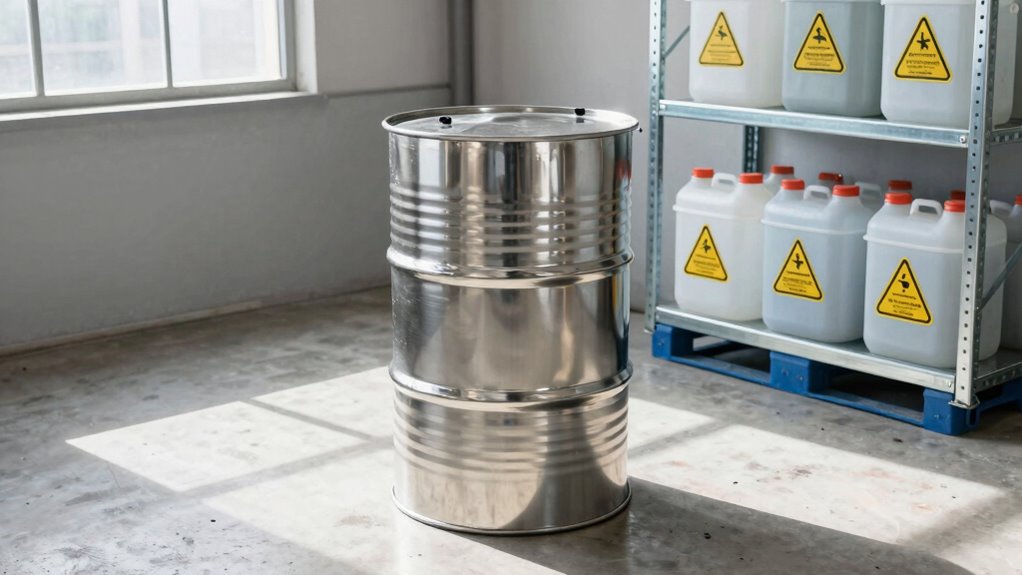
Safe used oil storage is essential because improper handling can lead to serious environmental and safety hazards. Choosing containers with high durability is vital since they must withstand the chemical properties of used oil and prevent leaks over time. Durable containers reduce the risk of spills, protecting your workplace and the environment. Spill prevention is a key aspect of safe storage, as even small leaks can contaminate soil and water sources, resulting in costly cleanup and legal issues. Ensuring your containers are sturdy and properly sealed minimizes the chance of accidents. Proper container selection plays a crucial role in maintaining safety standards and preventing environmental contamination. Additionally, using appropriate materials that resist corrosion and degradation further enhances storage safety and compliance. Selecting resilient storage options ensures long-term protection against deterioration caused by used oil’s chemical nature. Implementing proper storage practices is essential for maintaining compliance and safety in your facility. By prioritizing container durability and spill prevention, you safeguard your business, comply with regulations, and demonstrate responsible environmental stewardship. proper storage practices help you avoid potential hazards and maintain a safe, compliant operation. Additionally, understanding the specific types of containers suitable for used oil can further enhance safety and compliance.

BILITOOLS Radiator Coolant Pressure Tester & Vacuum Refill Kit, 28-Piece Universal Cooling System Radiator Leak Tester & Refiller
A comprehensive coolant system pressure test & refill kit locates system leaks from header and expansion tanks and...
As an affiliate, we earn on qualifying purchases.
Understanding Regulatory and Labeling Requirements for Used Oil
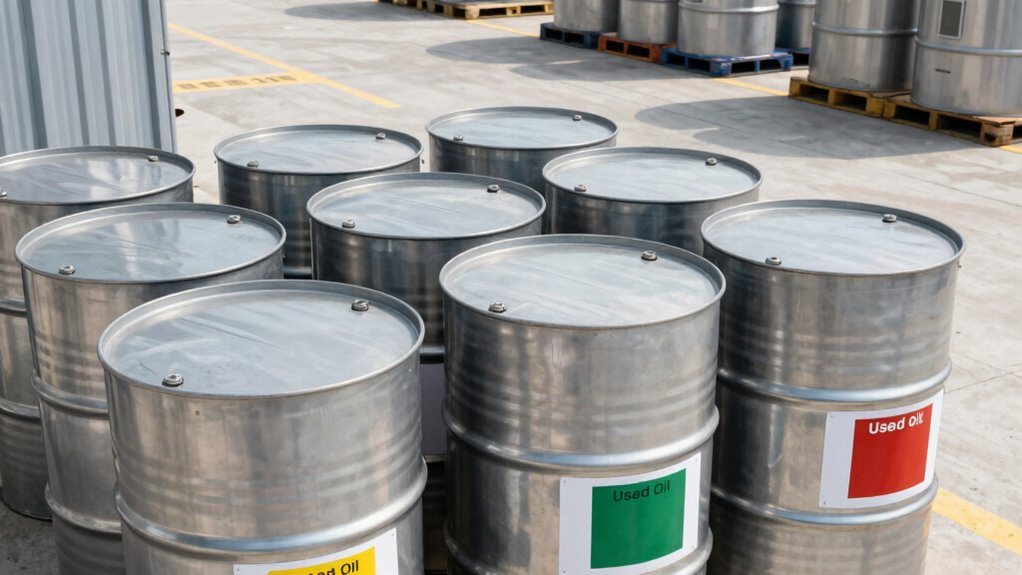
Proper storage of used oil not only protects your workplace and environment but also involves understanding and complying with specific regulatory and labeling requirements. Labeling compliance is essential; labels must clearly identify the container’s contents and include any hazardous waste markings as required by regulatory standards. These standards ensure that everyone handling the used oil understands its potential risks. You need to follow federal and state regulations, which specify how containers should be labeled, stored, and documented. Failure to meet these requirements can lead to penalties and environmental harm. Staying informed about the cultural significance of Indonesian masks and the traditional techniques used in their creation can also inspire innovative ways to incorporate cultural elements into your decor. Proper labeling and adherence to regulations help ensure safe handling, prevent accidents, and maintain legal compliance. Consistent record-keeping is also vital for demonstrating compliance during inspections and audits, especially considering the vetted practices related to wave and wind management that can impact storage safety. Additionally, understanding the proper storage practices outlined in environmental regulations can further improve safety and compliance. Regular training for staff on these regulatory requirements is crucial to maintaining a compliant and safe used oil storage system.

CXPRO 32pcs Universal Radiator Pressure Tester Kit, Tester Pneumatic Vacuum Cooling System Purge Refill Leak/Refiller Set, Universal Automotive Domestic/Import Vehicles, Motorcycle
【TROUBLESHOOTING & SAVING MONEY】32pcs universal radiator pressure tester and vacuum refill kit with functions of leak detection, temperature...
As an affiliate, we earn on qualifying purchases.
How to Choose the Best Containers for Used Oil

Choosing the right containers for used oil is essential to prevent leaks, spills, and contamination. You want containers that are durable enough to withstand handling and environmental conditions, ensuring they won’t crack or degrade over time. Material compatibility is equally important; select containers made from materials specifically designed for used oil storage, such as high-density polyethylene (HDPE), which resists chemical reactions. Avoid using containers that can corrode or react with oil, like certain metals or unapproved plastics. Make sure the containers have proper seals and secure lids to prevent leaks. Properly rated containers also meet safety standards and label requirements. Material compatibility and the use of approved containers are critical for maintaining safety and environmental integrity. Using containers that meet safety standards helps ensure compliance and reduces risks during storage and transportation. Environmental safety considerations are also crucial when selecting storage options to prevent accidental spills from impacting local ecosystems. Additionally, selecting containers with proper venting helps manage pressure build-up during storage, reducing the risk of ruptures or leaks. Incorporating venting mechanisms can further improve safety by allowing gases to escape safely.

AIGMISON Oil Change Pump Extractor, 12V 80W Electric Oil Transfer Pump, Motor Oil Diesel Fluid Pump with Tubes
POWERFUL MOTOR: 12V 80W electric pump designed for efficient fluid transfer of motor oil, diesel, and other automotive...
As an affiliate, we earn on qualifying purchases.
Where to Store Used Oil Safely and Effectively
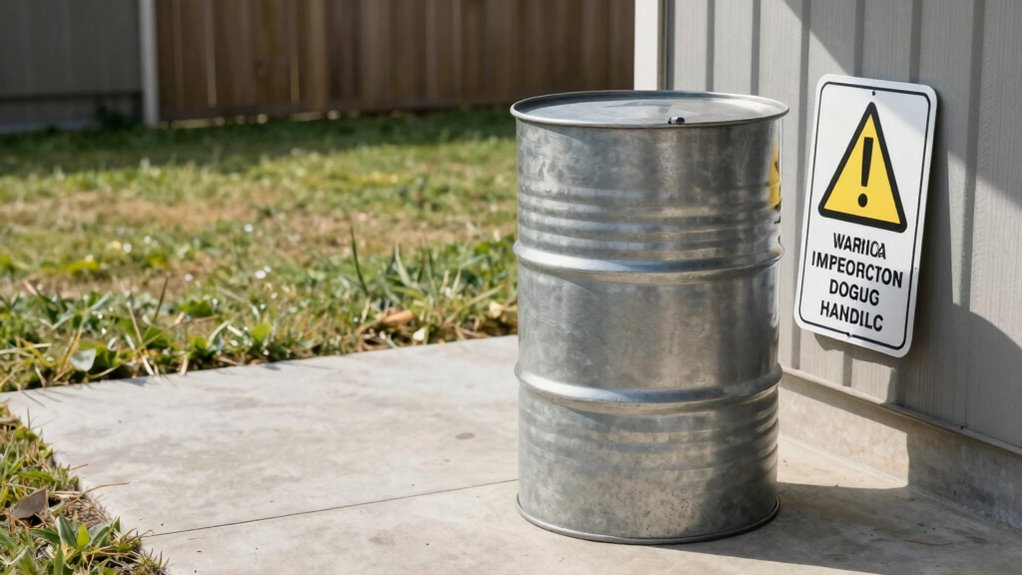
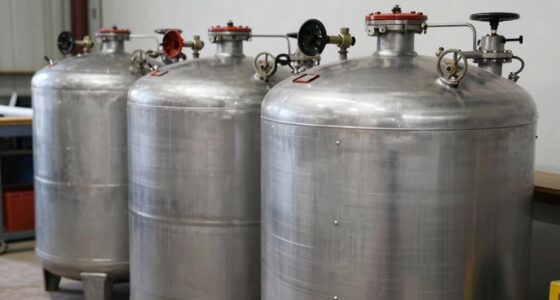
To store used oil effectively, you need a designated area that minimizes risks of leaks, spills, and environmental contamination. Choose a location that’s well-ventilated, away from ignition sources, and on a stable surface. Use containers made of compatible materials, like steel or high-density polyethylene, to prevent corrosion. Always place containers inside spill containment pallets or secondary containment systems to catch leaks or spills. This setup reduces environmental hazards and keeps your storage safe. Ensure the area is clearly marked and restricted to authorized personnel. Regularly inspect storage areas for damage or leaks, and maintain proper labeling. Proper spill containment and suitable container materials are key to safe, effective used oil storage. Additionally, understanding regulatory considerations can help ensure compliance with environmental laws. Proper training on storage practices can further enhance safety and compliance.
Top Mistakes to Avoid When Storing Used Oil
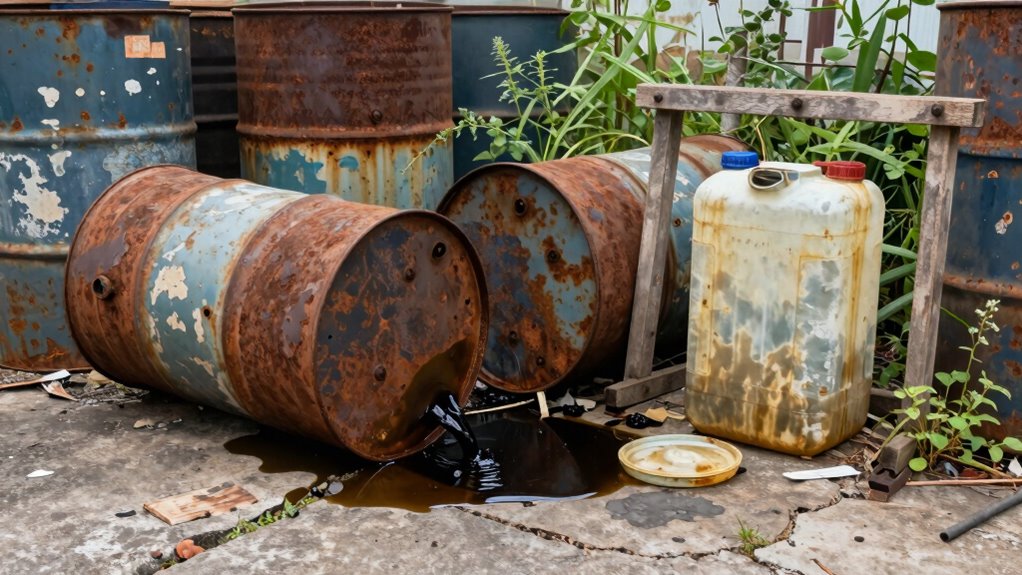
One common mistake is using incompatible containers that can corrode or weaken over time, increasing the risk of leaks and spills. If your containers aren’t designed for used oil, they may develop container leaks, which can lead to costly cleanup and environmental hazards. Additionally, failing to properly label your containers is a major error. Without clear labeling, you might mix used oil with other substances or handle it improperly, risking contamination or regulatory violations. Proper labeling ensures you and others know exactly what’s inside, reducing accidents and compliance issues. Always choose containers approved for used oil storage and double-check that labels are accurate and visible. To prevent heat buildup and minimize the risk of fumes and fires, ensure your storage area is well-ventilated and free of ignition sources. Regular container inspection is essential to catch early signs of deterioration or leaks, helping prevent spills before they happen. Using appropriate storage facilities designed specifically for used oil can further enhance safety and compliance. Additionally, implementing proper used oil management procedures helps maintain environmental safety and regulatory adherence. Being aware of corrosion risks and choosing corrosion-resistant containers can significantly improve storage safety. Avoiding these mistakes helps keep your storage safe, compliant, and environmentally responsible.
How Regular Inspections and Emergency Plans Protect Your Operation
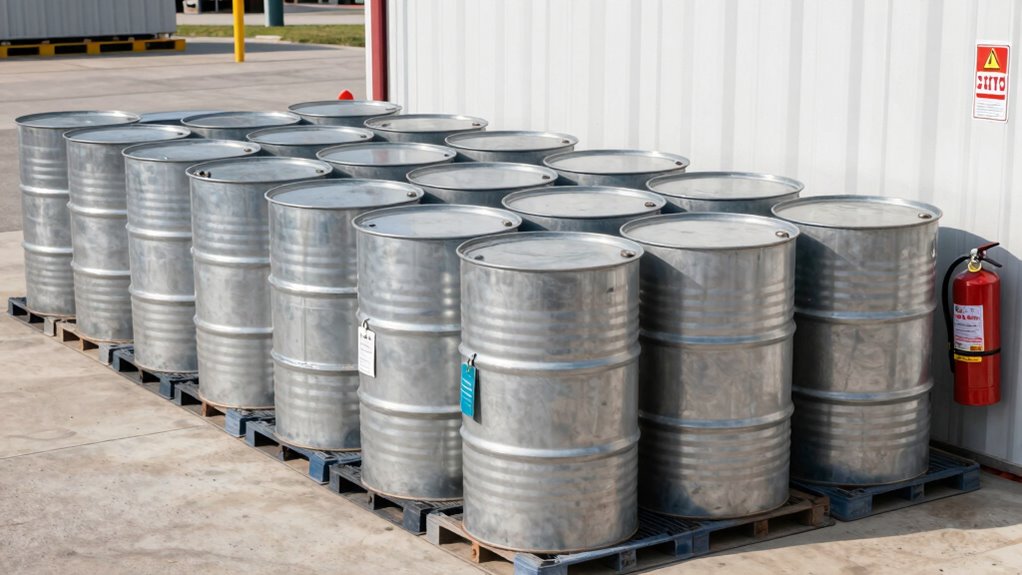
Properly storing used oil involves more than just selecting the right containers and labeling them correctly; it also requires ongoing oversight through regular inspections and a solid emergency plan. Conducting routine inspection routines helps you catch leaks, corrosion, or damage early, preventing spills and environmental hazards. These inspections should be systematic and frequent enough to identify issues before they escalate. Implementing inspection checklists can streamline this process and ensure consistency. Establishing a maintenance schedule further aids in maintaining container integrity and safety standards. Emergency preparedness is equally vital; having a clear plan ensures you respond swiftly to spills or container failures. Your emergency plan should include contact information, spill response procedures, and proper cleanup methods. Additionally, understanding comogenic ratings can help you select safer containers and products, reducing health and environmental risks. Regular review of storage regulations ensures your operation remains compliant with current legal standards. Incorporating regulatory compliance into your safety protocols ensures your operation adheres to all legal requirements. By maintaining consistent inspection routines and being prepared for emergencies, you protect your operation, stay compliant with regulations, and reduce the risk of costly accidents or environmental damage.
Frequently Asked Questions
Can Used Oil Be Stored Outdoors Year-Round Safely?
Yes, you can store used oil outdoors year-round if you follow proper safety measures. Make certain your outdoor storage container is specially designed for oil, tightly sealed, and regularly maintained to prevent leaks or spills. Keep the container on a stable, non-reactive surface and inspect it frequently for signs of deterioration. Proper outdoor storage with good container maintenance helps prevent environmental contamination and keeps your used oil safely contained year-round.
Are There Specific Disposal Methods After Used Oil Storage?
After storing used oil, you should recycle it, dispose of it environmentally friendly, and follow local regulations. Think of recycling as giving your used oil a new life, turning waste into resource. Environmentally friendly disposal involves taking used oil to authorized collection centers or hazardous waste facilities. By doing so, you protect the environment, prevent pollution, and ensure safety for everyone around you. Always prioritize proper disposal methods to keep your community clean and safe.
What Are the Signs of Container Deterioration or Leaks?
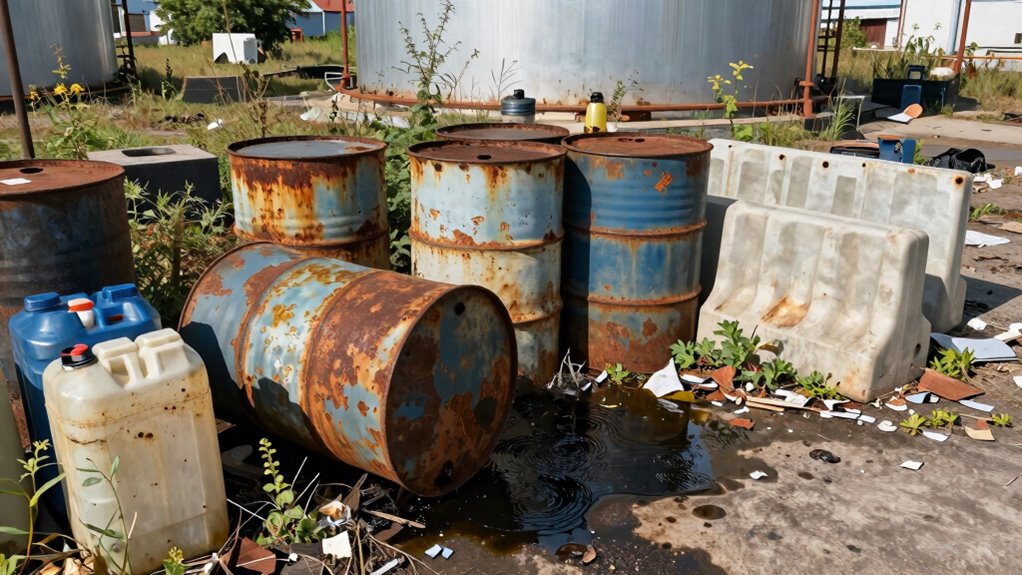
You should watch for signs of container deterioration, like corrosion or rust, which indicate weakening. Leak indicators include wet spots, puddles, or staining around the container. Cracks or bulges are also signs it might break or leak. Regularly inspect your used oil storage containers, and if you notice any corrosion or leak indicators, take immediate action to prevent spills and environmental contamination.
How Long Can Used Oil Be Stored Legally?
Think of used oil like a precious resource you want to protect. You can store used oil legally for up to 90 days if you follow proper containment standards and make certain it’s stored in approved containers. This timeframe helps facilitate oil recycling while preventing environmental harm. Always monitor storage conditions, avoid leaks, and stay within legal limits to keep your site compliant and safeguard the environment.
What Training Is Required for Employees Handling Used Oil?
You need to complete EPA-mandated training to handle used oil safely. This training covers proper storage, spill prevention, and emergency procedures, ensuring employee safety and compliance with regulations. You should also stay current with any updates to training requirements. By doing so, you minimize risks, protect workers, and maintain a safe, compliant used oil storage environment. Always verify your training meets local and federal standards for maximum safety.
Conclusion
Proper used oil storage isn’t just about following rules—it’s about ensuring safety and preventing environmental harm. While some believe regulations are overly strict, evidence shows that strict standards considerably reduce spills and accidents. By choosing the right containers, storing oil correctly, and conducting regular inspections, you protect your business and the environment. Remember, investing in safe storage practices isn’t just compliance—it’s a responsible choice backed by proven safety benefits.