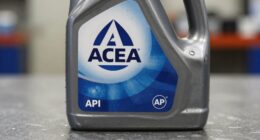
‘ACEA Approved’ isn’t the same as OEM approved because ACEA standards are industry-wide benchmarks for synthetic oils, focusing on performance across many vehicles. OEM approval, however, is specific to a particular manufacturer’s engine design and testing requirements. This means OEM-approved products have had targeted validation for that vehicle brand, offering more tailored assurance. To understand how these standards really differ and what they mean for your engine, keep exploring further.
Key Takeaways
- ACEA certification covers broad performance standards for synthetic oils, not specific vehicle or engine models.
- OEM approval verifies compatibility with particular vehicle makes and engine designs, often involving manufacturer-specific testing.
- ACEA standards are industry-wide benchmarks, while OEM approvals are tailored to individual manufacturer requirements.
- ACEA approval indicates quality but doesn’t guarantee perfect fit or performance for specific OEM engines.
- OEM approval typically involves rigorous testing aligned with the vehicle maker’s engineering and warranty standards.

When choosing motor oils and lubricants for your vehicle, understanding the difference between “ACEA Approved” and “OEM Approved” labels is essential. These certifications indicate quality and suitability, but they serve different purposes and are based on distinct standards. Knowing how each one applies helps you make informed decisions to keep your engine running smoothly.
Let’s start with ACEA, the European Automobile Manufacturers Association. When an oil is labeled “ACEA Approved,” it means it has passed specific certification standards set by ACEA. These standards focus heavily on the performance of synthetic formulations, which dominate modern motor oils. Synthetic oils are designed to offer superior protection, better fuel economy, and longer intervals between oil changes. ACEA certification involves rigorous testing to ensure the oil meets criteria for engine wear, sludge prevention, and emission control. It’s a broad, industry-backed standard that applies across a variety of European vehicles and engine types. However, it doesn’t specify compatibility with particular manufacturers’ engines beyond general performance benchmarks. It’s more about meeting a baseline of quality and performance that many vehicles can rely on. Additionally, ACEA standards are updated regularly to adapt to evolving engine technologies and environmental regulations.
On the other hand, OEM approvals are issued directly by vehicle manufacturers like Ford, BMW, or Toyota. When an oil is OEM approved, it signifies that the lubricant has been tested and approved specifically for use in that manufacturer’s engines. These approvals are often tied to particular certification standards, but the key point is that they reflect compatibility and performance tailored to the OEM’s engine design and specifications. OEM approval often involves testing synthetic formulations to ensure they won’t cause issues like seal degradation or improper lubrication, which could void your vehicle’s warranty. It’s a more targeted endorsement, directly linked to the manufacturer’s engineering requirements.
The main difference is that ACEA standards are more general, covering a wide range of European vehicles and engine types, focusing on broad performance metrics. OEM approvals are specific, often more rigorous, and tied to particular engine designs. They’re not interchangeable, and relying solely on one or the other can sometimes lead to compromises. If you want to guarantee peak performance and warranty protection, aligning your choice with your vehicle manufacturer’s recommendations is wise. While ACEA certification indicates high-quality synthetic formulations meeting industry standards, OEM approval guarantees compatibility with your specific vehicle. Knowing this distinction helps you select the right lubricant for your needs, avoiding pitfalls that come with mislabeling or misunderstanding these certifications. Understanding certification standards and their implications is crucial for making the best choice for your engine’s health and longevity.

Valvoline European Vehicle Full Synthetic SAE 5W-40 Motor Oil 5 QT
Advanced protection for European gasoline and diesel vehicles against the four main causes of engine breakdown: wear friction…
As an affiliate, we earn on qualifying purchases.
As an affiliate, we earn on qualifying purchases.
Frequently Asked Questions
Can ACEA Approval Guarantee Manufacturer-Specific Performance Standards?
ACEA approval doesn’t guarantee manufacturer-specific performance standards, as it mainly guarantees the oil meets European quality benchmarks, including synthetic certification. While it indicates the oil’s general quality, it doesn’t necessarily align with your vehicle’s warranty implications or specific manufacturer requirements. You should always check your vehicle’s manual to confirm the oil’s compatibility, especially if you want to protect your warranty and secure ideal performance.
How Often Are ACEA Standards Updated Compared to OEM Approvals?
You’ll find that ACEA standards are updated less frequently than OEM approvals, typically every few years, reflecting industry certification updates. OEM approvals, however, often require more regular reviews to meet evolving manufacturer-specific performance standards. This difference means ACEA standards provide a broad certification, while OEM approvals focus on precise, current performance criteria. Staying aware of update frequency helps you select lubricants that meet your vehicle’s latest requirements.
Are Acea-Approved Products Compatible With All Vehicle Brands?
ACEA-approved products are designed to meet European standards, but they’re not necessarily compatible with all vehicle brands, especially if you’re loyal to specific OEMs. Brand loyalty influences your choice, and product branding plays a role in ensuring compatibility. Always check your vehicle’s requirements before choosing ACEA-approved products, as some brands may prefer OEM-specific oils for peak performance. Don’t assume universal compatibility just because a product has ACEA approval.
What Are the Cost Differences Between Acea-Approved and Oem-Approved Products?
You’ll find that ACEA-approved products generally cost less than OEM-approved ones due to pricing variability and broader certification scope. OEM approvals often involve stricter standards and specialized testing, which increases costs. In contrast, ACEA certifications focus on European standards that are less restrictive, making their products more affordable. So, if budget matters, ACEA-approved options might be more economical, but OEM-approved products offer more specific assurance for your vehicle.
Does ACEA Approval Cover Future Vehicle Models or Only Current Ones?
ACEA approval mainly covers current vehicle models, so it doesn’t guarantee future vehicle compatibility. You should be aware that approval longevity is limited, meaning it may not apply to upcoming models or new technology. If you’re aiming for long-term assurance, check whether the product meets OEM standards for future vehicle models. Relying solely on ACEA approval might leave you uncertain about compatibility as vehicles evolve.

TOYOTA Genuine OEM 00279-0WQTE-01 Oil (4 QUARTS)
As an affiliate, we earn on qualifying purchases.
As an affiliate, we earn on qualifying purchases.
Conclusion
So, stay savvy and steer clear of the false promises. Recognize that ‘ACEA Approved’ isn’t a badge of guaranteed quality like OEM approval. Don’t doubt, don’t delay—delve deep, demand details, and make your decision wisely. Because your vehicle’s importance depends on it, and your peace of mind is priceless. Protect your purchase, prioritize proven performance, and prevent potential problems before they begin. Your car deserves clarity, confidence, and care—choose certifications you can trust.

Mobil 1 European Car Formula Full Synthetic Motor Oil 0W-40, 5 Quart
Mobil 1 FS European Car Formula full synthetic motor oil 0W-40 helps to extend engine life even in…
As an affiliate, we earn on qualifying purchases.
As an affiliate, we earn on qualifying purchases.

PlanetSafe Lubricants AiM RC Gear Grease – 1oz – Non Synthetic Lubricant Spray for RC Cars, Planes & Drones – Reduce Friction & Noise – Odorless – RC Oil & RC Grease for High RPMs – Made in The USA!
This advanced lubricant is engineered for RC cars, planes, and drones to deliver smooth gear movement, reduced friction,…
As an affiliate, we earn on qualifying purchases.
As an affiliate, we earn on qualifying purchases.