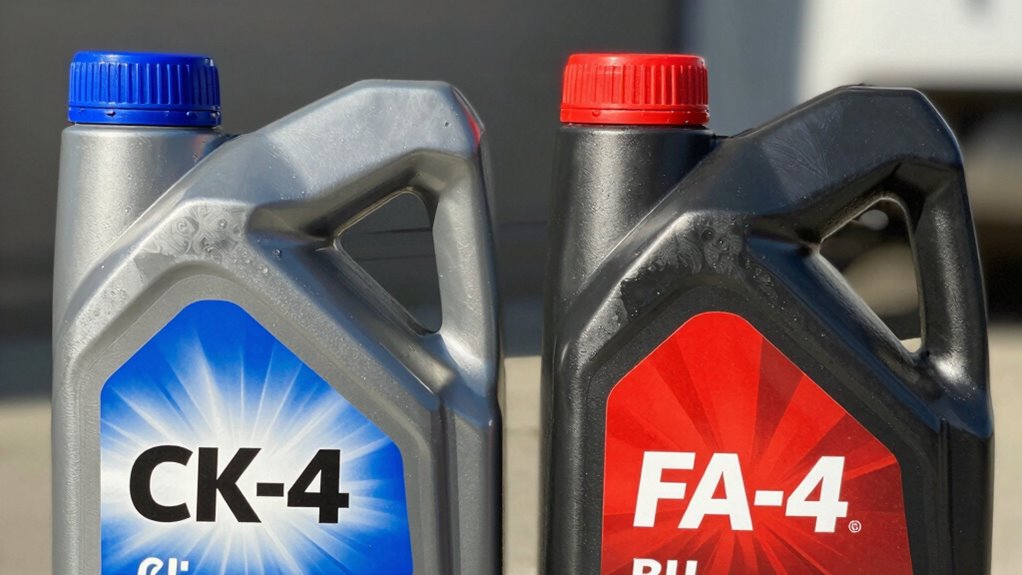

API CK-4 and FA-4 are diesel engine oil standards designed for different engine types and emission needs. CK-4 is proven durable for older heavy-duty engines, helping protect against wear and soot buildup. FA-4 targets newer engines with advanced emission systems, offering lower viscosity for better fuel economy. If you want to understand how these standards suit your engine or which is right for your vehicle, keep exploring the details below.

Get business pricing on garage and car supplies
- Business-only prices and quantity discounts
- Tax-exempt purchasing
- Multiple users, one account, clear invoices
Key Takeaways
- CK-4 is designed for older diesel engines requiring thicker oils, offering proven wear protection.
- FA-4 is a newer, low-viscosity oil tailored for modern engines with stricter emission standards.
- CK-4 oils are backward compatible with older engines, while FA-4 is not suitable for them.
- FA-4 improves fuel economy and reduces particulate emissions in compliant engines.
- Choosing the right oil depends on your engine’s age and manufacturer recommendations.
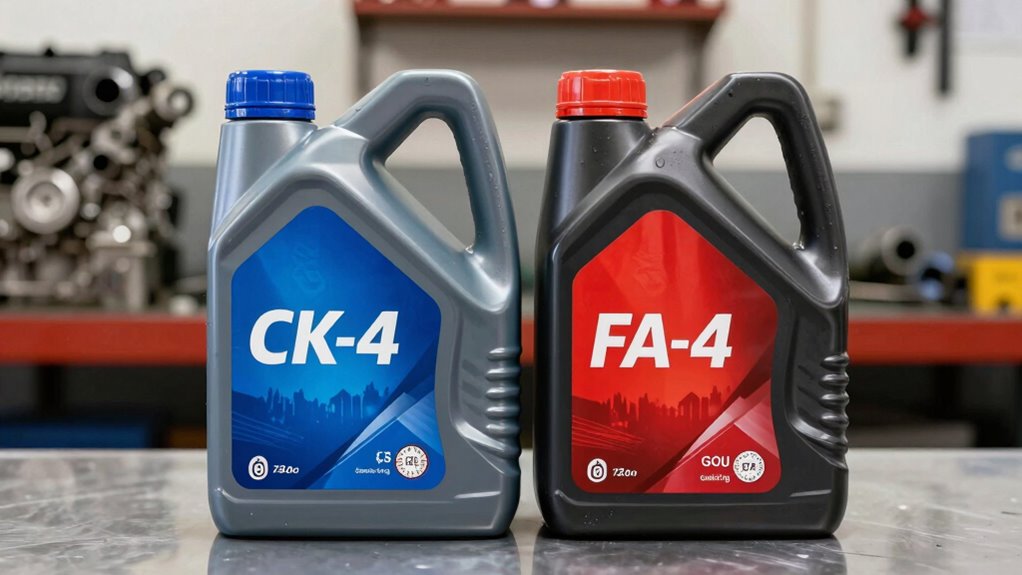
Are you trying to determine which engine oil meets your needs—API CK-4 or FA-4? If so, understanding their differences is essential for ensuring your diesel engine runs smoothly and complies with current regulations. The key factors to consider are engine oil compatibility and emission standards, which influence how each oil performs and what engines they’re suitable for. API CK-4 oils are designed to provide excellent protection for high-speed, heavy-duty diesel engines, especially those with older designs. They’ve been around longer and are compatible with a wide range of engines, making them a reliable choice for many fleet operators and vehicle owners. These oils are formulated to handle the typical wear and tear of demanding diesel operations, offering good wear protection, deposit control, and soot handling. They also meet the latest emission standards, ensuring your engine stays compliant with regulatory requirements.
API CK-4 oils offer proven protection for high-speed, heavy-duty diesel engines, ensuring compliance and durability for demanding operations.
On the other hand, FA-4 oils are a newer specification that targets the latest generation of diesel engines. They’re developed to improve fuel economy and reduce emissions further, making them more suitable for newer engines designed with tighter emission standards in mind. These oils have a lower viscosity compared to CK-4, which helps reduce internal engine friction and, consequently, fuel consumption. However, because of their specific formulation, FA-4 oils are not backward compatible with older engines that were designed to use CK-4 or earlier oils. This means if your engine is older, switching to FA-4 could cause compatibility issues or even engine damage over time.
When considering engine oil compatibility, it’s crucial to check your engine manufacturer’s recommendations. Using the wrong oil can lead to inadequate protection, increased wear, or failure to meet emission standards. Many newer engines are built to operate with FA-4 oils because they’re engineered to work with reduced viscosity and advanced emission controls. Conversely, older models often require the thicker CK-4 oils that provide a proven track record of protection and performance.
Emission standards are another critical factor. Both CK-4 and FA-4 oils meet the required standards, but FA-4 oils are optimized for engines aiming to meet stricter future emission regulations. They’re formulated to support low-temperature operation and reduce particulate matter emissions, aligning with tighter environmental regulations. So, your choice of oil should align with your engine’s design and your compliance goals. Ultimately, understanding the differences in engine oil compatibility and emission standards helps you select the right oil to keep your diesel engine performing efficiently and legally. Additionally, staying informed about regulatory updates can help ensure ongoing compliance and optimal engine performance.
As an affiliate, we earn on qualifying purchases.
Frequently Asked Questions
Can FA-4 Oils Be Used in Older Diesel Engines?
You can generally use FA-4 oils in older diesel engines, but compatibility concerns arise because FA-4 oils are designed for newer engines with stricter emission standards. You should check your engine’s specifications and verify your filtration requirements are met, as FA-4 oils may have different additive packages. If your engine isn’t compatible, using FA-4 could lead to lubrication issues or engine damage. Always consult your manufacturer’s recommendations.
Are FA-4 Oils Backward Compatible With CK-4 Engines?
FA-4 oils are generally not backward compatible with CK-4 engines, so you shouldn’t use them interchangeably. Compatibility questions like this can impact your engine performance and longevity. Always check your engine’s specifications and follow manufacturer recommendations. Using the wrong oil can lead to reduced protection and potential engine damage. When in doubt, consult your engine’s manual or a professional mechanic to guarantee you’re choosing the right oil for your diesel engine.
How Do Cost Differences Impact Choosing Between CK-4 and FA-4?
Choosing between CK-4 and FA-4 oils can feel like deciding between a luxury sports car and a reliable family sedan—cost considerations play a huge role. FA-4 oils often come with a higher price tag, impacting your budget notably, but they offer advanced protection for newer engines. CK-4 oils are more budget-friendly, making them a smart choice if cost considerations are your top priority without sacrificing essential engine performance.
Do FA-4 Oils Require Different Maintenance Protocols?
Yes, FA-4 oils may require different maintenance protocols. You might need to adjust your oil change intervals because FA-4 oils are designed for higher efficiency and better wear protection at higher temperatures. It’s essential to follow the manufacturer’s recommendations, as FA-4 oils could have different additive packages that impact maintenance needs. Staying attentive to these differences guarantees peak engine performance and longevity.
Are There Environmental Benefits to Using FA-4 Oils Over CK-4?
You might imagine FA-4 oils as eco-friendly warriors, helping reduce emissions and boost fuel efficiency. Using FA-4 can lead to significant emission reductions, contributing to a cleaner environment. They’re designed to improve engine performance while consuming less fuel, which lowers greenhouse gases. So, yes, switching to FA-4 oils offers environmental benefits, making your engine more efficient and environmentally responsible, all while helping to protect our planet.
As an affiliate, we earn on qualifying purchases.
Conclusion
Choosing between API CK-4 and FA-4 is like selecting the right shield for your engine’s journey. CK-4 offers a sturdy, time-tested armor, protecting your engine through countless miles. FA-4, with its modern edge, symbolizes innovation and forward momentum, ready to face new challenges. Your choice reflects your path—whether you value tradition or embrace the future. Whichever you pick, remember, you’re guiding your engine’s story, forging a legacy with every mile ahead.
As an affiliate, we earn on qualifying purchases.
low viscosity diesel oil for modern engines
As an affiliate, we earn on qualifying purchases.
As an affiliate, we earn on qualifying purchases.
Fall Picks
fall essentials
As an affiliate, we earn on qualifying purchases.