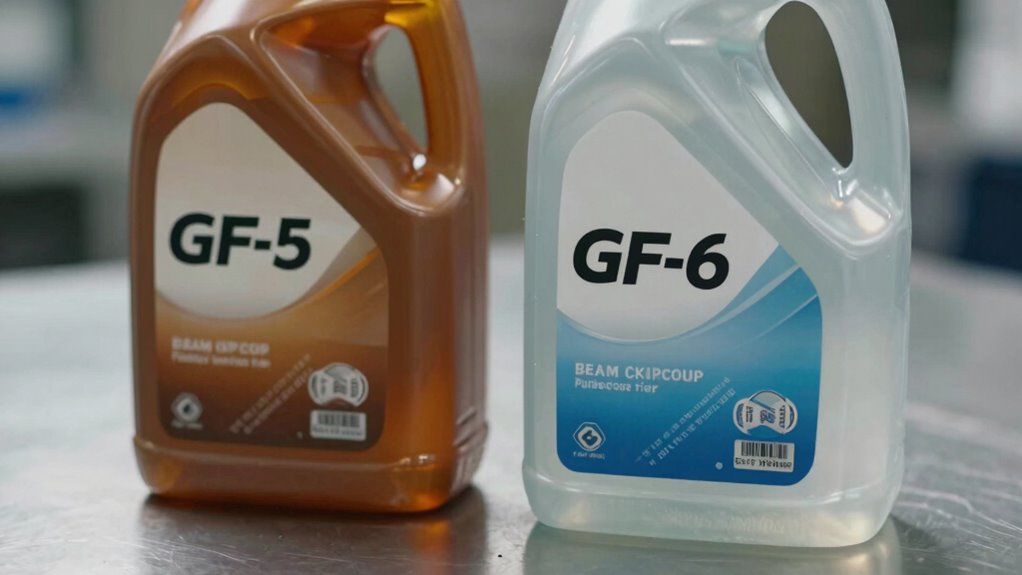

Switching from GF-5 to GF-6 brings key updates, mainly in fuel economy, engine protection, and environmental benefits. GF-6 oils feature advanced additives that reduce friction, improve durability for modern turbocharged and direct-injection engines, and lower emissions. GF-6 formulations are also designed to be more compatible with eco-friendly, low-viscosity options. If you want to understand how these changes could affect your engine’s performance and longevity, keep exploring the details.
Key Takeaways
- GF-6 introduces advanced additive packages for better fuel economy, engine cleanliness, and wear protection compared to GF-5.
- GF-6 formulations feature lower viscosity options to improve efficiency, unlike GF-5’s more traditional formulations.
- GF-6 is optimized for modern turbocharged and direct-injection engines, whereas GF-5 caters to older engine designs.
- GF-6 emphasizes environmental benefits, such as reduced emissions and better fuel efficiency, which GF-5 lacks.
- Technological advancements in GF-6 result in improved engine longevity and reduced pollutant emissions over GF-5.
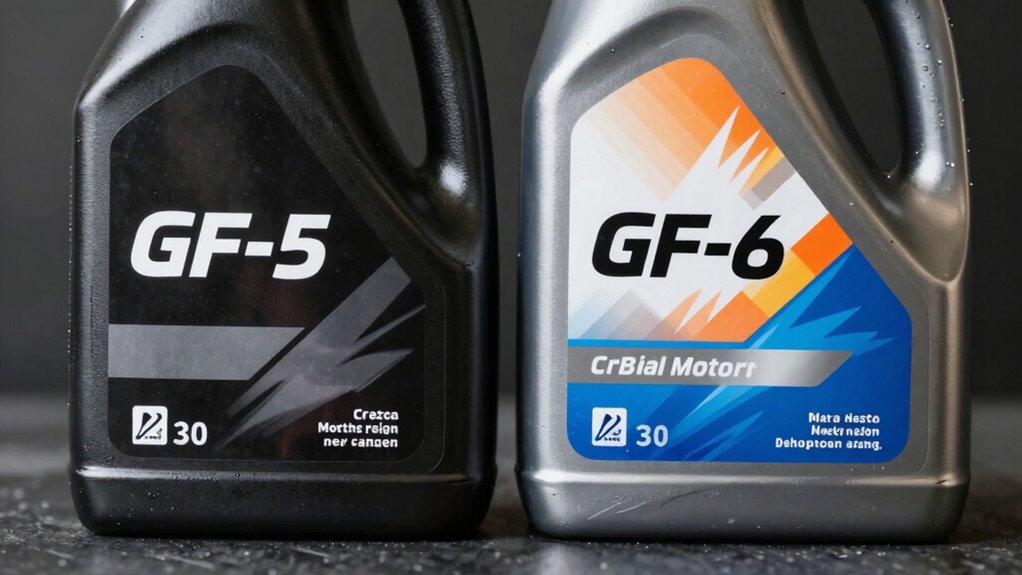
Are you wondering how ILSAC GF-5 compares to GF-6? If you’re trying to decide which oil to use for your vehicle, understanding the differences in oil formulations and their environmental impact can help you make an informed choice. GF-5 and GF-6 are both specifications created by the International Lubricants Standardization and Approval Committee (ILSAC) to ensure oil quality, but GF-6 introduces some notable updates designed to improve performance and sustainability.
When it comes to oil formulations, GF-6 oils are engineered to meet higher standards. They typically contain advanced additive packages that enhance fuel economy, engine protection, and wear resistance. These new formulations are designed to reduce friction more effectively, which can translate into better fuel efficiency and potentially lower emissions. In contrast, GF-5 oils, while still effective, do not include some of the latest additive innovations found in GF-6. They tend to be more traditional in composition, focusing on engine cleanliness, corrosion resistance, and overall durability, but may not deliver the same level of efficiency improvements.
The environmental impact is a key area where GF-6 oils are making strides. Because of their improved formulations, GF-6 oils often contribute to lower emissions, thanks to better fuel economy and reduced engine wear. They are optimized to keep engines cleaner longer, which can lead to fewer pollutants being released into the atmosphere. Additionally, GF-6 oils are formulated to have a lower viscosity in certain applications, which means they require less energy to circulate through the engine, further reducing fuel consumption and carbon footprint. This makes GF-6 a more eco-friendly choice, especially if you’re concerned about minimizing your vehicle’s environmental impact. Moreover, advances in lubricant technology have enabled GF-6 oils to better handle the demands of modern engines.
Another aspect to consider is how these oils perform in modern engines. GF-6 oils are specifically designed to meet the needs of newer vehicle technologies, including turbocharged engines and those with direct injection systems. These engines demand oils that can handle higher temperatures and stresses without breaking down. GF-5 oils, while still reliable, may not provide the same level of performance in these more demanding conditions.
Top picks for "ilsac actually chang"
Open Amazon search results for this keyword.
As an affiliate, we earn on qualifying purchases.
Frequently Asked Questions
How Do GF-5 and GF-6 Oils Impact Fuel Economy Differently?
GF-6 oils improve your vehicle’s fuel efficiency more than GF-5 oils because they reduce engine friction and improve flow at lower temperatures. This means your engine runs smoother, uses less fuel, and maintains better engine performance. GF-6 oils also contain advanced additives that help sustain fuel economy over time. Overall, upgrading to GF-6 can give you better fuel savings and enhanced engine performance compared to GF-5 oils.
Are GF-6 Oils Compatible With Older Vehicle Engines?
GF-6 oils are generally compatible with older engines, but you should check your vehicle’s manual first. About 90% of vehicles built before 2010 can safely use GF-6 oils, thanks to their similar engine compatibility and oil viscosity standards. However, for peak performance, confirm the oil’s viscosity matches your engine’s requirements, especially in older models that may need thicker oils. Always verify before switching to avoid engine issues.
What Are the Environmental Benefits of GF-6 Over GF-5?
GF-6 oils offer environmental benefits over GF-5 by utilizing renewable resources and improving emission reduction. When you choose GF-6, you’re supporting formulations that help lower harmful emissions from your engine, contributing to cleaner air. These oils are designed to be more efficient at reducing friction and fuel consumption, which ultimately decreases your vehicle’s greenhouse gas output. By switching to GF-6, you help promote a more sustainable environment.
How Do Additive Formulations Vary Between GF-5 and GF-6?
You might think additives stay the same, but GF-6’s formula actually jazzes things up with enhanced additive stability to withstand higher temperatures and oxidation. It also improves formulation compatibility, reducing the risk of sludge or deposits. GF-6’s additives are carefully crafted to work harmoniously with modern engines, unlike GF-5’s more basic mix. So, your oil’s additive profile has evolved, just like your car’s demands.
Will Switching to GF-6 Void My Vehicle’s Warranty?
Switching to GF-6 generally won’t void your vehicle’s warranty if you choose oil that meets manufacturer approval. However, warranty concerns can arise if the oil you select isn’t recommended by your vehicle’s manufacturer or lacks proper certification. Always check your owner’s manual and confirm that the GF-6 oil is approved for your vehicle. Using compliant, approved oils guarantees you maintain warranty coverage and peak engine performance.
Conclusion
As you look under the hood, you’ll notice the shift from GF-5’s familiar glow to GF-6’s newer, brighter shine. It’s like upgrading from a trusty old map to a sleek GPS—more precision, better protection. These changes may seem subtle, but they’re designed to keep your engine running smoother and longer. So, when you choose between them, picture your vehicle cruising effortlessly down the open road, confident in the new fuel of innovation powering every mile.