To calibrate your oil flow meter, start by ensuring it’s clean and properly installed, then select a reliable standard measurement tool. Run known oil volumes through the meter, compare the readings to the actual dispensed amount, and make any necessary adjustments. Regular checks and maintenance help prevent measurement errors. To get detailed steps and avoid common mistakes, keep exploring, and you’ll discover how to keep your calibration accurate over time.
Key Takeaways
- Use a standard measurement tool to dispense a known volume of oil and compare it with the flow meter reading.
- Ensure oil viscosity and temperature remain consistent during calibration to maintain accuracy.
- Verify proper sensor placement, clean sensors, and eliminate obstructions before calibration.
- Adjust the flow meter settings based on discrepancies between actual and measured volumes.
- Conduct calibration regularly, record results, and monitor for drift or deviations over time.

GRYVOZE 1 Inch Digital Turbine Fuel Flow Meter, 2.6-26 GPM Inline NPT Thread Flowmeter with 3/4 in Adapters for Water, Diesel, Gas Oil, Gasoline, and Other Liquids – Supports Gallon, QTS, PTS, L, m³
Accurate Measurements – Our digital turbine flow meter provides precise readings with a high accuracy of ±1%, ensuring…
As an affiliate, we earn on qualifying purchases.
As an affiliate, we earn on qualifying purchases.
How Flow Meters Ensure Accurate Oil Measurement
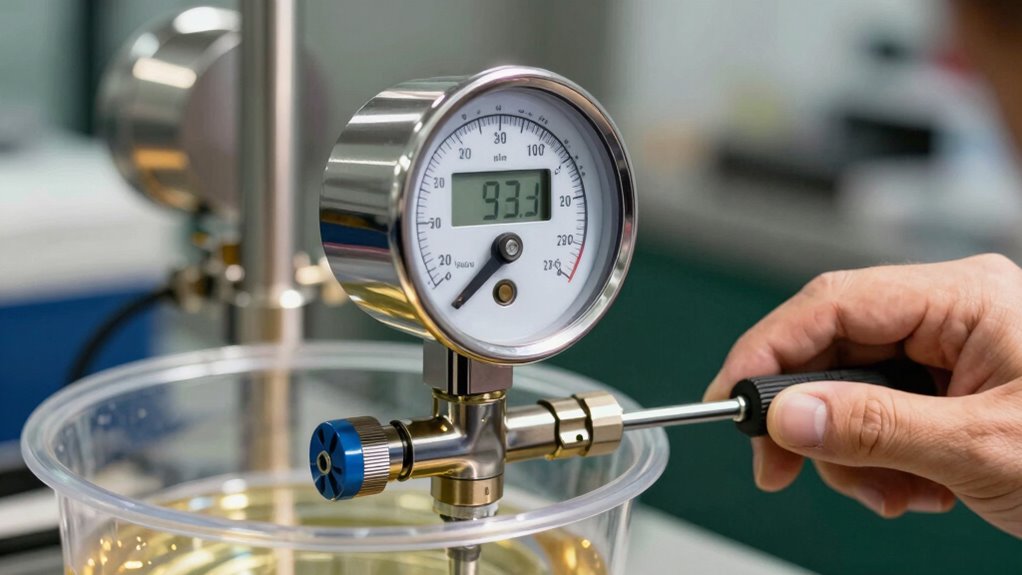
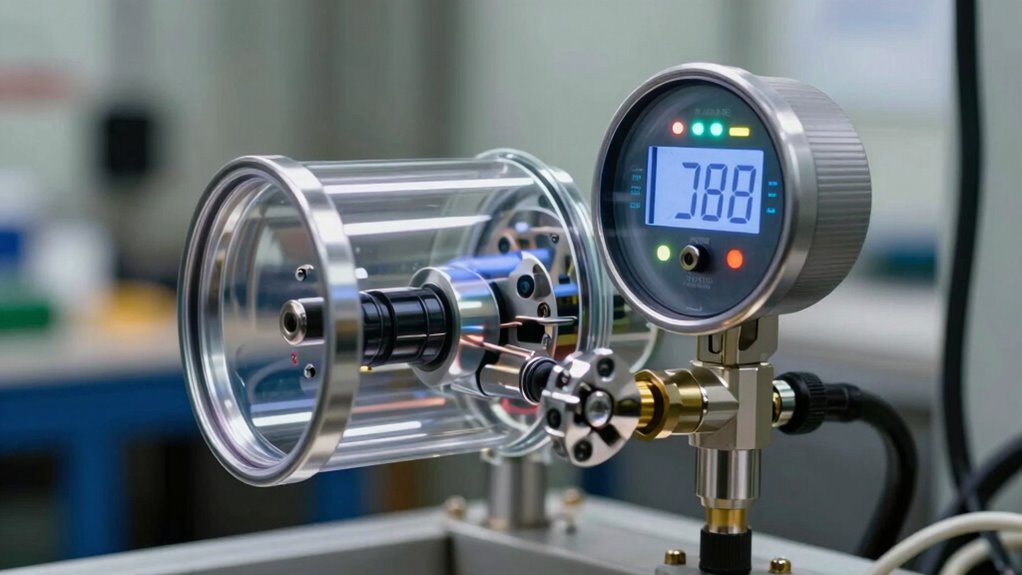
Flow meters play a crucial role in guaranteeing accurate oil measurement by precisely monitoring the volume or flow rate of oil as it moves through a system. You rely on a flow sensor to detect the movement of oil, converting this data into measurable signals. This process allows you to maintain consistent and reliable oil measurement, which is essential for quality control and efficiency. The flow sensor’s accuracy directly impacts the overall precision of your measurement, helping you detect variations and prevent errors. With a well-calibrated flow meter, you can guarantee that the right amount of oil is dispensed every time, reducing waste and maintaining standards. Calibration techniques are vital for ensuring that your flow meters remain accurate over time. Regular maintenance and sensor calibration help sustain measurement accuracy and optimize system performance. Additionally, understanding the measurement principles behind flow meters can help identify potential sources of error and improve calibration practices. Maintaining a thorough understanding of flow measurement accuracy is essential for achieving optimal results. Continuous monitoring of measurement variability also plays a key role in maintaining long-term precision. In short, a dependable flow sensor is key to achieving precise oil measurement in your system.
GRYVOZE 1 Inch Digital Turbine Fuel Flow Meter, 2.6-26 GPM Inline NPT Thread Flowmeter with 3/4 in Adapters for Water, Diesel, Gas Oil, Gasoline, and Other Liquids – Supports Gallon, QTS, PTS, L, m³
Accurate Measurements – Our digital turbine flow meter provides precise readings with a high accuracy of ±1%, ensuring…
As an affiliate, we earn on qualifying purchases.
As an affiliate, we earn on qualifying purchases.
Choosing the Right Oil Flow Meter for Your Needs

Selecting the right oil flow meter is vital to guarantee your measurement system meets your specific needs. When considering flow meter selection, focus on how the device handles oil viscosity, which varies across different types. Thicker oils require meters with higher sensitivity and specific designs to ensure accuracy, while lighter oils demand different calibration methods. You should evaluate flow rate ranges, pressure conditions, and whether your process involves intermittent or continuous flow. Keep in mind that some meters perform better with high-viscosity oils, offering precise readings even under demanding conditions. Understanding the effect of viscosity on measurement accuracy can help you choose a flow meter that delivers reliable, accurate measurements, helping you optimize your dispensing process and minimize errors. Additionally, considering vetted manufacturers known for their precision in handling different viscosities can further enhance your system’s reliability. It’s also beneficial to understand how viscosity impacts calibration to ensure your measurements remain consistent over time. Properly adjusting calibration techniques based on oil viscosity can significantly improve long-term measurement stability.

GRYVOZE Digital Oil Control Valve Flow Meter Dispenser Nozzle 10 GPM / 35 LPM, Heavy Duty Air Operated Electronic Oil Metering Gun 1/2 Inch NPT Inlet, Oil Gun – Max Working Pressure 1500 PSI / 100 bar
Specification: This air operated oil control valve digital meter has a Maximum Flow Rate of 10 GPM /…
As an affiliate, we earn on qualifying purchases.
As an affiliate, we earn on qualifying purchases.
Preparing Your Flow Meter for Calibration
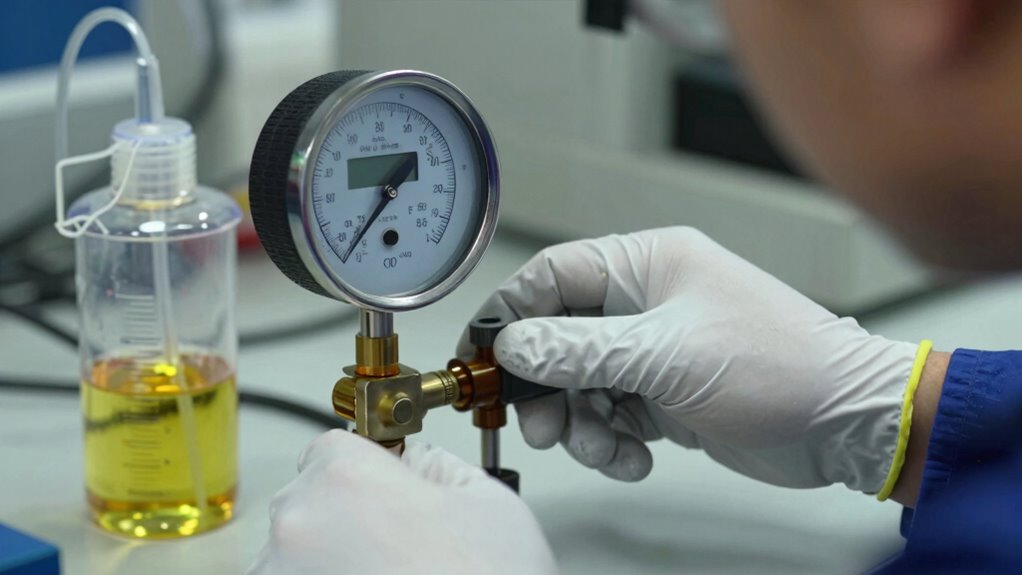
Before calibrating your flow meter, it’s essential to prepare it properly to guarantee accurate results. Ensure the sensor placement is correct, as improper positioning can lead to measurement errors. Check that the sensor is clean and securely mounted, avoiding any obstructions or debris. Set an appropriate calibration frequency based on usage and manufacturer recommendations to maintain accuracy over time. Use the table below to understand key preparation steps:
| Step | Details |
|---|---|
| Inspect sensor placement | Confirm proper alignment and secure attachment |
| Clean the sensor | Remove dirt or oil buildup |
| Verify calibration frequency | Follow manufacturer guidelines for scheduling |
| Check for obstructions | Ensure no blockages in flow path |
| Calibrate environment | Perform calibration in a stable, controlled setting |

GRYVOZE 3/4 Inch NPT Gear Flow Meter, 0.08–7.93 GPM Digital Oil Low Flowmeter, ±0.5% Accuracy, for Low-Flow High-Viscosity Liquids, Compatible with Motor Oil, Lubricants, Antifreeze & Hydraulic Fluids
Wide Compatibility – The 3/4 inch gear flow meter is suitable for high-viscosity liquids such as motor oil,…
As an affiliate, we earn on qualifying purchases.
As an affiliate, we earn on qualifying purchases.
How to Calibrate Your Oil Flow Meter Step-by-Step

To calibrate your oil flow meter accurately, start by confirming the sensor is properly prepared. Check that the flow sensor positioning is correct, as misalignment can skew readings. Select an oil with consistent viscosity, as oil viscosity affects flow measurement accuracy; using a standard calibration fluid helps guarantee reliable results. Begin by running a known volume of oil through the meter, recording the displayed measurement. Compare this to the actual volume dispensed, then adjust the calibration settings accordingly. Repeat the process several times to verify consistency. Make sure the oil temperature remains stable throughout calibration, since temperature fluctuations influence oil viscosity and flow behavior. Proper sensor positioning and consistent oil properties are vital for achieving precise calibration results.
Common Calibration Mistakes and How to Prevent Them
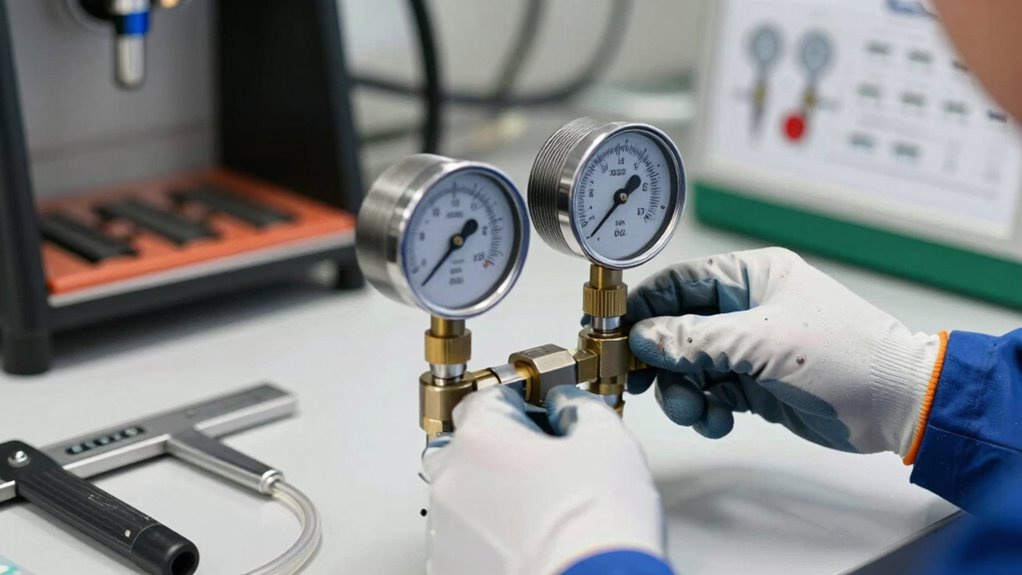
Calibration mistakes are common pitfalls that can lead to inaccurate flow measurements, compromising your system’s reliability. One mistake is neglecting sensor drift, which causes readings to become less accurate over time. Failing to adjust calibration frequency accordingly can worsen this issue. Additionally, rushing the calibration process or skipping proper zeroing can introduce errors. To prevent these mistakes, regularly review your calibration schedule and monitor sensor performance. Use the following table to understand key factors:
| Issue | Prevention Strategy |
|---|---|
| Sensor Drift | Increase calibration frequency as needed |
| Inadequate Zeroing | Always zero before calibration |
| Rushed Procedures | Allocate sufficient time for calibration |
| Ignoring Calibration Logs | Keep detailed records for trend analysis |
Regularly inspecting and maintaining sensor stability can also help ensure ongoing accuracy by addressing potential issues before they impact measurements. Implementing proper maintenance protocols and understanding sensor behavior over time are essential for long-term precision. Moreover, staying attentive to calibration data trends can help detect early signs of performance degradation, ensuring continued measurement accuracy.
Test and Verify Your Oil Flow Meter’s Calibration
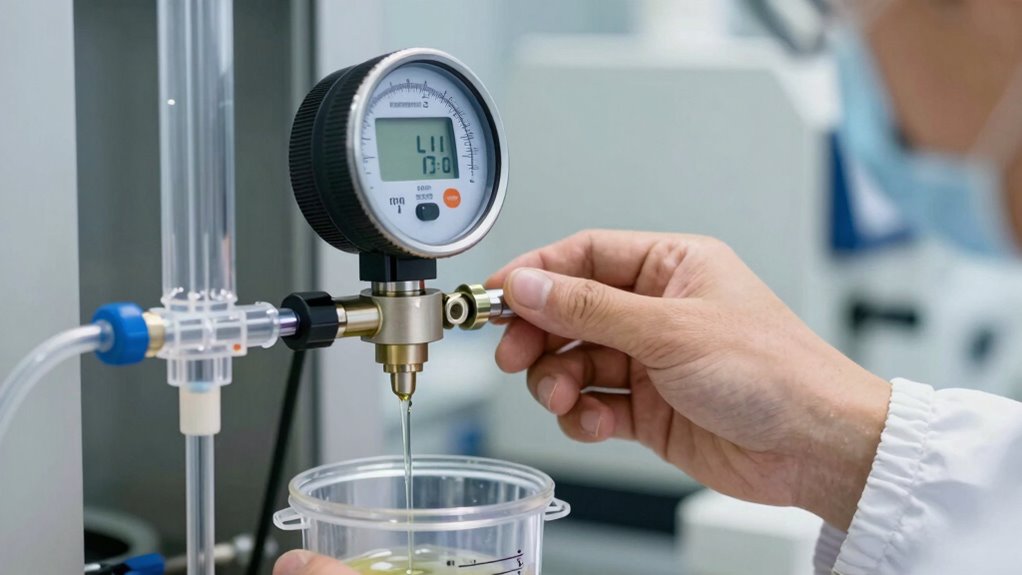
To make certain your oil flow meter stays accurate, you need to regularly test and verify its calibration. Start by conducting calibration tests using known measurement conditions, and always use reliable standard measurement tools. This approach helps you catch errors early and keeps your readings precise. Additionally, understanding flow rate accuracy is essential for maintaining optimal performance. Regularly monitoring measurement consistency ensures ongoing precision and helps identify potential issues before they affect your operations. Incorporating proper calibration procedures can further enhance your ability to maintain accurate measurements over time. Being aware of instrument drift allows for timely adjustments and sustained measurement reliability. Maintaining a calibration schedule is also crucial to ensure ongoing accuracy and compliance with industry standards.
Conduct Calibration Tests
Before relying on your oil flow meter for critical measurements, it’s essential to conduct calibration tests to verify its accuracy. Regular calibration ensures sensor accuracy and helps identify deviations caused by wear or environmental factors. Determine an appropriate calibration frequency based on usage intensity and manufacturer recommendations. During your tests, compare the flow meter’s readings against a known standard or measurement tool. To improve precision, consider:
- Recording initial readings and comparing them with standard measurements
- Adjusting the flow meter settings if discrepancies are detected
- Repeating tests periodically to monitor consistency over time
- Understanding the calibration procedures recommended by the manufacturer ensures proper adjustment and testing.
This process helps maintain measurement integrity and minimizes errors in oil dispensing, ensuring your flow meter remains dependable. Regular calibration is crucial for sustained accuracy and peak performance.
Use Standard Measurement Tools
Using standard measurement tools is the most reliable way to verify your oil flow meter’s accuracy. You’ll need calibration equipment that provides precise readings in measurement units like liters or gallons. Start by collecting a known quantity of oil using a calibrated container, ensuring it’s accurate. Run your flow meter to dispense that amount, then compare the displayed measurement to the actual volume recorded by your measurement tools. If discrepancies arise, adjustments may be necessary. Regularly using calibration equipment helps you confirm your flow meter’s accuracy and maintain consistent dispensing. Accurate measurement units are essential for quality control and compliance. Proper calibration procedures help prevent measurement errors and ensure reliable readings. Using measurement standards consistently can also detect calibration drift, which is vital for maintaining long-term accuracy. By testing with standard measurement tools, you ensure your oil flow meter remains reliable, reducing errors and improving overall dispensing precision. Additionally, understanding measurement accuracy is crucial for maintaining trustworthy and consistent results over time.
Best Practices for Maintaining Calibration Accuracy
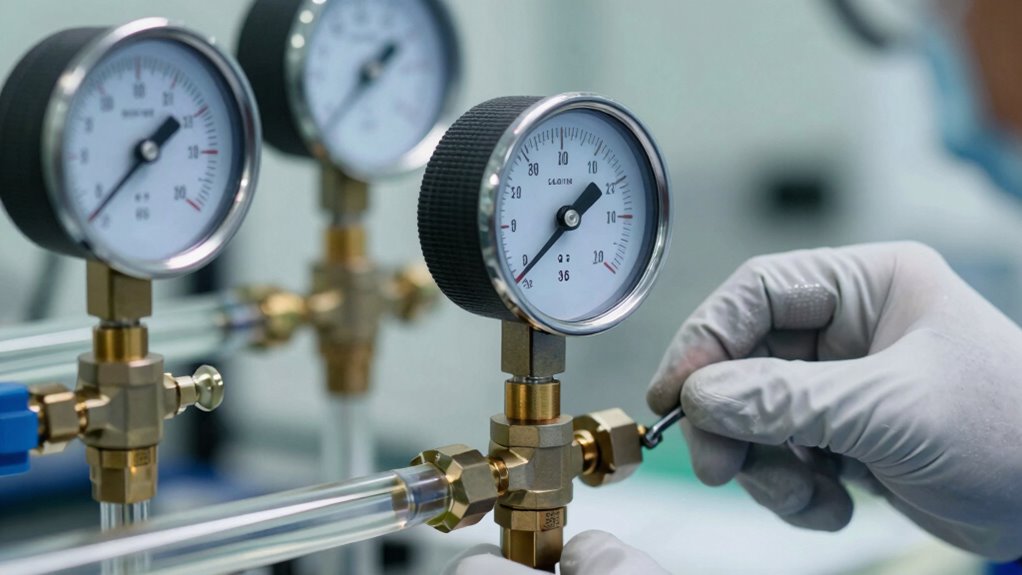
To keep your flow meter’s calibration accurate, you should perform regular calibration checks. Always use certified standards to verify your readings and guarantee consistency. Additionally, follow proper maintenance practices to prevent issues that can affect measurement accuracy. Regular inspection of the body jewelry measurements and materials can help ensure the integrity of your flow meter’s components. For optimal results, consider the influence of sound healing vibrations that may impact sensitive measurement devices. Incorporating calibration protocols that adhere to industry standards can further enhance measurement precision and reliability.
Regular Calibration Checks
Regular calibration checks are essential for ensuring your flow meter maintains accurate measurements over time. Consistent inspections help verify sensor accuracy and determine if calibration frequency needs adjustment. By scheduling regular checks, you prevent measurement drift and maintain reliable dispensing. During these checks, consider:
- Monitoring sensor responses for irregularities or deviations
- Recording calibration results to identify trends
- Adjusting calibration intervals based on usage and performance
These practices ensure your flow meter stays precise, reducing errors in oil dispensing. Regular calibration checks help catch issues early, minimizing costly mistakes and maintaining compliance standards. Keep detailed logs to track calibration history, which supports troubleshooting and future calibration planning. Staying proactive with calibration not only preserves measurement integrity but also extends your flow meter’s operational lifespan.
Use Certified Standards
Implementing certified standards is essential for maintaining calibration accuracy in your flow meters. These standards ensure adherence to strict certification requirements and standardization procedures that validate measurement precision. Using certified standards reduces variability and guarantees consistency across calibration sessions. To visualize, consider the following table:
| Standard Type | Certification Requirements | Usage Frequency |
|---|---|---|
| National Standards | Must meet ISO/IEC standards | Annually or as needed |
| Industry Standards | Certified by accredited labs | Quarterly or after repairs |
| Manufacturer Standards | Follow specific calibration protocols | During installation |
This approach ensures your calibration process remains reliable, compliant, and traceable to recognized benchmarks, safeguarding the accuracy of your oil dispensing operations.
Proper Maintenance Practices
Maintaining calibration accuracy requires diligent attention to proper maintenance practices that keep flow meters performing reliably over time. Regularly check and adjust for changes in lubricant viscosity, as variations can impact measurement precision. Ensure the flow meter is correctly positioned; improper placement can cause inconsistent readings and drift over time. Keep the sensor clean and free of debris, which can interfere with accurate flow detection. Additionally, verify that the flow meter’s connections are secure and free of leaks.
- Monitor lubricant viscosity regularly and adjust as needed
- Reposition flow meters to ideal, manufacturer-recommended locations
- Schedule routine inspections and calibration checks to catch issues early
Troubleshooting Inaccurate Flow Readings After Calibration
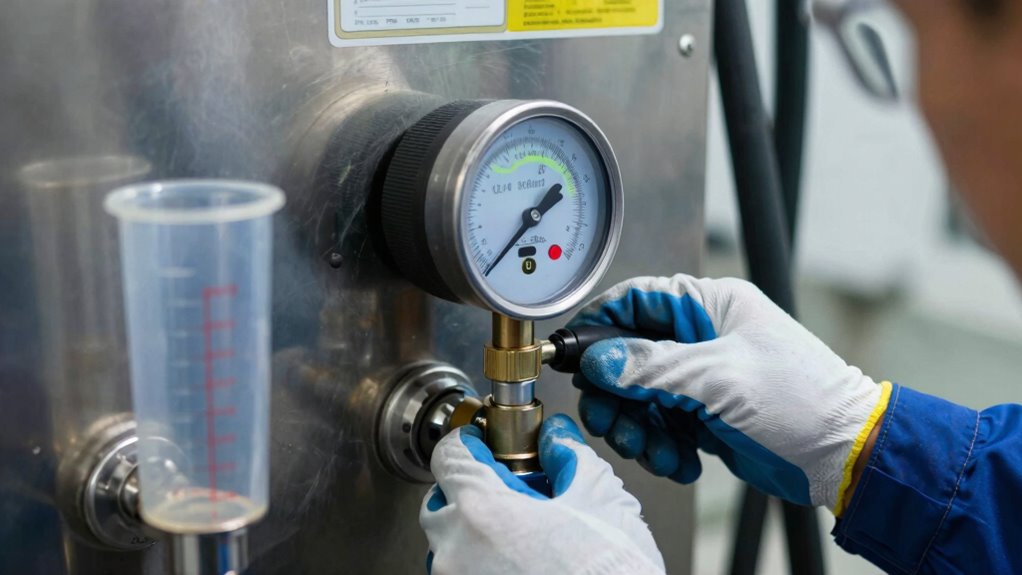
Even after calibration, flow meters can sometimes display inaccurate readings, leading to process errors. Sensor drift is a common culprit, causing the sensor to slowly lose accuracy over time. Environmental factors such as temperature fluctuations, humidity, or vibrations can also impact performance, making readings unreliable. To troubleshoot, start by inspecting the sensor for dirt, debris, or damage that might cause drift. Check if environmental conditions have changed substantially since calibration and ensure the meter is properly shielded or insulated. Confirm that connections are secure and that no external vibrations or temperature shifts are affecting the device. Regularly monitoring the flow meter’s performance helps identify issues early, ensuring your readings stay accurate and your process remains efficient.
When to Recalibrate or Call a Professional
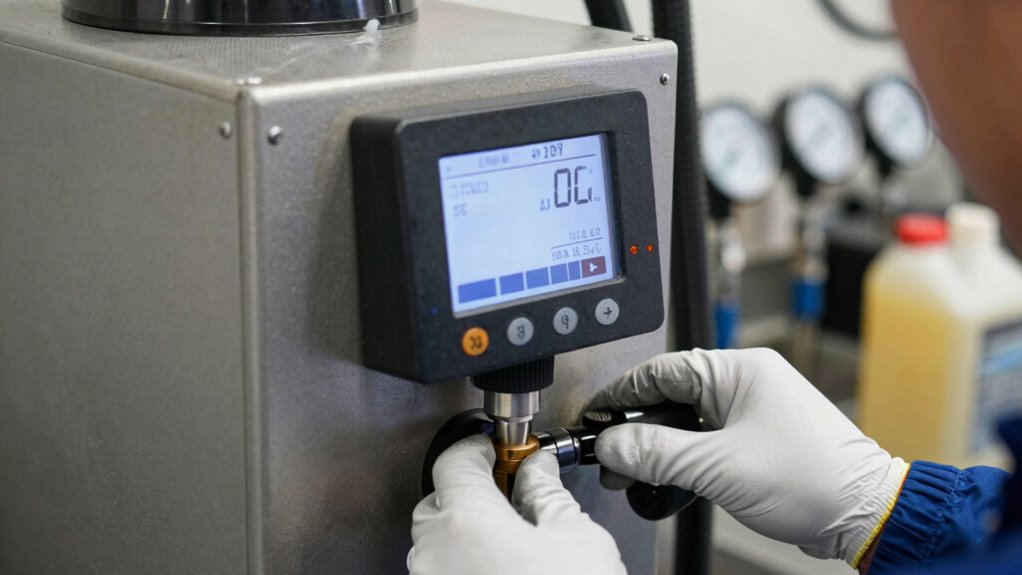
Knowing when to recalibrate your flow meter or call in a professional is crucial to maintaining accurate readings and preventing process disruptions. Sensor drift over time can cause measurement errors, and environmental factors like temperature, humidity, or vibrations may impact performance. If you notice persistent discrepancies in flow measurements despite recent calibration, it’s time to reconsider calibration or seek expert help. Look out for signs such as inconsistent readings, sudden drops, or unexplained fluctuations. Regular checks are essential, especially if your operation involves varying environmental conditions.
Regularly monitor flow readings and seek professional calibration to ensure accuracy and prevent process disruptions.
- Significant deviations from expected flow rates
- Changes in environmental conditions affecting sensor performance
- Unusual noise or vibrations indicating potential malfunctions
Frequently Asked Questions
What Are the Signs of a Malfunctioning Flow Meter?
You’ll notice a malfunctioning flow meter if it shows inconsistent readings or sudden fluctuations, which could indicate sensor drift. Mechanical wear may cause stalls or sluggish responses, leading to inaccurate measurements. Regularly checking for abnormal variations or delays helps you spot issues early. If you see these signs, it’s time to calibrate or service the flow meter to guarantee precise oil dispensing and avoid costly errors.
How Often Should Calibration Be Performed?
You should perform calibration regularly to keep your flow meter running smoothly. Typically, following your maintenance schedule, calibrate every 3 to 6 months or when you notice discrepancies. This routine helps prevent minor issues from becoming major problems. Consistent calibration ensures accurate oil dispensing, maintaining efficiency and reducing waste. Embrace this proactive approach, knowing that timely calibration supports peak performance and extends your equipment’s lifespan.
Can Calibration Be Done Manually Without Professional Tools?
Yes, you can do DIY calibration with manual adjustment, but it’s not always recommended. To guarantee accuracy, you might need specialized tools and precise measurements. If you’re experienced, you can attempt manual adjustments carefully, but for reliable results, professional calibration is best. Always follow the manufacturer’s instructions and safety precautions to avoid damaging the flow meter or affecting oil dispensing accuracy.
What Impact Does Temperature Have on Flow Meter Accuracy?
Imagine your flow meter as a delicate dance partner; temperature effects can throw off its rhythm. When temperatures fluctuate, calibration adjustments become necessary to maintain accuracy. Warmer oil expands, causing the meter to overestimate; cooler oil contracts, making it underestimate. You need to account for these shifts to keep measurements precise. Regularly checking and adjusting calibration guarantees your flow meter stays in sync, no matter the temperature changes.
Are There Recommended Calibration Standards or Regulations?
You should follow established calibration protocols and adhere to regulatory compliance standards set by organizations like API or ISO. These standards guarantee your flow meter maintains accuracy and reliability. Regular calibration using certified reference materials and documented procedures not only keeps your equipment compliant but also helps detect any discrepancies early. Always stay updated with industry regulations to avoid penalties and ensure consistent oil dispensing accuracy.
Conclusion
Regularly calibrating your oil flow meter isn’t just about accuracy—it’s about trusting your measurements, which many believe directly impacts operational efficiency. By following proper calibration steps and maintaining your device, you ensure precise dispensing and avoid costly errors. Think of calibration as a scientific hypothesis: consistent testing and adjustment prove your system’s reliability. When in doubt, consulting a professional helps confirm your results, guaranteeing your flow meter remains a trustworthy part of your process.