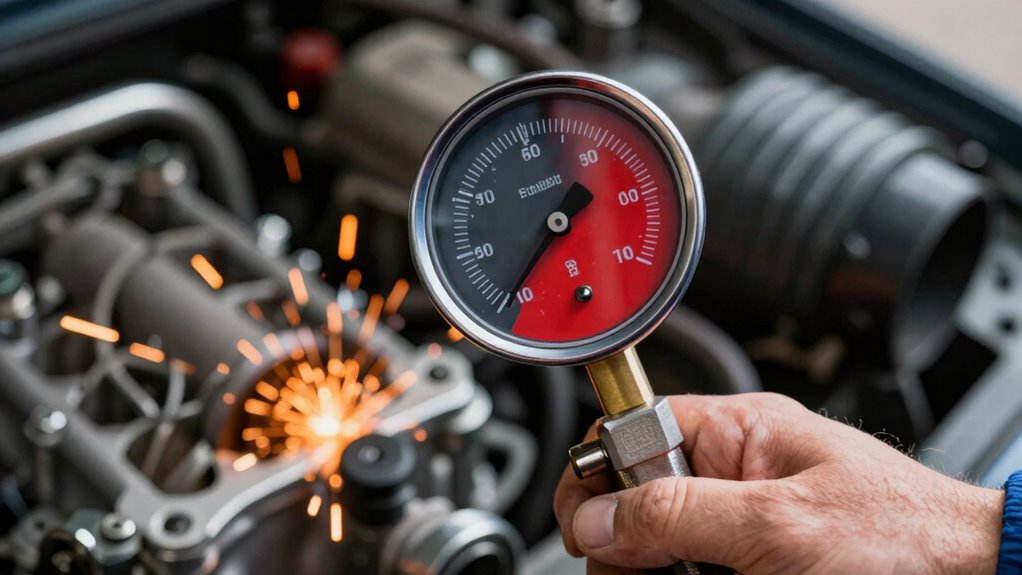

To quickly confirm if you have an actual oil pressure problem, start by checking your vehicle’s oil level and quality. Use a reliable oil pressure gauge compatible with your car, connect it securely to the sensor port, and start the engine to observe the readings. Compare the pressure with your manufacturer’s specs. If you find abnormal results, further testing or professional help may be needed. Keep exploring to learn how to perform these tests accurately.
Key Takeaways
- Use a high-quality, compatible oil pressure gauge to obtain accurate readings directly from the sensor or test port.
- Locate the oil pressure sensor, connect the gauge securely, and run the engine at idle to observe real-time pressure.
- Compare readings against manufacturer specifications to quickly identify abnormal pressure levels.
- Check oil level and quality, and inspect filters to rule out simple causes of pressure issues.
- If abnormal readings persist, test or replace the oil pump and pressure sensor for definitive diagnosis.

Oil Pressure Tester Tool, Oil Pressure Gauge kit, 0-140 PSI Pressure Test Diagnostic Tools, Engine Oil Pressure Tester Tool kit, for car Truck (Blue)
Exquisite design: Oil Pressure Tester Tool have dual display pressure gauge head, clear scale, easy to clean, and…
As an affiliate, we earn on qualifying purchases.
As an affiliate, we earn on qualifying purchases.
Why Engine Oil Pressure Matters and How It Affects Your Car
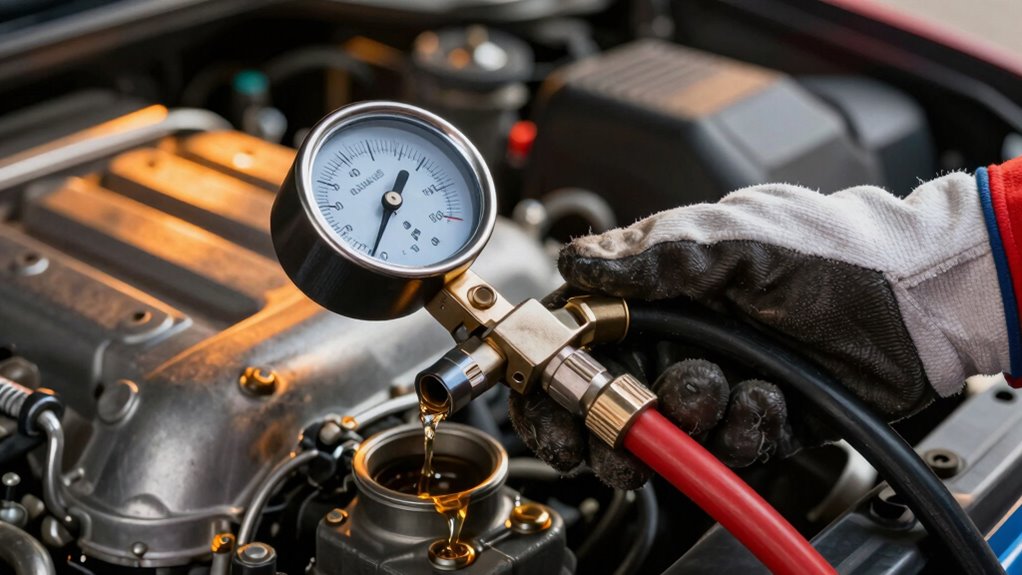
Engine oil pressure is crucial because it guarantees that your engine’s moving parts stay properly lubricated. If oil pressure drops, components like bearings and pistons face increased friction and wear, risking serious damage. Oil pressure sensors monitor this pressure in real-time, alerting you to potential issues before they become costly repairs. The oil pump plays a key role by circulating oil throughout the engine; if it fails or weakens, oil pressure drops sharply. Maintaining proper oil pressure ensures smooth engine operation and prolongs its lifespan. Ignoring warning signs from oil pressure sensors or neglecting oil pump maintenance can lead to engine failure. That’s why understanding and monitoring oil pressure is essential for keeping your vehicle running reliably.
Oil Pressure Tester Tool, Oil Pressure Gauge kit, 0-140 PSI Pressure Test Diagnostic Tools, Engine Oil Pressure Tester Tool kit, for car Truck (Blue)
Exquisite design: Oil Pressure Tester Tool have dual display pressure gauge head, clear scale, easy to clean, and…
As an affiliate, we earn on qualifying purchases.
As an affiliate, we earn on qualifying purchases.
What Tools Do You Need to Test Your Oil Pressure?

To test your oil pressure, you’ll need some essential equipment, starting with a proper oil pressure gauge. This tool provides accurate readings and is vital for diagnosing issues. You might also want additional diagnostic tools to help interpret the results and pinpoint any problems. Using a high-quality gauge with precise measurement capabilities can significantly improve the accuracy of your diagnostics. Properly calibrated tools ensure that your readings are reliable and trustworthy. Ensuring your measurement accuracy is crucial for making informed repair decisions. Additionally, selecting reliable testing equipment can help prevent misdiagnosis and avoid unnecessary repairs.
Essential Testing Equipment
When testing your oil pressure, having the right tools is essential for accurate results and safety. You’ll need specific equipment to get reliable readings and diagnose issues effectively. Here are the must-have items: 1. Oil pressure gauge – a high-quality gauge ensures precise measurement of oil pressure levels. 2. Adapter fittings – these connect the gauge to the oil filter port or oil pump port securely. 3. Wrench or socket set – used to remove the oil filter or access the test port without damage. Using the correct body jewelry measurements ensures a proper fit and reduces the risk of damage during testing. Proper equipment prevents misdiagnosis and keeps you safe during testing. Additionally, understanding engine performance indicators can help you interpret the results accurately and identify potential problems early. Familiarity with diagnostic procedures can also streamline the testing process and improve troubleshooting accuracy.
Proper Oil Pressure Gauge
Choosing the right oil pressure gauge is vital for obtaining accurate readings and guaranteeing safety during testing. You need a gauge compatible with your vehicle’s oil pressure sensors, making sure it fits correctly and delivers precise measurements. Proper gauge calibration is essential—an uncalibrated gauge can mislead you, risking engine damage. Look for gauges that are easy to read, durable, and designed for automotive use. For comprehensive testing, understanding Northeast – These Fifty States can help you find local automotive specialists or resources when needed.
Additional Diagnostic Tools
Testing your oil pressure requires more than just a gauge; you’ll need a set of essential diagnostic tools to guarantee accurate results and safe operation. These tools help you identify issues beyond the pressure gauge, such as blocked oil filters or malfunctioning oil coolers. A cryptid mystery in your engine could be hiding behind subtle signs that only proper diagnostic tools can uncover. 1. Mechanical Oil Pressure Tester: Attaches directly to the engine to give precise readings and verify gauge accuracy, revealing problems with oil flow caused by a clogged oil filter. 2. Infrared Thermometer: Measures oil temperature, helping you determine if the oil cooler is functioning properly and maintaining ideal engine temperature. 3. Oil Drain Pan and Inspection Tools: Used during oil changes to check for debris or metal shavings, indicating wear that could affect oil pressure. Regularly inspecting oil system components can prevent potential failures and costly repairs. Additionally, understanding oil flow dynamics can help diagnose underlying issues more effectively. For example, analyzing oil pressure fluctuations can reveal hidden problems that might not be immediately obvious. Having these tools ensures thorough diagnostics and prevents overlooked issues. Proper diagnostic procedures are crucial for accurate assessments and safe engine operation.
Oil Pressure Tester Tool, Oil Pressure Gauge kit, 0-140 PSI Pressure Test Diagnostic Tools, Engine Oil Pressure Tester Tool kit, for car Truck (Blue)
Exquisite design: Oil Pressure Tester Tool have dual display pressure gauge head, clear scale, easy to clean, and…
As an affiliate, we earn on qualifying purchases.
As an affiliate, we earn on qualifying purchases.
How to Check Your Oil Pressure: Step-by-Step Instructions
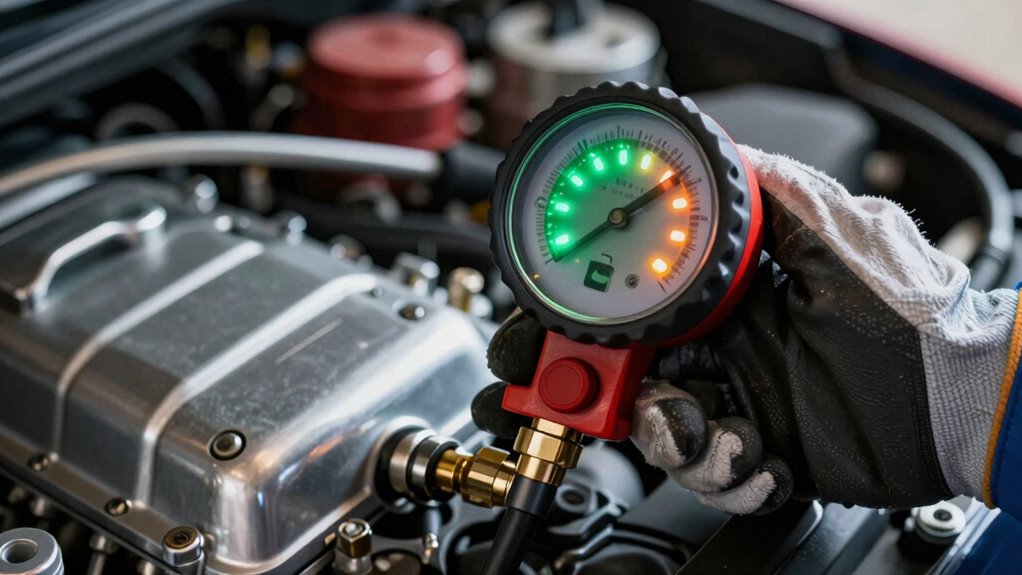
Checking your oil pressure is an essential maintenance step to guarantee your engine runs smoothly and avoids damage. First, locate your vehicle’s oil pressure sensor, usually near the engine block or cylinder head. Connect a reliable oil pressure gauge to the sensor port or use a mechanical gauge if your vehicle allows. Start the engine and let it idle; watch the gauge for readings. A healthy oil pump maintains proper pressure, but faulty sensors can give false readings. If your pressure is too low or fluctuates, it could indicate issues with the oil pump or sensors. Always ensure your gauge is securely connected, and avoid revving the engine excessively during testing. This step helps you quickly identify potential problems before they cause serious damage. Additionally, regularly verifying your oil pressure can help detect early signs of engine problems and prevent costly repairs.

Mekar 2PCS Oil Rail Adapters Kits and 1 PC 6.0 High Pressure Oil Pump IPR Valve Air Test Fitting Tool Compatible with Ford 6.0L Powerstroke Diesel Engine
【Perfect Fitment】– Compatible with Ford Super Duty 2003-2010 F250 F350 F450 F550, Ford Excursion 2003-2010, Ford 2004-2010 E-350…
As an affiliate, we earn on qualifying purchases.
As an affiliate, we earn on qualifying purchases.
What Do Normal Oil Pressure Levels Look Like?
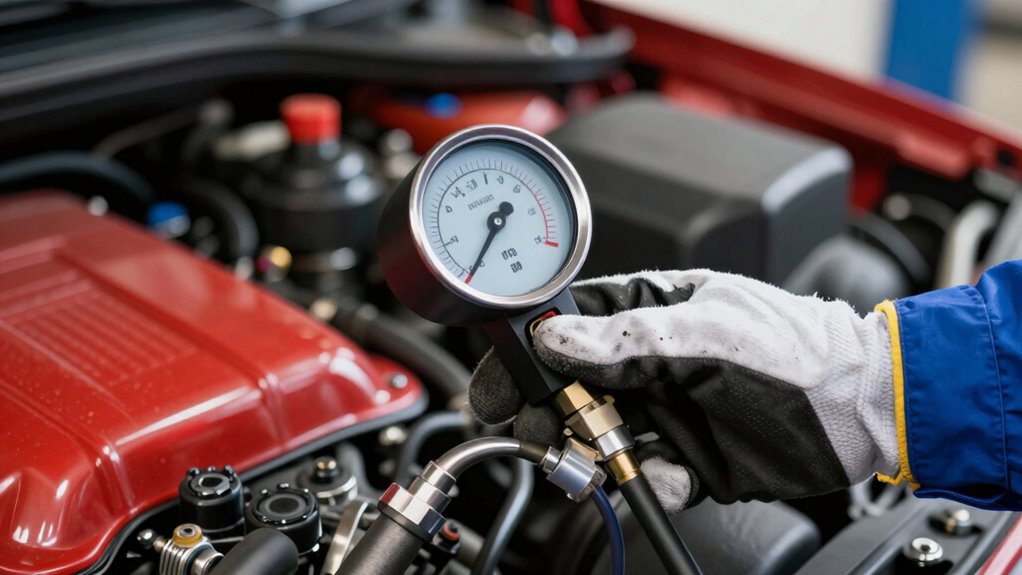
Most engines operate within a typical oil pressure range of 20 to 60 psi when running at normal temperature. However, the ideal pressure can vary depending on your engine type and size. Knowing these standards helps you recognize when your oil pressure is within the normal range or if it indicates a potential issue. Consulting your vehicle’s manual or a vetted vacuum expert can provide further guidance on specific engine requirements. Additionally, understanding engine specifications can help you determine the optimal oil pressure for your particular model. Recognizing acceptable oil pressure ranges for your engine is essential for proper maintenance, especially since proper oil pressure contributes to engine longevity and performance. Regularly monitoring your oil pressure gauge can help detect early signs of problems and prevent costly repairs.
Typical Pressure Range
What do normal oil pressure levels look like? Typically, your engine’s oil pressure ranges between 25 and 65 PSI when the engine is warm and at idle. Here are key points to keep in mind:
- At Idle: Expect oil pressure to be around 10-20 PSI, which signals the oil pressure sensor is functioning correctly.
- During Acceleration: Pressure should rise, often hitting 40-70 PSI, indicating proper oil flow.
- High RPM: Oil pressure usually peaks near 80 PSI, but shouldn’t exceed the oil pressure relief valve’s limit, preventing damage.
- Maintaining proper oil pressure is essential for engine longevity to ensure your engine remains well-lubricated under various operating conditions. Additionally, understanding the pressure fluctuations can help detect early signs of potential issues. Recognizing normal pressure ranges is crucial for effective diagnosis and preventing engine failure. Regularly checking for sensor accuracy can help prevent false readings that might lead to unnecessary repairs.
Always monitor these levels with a reliable gauge and ensure your oil pressure sensors are accurate. If pressure drops unexpectedly, the oil pressure relief system could be compromised, risking engine damage.
Variations by Engine Type
Have you ever wondered why oil pressure readings can vary between different engine types? It all comes down to engine-specific oil flow and design differences. For example, turbocharged engines often operate at higher pressures because they require increased lubrication under added stress. In contrast, naturally aspirated engines tend to have more stable, lower oil pressure ranges. Knowing these variations helps you interpret readings accurately. Some engines may run at 20-60 psi at idle, while others, like turbocharged models, might run higher, especially under load. Always consult the manufacturer’s specifications for your specific engine type. Recognizing these differences ensures you don’t mistake a normal variation for a problem, keeping you confident in your oil pressure assessments. Additionally, being aware of engine design differences allows for more precise diagnosis of potential issues. Understanding oil flow dynamics and how they vary can also provide deeper insights into engine health and performance.
Troubleshooting Low or Fluctuating Oil Pressure

Low or fluctuating oil pressure can indicate underlying issues that require prompt attention. To troubleshoot, start by checking the oil level and quality—use synthetic oil for better stability. Next, inspect the oil filter; a clogged or improperly installed filter can cause pressure drops. Finally, consider the oil pump and pressure sensor: a faulty pump or sensor can produce inconsistent readings.
Low or fluctuating oil pressure signals potential engine issues—check oil level, filter, pump, and sensor promptly.
- Make certain the oil level is adequate and the oil is clean—replace with synthetic oil if needed.
- Verify the oil filter isn’t clogged or installed incorrectly.
- Test or replace the oil pressure sensor and pump if suspicions remain.
Addressing these factors quickly can prevent engine damage and improve performance, ensuring your vehicle runs smoothly and maintains proper oil pressure.
When Should You See a Mechanic About Oil Pressure Problems?
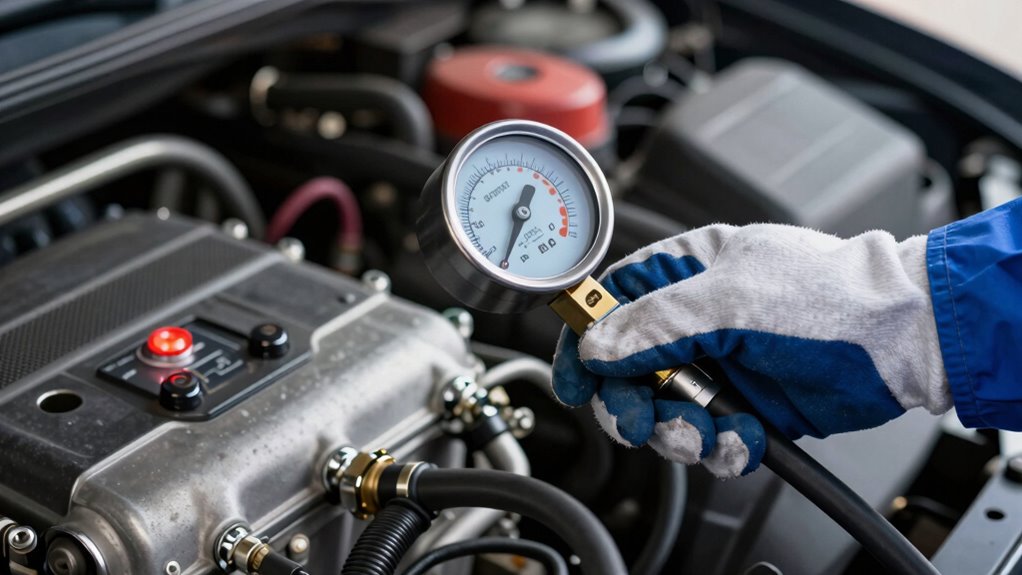
You should see a mechanic about oil pressure problems if you notice persistent warning lights on your dashboard, strange noises from the engine, or a sudden drop in oil pressure readings that don’t improve after basic checks. Low or fluctuating oil pressure can be caused by issues like incorrect engine oil viscosity, which affects proper lubrication, or poor oil filter quality, leading to restricted oil flow. If these problems persist, it indicates that your engine isn’t receiving adequate lubrication, risking serious damage. Don’t ignore warning signs; a mechanic can diagnose whether the oil pressure issue stems from improper oil viscosity, clogged filters, or other underlying problems. Timely inspection guarantees your engine stays healthy and prevents costly repairs down the line.
How to Maintain Healthy Oil Pressure and Keep Your Engine Running Smoothly
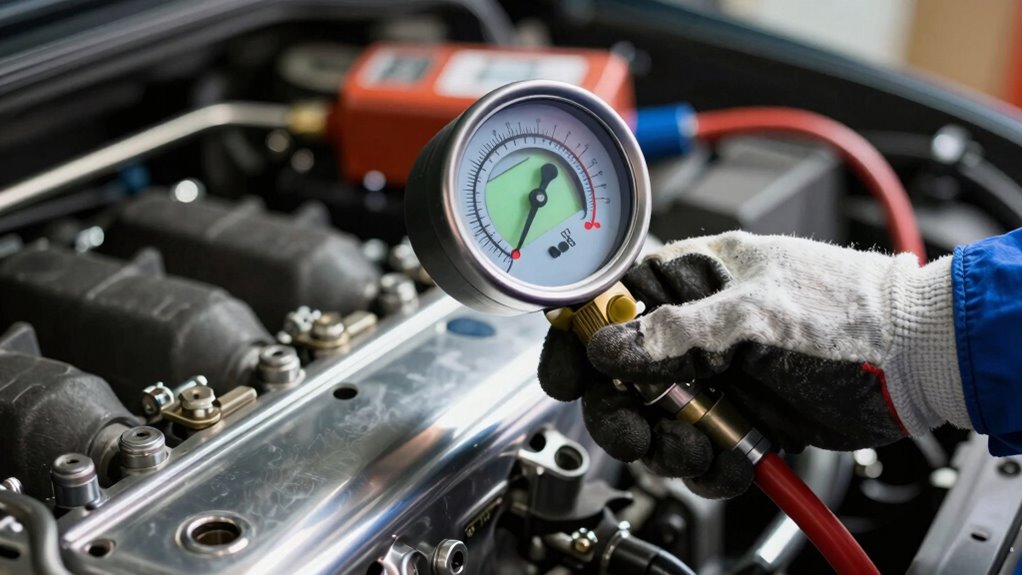
Maintaining healthy oil pressure is essential for ensuring your engine runs smoothly and lasts longer. To prevent oil degradation and ensure proper oil filtration, follow these key steps:
- Regularly change your oil and filter according to your vehicle’s maintenance schedule. Fresh oil and clean filters reduce oil degradation and keep contaminants out.
- Use high-quality oil suited for your engine, which enhances lubrication and maintains ideal pressure.
- Check your oil level frequently and top off if needed, especially before long drives. Proper levels support consistent oil flow and pressure.
Frequently Asked Questions
Can Oil Pressure Problems Cause Engine Overheating?
Yes, oil pressure problems can cause engine overheating. When oil pressure drops, oil circulation slows, leading to increased oil temperature and decreased oil viscosity. This reduces lubrication, causing friction and heat buildup in engine parts. As oil fails to carry away heat effectively, the engine can overheat, risking damage. Regular oil pressure checks help you spot issues early, preventing overheating and ensuring your engine runs smoothly.
How Often Should I Test My Car’s Oil Pressure?
Imagine your engine’s heart beating steadily—regular oil pressure keeps it alive. You should test your oil pressure every 3,000 to 5,000 miles, or during oil changes when you swap out old oil for fresh, viscosity-appropriate oil. This routine helps catch issues early, ensuring your engine’s essential signs stay strong. Regular testing keeps your car running smoothly and prevents costly repairs down the road.
Do All Vehicles Have the Same Ideal Oil Pressure Range?
No, all vehicles don’t have the same ideal oil pressure range. You should check your owner’s manual to find the specific range for your car. When testing, your oil pressure sensors and oil pressure gauges help you monitor the readings. If the pressure falls outside the recommended range, it could indicate an issue, so always verify with your vehicle’s specs and consult a mechanic if needed.
What Are the Risks of Ignoring Oil Pressure Warnings?
Ignoring oil pressure warnings can cause serious engine damage. When the warning light activates, your oil pressure sensors detect low oil flow, risking engine overheating and component failure. If you dismiss these alerts, you might face costly repairs or engine failure. Always interpret warning lights carefully, check oil levels, and don’t delay proper inspection. Promptly addressing oil pressure issues keeps your engine running smoothly and prevents irreversible damage.
Can Low Oil Pressure Damage Other Engine Components?
It’s true that low oil pressure can damage your engine components. When your pressure gauge shows low readings, it often points to issues like a failing oil pump or clogged passages. This lack of lubrication can cause excessive wear on parts like bearings and pistons, leading to costly repairs. Ignoring these signs risks severe damage, so addressing low oil pressure promptly helps prevent extensive engine failure.
Conclusion
Think of your engine’s oil pressure as its heartbeat—steady and strong keeps everything running smoothly. Regular checks are like listening to that heartbeat, catching problems before they grow. By staying vigilant and addressing issues early, you’re steering your car away from costly breakdowns. Keep your engine’s rhythm steady, and it’ll keep you moving forward, smooth and confident, on the open road. Don’t let a faint heartbeat turn into silence—stay proactive with oil pressure testing.