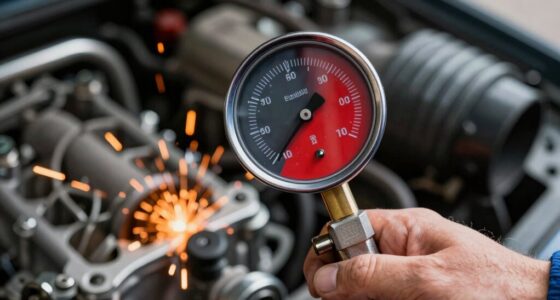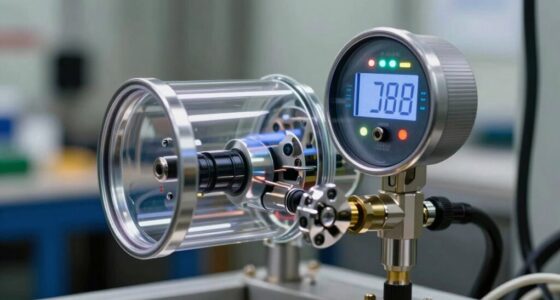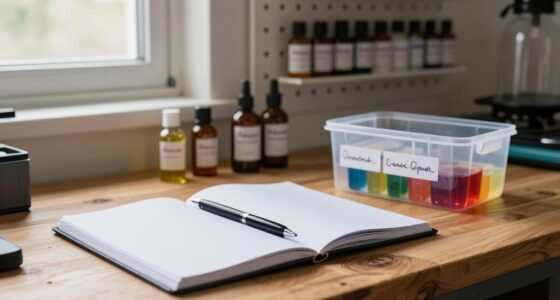

DIY oil viscosity tests can give you a rough idea of your engine oil’s condition by observing its flow, color, or smell, but they can’t provide precise measurements. These simple checks help identify major issues like contamination or significant thickening or thinning, but they don’t substitute professional lab analysis. To get accurate results and ensure engine health, it’s best to understand what these tests can and can’t reveal—and discover when to seek expert help.
Key Takeaways
- DIY tests can estimate if oil is too thick or thin by observing flow or texture but lack precise viscosity measurement.
- Visual cues like color and smell indicate contamination or degradation but do not directly reveal viscosity changes.
- Simple pouring or touch tests provide rough assessments of oil consistency but cannot replace lab-based viscosity testing.
- Environmental factors such as temperature can influence DIY observations, reducing their reliability for accurate viscosity determination.
- Professional lab analysis is necessary for precise viscosity data and comprehensive oil condition assessment beyond DIY methods.

MOLUCKFU Engine Oil Comparator Tool and Transmission Oil Viscosity Tester Acrylic Stand for Accurate Car Maintenance and Quality Testing
Versatile functionality: not only compares engine oil but also tests the viscosity of transmission oil, providing comprehensive oil…
As an affiliate, we earn on qualifying purchases.
As an affiliate, we earn on qualifying purchases.
What Is Oil Viscosity and Why Does It Matter?
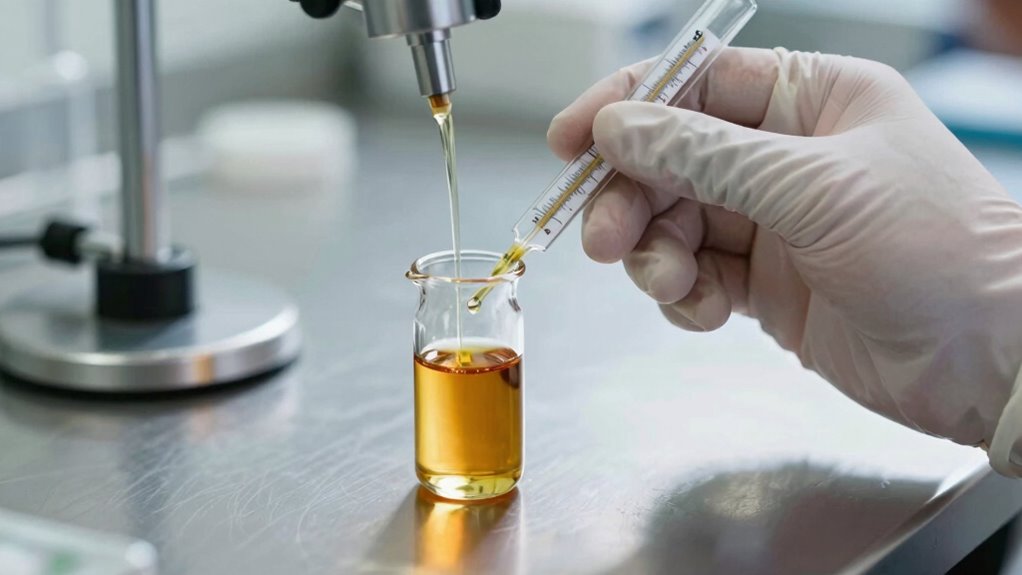
Oil viscosity measures how thick or thin the oil is, which directly affects its ability to flow through engine parts. This property is vital because ideal oil flow ensures proper lubrication, reducing wear and preventing engine damage. High-quality oil adheres to viscosity standards set by industry organizations, ensuring consistent performance under various conditions. If the oil is too thick, it may cause sluggish startup and increased fuel consumption; if too thin, it might not provide adequate lubrication. Understanding viscosity helps you choose the right oil for your engine’s needs, especially in different climates or operating conditions. Proper viscosity levels are also indicated by the oil’s viscosity index, which reflects how well the oil maintains its thickness across temperature ranges. Regularly monitoring oil condition can help prevent potential engine issues caused by improper viscosity levels. Additionally, viscosity testing methods can provide insights into whether your oil is still suitable or needs replacement, although they may not capture all aspects of oil performance. Conducting oil analysis tests can help identify the presence of contaminants or breakdown products that affect viscosity, further informing maintenance decisions. For example, viscosity stability over time indicates how well the oil maintains its properties during engine operation.
MOLUCKFU Engine Oil Comparator Tool and Transmission Oil Viscosity Tester Acrylic Stand for Accurate Car Maintenance and Quality Testing
Versatile functionality: not only compares engine oil but also tests the viscosity of transmission oil, providing comprehensive oil…
As an affiliate, we earn on qualifying purchases.
As an affiliate, we earn on qualifying purchases.
Can You Measure Oil Viscosity at Home? How DIY Tests Work
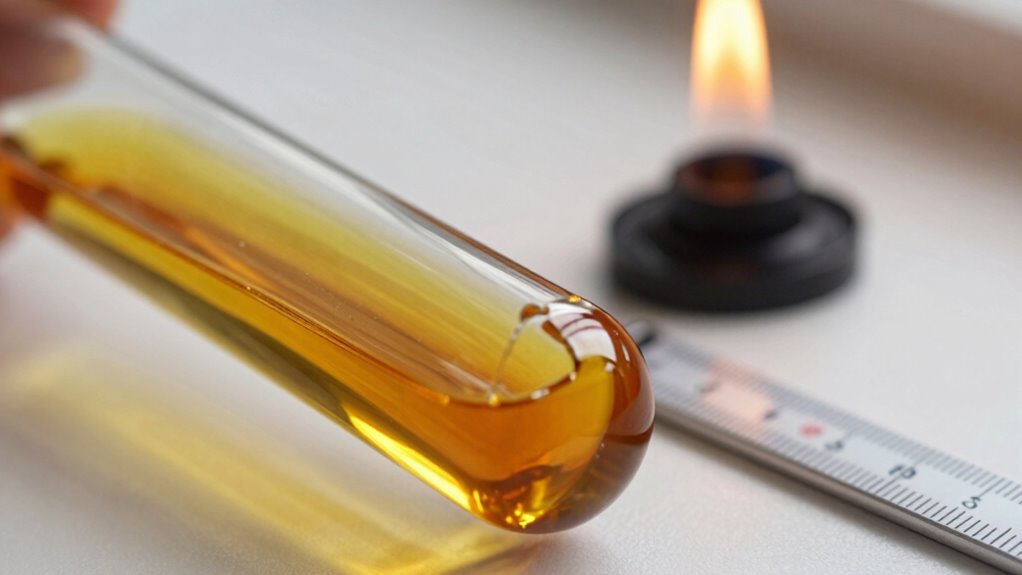
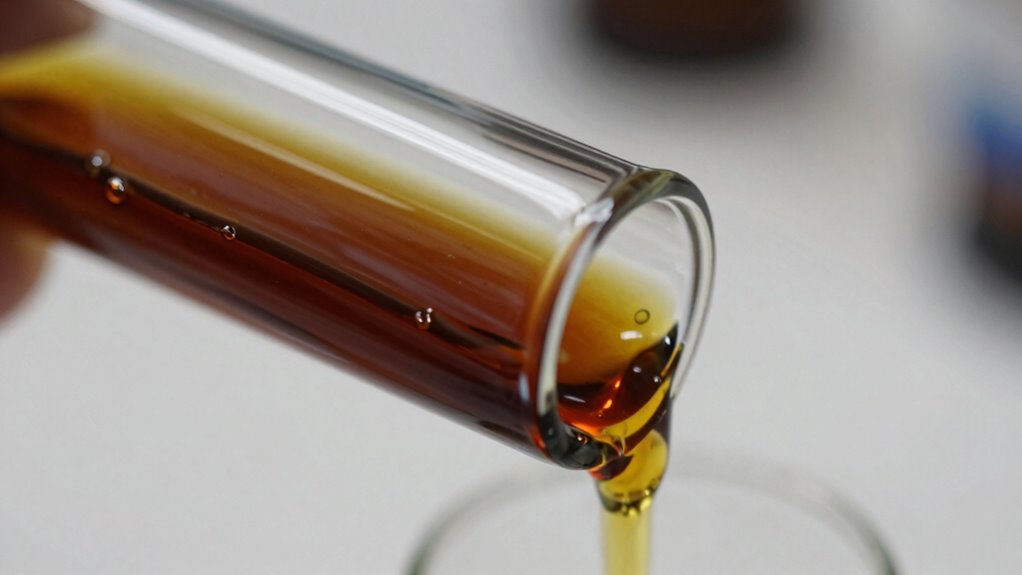
While professional lab testing provides the most accurate measurement, you can perform simple DIY tests at home to get a general idea of your oil’s viscosity. One easy method involves observing the oil’s color and smell; darker or burnt-smelling oil may indicate thickening or degradation. To test viscosity more directly, you can try pouring a small amount over a smooth surface or into a container and noting how it flows. Thinner oils will drip or spread quickly, while thicker oils move slowly. Keep in mind, these tests only give rough insights and can’t replace precise measurements. They’re useful for spotting obvious issues but won’t provide exact viscosity numbers. For accurate results, professional testing remains the best option. Additionally, understanding the oil’s physical properties can help interpret your observations more effectively. Monitoring oil’s temperature during tests can also improve the accuracy of your DIY assessments. Being aware of viscosity changes over time can help you determine when oil needs replacement or treatment.

Engine Oil Tester Gasoline & Diesel Engine Oil Quality Tester Analyzer Detector High-precision Car Engine Oil Diagnostic Tool with 50inch Flexible Probe,Identifier&Sound Prompt,2.8in Backlight Display
【Why You Need Engine Oil Tester】Engine oil tester can help you check your engine oil regularly to ensure…
As an affiliate, we earn on qualifying purchases.
As an affiliate, we earn on qualifying purchases.
What DIY Oil Viscosity Tests Can and Can’t Show You
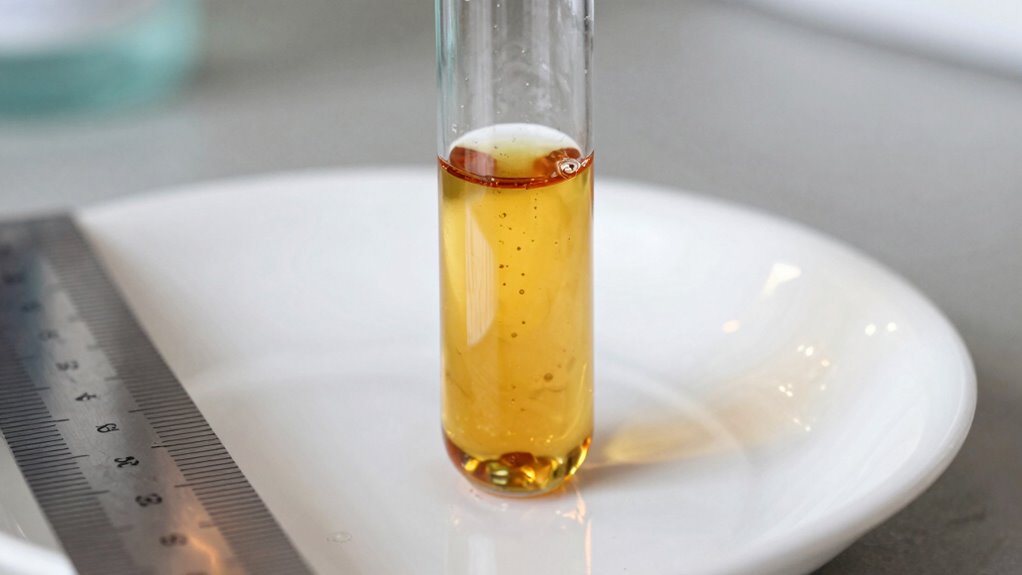
DIY oil viscosity tests can help you spot major changes in how thick or thin your oil is, but they can’t give you precise measurements. These simple tests might show if your oil has become considerably less effective, yet they don’t reveal subtle shifts or detailed data. Keep in mind, home methods have limitations and won’t replace professional lab analysis for thorough results. Trusted businesses and services near you can provide accurate testing and advice for your vehicle’s needs. Understanding oil viscosity is essential for maintaining engine health and performance. Recognizing engine oil properties can help you better assess your oil’s condition through basic inspection techniques, but only comprehensive testing can confirm the exact oil viscosity level necessary for optimal operation.
Detecting Viscosity Changes
Detecting viscosity changes through simple tests can give you a general idea of your oil’s condition, but they have notable limitations. For example, observing oil color can hint at contamination or degradation, but it doesn’t directly reveal viscosity shifts. Similarly, oil smell might indicate burning or contamination, but it doesn’t provide specific information about how thick or thin the oil has become. These sensory checks are quick and easy, but they can’t definitively measure viscosity changes. They can alert you to potential issues, prompting further testing or professional assessment. However, relying solely on oil color or smell won’t accurately determine viscosity changes, so always combine these observations with proper testing methods for a clearer picture of your oil’s health.
Limitations of Home Testing
Simple tests like checking oil color or smell can give you a quick sense of potential issues, but they don’t provide precise information about viscosity changes. Color accuracy can be misleading, as oil may look normal even if viscosity has decreased or increased. Temperature effects also play a significant role; a slight change in temperature can alter viscosity readings, making your observations unreliable. DIY tests lack the controlled environment necessary for accurate measurements, so they can’t account for these variables. While such tests are helpful for spotting obvious problems, they won’t tell you the true viscosity or how it’s changing over time. Oil viscosity measurement requires specialized equipment to ensure accuracy. Additionally, controlled testing conditions are essential to obtain reliable results, which are difficult to replicate outside of a laboratory setting. Without proper testing protocols, DIY methods cannot reliably track viscosity trends over time or detect subtle changes.

Groz 8-Quart Oil Measuring Container with Flexible Spout, Graduated in Quarts & Liters, Leak-Proof Threaded Design for Engine Oil Changes (41882)
FLEXIBLE SPOUT REACHES TIGHT SPACES – Heavy-duty corrugated spout bends into cramped engine compartments; makes oil changes cleaner…
As an affiliate, we earn on qualifying purchases.
As an affiliate, we earn on qualifying purchases.
How to Interpret DIY Test Results and When to Seek a Lab Test
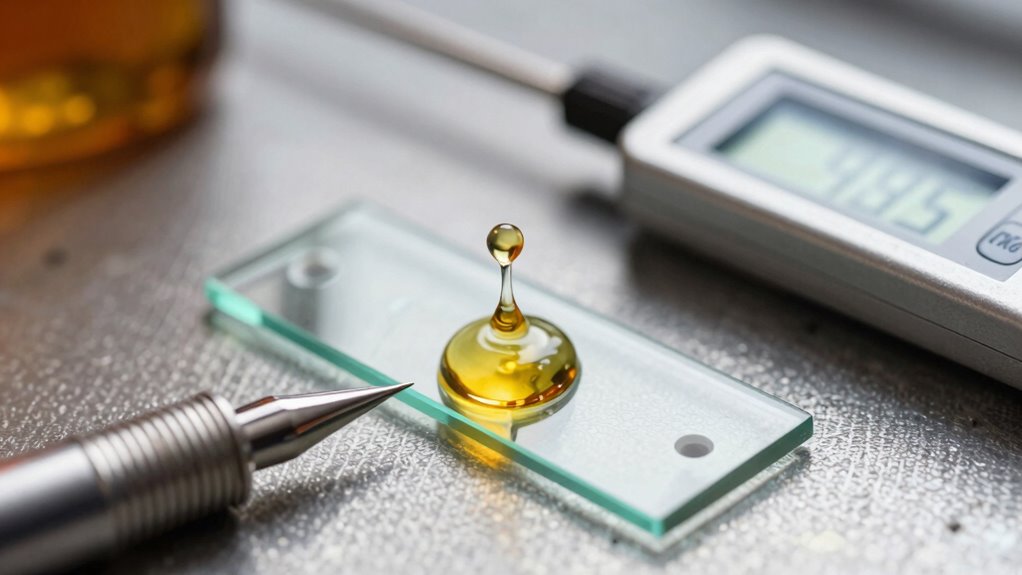
You need to understand that DIY tests have limitations and may not provide a complete picture of your oil’s condition. If your results are unclear or show signs of abnormal viscosity, it’s time to contemplate a lab test for more accurate analysis. Recognizing these signs helps you decide when professional testing is necessary to ensure your engine’s health. Additionally, understanding gear care tips can help maintain optimal performance and extend the lifespan of your engine components. Being attentive to oil viscosity indicators can further aid in early detection of potential issues before they escalate. Monitoring appliance maintenance and adhering to recommended testing intervals can also contribute to better engine care. Regularly reviewing viscosity testing procedures can help you better interpret DIY results and determine when expert analysis is warranted. For more reliable insights, consider the importance of proper oil sample collection techniques to avoid skewed results.
Understanding DIY Test Limits
While DIY oil viscosity tests can offer quick insights, they have limitations that prevent them from replacing professional lab analysis. One key issue is sensor accuracy; inexpensive tools may not provide precise measurements, leading to misleading conclusions. Additionally, sample contamination can skew results, especially if the oil isn’t properly collected or stored. These factors mean that DIY tests can sometimes give false positives or negatives, making it hard to confidently assess your oil’s condition. It’s essential to understand these limits and not rely solely on DIY results for critical decisions. If your test indicates significant issues or if you’re unsure about the results, it’s best to seek a lab analysis to get accurate, exhaustive data. Proper oil storage practices also play a crucial role in maintaining test integrity and ensuring reliable results. Furthermore, understanding oil viscosity standards can help interpret test outcomes more effectively and avoid misjudgments. Recognizing how electric dirt bikes generate power and the associated performance metrics can also provide context for understanding oil requirements in different machinery. Being aware of microplastics in dust is important, as they can influence dust contamination and affect oil conditions over time.
Recognizing When to Lab Test
Interpreting DIY oil viscosity test results can be tricky since these tests have inherent limitations. If your oil appears darker than usual or has a strange smell, it’s a red flag that lab testing might be necessary. Oil color changes can indicate contamination or breakdown, while smell indicators—such as burnt or sour odors—suggest chemical changes that DIY tests can’t accurately assess. If your DIY results show inconsistent viscosity readings, or if obvious signs like discoloration or unusual odors persist, it’s time to seek professional analysis. Lab tests provide precise measurements and detailed insights that DIY methods can’t match. Additionally, understanding the limitations of DIY tests is crucial for proper vehicle maintenance. Recognizing these visual and olfactory cues helps you decide when to move beyond simple tests and ensure your engine stays well-maintained. Being aware of test accuracy factors can further improve your ability to interpret results correctly, especially since testing techniques may vary in precision depending on how they are performed.
Simple Ways to Monitor Your Oil’s Condition Without Lab Equipment

Monitoring your oil’s condition doesn’t require expensive lab equipment; simple at-home tests can give you a clear indication of its health. Start by inspecting the oil color—if it’s dark and cloudy, it’s likely contaminated or degraded. Next, check the oil smell; burnt or sour odors suggest oxidation or contamination. These visual and olfactory cues are quick ways to gauge whether your oil is still good or needs attention. You can also perform a simple touch test—oil should feel smooth and slightly viscous. If it feels gritty or overly thin, that’s a sign it’s breaking down. While these tests won’t provide precise measurements, they offer useful insights into your oil’s overall condition, helping you decide when to dig deeper or take action.
When to Change Your Oil Based on DIY Findings
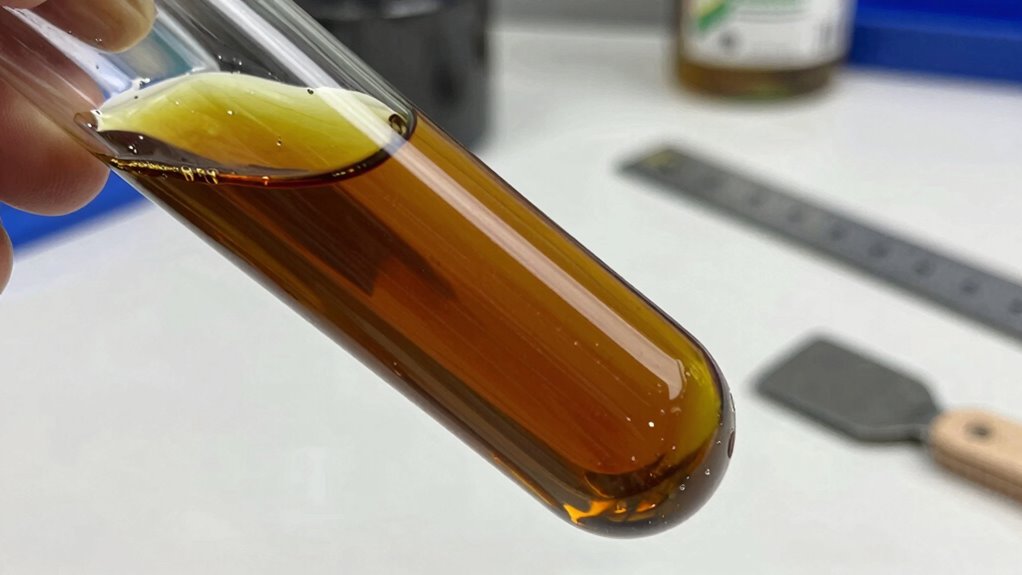
You should change your oil as soon as your DIY tests indicate signs of deterioration. If the oil color has turned dark or muddy, it’s a clear sign the oil has broken down and lost its effectiveness. Similarly, if you notice increased engine noise or knocking sounds, it could mean the oil isn’t providing proper lubrication anymore. These visual and auditory cues are simple indicators that your oil needs replacement. Don’t ignore these signs, as delaying an oil change can lead to engine wear or damage. Relying on these DIY observations helps you catch issues early, but remember they aren’t foolproof. When in doubt, follow your vehicle’s recommended oil change intervals or consult a professional for a thorough assessment.
Frequently Asked Questions
Can DIY Tests Determine the Exact Oil Viscosity Grade?
No, DIY tests can’t determine the exact oil viscosity grade with precision measurement. While you can get a general idea of viscosity, testing accuracy is limited by your equipment. Using simple methods, you’ll only identify broad viscosity ranges, not precise grades. For exact results, professional lab testing is essential. DIY tests are helpful for quick checks, but they don’t replace precise, standardized measurements needed for accurate viscosity grading.
How Often Should I Perform DIY Oil Viscosity Checks?
Think of your oil as the blood of your engine; it needs regular checkups to stay healthy. You should perform DIY oil viscosity checks every 3,000 to 5,000 miles or during routine oil changes, but for precise results, trust professional testing. These simple checks can catch early signs of viscosity changes, helping you decide if you need an oil change sooner, ensuring your engine runs smoothly and prolongs its life.
Are There Risks Involved in Conducting DIY Oil Tests?
Yes, there are risks involved in DIY oil tests. You should prioritize chemical safety by handling oils and chemicals carefully to avoid spills or skin contact. Also, be aware that equipment accuracy can vary if tools aren’t properly calibrated, leading to misleading results. Always follow safety guidelines, use proper protective gear, and double-check your equipment to minimize risks and guarantee reliable readings.
Can DIY Tests Detect Oil Contamination or Degradation?
Yes, DIY tests can help you spot oil contamination and oil degradation, but with limitations. You can perform simple visual inspections to check for discoloration or debris, or use test strips to detect contaminants. However, these methods won’t give detailed insights into the extent of contamination or degradation. For thorough analysis, professional lab tests are necessary. Always remember, DIY methods offer a rough indication, not a definitive diagnosis.
What Are the Limitations of Home-Based Oil Viscosity Testing?
You should know that home-based oil viscosity testing has limitations, mainly due to sensor accuracy and environmental factors. These tests often lack the precision needed for reliable results, and variables like temperature fluctuations or dirt can skew readings. While DIY tests can give you a rough idea of oil condition, they can’t replace professional testing for detailed analysis, so use them as a basic guide rather than a definitive assessment.
Conclusion
While DIY oil viscosity tests can give you a general idea of your oil’s condition, they aren’t foolproof. Did you know that regular monitoring can extend your engine’s life by up to 20%? By understanding what your tests can and can’t tell you, you’ll stay ahead of potential issues. Remember, when in doubt, a professional lab test provides the most accurate results. Keep an eye on your oil and enjoy smoother, longer-lasting engine performance.