
Checking your ATF level outside the proper service temperature window can give you false readings and lead to overfill or underfill issues. When the fluid is too cold or hot, it expands or contracts, making the level appear incorrect. Using the right tools and waiting for the right temperature guarantees accurate measurements. If you want to avoid costly mistakes and maintain your transmission’s health, keep these guidelines in mind as you continue.

Get business pricing on garage and car supplies
- Business-only prices and quantity discounts
- Tax-exempt purchasing
- Multiple users, one account, clear invoices
Key Takeaways
- ATF levels should be checked within 170°F to 200°F for accurate readings.
- Temperature fluctuations cause fluid to expand or contract, affecting level measurements.
- Checking outside the proper temperature window leads to false high or low ATF readings.
- Proper tools and techniques ensure measurement accuracy and prevent overfill or underfill errors.
- Consistently measuring at correct temperatures improves transmission performance and longevity.
automatic transmission fluid temperature gauge
As an affiliate, we earn on qualifying purchases.
As an affiliate, we earn on qualifying purchases.
What Is the Correct Service Temperature Window for Checking ATF?
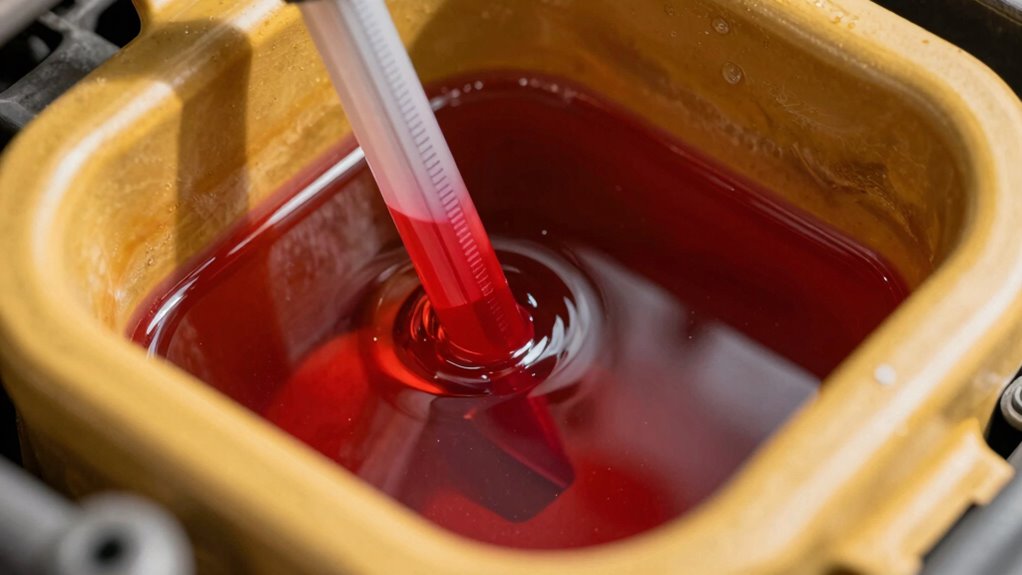
To accurately check the transmission fluid (ATF), you need to guarantee it’s within the correct temperature window. Typically, this window ranges between 170°F and 200°F (77°C to 93°C). When the ATF reaches this temperature, it’s thin enough to give an accurate reading of its level and condition. If the fluid is too cold, it’s thicker and will falsely appear low, leading you to add unnecessary fluid. Conversely, if it’s too hot, the fluid becomes thinner, which can cause an overestimation of the level. It’s essential to use a reliable thermometer or check the vehicle’s temperature gauge to confirm the fluid’s temperature falls within this range before inspecting the level. Proper temperature ensures accurate readings and helps maintain transmission health. Understanding proper testing procedures is crucial for ensuring the accuracy of your transmission maintenance, especially since consistent checkups can prevent costly repairs down the line. Additionally, knowing the correct service temperature window helps avoid misdiagnosing transmission issues caused by incorrect fluid levels. Being aware of transmission fluid properties can further aid in interpreting test results correctly.
ATF level dipstick with temperature indicator
As an affiliate, we earn on qualifying purchases.
As an affiliate, we earn on qualifying purchases.
How Temperature Changes Can Lead to Wrong ATF Level Readings
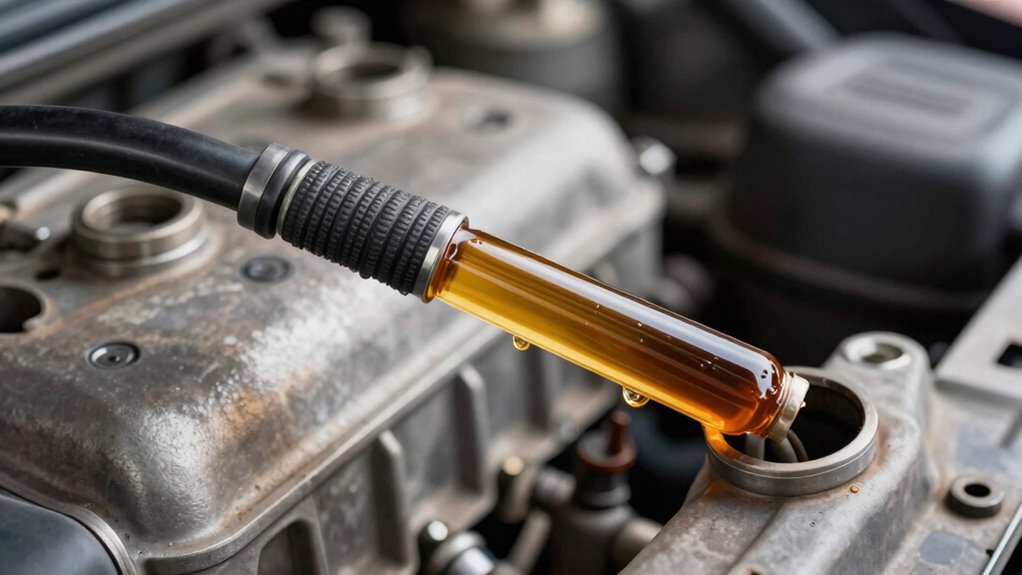
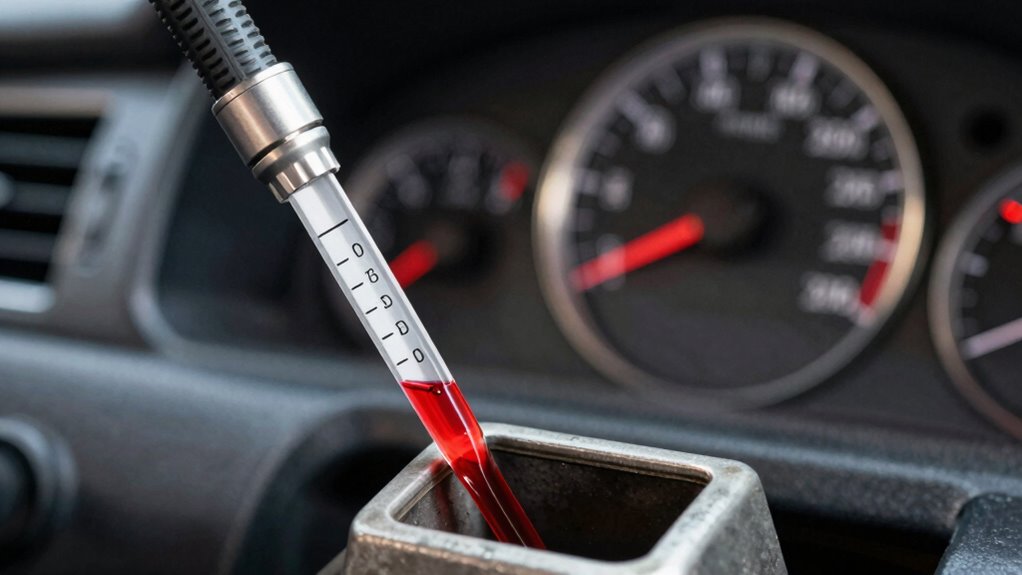
Temperature fluctuations cause automatic transmission fluid (ATF) to expand or contract, affecting its level measurement. If you check the fluid when it’s too hot or cold, you might get an inaccurate reading. Understanding how temperature influences fluid volume helps ensure you get precise ATF level readings. Additionally, proper measurement techniques can help mitigate errors caused by temperature changes. Being aware of the Free Floating condition helps in understanding how fluid behavior can vary with environmental factors. Recognizing the importance of credit card security can also prevent potential financial risks associated with inaccurate readings or maintenance procedures. Knowing how fluid expansion occurs with temperature shifts can further improve your diagnostic accuracy and maintenance practices. Monitoring temperature windows during checks ensures more consistent and reliable ATF level readings.
Temperature-Dependent Fluid Expansion
When fluid warms up, it expands, which can cause the ATF level to appear higher on the dipstick or level indicator than it actually is. This expansion occurs because warmer temperatures increase the fluid’s volume, making it seem like there’s more fluid than there truly is. If you check the fluid level immediately after driving or during hot conditions, you’ll likely see a higher reading. Conversely, when the fluid cools, it contracts, and the level appears lower. This fluctuation can mislead you into thinking the fluid is overfilled or underfilled. To get an accurate reading, it’s best to check the ATF level when the transmission is at its normal operating temperature, and the vehicle is on a level surface. Proper fluid maintenance helps ensure reliable operation and can prevent damage caused by incorrect level readings. Additionally, understanding fluid temperature variations is crucial for accurate diagnostics and maintenance. Recognizing temperature-dependent fluid expansion is essential for proper transmission care to avoid misinterpretation of fluid levels.
Inaccurate Level Readings
Fluid expansion and contraction directly impact how accurate your ATF level readings are. When the transmission fluid heats up, it expands, making the level appear higher than it truly is. Conversely, when it cools down, the fluid contracts, leading to a falsely low reading. This fluctuation can cause you to overfill or underfill your transmission. To better understand, consider this table:
| Temperature Effect | Resulting Level Reading |
|---|---|
| Fluid heats up | Reads higher than actual |
| Fluid cools down | Reads lower than actual |
| Incorrect check | Leads to improper maintenance |
Always check your ATF level at the recommended temperature range, typically when the fluid is warm but not hot, to avoid inaccurate readings influenced by temperature changes. Proper temperature management can help ensure your readings are accurate and maintenance is correctly performed. Additionally, understanding service temperature windows is crucial for precise level checks and optimal transmission health. Being aware of fluid behavior at different temperatures can further improve your maintenance accuracy and transmission longevity.
As an affiliate, we earn on qualifying purchases.
Common Mistakes When Checking ATF Levels at Incorrect Temperatures
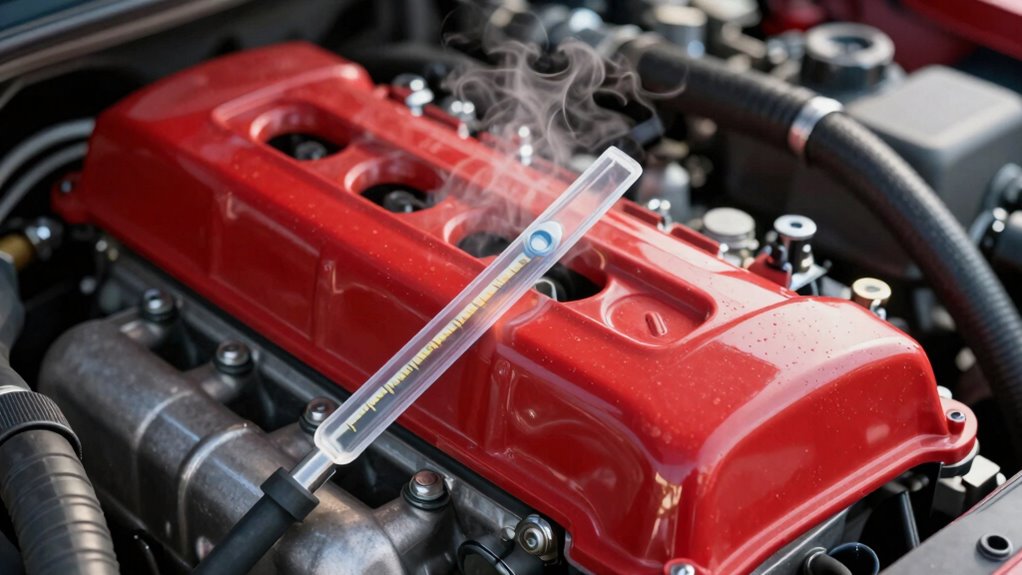
Checking ATF levels at the wrong temperature can lead to inaccurate readings. When the fluid is too hot or too cold, the measurement won’t reflect the true level, risking misdiagnosis. Always guarantee you’re testing within the recommended temperature range for reliable results. Additionally, ensuring proper fluid application techniques can help prevent erroneous readings and maintain transmission health. Being aware of service temperature windows ensures that measurements are both accurate and consistent over time. Recognizing the importance of transmission fluid properties can further improve diagnostic accuracy and prolong transmission life. Moreover, understanding temperature-dependent fluid behavior can help technicians make more informed maintenance decisions. Paying attention to fluid viscosity changes caused by temperature fluctuations is essential for precise diagnostics and effective maintenance.
Temperature Affects Fluid Readings
Temperature plays a crucial role in accurately reading automatic transmission fluid (ATF) levels because fluid expands as it heats up and contracts when it cools down. If you check the fluid when it’s too hot or cold, your reading will be off. For example, measuring immediately after driving can give a false high reading, while checking when cold may suggest a low level. To avoid errors, always check ATF when it’s within the recommended temperature range. Here’s a quick guide:
| Temperature Condition | Effect on Fluid Level Reading |
|---|---|
| Hot (operating temp) | Fluid is expanded, level appears higher |
| Cold (overnight) | Fluid is contracted, level appears lower |
| Slightly Warm | Accurate reading |
| Overheated | Overestimates fluid level |
| Too Cold | Underestimates fluid level |
Incorrect Checks Lead Errors
Failing to check ATF levels within the proper temperature range can lead you to make costly mistakes. When you check the fluid when it’s too cold or too hot, the reading won’t be accurate. Cold ATF appears lower than it actually is, causing you to add fluid unnecessarily. Conversely, checking when hot can give a false high reading, leading you to remove fluid incorrectly. Both errors can compromise transmission performance and cause damage. Always ensure the vehicle is within the recommended temperature window before checking the level. Using the wrong temperature as your reference point results in inaccurate readings and potential overfill or underfill. Properly timed checks help you maintain correct fluid levels, prolonging your transmission’s lifespan and avoiding costly repairs. Additionally, understanding the correct temperature range for testing can prevent these common mistakes and ensure precise maintenance. Being aware of Body Piercing Materials factors can also influence your maintenance routines, ensuring optimal vehicle performance.
car transmission fluid level checker
As an affiliate, we earn on qualifying purchases.
As an affiliate, we earn on qualifying purchases.
How to Measure Your ATF Level Accurately and Safely
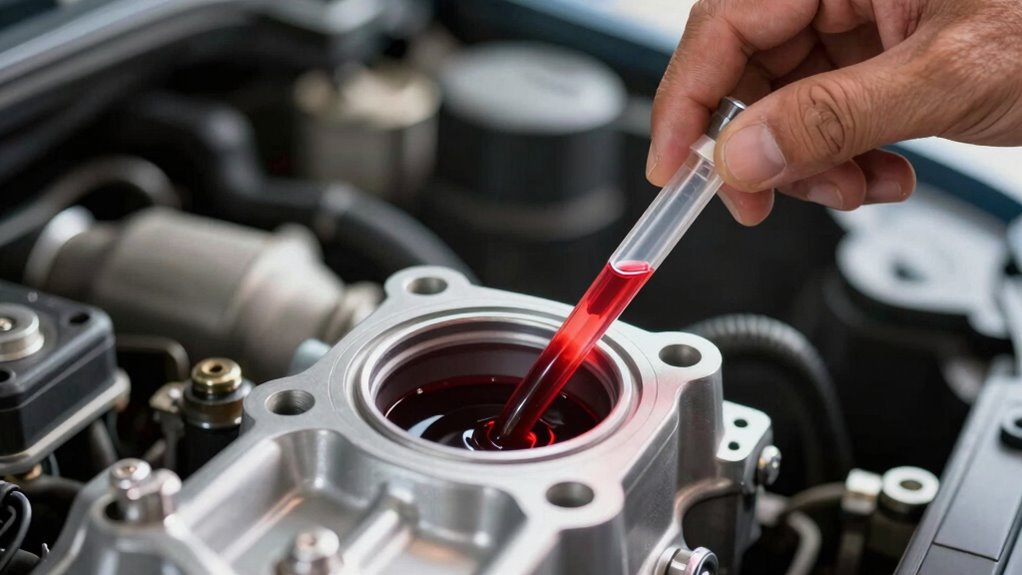
To measure your ATF level accurately and safely, start by parking your vehicle on a level surface and engaging the parking brake. Allow the engine to run and reach its normal operating temperature, typically by driving the car for a few minutes. Pull the transmission dipstick out and wipe it clean with a rag. Reinsert the dipstick fully, then remove it again to check the fluid level. Ensure the fluid sits between the ‘Full’ and ‘Add’ marks. If the level is low, add the recommended ATF gradually, checking frequently to avoid overfilling. Always perform checks with the engine warm and idling, following your vehicle manufacturer’s instructions for the most precise reading. This method helps you get a safe, accurate measurement of your ATF level.
Why Checking ATF When It’s Too Cold or Hot Can Mislead You?
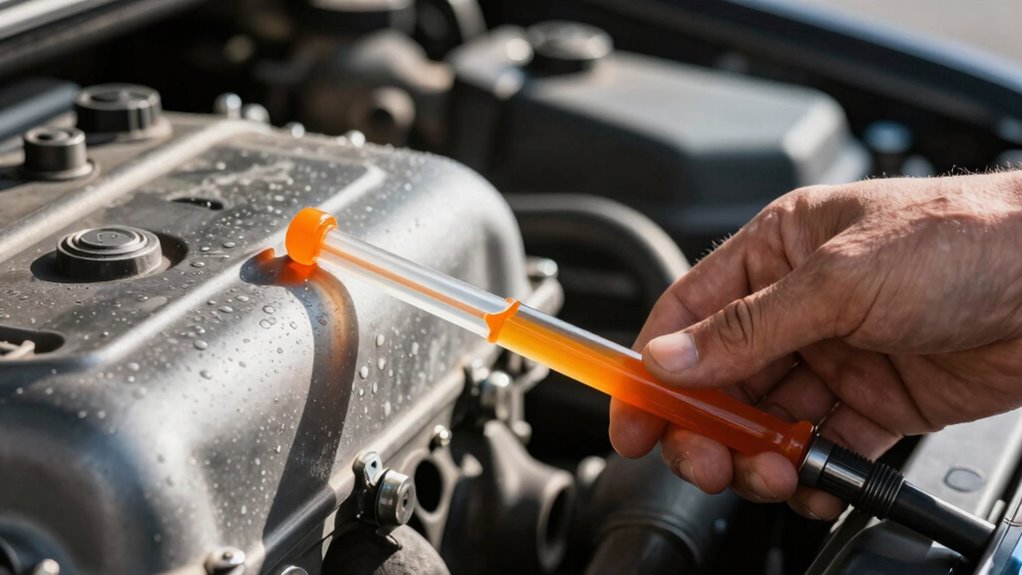
Ever wondered why your transmission fluid reading might be off when it’s too cold or hot outside? Temperature greatly affects ATF viscosity, which impacts your readings. When it’s cold, the fluid thickens, making the level appear lower than it truly is. Conversely, hot weather thins the fluid, causing the level to seem higher. Checking ATF when the transmission is cold or hot gives inaccurate results, leading you to believe there’s a problem when there isn’t one. For the most accurate reading, you need to measure the fluid when it’s within the recommended temperature range—usually after the engine has warmed up but before it gets too hot. Always follow your vehicle’s guidelines for proper testing conditions to avoid false readings. Understanding temperature effects is key to ensuring accurate maintenance practices.
Signs Your Transmission Might Be Having Troubles Beyond Fluid Levels

Even if your transmission fluid levels are correct, you might still notice issues indicating trouble. For example, if your vehicle hesitates or slips when shifting, it’s a sign something’s off. You may feel unusual delays between gears or hear grinding noises during shifts, which suggest internal wear or damage. Burning smells coming from the transmission area could indicate overheating or fluid breakdown. Additionally, if your check engine light blinks or your transmission warning light appears, don’t ignore it. You might also notice a rough or jerky ride, especially when accelerating or decelerating. These symptoms point to problems beyond just fluid levels, such as worn clutch plates, damaged solenoids, or internal mechanical issues. Recognizing smart diagnostic signs can help you identify potential issues before they worsen. Understanding transmission health indicators can be crucial in preventing costly repairs and ensuring your vehicle’s longevity. Being aware of early warning signs can save you time and money by prompting timely maintenance.
Tips to Keep Your ATF at the Right Temperature for Accurate Checks
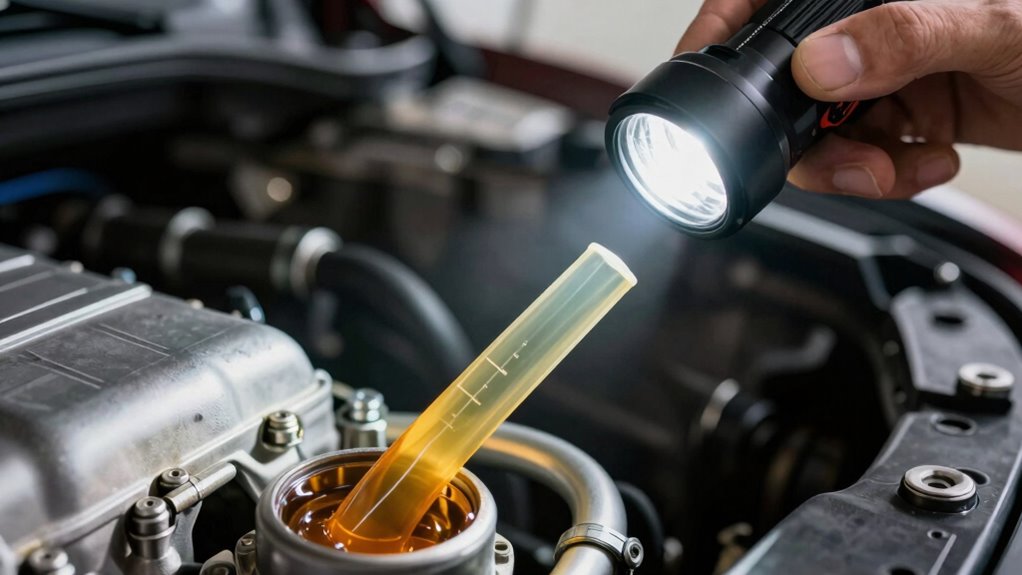
Maintaining the correct transmission fluid temperature is key to getting accurate ATF level readings. To do this, always check your fluid after driving for at least 15-20 minutes, allowing the transmission to warm up to its proper operating temperature. Avoid checking the fluid when it’s cold or after a short trip, as the levels can appear misleading. If your vehicle has a transmission temperature gauge, verify that the fluid is within the recommended temperature range specified in your owner’s manual. Using a quality infrared thermometer can help you quickly check the transmission pan’s surface temperature. Remember, patience is essential; taking the time to ensure the fluid is at the right temperature will give you a more reliable reading and prevent unnecessary top-offs or misses.
Essential Tools and Techniques for Reliable ATF Level Measurements

To guarantee you get accurate ATF level measurements, using the right tools and proper techniques is essential. First, invest in a quality transmission dipstick or a dedicated transmission fluid tool designed for precision. Always check the fluid when the engine is running and at the correct temperature, typically specified by the manufacturer, usually around 86-104°F (30-40°C). Use a clean cloth to wipe the dipstick before measuring, ensuring no debris skews the reading. Keep the vehicle on a level surface to avoid false readings caused by tilt. Don’t forget to verify the measurement against the manufacturer’s guidelines. Properly calibrated tools and consistent procedures help you obtain reliable ATF level readings, preventing overfill or underfill issues that could harm your transmission.
Following Manufacturer Guidelines to Protect Your Transmission Long-Term
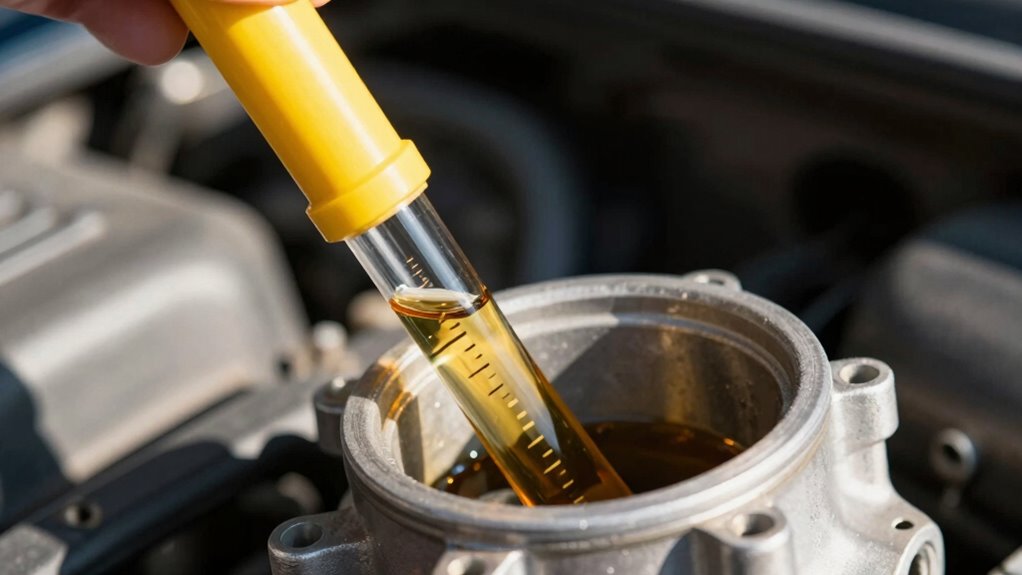
Following your vehicle manufacturer’s guidelines is crucial for guaranteeing your transmission remains healthy and reliable over time. Adhering to these recommendations helps prevent premature wear and costly repairs. To safeguard your transmission long-term, consider these key steps:
- Regularly check and maintain the correct ATF level and fluid condition as specified in your owner’s manual.
- Follow recommended service intervals for fluid changes and transmission inspections.
- Use only manufacturer-approved transmission fluid to ensure compatibility and peak performance.
Frequently Asked Questions
How Often Should I Check My Transmission Fluid Levels?
You should check your transmission fluid levels at least once a month or every 1,000 miles, whichever comes first. Always do this when your engine is warm and the car is on a level surface for accurate readings. Keep an eye on the fluid’s color and smell too, as dirty or burnt fluid indicates you might need a fluid change. Regular checks help prevent transmission issues and extend its lifespan.
Can I Check ATF Levels Without Driving the Vehicle First?
Yes, you can check your ATF levels without driving first, but it’s best to do so when the engine is warm. Turn on your vehicle and let it idle until it reaches normal operating temperature. Then, park on a level surface, shift through all gears, and check the fluid using the dipstick. This guarantees an accurate reading and helps prevent potential transmission issues caused by incorrect fluid levels.
What Are the Risks of Overfilling Transmission Fluid?
Overfilling your transmission fluid can cause foaming, which reduces lubrication and cooling efficiency. It may lead to increased pressure that damages seals, hoses, or other components, resulting in leaks or costly repairs. Excess fluid can also cause erratic shifting or slipping, impacting your vehicle’s performance. To avoid these risks, always check your transmission fluid level carefully and follow the manufacturer’s guidelines for proper fill levels.
Does Ambient Temperature Affect ATF Viscosity?
Think of ATF viscosity like honey flowing in warm weather—hot temperatures thin it out, while cold makes it thicker. Ambient temperature definitely affects ATF viscosity, causing it to become less or more fluid depending on the environment. So, if you’re checking your transmission fluid in extreme weather, you might get an inaccurate reading. Always make sure the vehicle’s at the correct temperature to get an accurate level, preventing potential transmission issues.
When Is the Best Time of Day to Check ATF Levels?
You should check your ATF levels when the transmission is at normal operating temperature, typically after driving for 10-15 minutes. Avoid checking first thing in the morning or right after parking, as the fluid may be cold and give a false reading. Make sure the vehicle is on a level surface and the engine is running to guarantee an accurate assessment of your transmission fluid level.
Conclusion
Remember, a stitch in time saves nine. By checking your ATF within the correct temperature window and following proper procedures, you protect your transmission and avoid costly repairs. Don’t let small mistakes snowball into bigger problems. Stay vigilant, stay informed, and treat your vehicle with care. When it comes to transmission health, patience and precision are your best allies—because taking shortcuts now can cost you dearly later.
Fall Picks
fall essentials
As an affiliate, we earn on qualifying purchases.