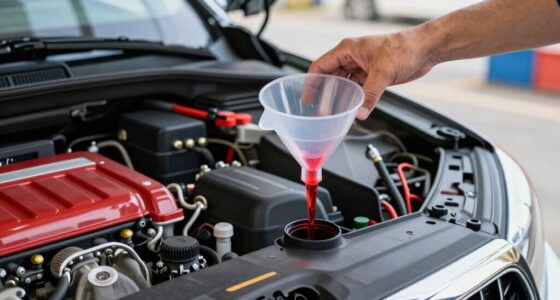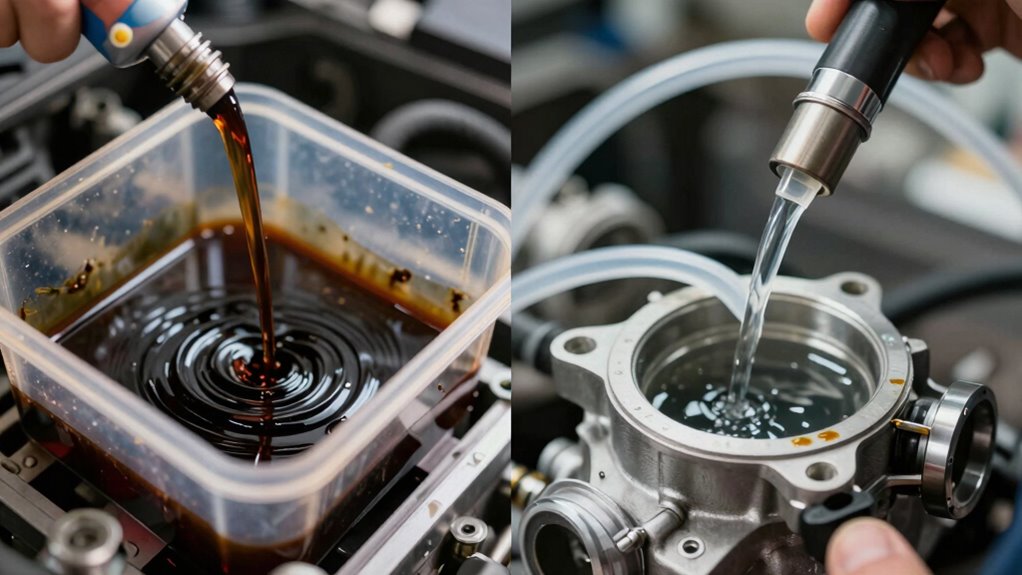

When choosing between drain-and-fill and fluid exchange, consider that drain-and-fill is simple, quicker, and better for routine maintenance, but doesn’t completely remove old fluid or contaminants. Fluid exchange cleans out almost all old fluid, offering better protection and longevity, especially for high-mileage or worn transmissions. Understanding how each works and their pros and cons can help you make an informed decision. Keep exploring to learn which method best suits your vehicle’s needs.
Key Takeaways
- Drain-and-fill replaces a portion of transmission fluid, while fluid exchange removes nearly all old fluid for thorough cleaning.
- Drain-and-fill is quicker and more cost-effective; fluid exchange offers better contaminant removal and internal cleaning.
- Fluid exchange is preferred for high-mileage or severely worn transmissions due to its comprehensive cleaning ability.
- Drain-and-fill may leave residual old fluid, limiting its effectiveness in contaminant removal.
- The choice depends on vehicle condition, transmission type, and maintenance goals, with fluid exchange providing optimal performance benefits.

VEVOR Flush Machine DC12V 0-60PSI, Automatic Transmission Fluid Exchanger Heavy Duty Transmission Flush Machine for Small Gasoline Motor Car and Diesel Vehicle
Auto Transmission Flush Machine: Driving Force: (Electric) DC12V; Pressure Gauge: 0-60PSI
As an affiliate, we earn on qualifying purchases.
As an affiliate, we earn on qualifying purchases.
Drain-and-Fill vs Fluid Exchange: Which Is Better for Your Transmission?
Drain-and-Fill vs Fluid Exchange: Which Is Better for Your Transmission?
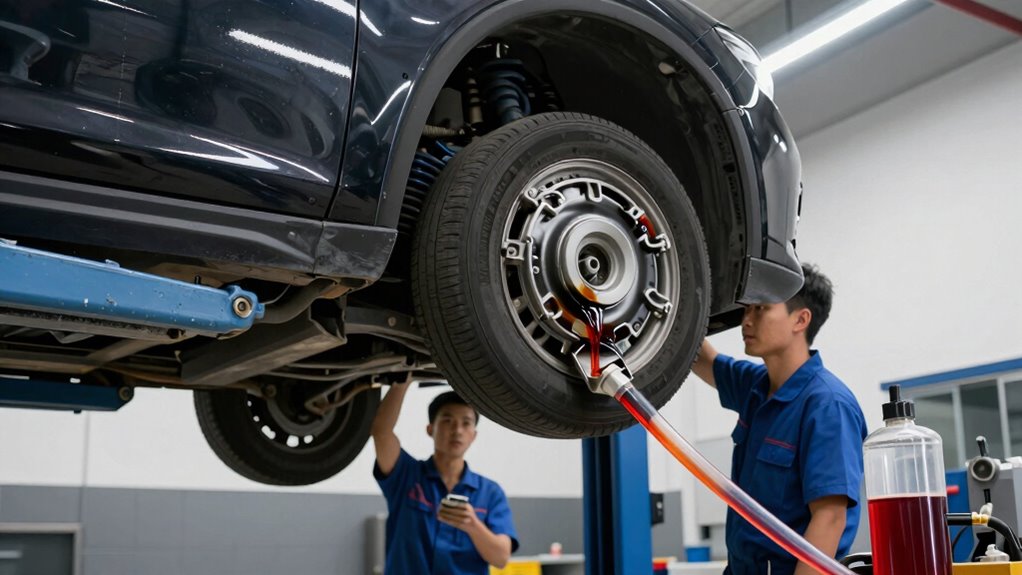
When it comes to maintaining your vehicle’s transmission, choosing the right fluid change method can make a big difference. Synthetic oils are popular because they last longer and perform better under high temperatures, making them ideal for transmission fluid changes. A drain-and-fill involves draining some old fluid and replacing it with fresh fluid, which is straightforward and gentle on your transmission. On the other hand, transmission flushes use a machine to clean out nearly all the old fluid, removing contaminants more thoroughly. While flushes can provide a more complete renewal, they may also cause stress on older or fragile transmissions. Understanding the different fluid exchange methods can help you decide which approach is best for your vehicle. It’s important to consider the transmission’s condition and manufacturer recommendations when choosing a method. Regular transmission maintenance can help extend the life of your vehicle’s transmission and prevent costly repairs later on. Additionally, knowing the benefits and risks of each method can help you make an informed choice suited to your vehicle’s needs.
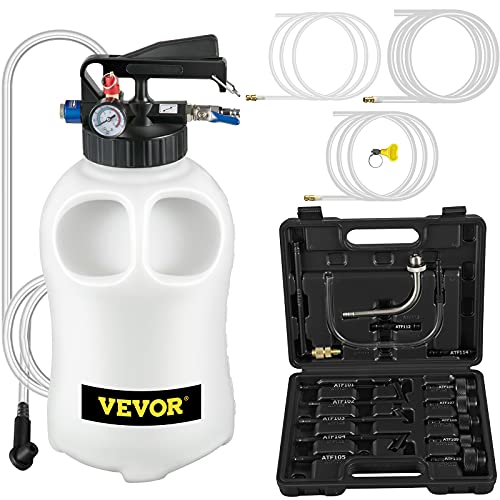
VEVOR Transmission Fluid Pump 2 Way ATF Refill System Dispenser, Oil and Liquid Extractor 10 Liter Large Capacity, Automatic Transmission Fluid Pump Tool Set with 14 Pieces ATF Filler Adapters
10L Large Capacity: Our pneumatic ATF pump has a 10L large capacity. It provides an easy way to…
As an affiliate, we earn on qualifying purchases.
As an affiliate, we earn on qualifying purchases.
How Do Drain-and-Fill and Fluid Exchange Work?
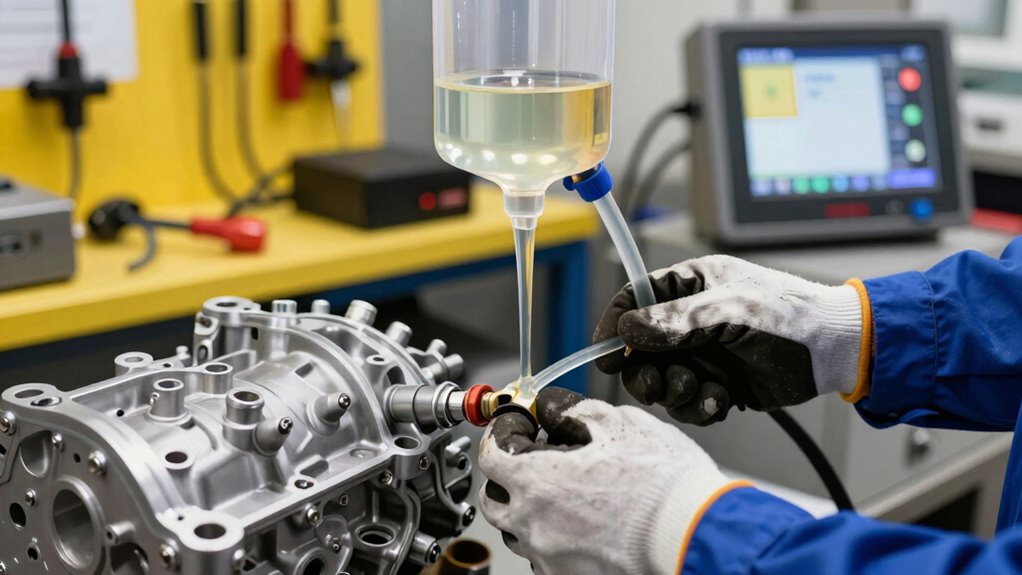
Drain-and-fill and fluid exchange are both methods used to replace your vehicle’s transmission fluid, but they operate differently. Drain-and-fill involves removing old fluid through a drain plug, then refilling with new fluid, typically replacing about 30-50% of the transmission fluid. Fluid exchange uses specialized equipment to flush out old transmission fluid entirely, replacing nearly all of it. During the process, the transmission’s fluid properties—such as viscosity and additive levels—are restored, optimizing performance. Here’s a quick visual:
| Drain-and-Fill | Fluid Exchange |
|---|---|
| Removes some fluid | Replaces nearly all fluid |
| Simple, quick | More thorough, complex |
| Leaves old fluid in system | Clears out old fluid completely |
| Less effective for contamination | Better for addressing impurities |
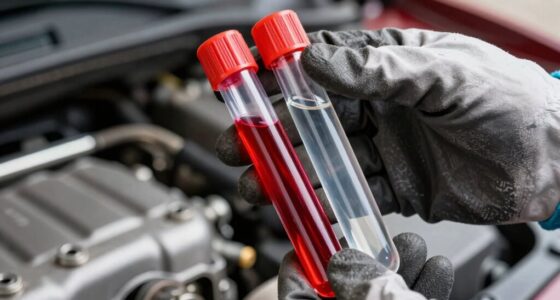
Additionally, fluid exchange is often preferred for maintaining optimal transmission health because it more thoroughly removes contaminants and degraded fluids. It is especially beneficial when dealing with fluid degradation or significant contamination in the transmission system.

Valvoline MaxLife Multi-Vehicle ATF Full Synthetic Automatic Transmission Fluid 1 Gallon
For use in 95% of vehicles including most CVTs in operation with US registered light duty applications
As an affiliate, we earn on qualifying purchases.
As an affiliate, we earn on qualifying purchases.
Pros and Cons of Drain-and-Fill?
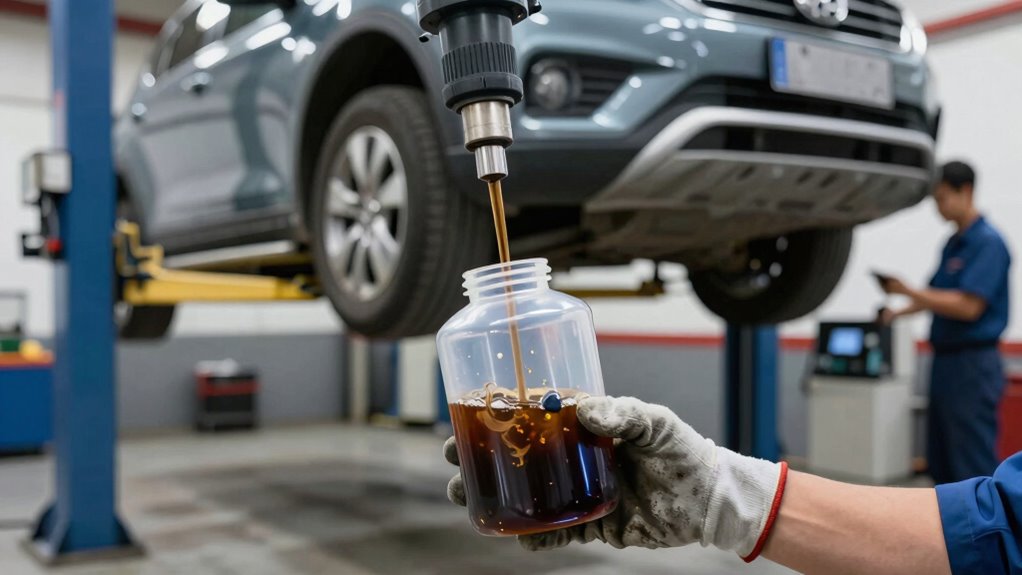
Are drain-and-fill methods a practical choice for maintaining your vehicle’s transmission? They’re straightforward and cost-effective, allowing you to replace old fluid with synthetic fluids that resist breakdown and improve performance. This process helps remove some debris and contaminants, but it doesn’t fully eliminate accumulated debris or sludge. Regular filter replacement ensures smoother operation and extends transmission life. Additionally, using proper fluid circulation techniques can help maximize the benefits of the service. However, drain-and-fill doesn’t reach all areas inside the transmission, meaning some contaminated fluid remains. It’s also less effective for high-mileage vehicles or severe wear. While convenient for routine maintenance, it may need to be combined with other services for ideal results. Understanding the limitations of drain-and-fill can help you decide if a more comprehensive approach is needed. Moreover, considering advanced transmission cleaning methods can improve long-term performance and reliability. A thorough understanding of transmission fluid dynamics can guide better maintenance decisions. Overall, drain-and-fill offers a simple, affordable way to keep your transmission functioning, but it has limitations that could impact long-term health.
automatic transmission flush
As an affiliate, we earn on qualifying purchases.
As an affiliate, we earn on qualifying purchases.
Advantages and Limitations of Fluid Exchange?
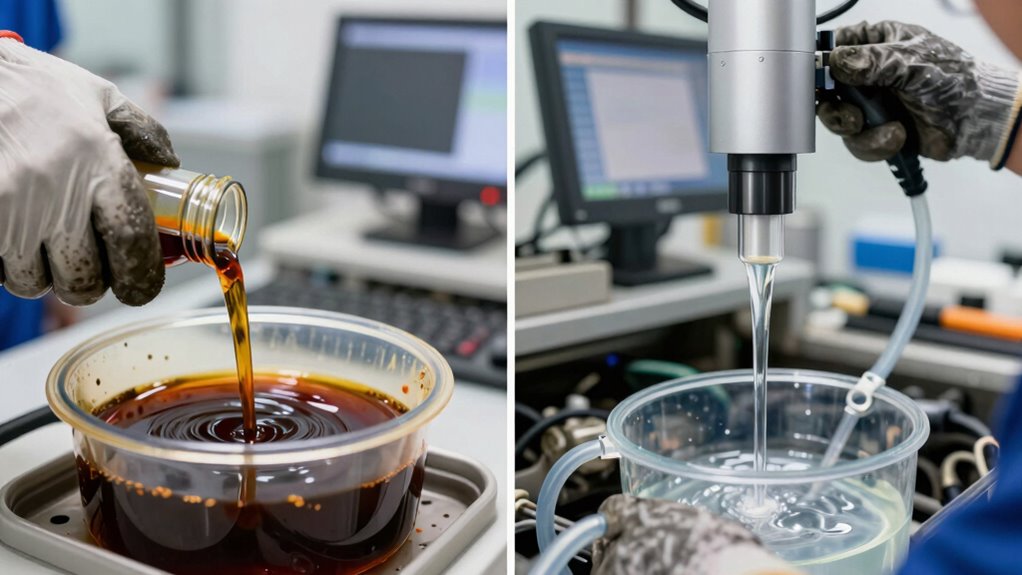
Fluid exchange offers a more all-encompassing approach to maintaining your transmission compared to drain-and-fill methods. It can remove old, degraded fluid and replace it with fresh synthetic fluids, improving performance and longevity. A key advantage is its ability to thoroughly clean internal components, reducing wear and tear. Additionally, employing performance-enhancing upgrades like upgraded flywheels or engine components can complement transmission maintenance by boosting overall vehicle responsiveness. However, this method has limitations: it might not reach all hidden areas, and certain transmissions may require specialized equipment. Additionally, using synthetic fluids can lessen environmental impact by reducing waste and improving efficiency. Here’s a quick comparison:
| Advantage | Limitation | Impact |
|---|---|---|
| Better cleaning | Equipment cost | Less environmental waste |
| Prolongs transmission life | Not suitable for all models | Reduced ecological footprint |
| Uses synthetic fluids | May not reach all areas | Eco-friendly options |
Factors to Consider When Choosing a Transmission Service
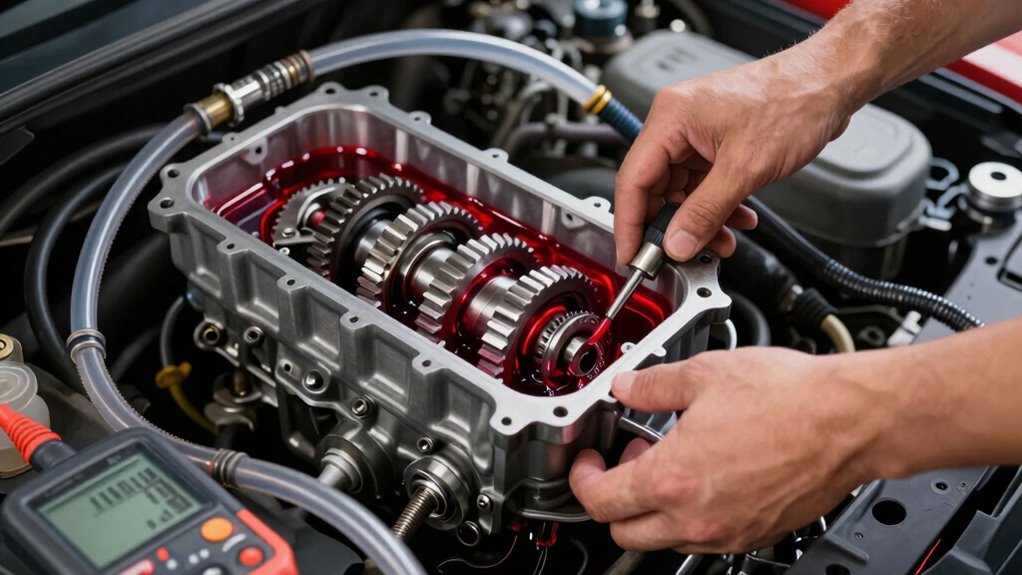
When choosing a transmission service, you need to take into account several key factors to guarantee you get the best maintenance for your vehicle. First, consider whether synthetic oils are necessary; they last longer and perform better under high temperatures, offering improved protection. Next, check if the service includes replacing the transmission filter, which helps prevent debris buildup and maintains smooth operation. Think about your driving habits—aggressive driving or frequent stop-and-go traffic may require more frequent services. Also, evaluate the type of transmission your vehicle has, as some models benefit more from fluid exchange methods. Additionally, consider the benefits of luxury-grade transmission fluids that can enhance overall performance and longevity. Properly maintaining your transmission can also include understanding fluid degradation, which is crucial for determining when to schedule maintenance. Recognizing signs of fluid deterioration can help prevent costly repairs and extend transmission life. Moreover, being aware of requirements traceability can ensure that maintenance procedures meet industry standards and manufacturer specifications. It is also important to keep track of performance monitoring to help identify potential issues before they become serious. Finally, consult your owner’s manual or a trusted mechanic to determine the recommended service intervals and the most suitable approach for your specific needs.
Frequently Asked Questions
How Often Should I Schedule Transmission Fluid Services?
You should schedule transmission fluid services every 30,000 to 60,000 miles, depending on your vehicle’s make and driving habits. Fluid deterioration happens over time, affecting transmission performance. Regular service intervals help maintain smooth shifting and prevent costly repairs. Check your owner’s manual for specific recommendations, but don’t wait too long—early intervention guarantees your transmission stays in top shape and prolongs its lifespan.
Can I Perform These Services Myself at Home?
You can perform DIY transmission fluid services at home if you have the right tools and some mechanical skill. You’ll need a socket set, a drain pan, a funnel, and possibly a transmission fluid pump. Follow your vehicle’s service manual carefully, make certain safety precautions, and double-check fluid specifications. While it’s doable, remember that improper maintenance can cause issues, so consider consulting a professional if you’re unsure.
What Are Signs My Transmission Needs Service Sooner?
When it rains, it pours—your transmission might need service if you notice unusual transmission noise or slipping gears. These are clear signs that your vehicle isn’t operating smoothly and could lead to bigger problems if ignored. Pay attention to any delayed responses or rough shifting, as these symptoms indicate your transmission needs attention sooner rather than later. Catching issues early can save you money and prevent breakdowns on the road.
How Do Costs Compare Between Drain-And-Fill and Fluid Exchange?
The cost comparison between drain-and-fill and fluid exchange varies, but generally, drain-and-fill tends to be more affordable upfront due to simpler procedures. Fluid exchange might cost more because it requires specialized equipment and more labor. If you’re looking for service affordability, drain-and-fill usually suits your budget better, but consider your transmission’s needs and consult your mechanic for the best long-term solution.
Are There Vehicle Types That Prefer One Method Over the Other?
Certain vehicle types prefer one method over the other based on compatibility and manufacturer recommendations. For example, older vehicles or those with sensitive transmission components often benefit from drain-and-fill, which is gentler and maintains system integrity. Conversely, newer models or high-mileage transmissions might require fluid exchange for more thorough cleaning. Always check your vehicle’s compatibility and follow manufacturer guidelines to determine the best approach for your transmission service.
Conclusion
Choosing between drain-and-fill and fluid exchange isn’t just a decision—it’s a game-changer for your vehicle’s future. Opting the wrong method could turn your transmission into a ticking time bomb, costing you a fortune and leaving you stranded. Make the smart choice by understanding each technique’s power and limitations. After all, your car’s transmission deserves nothing less than the absolute best—because neglect today could mean catastrophic failure tomorrow.