This checklist is for anyone cleaning an automotive garage or home shop, from routine wipeups to equipment used for heavier cleanup. It covers tools and supplies for washing parts, cleaning brakes, wiping surfaces, absorbing oil, scrubbing floors, and vacuuming wet or dry debris.

Get business pricing on garage and car supplies
- Business-only prices and quantity discounts
- Tax-exempt purchasing
- Multiple users, one account, clear invoices
The sections follow those jobs in order, with a named pick where one was provided. The oil absorbent pads section offers general selection advice because no specific product was supplied.
Use each section to match the item to your workspace and the tasks you actually do. Check fit, capacity, and compatibility against your equipment and cleaning routine before choosing; product names alone do not establish every specification.
Parts Washer
A parts washer gives you a dedicated place to clean components, helping keep the task contained instead of spreading residue across a bench. The listed pick is the CRC SmartWasher SW-423 Mobile Parts Washer Kit, described in its name as water-based and non-flammable. Consider whether a mobile washer suits your floor plan and whether the parts you handle can be cleaned using the product’s specified method.
A common buying mistake is assuming that a washer’s cleaning approach works for every material or soil. Check the manufacturer’s instructions for compatible parts, cleaning fluid, operating requirements, and maintenance before use. Confirm the unit’s footprint and movement needs against your available space, including where it will sit during use and storage. The product name does not state dimensions or capacity, so verify those details rather than estimating from the model name.
Plan for the full workflow: where parts will be placed, how cleaned components will be handled, and how the washer will be kept ready for its next use. Compatibility and workspace fit should guide the decision as much as mobility.
What to look for:
- Confirm the cleaning method is suitable for the parts you service.
- Check the manufacturer’s list of compatible materials and applications.
- Measure the intended work and storage area against the unit’s dimensions.
- Review operating, fluid, and maintenance requirements.
- Consider whether mobility fits your shop layout and routine.
CRC SmartWasher SW-423 Mobile Parts Washer Kit – Water‑Based, Non‑Flammable, pH‑

The CRC SmartWasher SW-423 is a mobile, water‑based parts washer designed for industrial and automotive cleaning. It comes with a ready‑to‑use unit, three 5‑gallon jugs of heavy‑duty degreasing solution, and an OzzyMat activation mat for efficient removal of dirt, oil, and grime.
Pros:
- Eco‑friendly, water‑based cleaning eliminates hazardous waste
- Mobile unit with wheels for easy transport to the job site
- Comes with ample degreasing solution and activation mat
- Effective on brake parts, grease, oil, and grime
Cons:
- Requires heating time before use
- Bulkier than stationary countertop units
Best for: Shops seeking a mobile, water-based parts washer kit.
Not ideal for: Workflows that require a cleaning method not confirmed as compatible.
Bottom line: Check the manufacturer’s compatibility and setup details before making this washer part of your cleaning workflow.
Brake Cleaner
Brake cleaner is a task-specific supply for cleaning brake and other parts, so the label and usage directions matter. The listed pick is Denco 1930 Brake & Parts Cleaner, identified as non-chlorinated and supplied in 13-ounce cans in a 48-pack. That format may suit a shop that wants multiple cans on hand, provided the product and its instructions match the intended applications.
Do not choose by the words “brake cleaner” alone. Read the label and safety directions for the surfaces, components, ventilation, and handling precautions involved. Avoid assuming that non-chlorinated means appropriate for every part or environment. A 48-pack is also a substantial quantity; consider your usage pattern and storage space before selecting a case format. Check the package details to confirm the can size and count meet your needs.
Keep the cleaner in its labeled container and follow the manufacturer’s directions every time. Application fit and safe handling are central to selecting and using this supply; the product name does not establish all of its approved uses.
What to look for:
- Verify the label lists the components and applications you intend to clean.
- Read handling, ventilation, and safety directions before use.
- Confirm the stated 13-ounce can size and 48-pack count.
- Consider whether a case quantity fits your usage and storage space.
- Follow the product maker’s instructions for use and disposal.
Denco 1930 Brake & Parts Cleaner, Non-Chlorinated, 13oz, 48-Pack

This is a non-chlorinated brake and parts cleaner with a highly aggressive formula. It dries quickly with low odor and low VOC content, making it suitable for cleaning brake components and other parts efficiently.
Pros:
- Effective cleaning with a highly aggressive formula
- Low odor and low VOC for safer use
- Dries quickly with minimal runoff
Cons:
- Sale prohibited in several states
- Contains aggressive chemicals that may require caution
Best for: Shops that need multiple cans of non-chlorinated cleaner.
Not ideal for: Occasional users who do not need a case quantity.
Bottom line: Match the labeled applications and handling directions to your work before choosing this case pack.
Shop Towels
Shop towels handle everyday wiping, prep, and cleanup around a garage. The listed pick, Lauco Prep Wipe Lint-Free Towels, is described as heavy-duty nonwoven cleaning cloths. Lint-free towels can be useful where loose fibers are unwelcome, but confirm that the product’s stated characteristics fit the surface and task rather than assuming one cloth is right for every job.
A frequent mistake is overlooking how the towel will be used: dry wiping, applying a product, or cleaning a surface may call for different handling and compatibility. Check the product details for sheet dimensions, pack quantity, and any guidance on use with cleaners or solvents. Those specifics are not included in the supplied name. Consider where towels will be stored and how easily workers can reach them during cleanup.
Keep separate towels for different jobs when cross-contamination could be a concern, and follow the instructions for any cleaning product used with them. Lint control and task suitability are useful priorities when comparing shop wipes. Choose a pack and sheet format that match the pace of work in your garage.
What to look for:
- Confirm the towels’ intended uses and surface compatibility.
- Check sheet size and pack quantity in the product details.
- Verify guidance for use with cleaners or other products.
- Consider whether the lint-free description suits the surfaces you clean.
- Choose a storage and access spot that supports your workflow.
Lauco Prep Wipe Lint-Free Towels – Heavy Duty Nonwoven Cleaning Cloths, 300 Pack
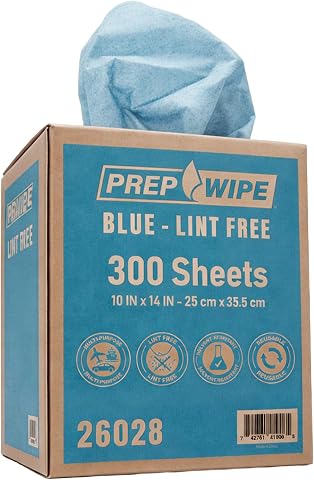
These heavy-duty, lint-free cleaning cloths are designed for industrial, automotive, and household use. Made from durable nonwoven material, they resist tearing and are ideal for surface preparation, cleaning tools, and finishing tasks.
Pros:
- Durable and tear-resistant for demanding tasks
- Low lint residue ideal for paint prep and finishing
- Large sheet size covers more surface area
Cons:
- Single-use only, may generate waste
- Not suitable for washing and reuse
Best for: Shops looking for nonwoven, lint-free cleaning cloths.
Not ideal for: Tasks requiring a towel format or compatibility not confirmed by the product details.
Bottom line: Verify the sheet format and task compatibility so these wipes suit your garage routine.
Oil Absorbent Pads
Oil absorbent pads help make spill response more organized by giving you a ready supply of material for oily messes. No specific product was provided for this slot, so choose pads based on the fluids you handle and the cleanup practices in your shop. Start by checking that the product is labeled for the substances you expect it to absorb; do not infer compatibility from a generic “oil absorbent” description.
Think through where a spill is most likely to happen and how quickly staff can reach the pads. A common mistake is buying a format that is awkward to place around equipment or too small for the area that needs attention. Compare pad dimensions, absorbency information, package quantity, and storage needs using the maker’s product details. Make sure the chosen supply can be kept accessible without obstructing walkways or work areas.
Follow site procedures and product directions for handling used pads and disposing of them. Fluid compatibility and access are the main selection checks. Stock a format that workers can deploy promptly, and replenish it after use so the spill response supply remains available.
What to look for:
- Check the label for compatibility with the fluids handled in your shop.
- Compare pad dimensions and stated absorbency information.
- Choose a format that can be placed around your equipment and work areas.
- Keep the package accessible while maintaining clear walkways.
- Follow local procedures and product directions for used-pad handling and disposal.
Floor Scrubber
A floor scrubber is a substantial piece of equipment for cleaning garage floors, so confirm that the machine suits your actual floor area and route. The supplied pick is named Battery Powered Ride-On Commercial Floor Scrubber Machine, with a 22-inch brush. Its ride-on format and brush measurement are stated in the name; other operating details should be checked in the manufacturer’s specifications.
Before choosing, measure doorways, aisles, storage areas, and the tightest turns on the cleaning path. A common mistake is focusing on brush width without checking the machine’s overall dimensions or maneuvering room. Confirm battery and charging requirements, cleaning and recovery setup, surface compatibility, and routine maintenance details with the maker. The supplied product name ends after “22" Brush,” so it does not establish those other specifications.
Consider how often the scrubber will be used and who will operate it. Review the instructions and training needs, then make sure the intended operator can handle the machine in your space. Route fit and operating requirements should be resolved before committing to ride-on equipment.
What to look for:
- Measure routes, doorways, and storage space against machine dimensions.
- Confirm the 22-inch brush suits the floor area and access constraints.
- Review battery, charging, and operating requirements with the manufacturer.
- Check that the scrubber is appropriate for your floor surface.
- Understand maintenance, training, and operator requirements.
Battery Powered Ride-On Commercial Floor Scrubber Machine, 22" Brush, 31.5" Sque

This commercial ride-on floor scrubber features a 22-inch cleaning width and a large dual-tank system, making it ideal for large industrial and commercial spaces. It offers up to 4 hours of continuous operation, efficient water and debris removal, and operates quietly at 60 dB.
Pros:
- Large cleaning coverage with 22-inch brush and wide squeegee
- Long-lasting battery provides up to 4 hours of continuous use
- Quiet operation suitable for noise-sensitive environments
- Handles inclines up to 20° with safety features like lights and alarms
Cons:
- Heavy and potentially difficult to maneuver for some users
- Charging time of 7-8 hours may require planning for continuous operation
- High capacity tanks may require significant storage space
Best for: Garages with routes and storage space suited to ride-on equipment.
Not ideal for: Tight spaces where machine access and turning room are limited.
Bottom line: Check the full machine dimensions and operating requirements against your floor plan.
Shop Vacuum
A wet and dry shop vacuum can support garage cleanup across different kinds of debris, but capacity and intended use should fit the work. The listed pick is DEWALT 10 Gal Stealthsonic Wet and Dry Shop Vacuum, with 5 peak horsepower stated in the supplied name. These figures identify the named model’s stated capacity and peak horsepower; confirm the rest of its specifications before comparing it with your needs.
Common buying mistakes include checking tank size but ignoring attachments, filter requirements, cord reach, and storage footprint. Review the maker’s information for compatible filters and accessories, wet pickup instructions, and the materials the vacuum is intended to handle. Confirm the dimensions and included components, since the supplied name ends mid-description at “Stainle” and does not provide the complete product details.
Think about where the vacuum will be used and how it will be moved between cleanup areas. Check the power setup and maintenance steps against your shop routine, and follow the instructions when switching between wet and dry pickup. Attachments and operating fit can make the difference between a useful everyday tool and a poor match for the jobs at hand.
What to look for:
- Verify the tank capacity and complete model details with the manufacturer.
- Check included attachments and available compatible accessories.
- Review filter requirements and wet pickup instructions.
- Measure storage space and consider movement between work areas.
- Confirm power, maintenance, and intended-material guidance.
DEWALT 10 Gal Stealthsonic Wet and Dry Shop Vacuum, 5 Peak HP, Stainless Steel,

This DEWALT shop vacuum features a powerful 5 Peak HP motor with innovative quiet technology, operating at less than 65dB. It has a 10-gallon stainless steel tank, long reach, and comes with a complete accessory kit, making it ideal for cleaning job sites, workshops, and garages.
Pros:
- Ultra-quiet operation at less than 65dB
- Large 10-gallon stainless steel tank for extended use
- Complete accessory kit for versatile cleaning
- Long reach with 7ft hose and 16.9" width for easy maneuverability
Cons:
- Heavy at 26.3 pounds, may be less portable
- Single speed operation limits adjustable power
- Higher price point compared to basic models
Best for: Garages needing a wet and dry shop vacuum.
Not ideal for: Tasks requiring attachments or specifications not confirmed for this model.
Bottom line: Confirm the included accessories and operating details before matching this vacuum to your cleanup jobs.
Build your checklist around the jobs that need attention first: start with the supplies for the cleanup tasks you handle most, then add equipment for less frequent or larger-scale work. Keep the essential spill and wipe supplies accessible, and check product instructions, compatibility, and storage needs as you assemble the rest of the setup.
You do not need to outfit every garage the same way. Match each item to your space, materials, and routine, and verify details directly with the manufacturer when the product name leaves questions open. A well-matched cleaning kit makes regular upkeep easier to plan and carry out.
Halloween Picks
halloween
As an affiliate, we earn on qualifying purchases.