
0W-16 oils are becoming popular because they flow quickly during cold starts, protecting your engine and improving fuel efficiency. Modern engines are designed for lighter, more protective lubricants to handle tighter tolerances and advanced technology. Using 0W-16 synthetic blends helps reduce wear, emissions, and energy use, all while lasting longer. If you’re curious about the full benefits and why manufacturers prefer this oil, there’s more to discover below.
Key Takeaways
- 0W-16 oils offer superior cold-start performance, ensuring quicker engine lubrication in low temperatures.
- They reduce internal engine friction, improving fuel efficiency and decreasing emissions.
- Modern engines with tighter tolerances are designed to work optimally with lighter, lower-viscosity oils like 0W-16.
- Synthetic blends provide enhanced stability, protection, and longevity compared to conventional oils.
- Using 0W-16 supports engine durability, meets efficiency standards, and aligns with advancements in automotive technology.
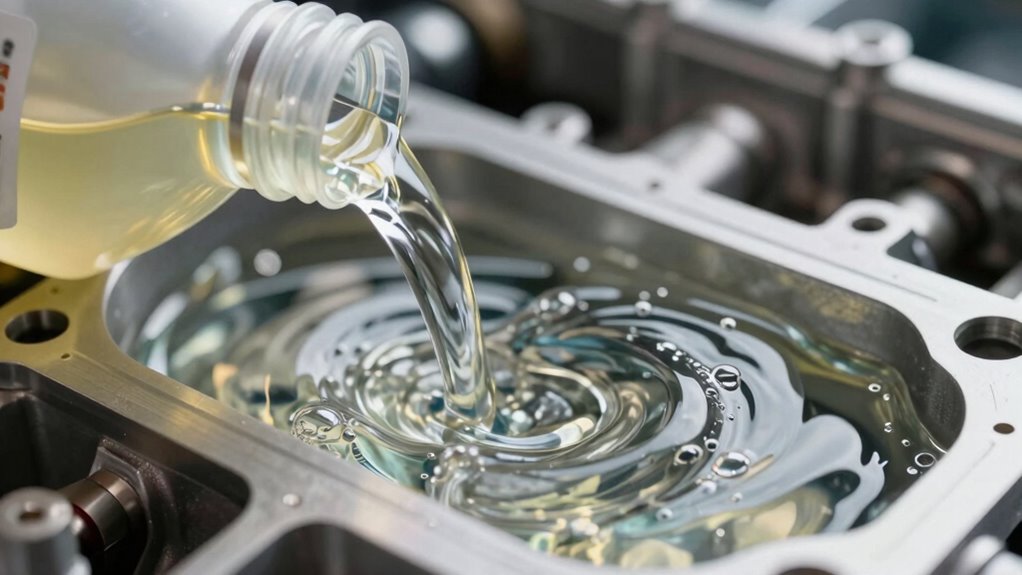
Have you ever wondered how modern engine oils keep your vehicle running smoothly while maximizing fuel efficiency? 0W-16 oils are a popular choice for many drivers today because they provide excellent low-temperature performance and help improve overall fuel economy. One key aspect of these oils is their oil viscosity, which measures how easily the oil flows at different temperatures. A lower viscosity, like 0W-16, means the oil is thinner when cold and during normal operation, reducing internal friction and allowing the engine to operate more efficiently.
Understanding viscosity is vital because it impacts how well the oil protects your engine. Traditional oils often had higher viscosity ratings, such as 5W-30 or 10W-40, which are thicker and better suited for heavy-duty or older engines. However, with advancements in engine design and tighter manufacturing tolerances, lighter oils like 0W-16 have become more suitable. These oils flow quickly at startup, providing immediate lubrication, which reduces wear during cold starts and improves fuel efficiency by decreasing internal drag.
Lighter oils like 0W-16 offer quick startup lubrication and improve fuel efficiency compared to thicker traditional oils.
The development of these low-viscosity oils is also driven by increased engine efficiency standards and environmental regulations, encouraging the use of oils that reduce emissions and fuel consumption. Synthetic blends play a significant role in the performance of 0W-16 oils. They combine base oils that are fully synthetic with conventional oils, creating a product that offers many benefits without the higher cost of full synthetics. Synthetic blends provide enhanced stability at high temperatures, better oxidation resistance, and improved lubrication properties. These qualities guarantee that your engine remains protected under various driving conditions, especially when using a low-viscosity oil like 0W-16. The blend’s balanced formulation helps maintain proper oil film strength, reducing metal-to-metal contact, and prolonging engine life.
Choosing a synthetic blend with 0W-16 viscosity isn’t just about protecting your engine; it’s also about gaining efficiency. Because these oils flow more easily, your engine uses less energy to circulate the lubricant, leading to better fuel economy. This is especially advantageous in modern vehicles designed for low-viscosity oils, where reduced friction translates directly into increased miles per gallon. Additionally, synthetic blends tend to last longer than conventional oils, meaning you don’t need to change them as often, saving you time and money in the long run.

Mobil 1 Advanced Fuel Economy Full Synthetic Motor Oil 0W-16, 5 Quart
Mobil 1 Advanced Fuel Economy full-synthetic motor oil 0W-16 is low-viscosity to help improve fuel economy.*
As an affiliate, we earn on qualifying purchases.
As an affiliate, we earn on qualifying purchases.
Frequently Asked Questions
Are 0W-16 Oils Suitable for All Vehicle Types?
You might wonder if 0W-16 oils suit all vehicle types. Generally, they’re ideal for newer engines that demand low-viscosity oils to improve efficiency. While synthetic blends with 0W-16 provide excellent protection, some older or heavier-duty vehicles may need higher viscosity oils. Always check your vehicle’s manual to verify compatibility, as using the wrong oil viscosity can impact performance and engine longevity.
How Often Should 0W-16 Oil Be Changed?
You should change your 0W-16 oil every 7,500 to 10,000 miles or as recommended in your vehicle’s maintenance schedule. Regular oil changes are essential to keep your engine running smoothly and efficiently. Check your owner’s manual for specific guidance, especially if you drive under severe conditions. Staying consistent with your oil change frequency helps prevent engine wear and maintains peak performance.
Can 0W-16 Oil Improve Fuel Efficiency Significantly?
Using 0W-16 oil can boost your fuel economy because its lower viscosity reduces engine friction, allowing your engine to run more efficiently. This improved engine performance means less energy is wasted, saving you money at the pump. While the difference might not be huge, switching to 0W-16 can contribute to better fuel efficiency over time, especially if your vehicle is designed to optimize this lightweight oil.
What Are the Environmental Benefits of Using 0W-16 Oils?
Using 0W-16 oils helps you achieve emission reduction by improving engine efficiency and reducing fuel consumption. These eco-friendly benefits mean your vehicle produces fewer harmful pollutants, contributing to cleaner air. Plus, 0W-16 oils decrease engine wear, extending its lifespan and lowering maintenance needs. By choosing this type of oil, you actively support environmental sustainability and enjoy a greener driving experience with less impact on the planet.
Are 0W-16 Oils Compatible With Older Engine Models?
Think of 0W-16 oils as a delicate dance partner; they’re designed for modern engines, not older models. Compatibility concerns may arise, and using them might cause engine performance issues or damage. You should check your vehicle’s manual or consult a mechanic before switching. Older engines often need thicker oils to maintain proper lubrication and protection, so sticking with recommended oils guarantees your engine stays healthy and runs smoothly.
Mobil 1 Advanced Fuel Economy Full Synthetic Motor Oil 0W-16, 5 Quart
Mobil 1 Advanced Fuel Economy full-synthetic motor oil 0W-16 is low-viscosity to help improve fuel economy.*
As an affiliate, we earn on qualifying purchases.
As an affiliate, we earn on qualifying purchases.
Conclusion
In short, switching to 0W-16 oils means you’re embracing a smarter, more efficient engine choice. These oils help your vehicle run smoother, last longer, and save you money in the long run. Remember, a stitch in time saves nine—investing in the right oil now prevents bigger issues later. So, stay ahead of the curve, keep your engine happy, and enjoy the ride knowing you’re making a wise decision.
Mobil 1 Advanced Fuel Economy Full Synthetic Motor Oil 0W-16, 5 Quart
Mobil 1 Advanced Fuel Economy full-synthetic motor oil 0W-16 is low-viscosity to help improve fuel economy.*
As an affiliate, we earn on qualifying purchases.
As an affiliate, we earn on qualifying purchases.
Mobil 1 Advanced Fuel Economy Full Synthetic Motor Oil 0W-16, 5 Quart
Mobil 1 Advanced Fuel Economy full-synthetic motor oil 0W-16 is low-viscosity to help improve fuel economy.*
As an affiliate, we earn on qualifying purchases.
As an affiliate, we earn on qualifying purchases.