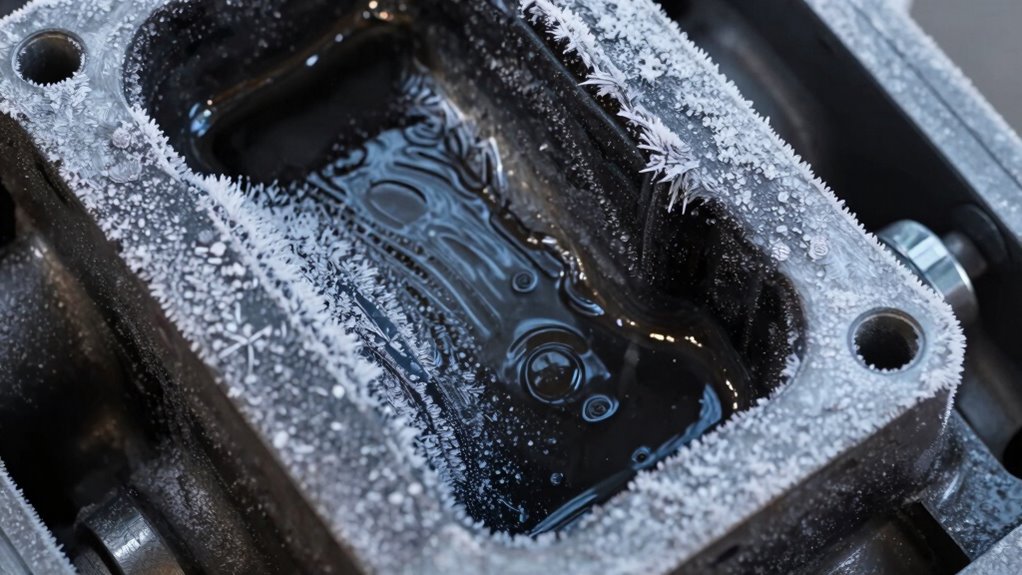

Many believe thicker oils protect better during cold starts, but that’s a common myth. In reality, viscosity alone doesn’t determine how well an oil prevents wear when starting a cold engine. Modern synthetic oils are designed to flow quickly and thin out appropriately as temperatures rise, providing better protection. If you want to understand why oil composition and formulation matter more than thickness, keep exploring this important topic.
Key Takeaways
- Thicker oils during cold start hinder proper circulation, increasing engine wear; low-viscosity oils flow better at low temperatures.
- Synthetic oils are formulated to thin quickly when cold, providing better lubrication and reducing cold start wear.
- The myth that thicker oils protect better is false; proper flow at low temperatures is critical for engine protection.
- Engine temperature affects oil viscosity; well-designed oils adapt swiftly to maintain optimal lubrication during startup.
- Choosing the right oil based on climate and engine needs is more important than simply selecting a thicker or thinner oil.
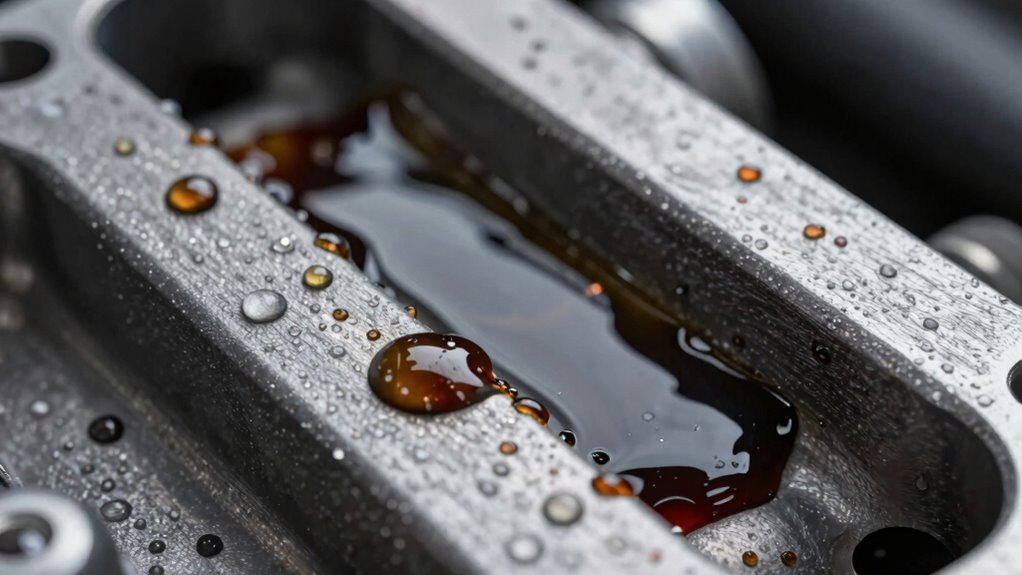
Have you ever noticed how new or recently repaired engines tend to wear out faster during their initial runs? This phenomenon is often linked to what’s called cold start wear, a common concern among vehicle owners and mechanics alike. Many believe that the main culprit is the oil’s viscosity, but the truth is more nuanced. When you start your engine, it’s cold, and the engine temperature is low. This cold temperature directly influences the oil’s behavior. Oil composition plays a pivotal role here—if the oil is too thick when cold, it struggles to flow properly through engine parts. That’s why many recommend using low-viscosity oils for cold starts; they flow more easily at lower temperatures, reducing initial friction and wear.
During a cold start, the engine’s temperature is far below its ideal operating range. When you turn on your engine, the oil is thick, and it takes a moment to circulate fully, reaching all moving parts. This delay means that metal-on-metal contact can occur, creating wear. The key point is that the oil must be capable of flowing smoothly at low temperatures to minimize this initial friction. That’s why modern synthetic oils, with their tailored oil composition, are favored—they maintain better flow characteristics when cold. This helps to create a thin, lubricating film more quickly, protecting engine parts from excessive wear right from the start.
Cold engine starts require oils that flow easily at low temperatures to prevent wear and ensure quick lubrication.
As your engine warms up, the engine temperature rises, and the oil’s viscosity decreases naturally. When the oil reaches its proper operating temperature, it becomes thinner and flows more freely, providing ideal lubrication. If your oil is designed well, it adapts swiftly to changing temperatures, maintaining a consistent protective film. However, if the oil is too thick initially, it hampers circulation, leading to increased wear during those critical first moments after starting. This is why choosing an oil with the right composition for your climate and engine type is essential—one that thins appropriately as the engine warms, preventing unnecessary wear.
Ultimately, the myth that thicker oils are always better for engine protection during cold starts is just that—a myth. The real factor is how quickly the oil responds to temperature changes. Modern oils with improved formulations are designed to minimize cold start wear by ensuring they flow easily at low engine temperatures. So, when you start your vehicle on a chilly morning, remember that a good oil composition tailored for cold conditions can make a significant difference in protecting your engine during those first few moments of operation. Proper oil choice helps your engine warm up faster, reduces wear, and extends its lifespan.

Mobil 1 Advanced Fuel Economy Full Synthetic Motor Oil 0W-20, 5 Quart
Mobil 1 Advanced Fuel Economy full-synthetic motor oil 0W-20 is low-viscosity to help improve fuel economy.*
As an affiliate, we earn on qualifying purchases.
As an affiliate, we earn on qualifying purchases.
Frequently Asked Questions
How Do Different Oil Formulations Affect Cold Start Wear?
Different oil formulations markedly impact cold start wear by affecting oil viscosity. Thinner oils with lower viscosity flow more easily at cold temperatures, providing quicker lubrication and reducing engine wear during startup. Conversely, thicker oils with higher viscosity take longer to circulate, increasing wear risks. Choosing the right oil formulation guarantees ideal viscosity for cold conditions, helping protect your engine and extend its lifespan.
Does Engine Design Influence Susceptibility to Cold Start Viscosity Issues?
A stitch in time saves nine, and your engine design definitely influences cold start viscosity issues. An engine block with efficient oil passages guarantees better lubrication, while piston design impacts how quickly oil reaches critical components. If your engine’s built for rapid oil flow and reduced friction, it’s less prone to cold start wear. So, yes, smart engine design minimizes viscosity problems and protects your engine during cold starts.
Can Synthetic Oils Completely Eliminate Cold Start Wear?
Synthetic oils considerably reduce cold start wear because they flow more easily at low temperatures, improving engine lubrication right from startup. While they can’t eliminate cold start wear completely, using a high-quality synthetic oil and a good oil filter ensures better protection. You’ll experience less engine stress during cold starts, extending engine life. Remember, proper maintenance and choosing the right oil help optimize lubrication and minimize wear.
What Role Do Additives Play in Reducing Cold Start Wear?
Additives play a vital role in reducing cold start wear by enhancing additive chemistry and ensuring additive compatibility with your oil. They work by improving the oil’s flow properties at low temperatures and forming a protective film on engine parts. When choosing oils, look for formulations with well-balanced additives that are compatible, so they can effectively minimize wear during cold starts without compromising overall engine performance.
How Does Ambient Temperature Impact Cold Start Viscosity Effects?
You’ll notice that ambient temperature greatly impacts viscosity behavior during cold starts. When temperatures are low, oil thickens, increasing resistance and causing more wear. As temperatures rise, viscosity decreases, allowing the oil to flow more easily and protect engine components better. So, colder ambient temperatures make viscosity issues worse, highlighting the importance of choosing oils with suitable viscosity ratings for your climate to reduce cold start wear effectively.

Lucas Oil 11097 Low Viscosity Stabilizer – 12 Ounce
Improves fuel economy and power
As an affiliate, we earn on qualifying purchases.
As an affiliate, we earn on qualifying purchases.
Conclusion
As you turn the key and start your engine on a cold morning, remember that the old viscosity myth is like a shadow, lurking but not truly there. Don’t let fear of cold start wear hold you back; instead, see it as a dawn’s first light revealing new truths. Trust in modern oils and your engine’s resilience—each cold start is just a new chapter, a fresh sunrise promising smoother journeys ahead.

Archoil AR9100 Oil Additive (16oz) for All Vehicles – Powerstroke Cold Starts, Eliminates Injector Problems
HEUI STICTION FIX (6.0L & 7.3L Power Stroke): Eliminates injector stiction that causes cold start misfires, rough idle,…
As an affiliate, we earn on qualifying purchases.
As an affiliate, we earn on qualifying purchases.

STP Premium Small Engine 4 Cycle Oil Formula, SAE10W-30 Small Engine Oil Engine Care Formula Reduces Wear for Lawnmower, Push Mower, Tractor, 32 Oz, STP
SAE 10W-30 MOTOR OIL FOR SMALL ENGINES: One 32 fl oz bottle of STP Premium Synthetic Blend 4…
As an affiliate, we earn on qualifying purchases.
As an affiliate, we earn on qualifying purchases.