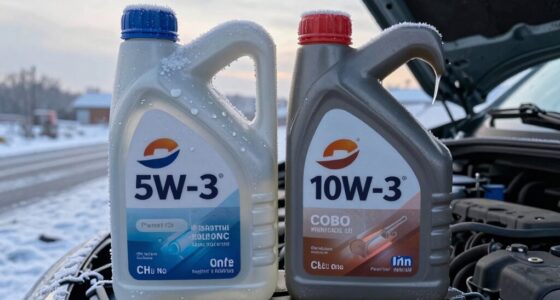
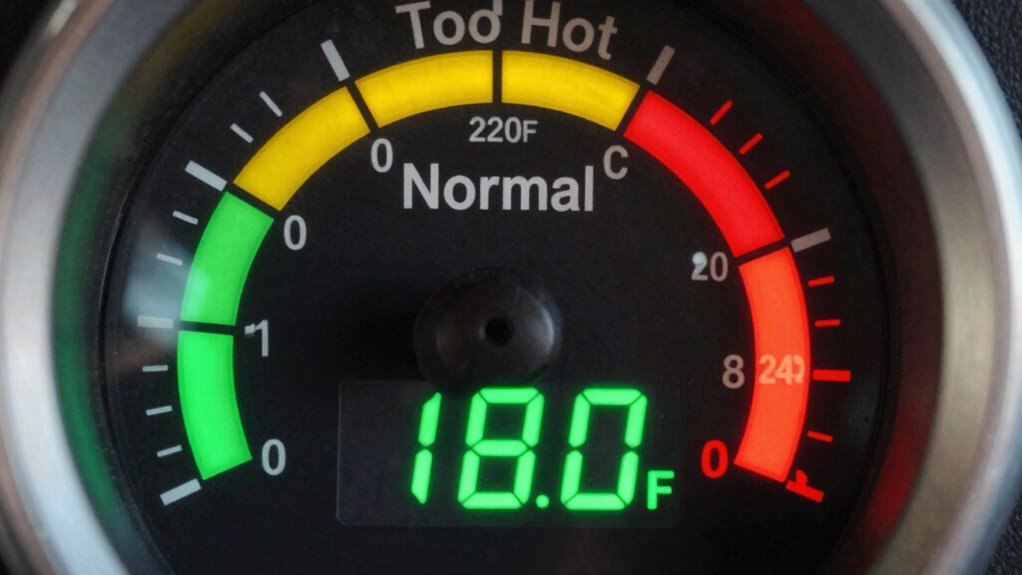
The normal oil temperature for most engines ranges from about 180°F to 220°F (82°C to 104°C), where the oil maintains ideal viscosity for lubrication. If the temperature exceeds 240°F (115°C), the oil is likely too hot, risking breakdown, reduced protective film, and increased engine wear. Cold oil below 180°F (82°C) can cause poor circulation and more wear during startup. Staying within the right range helps prevent damage; keep reading to learn how to monitor and maintain proper oil temperature.
Key Takeaways
- Normal oil temperature typically ranges between 180°F to 220°F (82°C to 104°C) for optimal lubrication.
- Temperatures above 230°F (110°C) are considered ‘too hot,’ risking oil breakdown and reduced viscosity.
- Cold oil below 140°F (60°C) can hinder flow, increasing engine startup wear.
- Consistently high oil temperatures indicate cooling system issues or excessive engine load.
- Maintaining oil temperature within the recommended range ensures proper lubrication and engine longevity.
Ever wondered why maintaining the right oil temperature is crucial for your vehicle? The truth is, oil temperature plays a fundamental role in how well your engine runs and how long it lasts. When oil operates within its ideal temperature range, it lubricates engine components smoothly, reducing friction and preventing unnecessary wear. But if the oil gets too hot, it can cause viscosity fluctuations, meaning the oil’s ability to flow and protect parts changes. Conversely, if it’s too cold, the oil becomes too thick, making it harder to circulate and leaving engine parts vulnerable to increased wear during startup. Keeping the oil within its proper temperature range isn’t just about engine performance; it’s about preventing long-term damage and costly repairs.
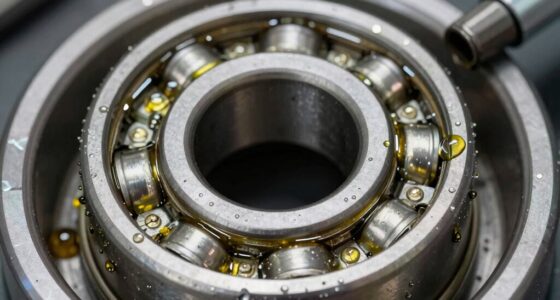
When your engine oil is too hot, it loses its viscosity, becoming thinner and less capable of forming a protective film between moving parts. This reduced lubrication increases metal-to-metal contact, accelerating engine wear. Over time, this can lead to damaged bearings, pistons, and other critical components. On the other hand, if the oil is too cold, it becomes too viscous, thickening and resisting flow. This sluggishness hampers the oil’s ability to reach vital engine parts quickly, especially during cold starts, which can lead to increased wear and tear. Maintaining the correct oil temperature ensures that the oil’s viscosity remains stable, providing a consistent barrier that minimizes friction and prevents premature deterioration of engine parts. Additionally, heat buildup in the oil can be a sign of underlying cooling system issues that need attention.
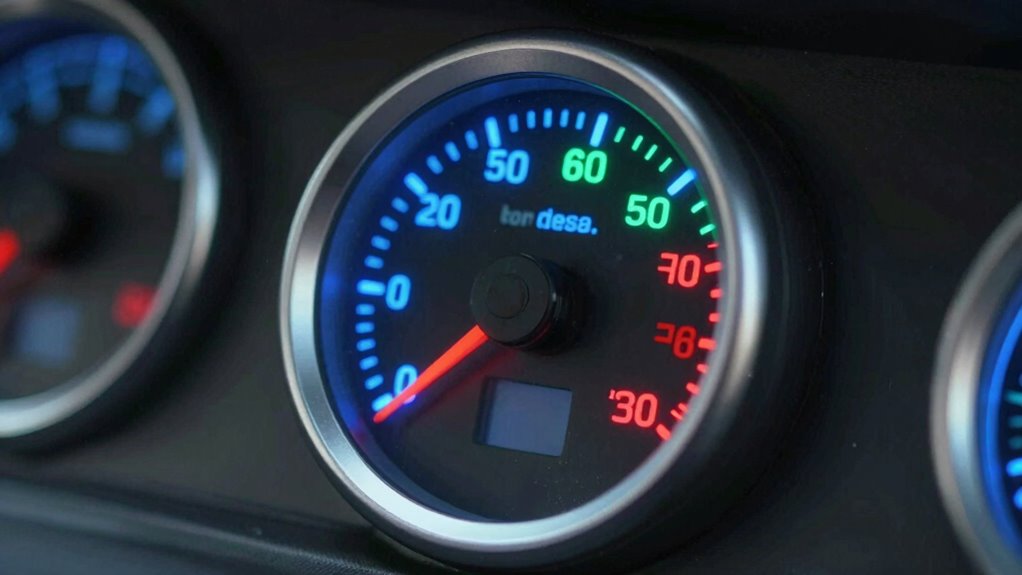
Your vehicle’s cooling system and oil viscosity work hand in hand to keep oil within its ideal temperature range. Many modern engines are equipped with sensors and monitoring systems that alert you if the oil temperature exceeds normal limits. If you notice your engine running hotter than usual or if the oil temperature gauge shows unusually high readings, it’s a sign you need to address potential issues promptly. Overheating oil not only risks increased engine wear but can also lead to oil breakdown, forming sludge that hampers lubrication further. Conversely, if the oil remains too cold for prolonged periods, especially in winter conditions, it can lead to insufficient lubrication during startup, stressing engine components unnecessarily.

Bosch SP0F000045 Style Line 2" Mechanical Water/Oil Temperature Gauge (White Dial Face, Chrome Bezel)
Standard 2" white dial for 2-1/16" openings
As an affiliate, we earn on qualifying purchases.
As an affiliate, we earn on qualifying purchases.
Frequently Asked Questions
How Does Ambient Temperature Affect Oil Temperature Readings?
Ambient influence plays a big role in your oil temperature readings. When temperatures fluctuate, especially in hot weather, your engine runs hotter, raising oil temperatures. Conversely, cooler ambient conditions help keep oil temperatures lower. You should keep an eye on how these fluctuations affect your vehicle’s lubrication, as extreme ambient temperatures can push oil beyond its ideal range, risking reduced lubrication and potential engine issues.
Can Oil Temperature Impact Fuel Efficiency?
Think of oil temperature as the heart of your engine’s efficiency. When it’s too hot, oil viscosity drops, causing poor lubrication, which can hinder engine performance and increase fuel consumption. Conversely, if it’s too cold, oil thickens and resists flow. Maintaining ideal oil temperature ensures smooth operation, enhances fuel efficiency, and keeps your engine running at peak performance. Proper oil management is key to a healthier, more efficient drive.
What Are Early Signs of Oil Overheating?
You’ll notice early signs of oil overheating if your engine’s oil viscosity feels thinner or thicker than usual, which can affect lubrication. You might also see warning lights or smell burning oil. Cooling mechanisms, like radiators or fans, could be struggling, causing the temperature to rise. If you experience these signs, it’s essential to check your oil’s temperature and make sure your cooling system is working properly to prevent damage.
How Often Should Oil Temperature Be Checked?
You should check your oil temperature regularly, ideally every few hundred miles or during routine maintenance. Keep an eye on the oil level and oil pressure gauges, as drops or spikes can indicate overheating. If the oil feels unusually hot or the gauges show abnormal readings, inspect your vehicle promptly. Consistent checks help prevent engine damage by ensuring the oil stays within safe temperature ranges and maintains proper lubrication.
Does Oil Type Influence Optimal Temperature Range?
Your choice of oil definitely influences the ideal temperature range. Thicker oils like high-viscosity ones need cooler temperatures to flow properly, while synthetic oils, which excel at maintaining consistent viscosity, perform best within a broader temperature spectrum. Think of synthetic oils as the superheroes of lubrication—they adapt to temperature swings, preventing your engine from overheating or running too cold, ensuring smooth operation no matter the climate.

KEJSTED 2 Pack Engine Oil Pressure Sensor Sender Switch & Coolant Temperature Sensor 5149062AA 5149077AB Compatible with Chrysler Aspen Pacifica Jeep Grand Cherokee Dodge Avenger Ram 1500 2500 3500
Compatible With: Oil Pressure Sensor Sender Switch & Coolant Temperature Sensor fit for Chrysler 200 300 Aspen Town…
As an affiliate, we earn on qualifying purchases.
As an affiliate, we earn on qualifying purchases.
Conclusion
Keeping your oil within the recommended temperature range is like tending a gentle fire—you want it warm enough to do its job but not so hot it starts to fade. By monitoring your engine’s temperature, you prevent it from reaching that uncomfortable, overcooked state. Think of your oil as a careful chef, maintaining just the right heat to keep everything running smoothly. Staying mindful helps your engine stay comfortable, efficient, and ready for the road ahead.

Upgraded Aluminum Engine Oil Filter Housing Kit with Oil Cooler Sensors and Gaskets Compatible with 2011-2016 Chrysler 200 300, Dodge Charger Challenger Journey, Wrangler, Ram ProMaster 3.6L
Perfect Replacement: The original plastic oil filter housing very easy break, that will cause a leak and allow…
As an affiliate, we earn on qualifying purchases.
As an affiliate, we earn on qualifying purchases.
Fish Tank Smart Aquarium Kit: 2 Gal UHD Glass Silent Water Pump Self Cleaning System Temperature Monitoring Essential Oil Diffuser with Humidifier 7 Color Lights Multi-Layer Filtration System – Black
Efficient Water Circulation System: The URUQ smart pump offers powerful suction, effortlessly handling filtration and cleaning tasks. The…
As an affiliate, we earn on qualifying purchases.
As an affiliate, we earn on qualifying purchases.