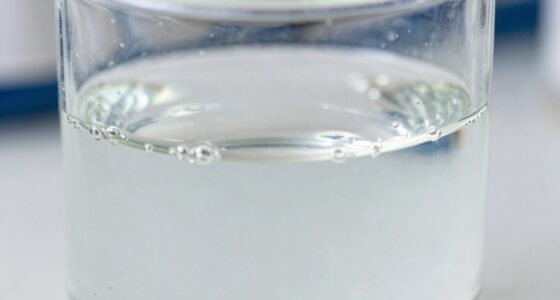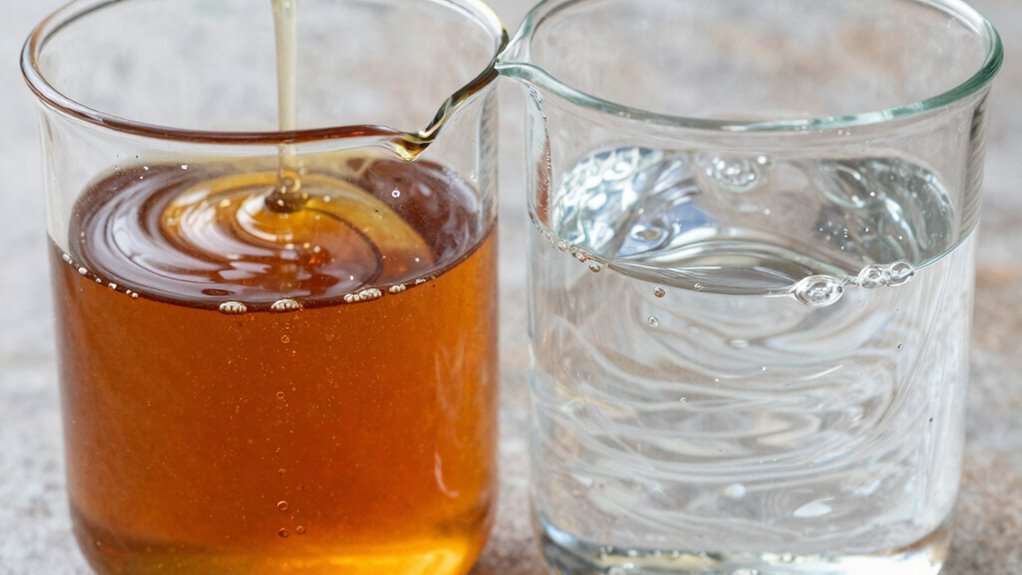
Kinematic and dynamic viscosity both describe how fluids resist flow but in different ways. Dynamic viscosity measures a fluid’s internal friction, showing how sticky or thick it is, while kinematic viscosity considers how fast a liquid flows under gravity by dividing this resistance by the fluid’s density. Understanding the difference helps you choose the right tools and methods. Keep exploring to see how these two concepts influence real-world fluid behavior and applications.

Get business pricing on garage and car supplies
- Business-only prices and quantity discounts
- Tax-exempt purchasing
- Multiple users, one account, clear invoices
Key Takeaways
- Dynamic viscosity measures a fluid’s internal resistance to shear force; kinematic viscosity relates this resistance to the fluid’s density.
- Dynamic viscosity is measured by shear stress and force, while kinematic viscosity is determined by flow time under gravity.
- Kinematic viscosity equals dynamic viscosity divided by density, making it useful for natural flow conditions.
- Both viscosities are essential for fluid system design: dynamic for machinery, kinematic for flow behavior prediction.
- Understanding their differences improves fluid analysis, control, and selection of appropriate measurement techniques.
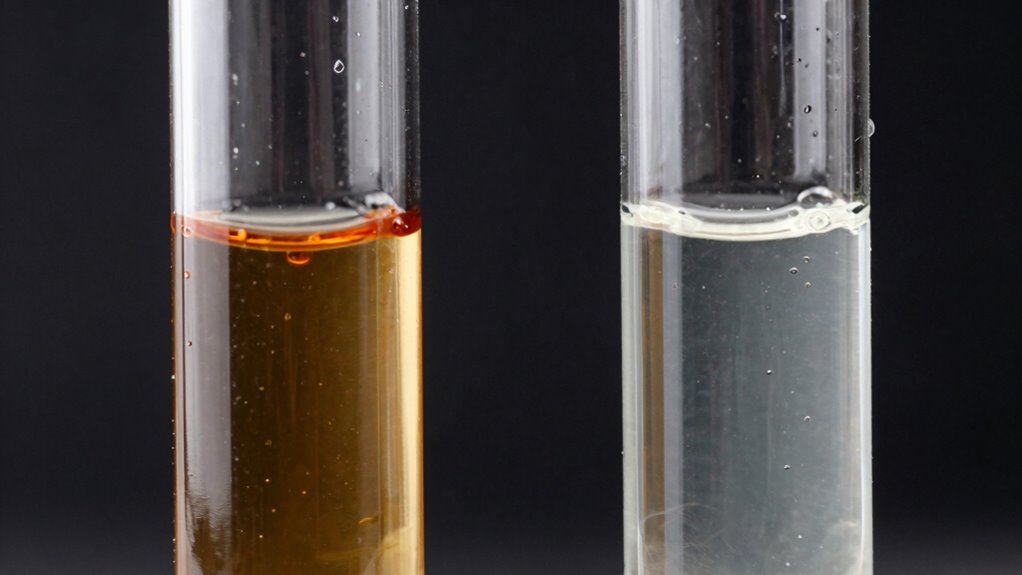
Have you ever wondered how liquids flow differently? It’s a fascinating question because understanding fluid flow helps us predict how liquids behave in various situations, from everyday tasks to complex industrial processes. One way to grasp this is by exploring viscosity, which measures a fluid’s resistance to flow. When you look into viscosity, you’ll find two main types: kinematic and dynamic. Though related, they serve different purposes and are measured differently, making it *vital* to know the distinction. Accurate measurement of viscosity is crucial for applying the correct properties in real-world scenarios. Dynamic viscosity, also called absolute viscosity, describes a fluid’s internal resistance to shear stress under applied force. Think of it as how sticky or thick a liquid is—honey has high dynamic viscosity, while water’s low. To measure this, scientists typically use measurement techniques like a viscometer, which applies a known force to the fluid and observes its response. For example, a capillary viscometer measures how long it takes a fluid to flow through a narrow tube, giving you a precise value of dynamic viscosity. This measurement is *fundamental* for understanding how a fluid behaves when subjected to forces, such as pumping or pouring, because it directly relates to the internal friction within the liquid.
Kinematic viscosity, on the other hand, takes things a step further by considering how fast a fluid flows under gravity without applying an external force. It’s *essentially* the ratio of dynamic viscosity to the fluid’s density. When you want to know how easily a liquid spreads or flows in natural conditions, kinematic viscosity offers a clearer picture. You might measure it using a simple device like a Ubbelohde viscometer, where you observe the time it takes for a fixed volume of fluid to pass through a capillary tube under gravity. This measurement technique makes it easier to compare different fluids or track changes in a fluid’s properties over temperature or pressure variations.
Understanding the difference between these two types of viscosity is key to controlling fluid flow in various applications. In industrial settings, knowing the dynamic viscosity helps you select the right pumps and pipes, while kinematic viscosity can inform you about how a fluid will behave as it moves through systems or spreads on surfaces. Both measurement techniques are straightforward but require careful calibration and interpretation to get accurate results. Whether you’re designing machinery, conducting experiments, or simply trying to understand everyday liquids, recognizing these distinctions will improve how you analyze and work with fluids. *In essence*, grasping kinematic versus dynamic viscosity empowers you to predict fluid behavior more precisely, making your work more efficient and informed.
As an affiliate, we earn on qualifying purchases.
Frequently Asked Questions
How Do Temperature Changes Affect Kinematic and Dynamic Viscosity Differently?
Temperature changes cause viscosity variation by decreasing both dynamic and kinematic viscosity as temperature rises. You’ll notice that dynamic viscosity drops because the fluid molecules move more freely, reducing internal resistance. Similarly, kinematic viscosity decreases since it depends on dynamic viscosity and density, which also change with temperature. The temperature dependence means that as temperature increases, both viscosities decrease, affecting fluid flow and lubrication performance.
Can a Fluid Have High Kinematic Viscosity but Low Dynamic Viscosity?
Yes, you can have a fluid with high kinematic viscosity but low dynamic viscosity. It happens because viscosity conversion involves dividing the dynamic viscosity by the fluid’s density. So, if a fluid’s density is very high, its kinematic viscosity can be high even when its dynamic viscosity remains low on the viscosity scale. This contrast highlights how density influences the relationship between these two viscosity measurements.
Which Viscosity Type Is More Relevant in Fluid Flow Calculations?
You should focus on dynamic viscosity for fluid flow calculations because it directly measures flow resistance, which impacts how fluids move through pipes or around objects. Viscosity measurement of dynamic viscosity helps you understand the force needed to make a fluid flow. While kinematic viscosity is useful in other contexts, dynamic viscosity provides the more relevant data for practical flow analysis and engineering applications.
How Do Viscosity Measurements Differ Between Gases and Liquids?
You’ll find that viscosity measurements differ for gases and liquids because of their molecular interactions. For liquids, you typically use viscometers like capillary or rotational types, which measure how they resist flow. Gases require measurements based on their molecular interactions with pressure and temperature, often using techniques like flow or pressure drop methods. These differences stem from the distinct ways molecules interact and move in each state.
Are There Any Common Applications Where Understanding Both Viscosities Is Crucial?
You need to understand both viscosities in applications like lubrication efficiency and hydraulic systems. Knowing dynamic viscosity helps you select the right lubricant to reduce wear, while kinematic viscosity guides you in understanding how fluids flow under gravity. Together, these measurements guarantee your machinery runs smoothly, preventing breakdowns and optimizing performance. This extensive understanding is essential for maintaining system reliability and efficiency in various industrial and mechanical operations.
capillary viscometer for kinematic viscosity
As an affiliate, we earn on qualifying purchases.
As an affiliate, we earn on qualifying purchases.
Conclusion
Now that you understand the difference between kinematic and dynamic viscosity, you can better appreciate how fluids behave in various applications. Isn’t it fascinating how these subtle properties influence everything from engine oils to weather patterns? By grasping these concepts, you’re equipped to make smarter choices in engineering, science, or everyday life. After all, isn’t understanding fluid behavior the key to mastering many technological advancements?
industrial fluid viscosity meter
As an affiliate, we earn on qualifying purchases.
As an affiliate, we earn on qualifying purchases.
laboratory viscosity measurement tools
As an affiliate, we earn on qualifying purchases.
As an affiliate, we earn on qualifying purchases.
Fall Picks
fall essentials
As an affiliate, we earn on qualifying purchases.