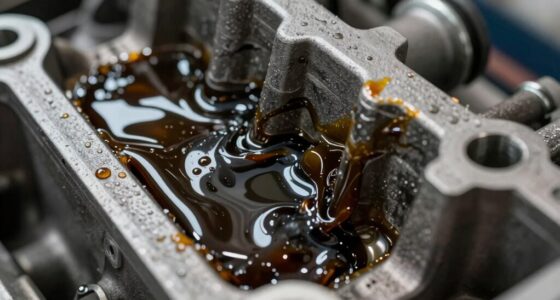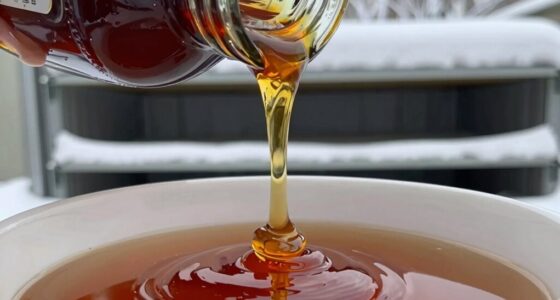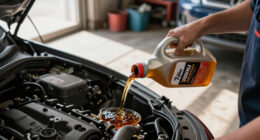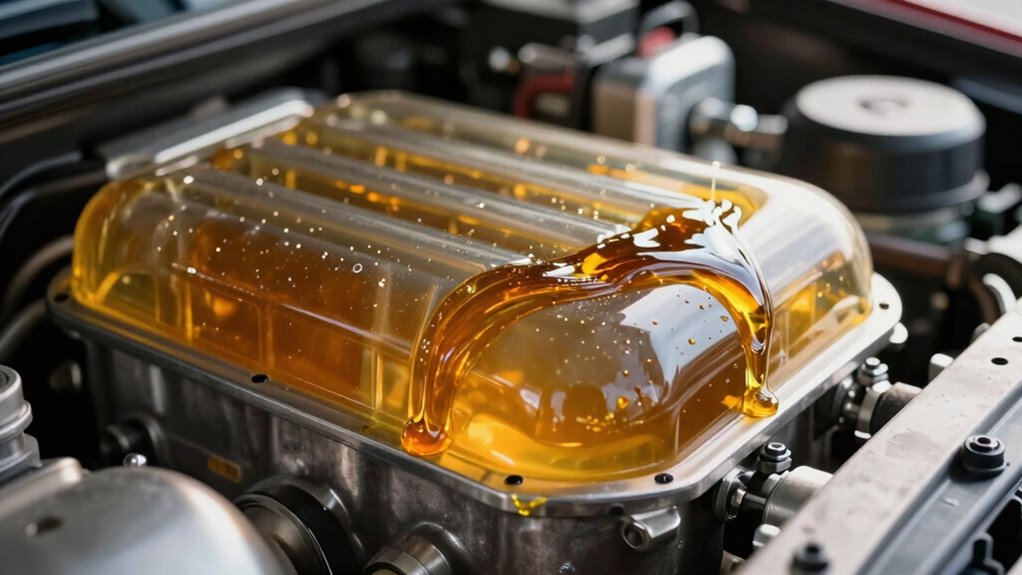

When your engine warms up, the oil’s viscosity decreases, causing it to thin out. Thin oil flows more easily but can’t maintain proper pressure, which can lead to lower oil pressure readings. Using the wrong oil type or allowing sludge buildup worsens this issue, especially as engine parts wear over time. To keep your engine running smoothly, it’s essential to choose the right viscosity and stay on top of maintenance—continue exploring to understand how to prevent these problems.
Open a free Amazon Business account
Business pricing, bulk buying and tax-exempt orders.
As an affiliate, we earn on qualifying purchases.
Key Takeaways
- As the engine heats, oil viscosity decreases, making the oil thinner and reducing the oil pressure.
- Using oil with incorrect or low viscosity at operating temperature can lead to pressure drops.
- Thinner oil flows more easily, decreasing the oil film thickness and lowering pressure during warm-up.
- Engine wear and increased clearances cause oil pressure to drop when the oil becomes thinner at high temperatures.
- Regular oil changes with proper viscosity help maintain consistent oil pressure when the engine is hot.
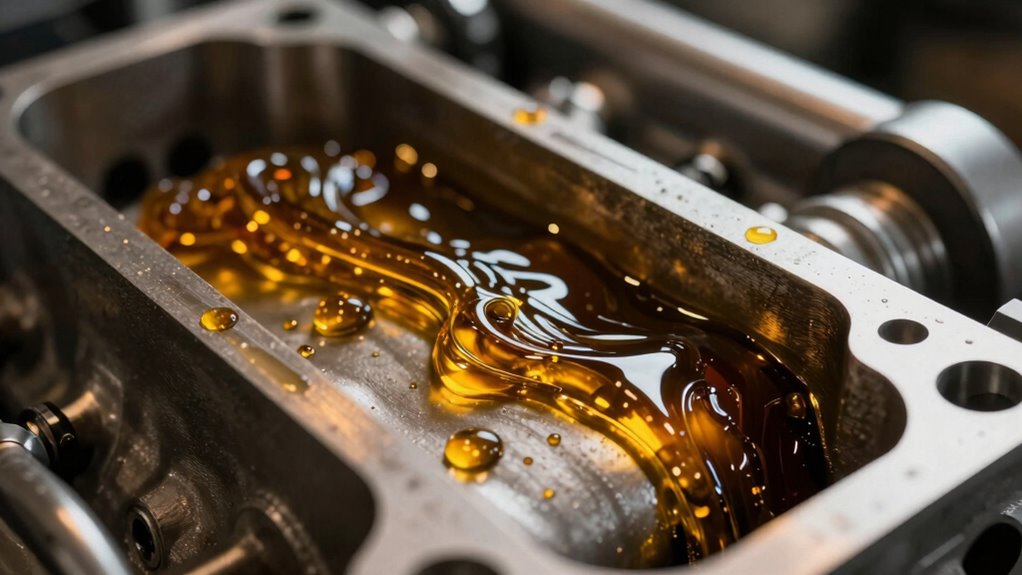
If your vehicle’s oil pressure drops when the engine warms up, it can signal underlying issues that need attention. One common cause is changes in oil viscosity as the engine heats. When you start your car, the oil is typically cooler and thicker, which helps maintain proper pressure. But as the engine warms, the oil becomes less viscous, flowing more easily through the engine’s passages. If the oil isn’t thick enough or if it has become too thin due to age or contamination, it can cause a drop in oil pressure. This isn’t just a minor inconvenience; it can lead to serious engine problems if left unaddressed.
Your engine relies heavily on the right oil viscosity to operate smoothly. If the oil is too thin when hot, it won’t create enough film between moving parts, increasing metal-to-metal contact and accelerating engine wear. Over time, this increased wear can cause components like bearings and camshafts to degrade faster, further compromising oil pressure. Conversely, if the oil is too thick when hot—perhaps because it’s too viscous due to incorrect oil type or low-quality oil—it can strain the oil pump, making it work harder to circulate oil throughout the engine. Both scenarios can result in fluctuating or dropping oil pressure when the engine reaches operating temperature.
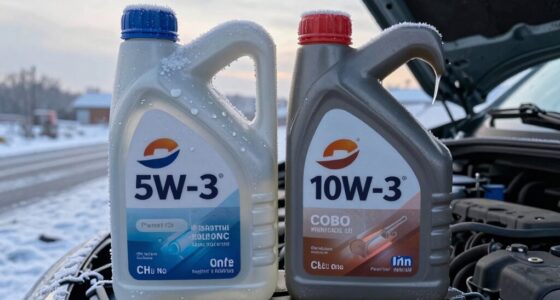
Using the correct oil viscosity recommended by your vehicle’s manufacturer is essential. If you’re using oil with a higher viscosity than specified, it might not flow easily at operating temperature, causing pressure issues. If it’s too thin, it might not provide adequate lubrication, leading to increased engine wear. Regular oil changes with the proper oil type help maintain ideal viscosity and prevent the buildup of sludge or deposits that can impact oil flow and pressure.
Engine wear also plays a significant role here. As engine components wear down over time, clearances between parts can increase, meaning oil pressure naturally drops even when the engine is hot. Worn seals and gaskets can also allow oil to leak or bypass, reducing pressure further. If you notice consistent drops in oil pressure when hot, it could be a sign that your engine is wearing out and needs maintenance or repairs. Monitoring oil viscosity and engine condition can help you prevent more serious damage and ensure your vehicle runs reliably, especially when it’s warmed up and operating at full temperature.
As an affiliate, we earn on qualifying purchases.
Frequently Asked Questions
Can Synthetic Oil Prevent Oil Pressure Drops When Hot?
Yes, synthetic oil can help prevent hot oil pressure drops because it maintains consistent oil viscosity at high temperatures. Unlike conventional oil, synthetic lubricants resist thinning, ensuring proper engine lubrication during extended oil change intervals. This stability helps keep oil pressure steady, reducing wear and tear. By choosing synthetic oil, you support better oil flow and protect your engine when it’s hot, ultimately extending its lifespan.
How Does Oil Filter Quality Affect Hot Oil Pressure?
Ever wonder if your oil filter’s quality affects hot oil pressure? Well, if you pick a cheap, degraded filter, it’s like trying to breathe through a clogged straw—oil flow suffers. High-quality filters maintain viscosity consistency by trapping contaminants more effectively, preventing clogging and ensuring steady pressure. So, skimp on quality, and you risk oil filter degradation that can drop your hot oil pressure faster than you can say “engine trouble.”
Are Certain Engine Types More Prone to Hot Oil Pressure Issues?
Certain engine types are more prone to hot oil pressure issues, especially those with high engine wear or rapid oil degradation. You might notice pressure drops more often in older engines or those subjected to heavy loads. These conditions cause oil to thin or break down faster, reducing pressure. Regular maintenance and oil changes help mitigate these issues, ensuring your engine maintains proper lubrication and avoids excessive wear.
Does Driving Style Influence Oil Pressure When the Engine Is Hot?
Think of your driving habits as the steering wheel of your engine’s health. Yes, your driving style influences oil pressure when hot. Aggressive acceleration techniques cause the oil to thin more quickly, reducing pressure. Smooth driving helps maintain consistent oil viscosity, ensuring proper lubrication. So, if you want to keep your engine happy and pressure steady, practice gentle acceleration and avoid sudden stops. Your engine will thank you for it.
What Are the Signs of Oil Viscosity Problems at High Temperature?
You’ll notice signs of oil viscosity problems at high temperatures if your oil thickens, causing your engine to work harder. Look for pressure fluctuations on your gauge, especially when the engine is hot. These fluctuations indicate inconsistent oil flow due to thickening. Additionally, you might experience sluggish engine response or unusual noise, both signs that the oil isn’t flowing smoothly, compromising lubrication and engine performance.
As an affiliate, we earn on qualifying purchases.
Conclusion
Just like a wise old storyteller once warned, neglecting oil viscosity can turn your engine’s smooth tale into a costly tragedy. When your oil thins at high temperatures, it’s as if the engine’s heartbeat slows, risking damage and breakdown. Stay vigilant, check your oil regularly, and don’t let this hidden villain turn your journey into a pit stop. Remember, in the engine’s story, proper oil flow is the hero that keeps your ride alive and thriving.
oil filter for engine protection
As an affiliate, we earn on qualifying purchases.
As an affiliate, we earn on qualifying purchases.
As an affiliate, we earn on qualifying purchases.
Fall yard work Picks
leaf blowers
As an affiliate, we earn on qualifying purchases.