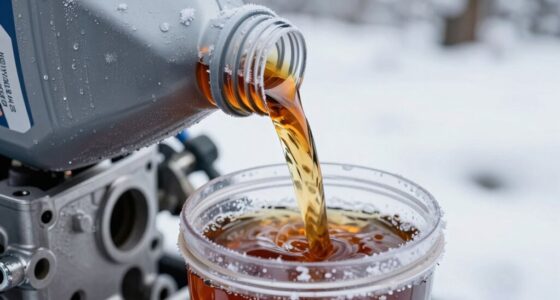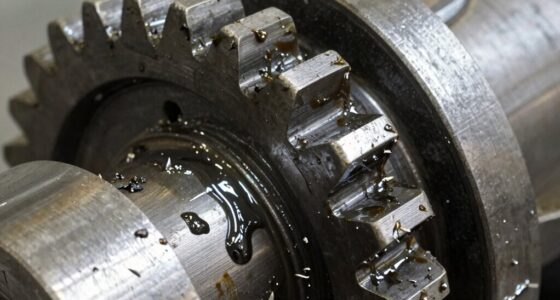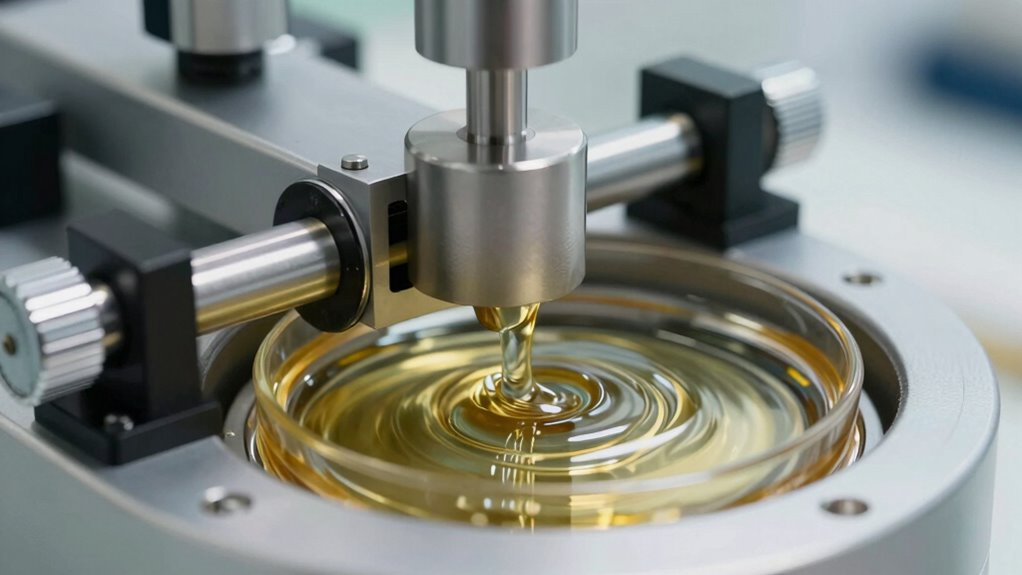

When considering long-drain oils, focus on their shear stability—how well they resist viscosity breakdown under extended shear stress. High shear stability means the oil can maintain its protective film longer, reducing wear and preventing deposit buildup. Factors like formulation and additives play a key role. Evaluating these aspects helps guarantee your lubricant performs reliably over time. If you want to understand how to choose the best long-drain oil, there’s more to learn about optimizing shear stability.
Key Takeaways
- Prioritize oils with proven shear stability to prevent viscosity breakdown during extended use.
- Understand that high shear stress can cause molecular changes, reducing lubricant effectiveness over time.
- Select formulations with additives designed to improve resistance to shear-induced viscosity loss.
- Evaluate shear stability ratings aligned with your equipment’s operating conditions for long drain intervals.
- Recognize that maintaining viscosity under shear ensures consistent lubrication, reducing wear and prolonging machinery life.
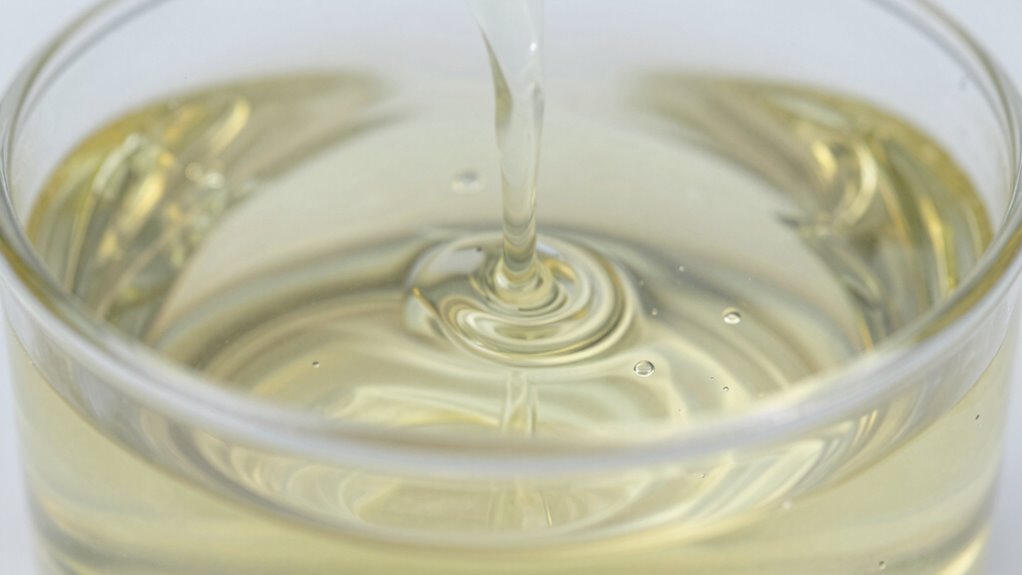
Have you ever wondered how materials resist deformation under shear stress? It’s a vital question, especially when it comes to long-drain oils used in machinery and engines. These oils are expected to perform reliably over extended periods, but their ability to maintain stability under shear stress effects can vary considerably. When shear stress acts on an oil, it causes layers of the fluid to slide past each other, generating internal forces that can lead to viscosity breakdown. If the oil’s viscosity drops too much, it loses its lubricating properties, which can result in increased wear and potential equipment failure. Understanding how shear stress impacts these oils helps you choose the right formulation to guarantee longevity and performance.
Viscosity breakdown is a key concern in shear stability. Under normal conditions, an oil’s viscosity provides a protective film between moving parts, reducing friction and preventing metal-to-metal contact. However, when subjected to sustained shear stress, the molecular structure of the oil can change. This molecular change often manifests as a reduction in viscosity, which compromises the oil’s ability to maintain a stable lubricating film. In long-drain oils, this effect is especially critical because the oil is expected to endure prolonged shear forces without deteriorating. Different formulations respond differently; some oils are designed with additives that resist viscosity breakdown, while others may suffer from it more readily. Additionally, advancements in additive technology can significantly enhance shear stability, helping oils withstand demanding conditions.
Viscosity stability under shear stress is essential for long-drain oils to maintain effective lubrication.
Shear stress effects are influenced by several factors, including temperature, shear rate, and the oil’s chemical composition. As shear stress increases, the internal forces within the oil become more intense, risking the breakdown of thicker, more viscous structures. This is why oils with higher shear stability are formulated to withstand these forces without significant viscosity loss. You should look for oils with shear stability ratings that match your operating conditions. When shear stress effects become too pronounced, the oil’s molecular network can break down, causing the viscosity to decline sharply. This not only reduces lubrication efficiency but can also accelerate the formation of deposits and sludge, further impairing engine or machinery performance. Recognizing the importance of shear stability can help you select lubricants that perform reliably over long periods. In practice, evaluating long-drain oils involves understanding their shear stability characteristics. Manufacturers often perform tests simulating shear stress over extended periods to assess how well the oil maintains its viscosity. Selecting an oil that resists viscosity breakdown under shear stress ensures consistent lubrication, reduces maintenance costs, and prolongs equipment life. By paying attention to shear stability ratings and understanding shear stress effects, you can make smarter choices about the oils you rely on, especially for applications requiring long drain intervals. Ultimately, recognizing how materials behave under shear stress helps you choose oils designed to endure the demands of your machinery, keeping everything running smoothly for the long haul.

Motul 8100 X-clean EFE 5W-30 Full Synthetic Motor Oil | Fuel Economy Formula, Helps Protect Emissions Systems, Clean Engine Performance | Long Drain Capable, Improved Engine Responsiveness | 5L
Optimized for fuel economy and extended service intervals: Formulated to reduce internal engine friction, improve efficiency, and extend…
As an affiliate, we earn on qualifying purchases.
As an affiliate, we earn on qualifying purchases.
Frequently Asked Questions
How Does Shear Stability Impact Long-Term Oil Performance?
Shear stability directly impacts your oil’s long-term performance by maintaining viscosity retention over time. When oil resists shear thinning, it keeps its protective film intact, preventing wear and tear. If shear stability is inadequate, your oil may thin out under stress, reducing lubrication efficiency. Choosing oils with high shear stability ensures consistent viscosity, prolongs oil life, and keeps your engine running smoothly for longer periods.
What Testing Methods Best Measure Shear Stability?
You should focus on bench tests like the Mini-Rotary Viscometer and the Scuffing Wear Test to measure shear stability. These methods evaluate viscosity retention and additive compatibility under stress, revealing how well the oil maintains performance over time. By analyzing the change in viscosity after shear, you can determine if the oil resists breakdown, ensuring it stays effective during long drain intervals.
Can Shear Stability Vary Between Different Oil Brands?
Yes, shear stability can vary between different oil brands because of formulation differences and brand reputation. Some brands use additives and base oils that resist shear better, leading to longer oil life and better engine protection. Always check the specifications and reputation of the brand you’re choosing, as high-quality formulations tend to maintain viscosity and performance over extended drain intervals, ensuring your engine stays well-lubricated and protected.
How Does Shear Stability Influence Equipment Lifespan?
Shear stability directly impacts your equipment’s lifespan by maintaining viscosity retention, which keeps components properly lubricated. Studies show that oils with higher shear stability can extend equipment life by up to 20%. When shear stability is high, additive compatibility improves, preventing breakdowns and reducing wear. This means your machinery runs smoother and longer, saving you money on repairs and downtime, especially with long-drain oils designed for durability.
Are There Specific Additives That Improve Shear Stability?
Yes, certain additives can enhance shear stability. You should look for additive chemistry designed to resist breakdown under stress. Formulation techniques like incorporating viscosity index improvers and shear-stable polymers help maintain oil consistency. These additives work together to prevent thickening or thinning during operation, ensuring your equipment runs smoothly and extends oil life. Always choose products with proven shear stability properties for ideal performance.

Lucas Oil 10130 Pure Synthetic Oil Stabilizer – 1 Quart
World’s #1 synthetic oil additive
As an affiliate, we earn on qualifying purchases.
As an affiliate, we earn on qualifying purchases.
Conclusion
So, next time you’re marveling at those long-drain oils, remember—they’re tough, right? Well, don’t forget that shear stability is what keeps them from breaking down under pressure. It’s almost funny how something so tiny can make or break your engine’s life. So, go ahead, trust those long-drain oils—just don’t be surprised if they surprise you by holding up longer than you thought. After all, who knew stability could be so thrilling?

TTL T-777 Multi-Purpose High Temp Red Lithium Complex Grease Cartridge, 14.5 oz – Heavy-Duty Lubricant for Bearings, Bushings, Automotive, Marine, Industrial – Rust & Water Resistant, Shear Stable
High Temp Lithium Complex Grease – Formulated with a proprietary lithium complex thickener, T-777 delivers exceptional thermal stability…
As an affiliate, we earn on qualifying purchases.
As an affiliate, we earn on qualifying purchases.

Oil Drain Hose HON1010 10 mm Oil Changing Aid Compatible With Hon-da GX110, GX120, GX160, GX200
Replace: HON1010
As an affiliate, we earn on qualifying purchases.
As an affiliate, we earn on qualifying purchases.