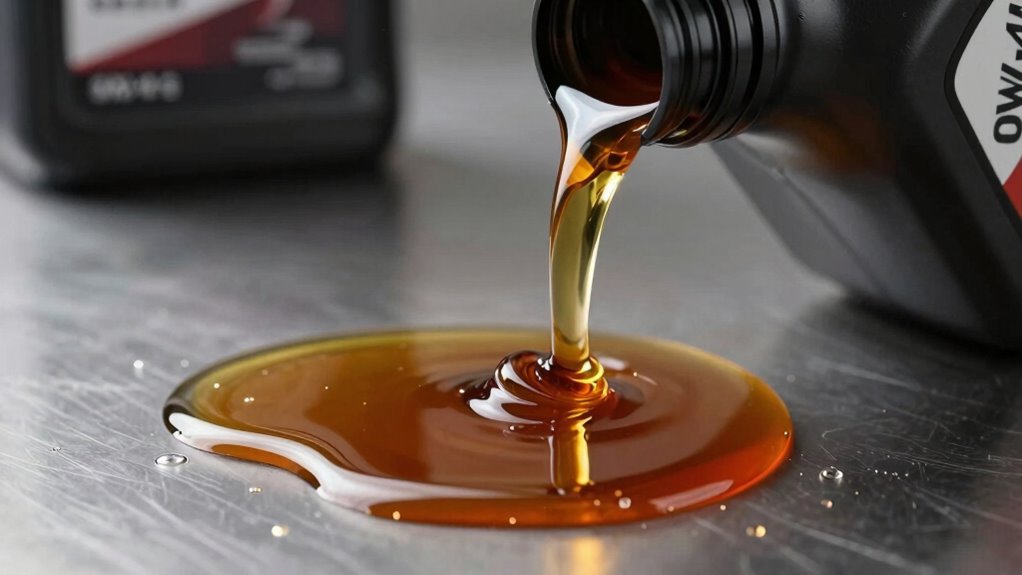

Formulating a 0W-40 oil is tougher than it seems because balancing cold-start flow with high-temperature stability is complex. You need precise control over additive interactions and oil stability to keep the viscosity spread narrow across temperatures. Unstable formulations or too many additives can cause fluctuations that affect performance and measurements. Understanding these challenges helps you see why achieving consistent viscosity spread takes careful planning—keep exploring to learn more about the science behind it.
Key Takeaways
- Balancing cold-start viscosity and high-temperature stability requires precise additive formulation, making 0W-40 oils complex to develop.
- Achieving consistent viscosity spread demands careful selection of stabilizers and antioxidants to maintain oil stability over time.
- Viscosity index improvers must be finely tuned to minimize viscosity fluctuations across temperature ranges.
- Additive interactions can cause unpredictable viscosity behavior, complicating formulation efforts.
- Ensuring stability against degradation prevents viscosity deviations, making 0W-40 formulations more challenging than other oils.

Viscosity spread is a key indicator used to assess the consistency of viscosity measurements across different methods or instruments. It helps you understand how much a lubricant’s viscosity varies under different conditions, which is vital for ensuring reliable engine performance. When it comes to formulations like 0W-40, grasping the factors that influence viscosity spread becomes even more essential. You see, achieving a precise viscosity profile isn’t just about selecting the right base oils; it’s also about understanding how oil stability and additive effects interact to produce a consistent flow behavior. Controlling viscosity fluctuations is critical to maintaining performance and measurement accuracy over the oil’s lifespan. Oil stability plays a significant role in maintaining a narrow viscosity spread. Stable oils resist breakdown or thickening over time and under varying temperatures. If the oil isn’t stable, its viscosity can fluctuate wildly, making it difficult to predict how the oil will perform in real-world conditions. This variability affects not only the engine’s protection but also the accuracy of viscosity measurements across different testing methods. For instance, an unstable oil could appear to have a larger viscosity spread, misleading you into thinking there’s an inconsistency in formulation when, in reality, it’s a stability issue. Ensuring oil stability involves selecting high-quality base oils and incorporating antioxidants or stabilizers that prevent degradation, therefore maintaining a consistent viscosity profile.
Additive effects are equally essential in controlling viscosity spread. Modern oils contain a complex blend of additives like viscosity index improvers, dispersants, and anti-wear agents. These additives are designed to enhance performance, but they can also influence how viscosity responds to temperature changes. For example, viscosity index improvers work to keep the oil flowing smoothly across a range of temperatures, reducing the viscosity spread. However, if these additives are not properly balanced or degrade over time, they can cause the viscosity to deviate unexpectedly, making the spread larger. Achieving the right additive formulation involves meticulous testing and fine-tuning to make sure these compounds work synergistically without introducing variability. In the specific case of 0W-40 oils, the challenge lies in crafting a formulation that balances cold-start performance with high-temperature stability. This balance requires controlling oil stability and understanding additive effects thoroughly. If either aspect isn’t carefully managed, the viscosity spread can become problematic, leading to inconsistent engine protection or inaccurate performance testing. Ultimately, understanding and controlling these factors allows formulators to produce oils that perform reliably across different conditions, ensuring that viscosity measurements stay consistent. Recognizing the interplay between oil stability and additive effects helps you appreciate why formulating a 0W-40 isn’t just a matter of blending base oils but involves precise science to keep viscosity spread within tight, predictable bounds.

Mobil 1 European Car Formula Full Synthetic Motor Oil 0W-40, 5 Quart
Mobil 1 FS European Car Formula full synthetic motor oil 0W-40 helps to extend engine life even in…
As an affiliate, we earn on qualifying purchases.
As an affiliate, we earn on qualifying purchases.
Frequently Asked Questions
How Does Temperature Affect Viscosity Spread in Engine Oils?
Temperature affects viscosity spread by challenging your oil’s temperature stability. As temperatures rise or fall, the oil’s viscosity changes, impacting engine performance. A high viscosity index helps maintain consistency across temperature ranges, ensuring better protection. When formulators design oils like 0W-40, they aim for ideal viscosity spread, so the oil flows easily in cold starts and remains thick enough at high temperatures to protect your engine effectively.
Can Viscosity Spread Influence Fuel Efficiency?
Viscosity spread can definitely influence your fuel economy and engine performance. When the oil’s viscosity varies too much with temperature, your engine works harder to circulate it, reducing efficiency. A stable viscosity spread guarantees the oil flows smoothly at cold starts and maintains proper lubrication when hot. This balance helps your engine run efficiently, saves fuel, and protects components, leading to better overall performance and lower emissions.
Are Synthetic Oils More Consistent in Viscosity Spread?
Synthetic oils are like a steady heartbeat, offering more consistent viscosity spread. You’ll notice synthetic consistency because their additive stability keeps viscosity steady across temperature swings. This means your engine runs smoothly without sudden changes, enhancing performance and protection. Unlike conventional oils, synthetics are engineered for reliability, providing you with peace of mind knowing your oil maintains ideal flow, no matter how extreme the conditions.
What Role Does Additive Chemistry Play in Viscosity Spread?
Additive chemistry plays a vital role in viscosity spread by influencing additive interactions and ensuring chemistry stability within the oil. When formulators combine various additives, they aim to maintain consistent viscosity across temperature ranges. If additive interactions aren’t well-managed, they can compromise stability and alter viscosity spread. So, mastering additive chemistry is essential for creating oils like 0W-40 that perform reliably under diverse conditions.
How Does Viscosity Spread Impact Cold-Start Performance?
A stitch in time saves nine, and your oil’s viscosity spread directly impacts cold-start performance. When oil viscosity is too high at low temperatures, it thickens, making engine starts harder and increasing wear. The pour point is critical here—if it’s too high, the oil won’t flow easily when cold. A well-formulated oil guarantees a low pour point, reducing friction, making those cold starts smoother and protecting your engine from early wear.

Lucas Oil 10118 High Mileage Oil Stabilizer – 1 Quart
Lubricates all internal parts to minimize wear in any engine
As an affiliate, we earn on qualifying purchases.
As an affiliate, we earn on qualifying purchases.
Conclusion
So, next time you pick up that 0W-40 oil, remember it’s no simple potion. Formulating it takes wizardry, balancing cold-start flow with high-temperature protection. Think of it like a well-crafted elixir from a bygone era—each ingredient carefully chosen. The viscosity spread isn’t just a number; it’s a feat of engineering that keeps your engine running smoothly, no matter the weather. Truly, it’s a modern marvel, even if it sounds like magic.

Alpha Olefins Applications Handbook
As an affiliate, we earn on qualifying purchases.
As an affiliate, we earn on qualifying purchases.
Lucas Oil 10118 High Mileage Oil Stabilizer – 1 Quart
Lubricates all internal parts to minimize wear in any engine
As an affiliate, we earn on qualifying purchases.
As an affiliate, we earn on qualifying purchases.