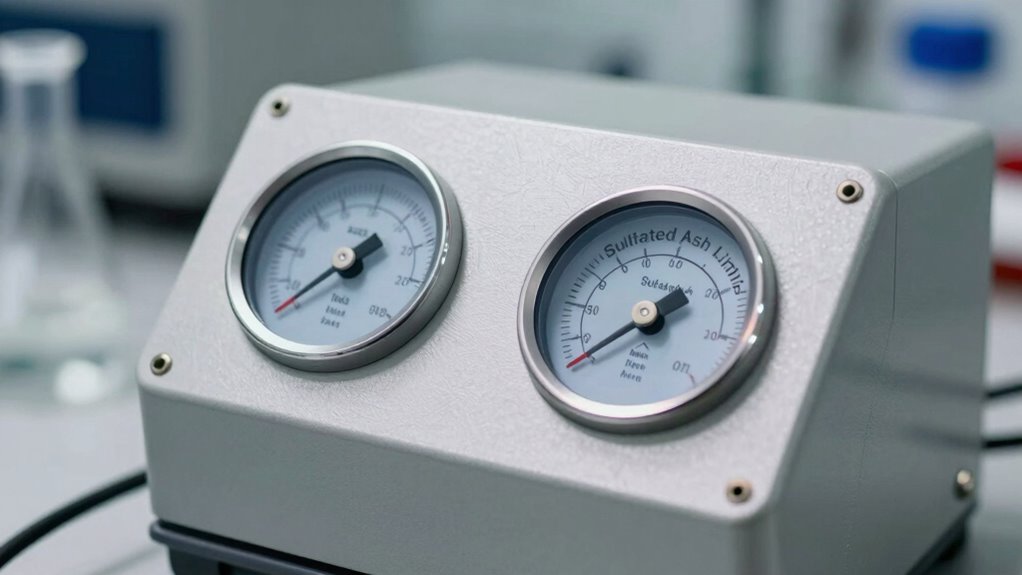

The sulfated ash limits come from extensive research into how fuel additives burn and produce residues that can harm engine parts. Regulatory agencies like EPA and European authorities analyze testing data to set these maximum levels, aiming to protect engine components and meet environmental standards. These limits are designed to balance engine performance with sustainability. If you keep exploring, you’ll discover more about how these standards are developed and their importance.

Get business pricing on garage and car supplies
- Business-only prices and quantity discounts
- Tax-exempt purchasing
- Multiple users, one account, clear invoices
Key Takeaways
- Sulfated ash limits are established through extensive testing by regulatory agencies like EPA and European authorities.
- These limits are based on research into additive composition and its impact on engine components.
- Industry standards set maximum ash content to prevent engine wear and emission system clogging.
- Regulatory bodies define acceptable ash levels to balance engine performance with environmental protection.
- Fuel manufacturers formulate additives to meet these predefined sulfated ash thresholds during product development.

Have you ever wondered how sulfated ash limits impact fuel quality and engine performance? These limits are a critical aspect of modern fuel specifications, directly influencing how your engine runs and how cleanly it operates. At the core, sulfated ash refers to the residue left behind after burning fuel containing certain additives. This residue, often a byproduct of specific fuel additives, can accumulate inside engine parts like diesel particulate filters (DPFs) and catalytic converters. When sulfated ash levels are too high, it can lead to increased wear and tear, reduced efficiency, and more frequent maintenance needs. That’s why regulatory agencies and industry standards set clear limits on sulfated ash content in fuels.
The primary goal of establishing sulfated ash limits is to balance engine performance with environmental concerns. Fuel additives are included in formulations to enhance performance, reduce emissions, or improve fuel stability. However, these additives often contain compounds that, once burned, produce ash residues. If the ash content exceeds a certain threshold, it can clog emission control devices, impairing their function. This is especially relevant in engines designed to meet strict emission standards, which aim to minimize pollutants released into the environment. By controlling sulfated ash levels, manufacturers guarantee their engines meet these standards without sacrificing performance.
As you select fuel for your vehicle or machinery, understanding the significance of sulfated ash limits helps you make informed choices. Fuels with lower ash content tend to produce fewer deposits inside engines, leading to smoother operation and longer intervals between maintenance. This is particularly essential for diesel engines, where ash buildup can severely impact emissions control devices. When fuel contains appropriate levels of additives that meet the specified sulfated ash limits, it supports cleaner combustion and helps your engine stay compliant with emission standards. Conversely, fuels with excessive ash can cause premature filter clogging, increasing downtime and costs. Additionally, fuel additive composition plays a crucial role in determining ash production during combustion.
Regulatory bodies, such as the EPA or European agencies, set these limits based on extensive research and testing. They evaluate how different additives contribute to ash formation and how that affects emissions and engine durability. Manufacturers also adhere to these standards, designing additives and fuels that optimize performance while respecting environmental regulations. Ultimately, sulfated ash limits serve as a safeguard to guarantee fuels do not compromise engine longevity or increase pollution. For you, understanding these limits means choosing fuels that help your engine run efficiently, stay clean, and meet legal requirements, all while maximizing your vehicle’s lifespan.
Frequently Asked Questions
How Do Sulfated Ash Limits Vary Globally?
You’ll find sulfated ash limits vary globally due to differing regulatory standards and environmental concerns. Countries with strict environmental policies, like those in the EU and North America, set lower ash limits to reduce pollution. Conversely, some developing nations have more lenient standards. These variations aim to balance engine performance with environmental implications, influencing fuel formulations and additive choices. Staying aware of local regulations helps you make certain of compliance and environmentally responsible practices.
What Industries Are Most Affected by These Limits?
Think of yourself as a race car driver fine-tuning for peak performance. Industries like automotive, marine, and heavy machinery are most affected by sulfated ash limits. These limits influence combustion efficiency and engine maintenance, as excessive ash can clog filters and harm engine longevity. Staying within these limits guarantees maximum engine performance, reduces downtime, and keeps emissions in check—vital for industries prioritizing efficiency and sustainability.
How Are Sulfated Ash Levels Measured Accurately?
You measure sulfated ash levels accurately using analytical techniques like gravimetric analysis or X-ray fluorescence, which follow strict measurement standards. First, you burn a sample at high temperature, then weigh the residue to determine ash content. These methods guarantee precision and repeatability, helping you stay compliant with industry regulations. By adhering to measurement standards, you can confidently assess sulfated ash levels in lubricants, fuels, or other petroleum products.
What Are the Health Implications of High Sulfated Ash?
High sulfated ash can harm your health by releasing harmful particles into the air, contributing to respiratory issues and cardiovascular problems. Did you know that strict environmental standards and emission controls aim to limit these particles? When ash levels exceed safe limits, it increases the risk of lung inflammation and long-term health problems. Staying within regulated sulfated ash limits helps protect both your health and the environment.
How Do Sulfated Ash Limits Impact Fuel Formulation?
Sulfated ash limits shape your fuel formulation by controlling ash composition and minimizing additive effects that can harm engines. You need to balance additives to reduce ash buildup without compromising performance. Strict limits encourage you to select cleaner additives and optimize fuel blends, which helps prevent deposit formation and engine wear. This guarantees your engine runs smoothly, reduces maintenance costs, and adheres to environmental standards.
Conclusion
So, next time you see sulfated ash limits, remember there’s more behind those numbers than just regulations. They hint at unseen factors that could impact engine performance and environmental health in ways you might not expect. Will these limits stay the same, or are they quietly evolving? The true story is still unfolding, and staying informed might just be your best move. After all, what’s written today could change the game tomorrow.
Evergreen bestsellers Picks
bestsellers
As an affiliate, we earn on qualifying purchases.