
Understanding the difference between flash point and fire safety is vital for properly managing flammable materials. The flash point measures how easily a liquid ignites, while fire safety covers overall practices to prevent fires and explosions. Knowing this helps you set safe handling limits, equipment, and protocols. Confusing the two can lead to inadequate safety measures. Keep exploring to discover how clear distinctions enhance safety protocols and protect everyone around you.
Key Takeaways
- Flash point is a specific measurement indicating how easily a liquid ignites, while fire safety encompasses broader practices to prevent fires.
- Understanding flash point helps determine appropriate safety protocols, but fire safety also includes procedures like evacuation and fire suppression.
- A low flash point suggests higher fire risk, requiring stricter controls; fire safety involves managing all potential hazards regardless of flash point.
- Proper knowledge of flash point informs safety measures such as ventilation and temperature limits, which are part of comprehensive fire safety strategies.
- Relying solely on flash point without broader fire safety measures can lead to inadequate hazard management and increased risk.
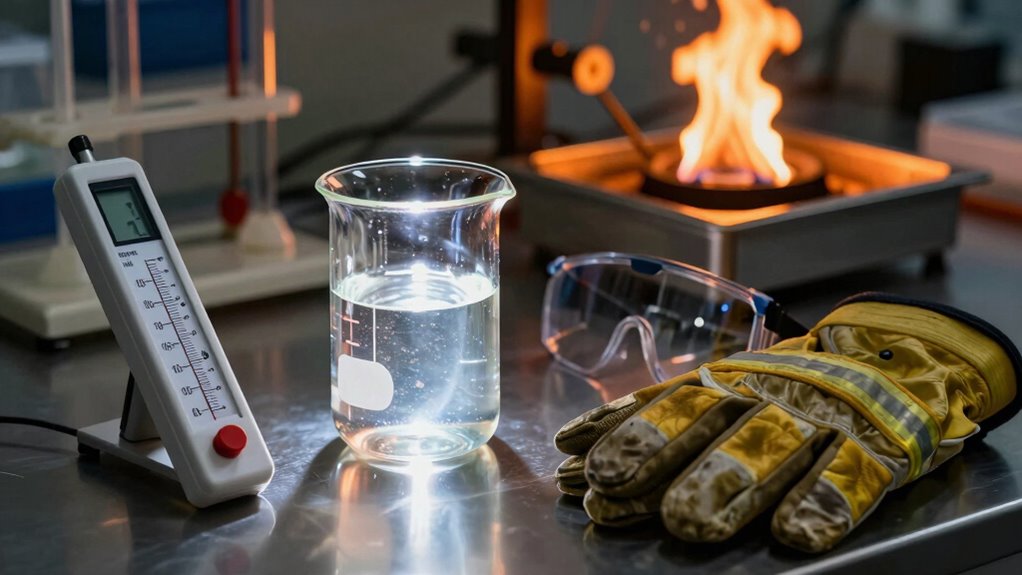
Understanding the difference between flash point and fire safety is crucial for handling flammable materials safely. When you’re working with flammable liquids, knowing their flash point helps you gauge how easily they can ignite. The flash point is the lowest temperature at which a liquid produces enough vapor to catch fire in the presence of an ignition source. This measurement isn’t just technical; it directly influences your safety protocols. For example, if a solvent has a low flash point, you need to handle it with extra caution, store it in properly ventilated areas, and keep it away from heat sources and open flames. Ignoring this critical detail can lead to dangerous situations, including fires or explosions.
Knowing a liquid’s flash point helps you handle and store flammable materials safely to prevent fires and explosions.
In your daily operations, understanding flash point helps you determine appropriate safety protocols. For flammable liquids with low flash points, you might implement stricter controls, such as using explosion-proof equipment, ensuring proper grounding, and maintaining safe distances from ignition sources. Conversely, liquids with higher flash points are less volatile at room temperature, but they still require careful handling and storage. Recognizing these differences allows you to develop tailored safety measures that prevent accidents, rather than relying on generic procedures that may not suit specific substances.
Many people confuse flash point with other fire safety concepts, but they serve distinct purposes. The flash point isn’t just a number; it’s a key factor in evaluating fire risk. When you understand this, you can prioritize safety protocols more effectively. For instance, if you’re responsible for storing or transporting flammable liquids, knowing their flash points guides you on temperature limits, ventilation needs, and protective equipment. This knowledge also influences how you train staff, ensuring they recognize hazards associated with different substances and handle them accordingly.
Moreover, understanding flash points helps you plan emergency responses better. If an accidental spill occurs, knowing the flash point can inform how you contain and ventilate the area to prevent ignition. It also influences your decisions about fire suppression systems and safety signage. In essence, grasping the difference between flash point and general fire safety practices empowers you to minimize risks, protect personnel, and ensure compliance with safety standards. Handling flammable liquids becomes less about guesswork and more about informed action, making your workplace safer and more resilient against fire hazards.
Additionally, awareness of flammable material properties such as flash point can help you stay compliant with safety regulations and industry standards, reducing legal liabilities.

Explosion-Proof Equipment in Hazardous Area
As an affiliate, we earn on qualifying purchases.
As an affiliate, we earn on qualifying purchases.
Frequently Asked Questions
How Is Flash Point Determined for Different Liquids?
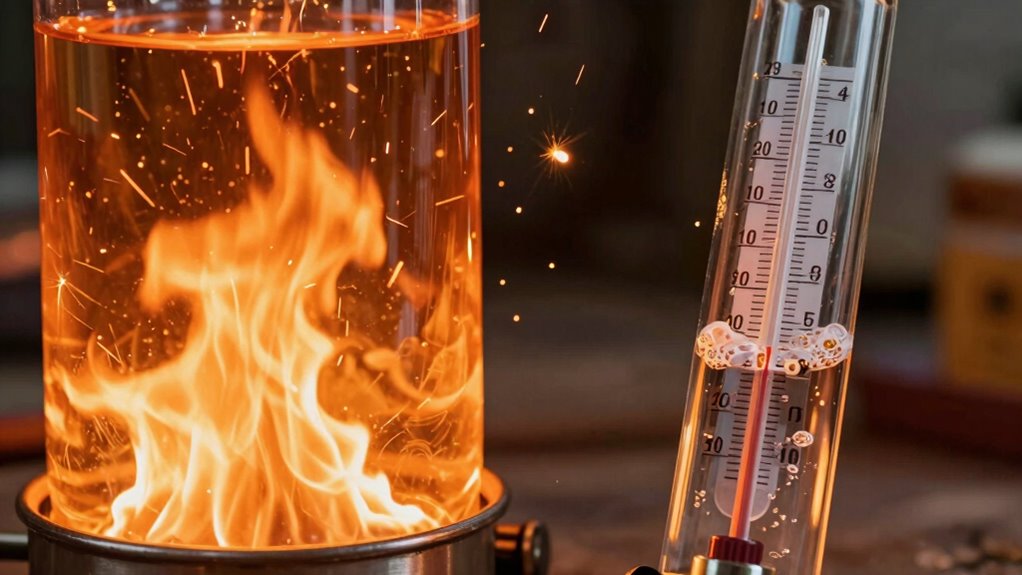
You determine a liquid’s flash point through standardized measurement procedures that assess its volatility. You heat a sample gradually in a closed cup or open container, then apply a flame at intervals until it ignites. The lowest temperature at which the vapor ignites is the flash point. This method helps you understand the liquid’s volatility and fire hazards, vital for safe handling and storage.
Can Flash Point Change Over a Substance’s Lifespan?
Imagine storing a chemical like gasoline, whose flash point can rise over time if it’s contaminated or degraded. Yes, a substance’s flash point can change throughout its lifespan, affecting its flammability classification and storage guidelines. Factors like oxidation or impurities can lower or raise the flash point, so regular testing is vital to guarantee safety. Always monitor and re-evaluate stored liquids to prevent fire hazards.
What Safety Measures Are Recommended for Low Flash Point Liquids?
For low flash point liquids, you should implement strict storage protocols to minimize volatile hazards. Store these liquids in well-ventilated, cool, and fire-resistant containers away from heat sources and ignition points. Always handle with appropriate personal protective equipment, and keep them clearly labeled. Regularly inspect containers for leaks or deterioration, and ensure proper grounding to prevent static buildup. Following these safety measures helps prevent fires and protects everyone involved.
How Do Environmental Factors Influence Flash Point Readings?
Environmental factors like temperature, humidity, and moisture effects can considerably influence flash point readings. Higher temperatures can lower the flash point, making volatile compounds more prone to ignition. Moisture effects can also alter the measurement, especially in liquids that absorb or react with water, potentially raising or lowering the flash point. Understanding these influences helps you accurately assess fire risks and implement appropriate safety measures.
Are There International Standards for Measuring Flash Points?
You’ll find that international standards for measuring flash points do exist, guaranteeing consistency across different regions. Organizations like ASTM and ISO set guidelines for flash point calibration and enforce flash point regulations, which you should follow to maintain safety and compliance. By adhering to these standards, you can accurately determine flash points, reduce risks, and ensure your measurements are reliable regardless of where you operate.

Hacaroa 3 Pack Plastic Storage Jug for Non-Flammable Liquid, 1 Gallon/4L HDPE Motor Oil Container with White Lid&Ergonomic Handle, Black Empty Bottle for Bleach, Detergent, Lubricant, Not for Fuel Use
- Safety Notice: Not for flammable liquids or fuel
- Package Includes: 3-pack 1-gallon HDPE storage jugs
- Product Dimensions: 6.5"L x 4.2"W x 11"H
As an affiliate, we earn on qualifying purchases.
As an affiliate, we earn on qualifying purchases.
Conclusion
Understanding flash point and fire safety is like steering a maze with flickering lights—you need to know what each signpost means to stay safe. Don’t let confusion be the fog that clouds your judgment; instead, see it as a clear window through which you can spot dangers before they ignite. By mastering these concepts, you’re wielding a shield that keeps the flames at bay, turning potential chaos into a controlled, safe haven.

(2011) Workplace Fire Safety Video Training Kit | Easily Train An Unlimited Number of Employees How To React In Case Of A Fire In The Workplace | National Safety Compliance
- Training Kit Format: Single disc with DVD and digital files
- Unlimited Employee Training: Train unlimited employees repeatedly
- Suitable for All Employees: Ideal for new and refresher training
As an affiliate, we earn on qualifying purchases.
As an affiliate, we earn on qualifying purchases.

PATIKIL 4 Inch 3 Way Splitter, Y-Shaped Metal Manual Volume Damper for Vents Fans Extractors Stove Pipes Range Hoods HVAC Ventilation Systems
- Color: Silver
- Outer Diameter: 100 mm / 3.94 inch
- Thickness: 1 mm / 0.04 inch
As an affiliate, we earn on qualifying purchases.
As an affiliate, we earn on qualifying purchases.