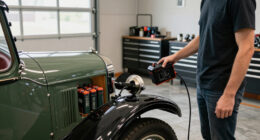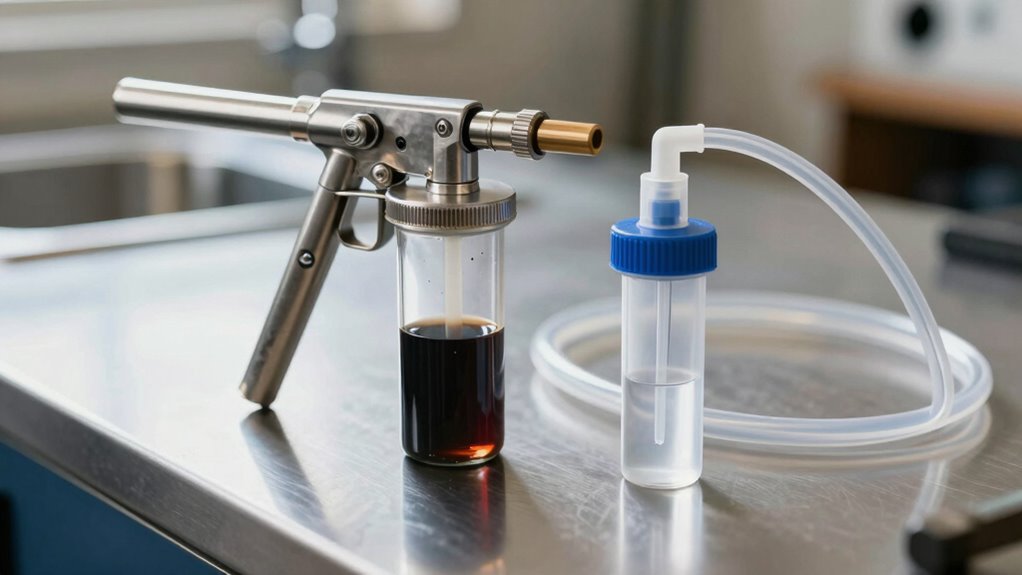
Choosing between a pressure bleeder and a vacuum bleeder depends on your vehicle’s system and your experience level. Pressure bleeders are faster and work well for professional use, but over-pressurizing can cause damage. Vacuum bleeders are easier and safer for DIYers, pulling air out without much effort. To get the best results and prevent issues, consider your vehicle’s needs and tools. If you want to know which method suits your situation best, keep exploring.
Key Takeaways
- Choose a pressure bleeder for faster, more efficient bleeding of brake and cooling systems, especially in professional settings.
- Opt for a vacuum bleeder if ease of use and minimal manual effort are priorities, suitable for simpler or older systems.
- Use pressure bleeders carefully to avoid over-pressurizing and damaging sensitive components; always monitor pressure levels.
- Select vacuum bleeders to prevent fluid contamination and maintain a sealed environment during bleeding.
- Follow manufacturer guidelines to ensure compatibility and prevent system damage when choosing between the two methods.

OMT 2.5L One-Person Pressure Brake Bleeder Kit with 4.25"x6.75" Adapter
- Easy Brake Bleeding: Quickly clear old brake fluid and air
- Wide Vehicle Compatibility: Fits most cars from 1967 to mid-80s
- Includes Rectangular Adapter: Compatible with AMC, Buick, Cadillac, and more
As an affiliate, we earn on qualifying purchases.
As an affiliate, we earn on qualifying purchases.
How Do Pressure and Vacuum Bleeders Work?
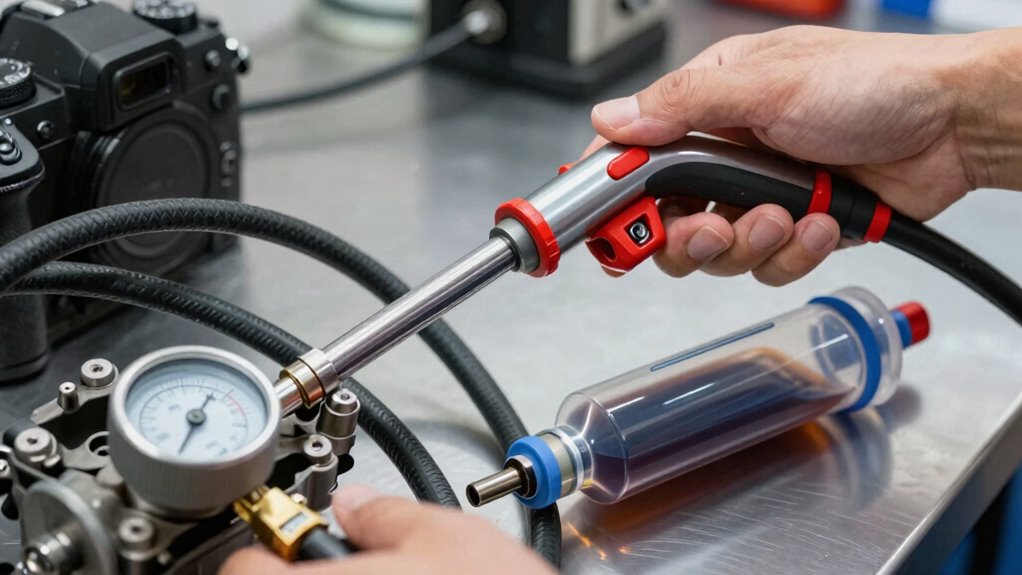
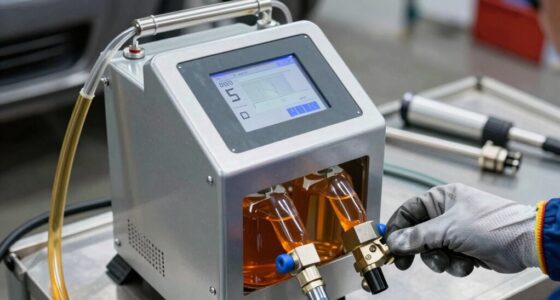
Have you ever wondered how pressure and vacuum bleeders actually work? They rely on principles of fluid dynamics to remove air from your vehicle’s braking system efficiently. Pressure bleeders use a pump to create positive pressure, forcing brake fluid through the system and pushing out trapped air. Vacuum bleeders, on the other hand, pull air and fluid out using negative pressure, creating a sealed environment that sucks the air out. Sealing mechanisms are essential in both methods; they ensure no air leaks during the process, maintaining consistent pressure or vacuum. Proper seals prevent contamination and help keep the system airtight. Understanding these core concepts helps you grasp how each tool effectively removes air, ensuring your brakes operate safely and smoothly. Additionally, selecting the appropriate fluid compatibility is crucial to prevent damage and ensure optimal performance of your braking system. For optimal results, knowing the functionality of each system can help you choose the right tool for your specific needs. Furthermore, awareness of pressure regulation techniques can improve the efficiency and safety of the bleeding process. A solid understanding of fluid flow principles enhances your ability to troubleshoot and optimize the bleeding procedure. Moreover, considering system design can influence which bleeding method will be more effective for your vehicle.
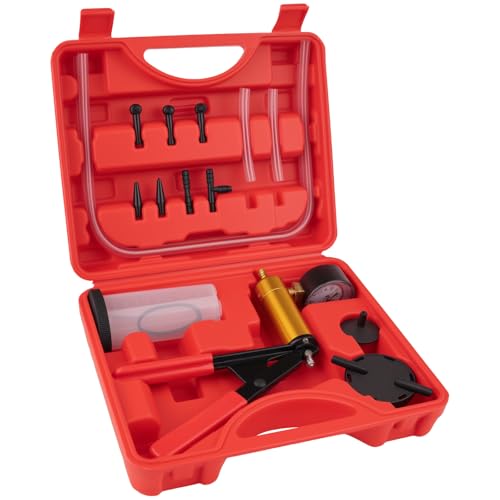
Gickbusus Brake Vacuum Pump Kit, Brake Bleeder for Hand Operation
- High-Precision Vacuum Gauge: Measures up to 30 inHg for accuracy
- Complete Brake Bleeder Kit: Includes hoses, adapters, reservoir, pump
- Universal Compatibility: Suitable for cars, motorcycles, trucks
As an affiliate, we earn on qualifying purchases.
As an affiliate, we earn on qualifying purchases.
Which Bleeding Method Is Best for Your Vehicle? Factors to Consider
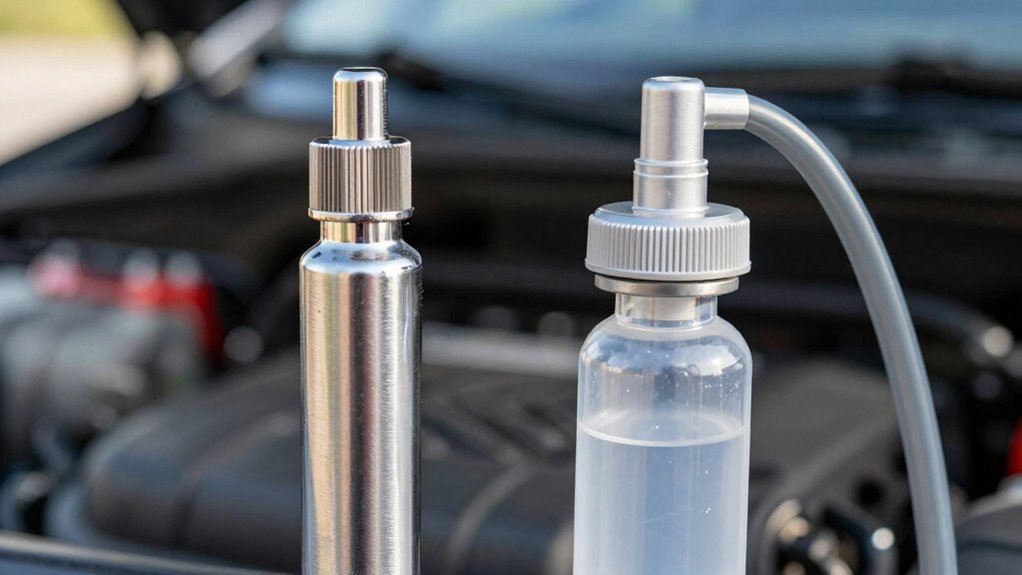
Choosing the right bleeding method depends on your vehicle’s specific needs and your experience level. Consider brake fluid purity, as some methods might introduce contaminants or require specific fluid types to prevent system damage. For instance, fluid purity can be compromised if the wrong technique is used, leading to brake system issues. System compatibility is essential; check if your vehicle’s brake system can handle pressure or vacuum bleeding without risking damage. For newer vehicles with sensitive components, a method that minimizes fluid exposure and maintains system integrity is best. If you’re experienced, a pressure bleeder might offer faster results, but for simpler tasks or older systems, a vacuum bleeder could be safer. Always review your vehicle’s manufacturer guidelines to guarantee the chosen method aligns with system requirements, ensuring effective bleeding without compromising brake fluid purity or system compatibility. Additionally, understanding the content formats used in instructional guides can help you better follow procedures and avoid mistakes.

KOOPOOL 30PCS Radiator Pressure Tester Kit with Vacuum Refill
- Universal Compatibility: Fits most Japanese, European, and American cars
- Color-Coded Test Caps: 17 test caps and 3 covers for quick identification
- Durable Aluminum Pump: Precision hand pump with dual rubber rings for airtightness
As an affiliate, we earn on qualifying purchases.
As an affiliate, we earn on qualifying purchases.
Pros and Cons of Pressure Bleeders for Brake and Cooling System Bleeding
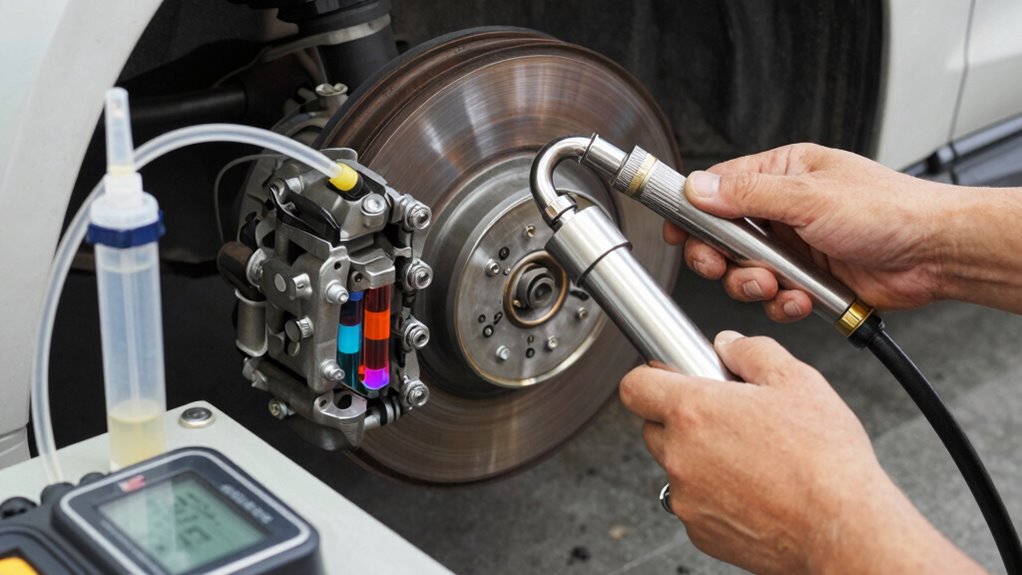
Pressure bleeders can considerably speed up the process of bleeding brake and cooling systems, making them a popular choice for many DIY enthusiasts and professionals alike. They improve maintenance safety by reducing the risk of air leaks and fluid spills, keeping the workspace cleaner and safer. However, equipment compatibility is vital; not all vehicles or systems work well with pressure bleeders, and using incompatible equipment can cause damage. While they save time, you need to carefully monitor pressure levels to avoid over-pressurizing components. Additionally, improper use can lead to fluid leaks or damage to seals. Overall, pressure bleeders are efficient, but you must consider your vehicle’s specifications and guarantee proper safety procedures to prevent accidents or equipment damage. Understanding neural interfaces can further enhance your knowledge of innovative maintenance technologies. Proper pressure regulation is essential to ensure safe operation and prevent unintended consequences.

BILITOOLS 1L Universal Brake Bleeder Kit, Vacuum Brake Fluid Bleeding Tool
- One-Person Brake Bleeding: Connects to air compressor for solo use
- Efficient Vacuum Bleeding: Draws fluid directly from bleeder screw
- Corrosion-Resistant PE Tank: Durable tank resists brake fluid corrosion
As an affiliate, we earn on qualifying purchases.
As an affiliate, we earn on qualifying purchases.
Advantages and Disadvantages of Vacuum Bleeders for Vehicle Maintenance
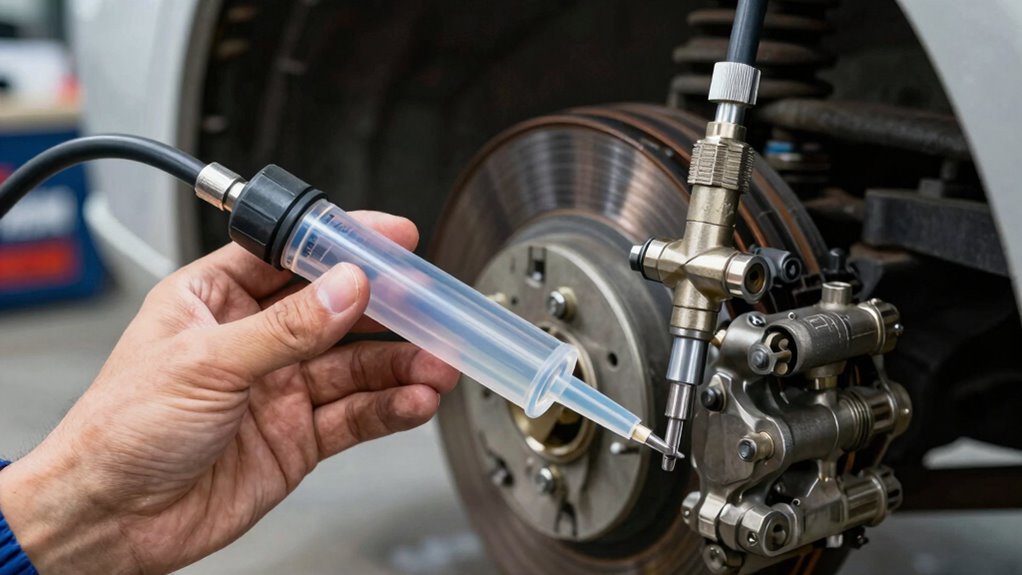
Vacuum bleeders offer a convenient and efficient way to bleed brakes and cooling systems by removing air without the need for continuous manual pumping. However, they have some disadvantages to take into account. First, they can increase the risk of fluid contamination if not properly sealed, potentially introducing debris or moisture into your system. Second, the equipment cost for vacuum bleeders tends to be higher upfront compared to traditional methods, which might be a concern for casual DIYers. In addition, application techniques can influence the effectiveness of vacuum systems, requiring proper training to ensure optimal results. Proper system complexity can also impact the success rate of vacuum bleeding, especially in intricate or lengthy lines. In the end, vacuum systems may struggle with residual air pockets in complex or long lines, requiring additional steps or equipment. While they streamline the process, you need to weigh these disadvantages against their benefits, especially when it comes to maintaining fluid integrity and managing initial investment costs. Additionally, understanding system design can help determine whether a vacuum bleeder is suitable for your specific vehicle or setup. For example, fluid properties such as viscosity and compressibility can significantly influence bleeding effectiveness, making it essential to consider these factors during system selection. Moreover, proper maintenance of vacuum bleeders is crucial to ensure consistent performance and prevent potential failures over time.
Troubleshooting Common Brake and Coolant Bleeding Issues
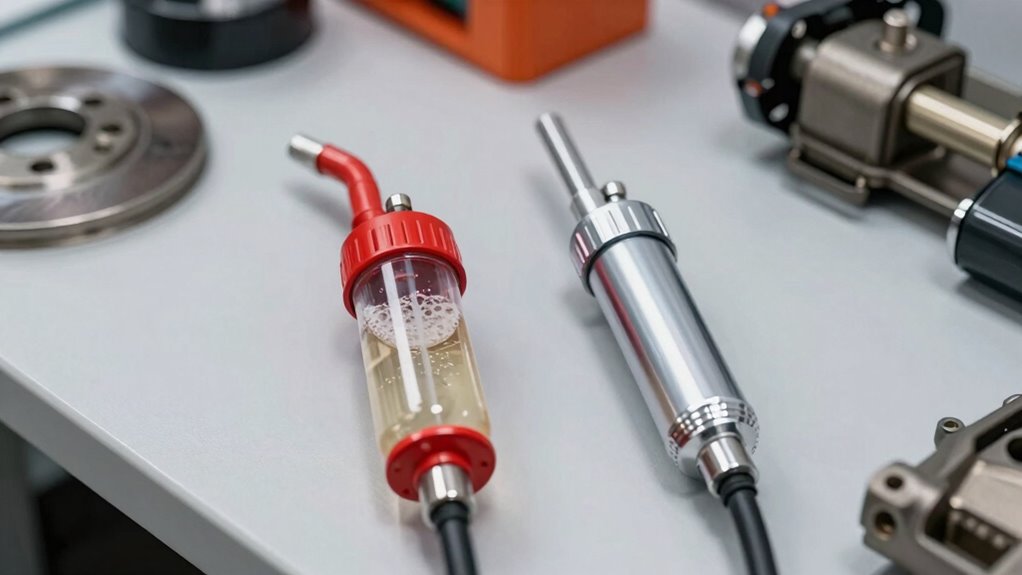
When bleeding brakes or cooling systems, air pockets can still cause issues despite using advanced tools like vacuum bleeders. To troubleshoot effectively, focus on fluid dynamics and system compatibility. Confirm all connections are tight, and fluid flows smoothly without turbulence. If air persists, check for leaks or blockages that disrupt the system’s pressure balance. Sometimes, incompatible components or incorrect procedures hinder proper bleeding. Use a clear container to observe fluid movement, confirming air removal. Also, verify the bleed screw’s tightness and seating. Here’s a quick guide:
| Issue | Solution |
|---|---|
| Air pockets remain in system | Re-bleed, ensuring proper flow and tight seals |
| Fluid not flowing smoothly | Check for blockages, clean or replace parts |
| System incompatibility | Confirm parts compatibility before bleeding |
Frequently Asked Questions
Can Pressure and Vacuum Bleeders Be Used Interchangeably?
You can’t use pressure and vacuum bleeders interchangeably because they serve different purposes. Pressure bleeders push fluid through the system, while vacuum bleeders pull fluid out, so fluid compatibility varies depending on the tool. Also, consider tool portability; pressure bleeders are often bulkier, making vacuum bleeders more convenient for tight spaces. Choose the right tool based on your vehicle’s needs to guarantee effective and safe brake bleeding.
Which Bleeding Method Offers Faster Results?
Ever wondered which bleeding method delivers faster results? A pressure bleeder typically wins because it uses compressed air to quickly transfer fluid, making the process more efficient. Its tool compatibility allows for seamless fluid transfer, reducing time and effort. Meanwhile, vacuum bleeders may take longer due to slower fluid movement. So, if speed’s your priority, a pressure bleeder is the better choice for quick, effective brake fluid bleeding.
Are There Specific Vehicles That Require One Method Over the Other?
Certain vehicles, based on their vehicle compatibility, benefit from specific bleeding methods. Always check the manufacturer recommendations to determine whether a pressure bleeder or vacuum bleeder functions best. For example, some European models with complex brake systems may require a pressure bleeder for thorough bleeding, while simpler setups might do well with a vacuum bleeder. Following these guidelines ensures effective brake fluid changes and maintains safety.
How Much Maintenance Do Pressure and Vacuum Bleeders Need?
You’ll find that both pressure and vacuum bleeders require minimal maintenance, mainly keeping the tool durable and easy to use. Regularly inspect seals and hoses for wear or damage, and clean the tools after each use to prevent corrosion. Proper care guarantees your tools stay reliable and durable, making the bleeding process smoother and safer. With proper maintenance, you’ll enjoy consistent performance and extended lifespan from your bleeding tools.
Is One Method Safer for Inexperienced Users?
You’ll find that vacuum bleeders are generally safer for inexperienced users because they reduce the risk of over-pressurizing the system. With better safety considerations, vacuum methods typically involve less force, making the process easier to control. Your user experience improves since you can focus on proper technique without worrying about high-pressure hazards. So, if safety is your priority, vacuum bleeders are the smarter choice for beginners.
Conclusion
Ultimately, choosing between a pressure or vacuum bleeder depends on your vehicle and comfort level. Both tools can save you time and headaches—think of them as your modern-day Excalibur in the domain of brake and coolant maintenance. Weigh the pros and cons, consider your skill, and pick the tool that fits best. With patience and the right approach, you’ll keep your ride safe and smooth, just like a trusty knight guarding their kingdom.