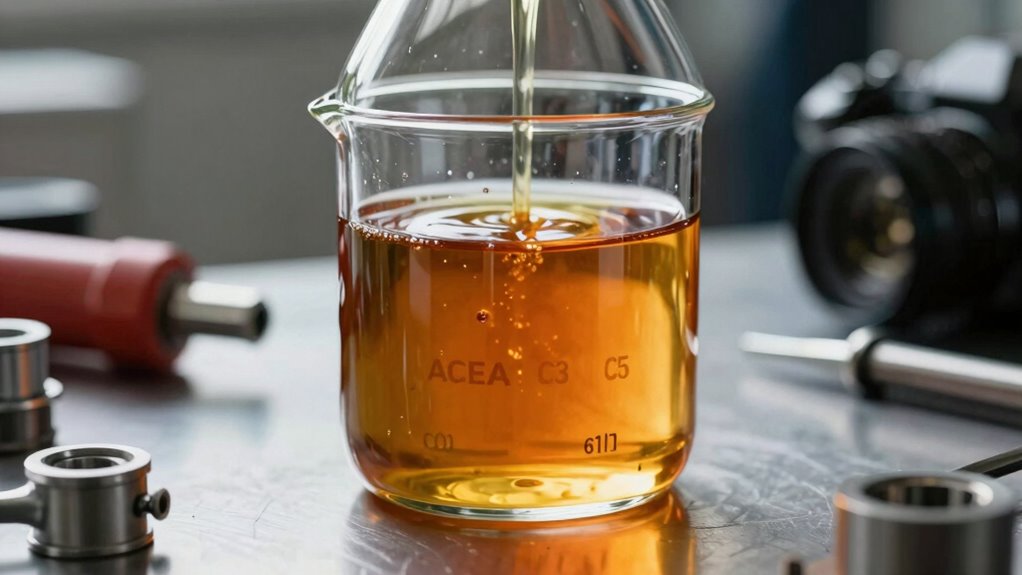

Mixing ACEA C3 and C5 oils isn’t automatically safe because their additive packages and performance goals differ. C3 oils focus on engine protection and reducing ash deposits, while C5 oils prioritize fuel economy and emission system compatibility. Combining them without checking compatibility can weaken lubrication, increase engine wear, and reduce performance. To guarantee your engine stays protected, it’s important to understand these differences—and there’s more to learn if you explore further.
Key Takeaways
- Mixing ACEA C3 and C5 oils can cause additive incompatibilities, reducing overall lubrication and engine protection.
- Different ACEA categories have unique additive packages; blending them may not meet original standards’ specifications.
- Compatibility issues between detergents, dispersants, and anti-wear agents can lead to diminished oil performance.
- Synthetic blends of C3 and C5 are safer but still require verification of additive compatibility to avoid engine risks.
- Proper understanding of engine requirements and standards is essential before mixing different ACEA categories.

Mixing ACEA categories can be necessary when your vehicle’s requirements or availability of oils vary, but it’s important to understand how different classifications interact. When you combine oils labeled under different ACEA standards, you’re essentially blending their properties, which can impact your engine’s performance and longevity. For instance, synthetic blends often offer a middle ground—balancing cost and performance—but their compatibility with other oils depends heavily on additive compatibility. Not all oils mix well, and even if they do, the resulting blend might not meet the original standards’ specifications.
ACEA categories, such as C3 and C5, are designed with specific performance criteria, including fuel efficiency, engine protection, and emission system compatibility. When you combine oils labeled as C3 with those labeled as C5, you might think they’re interchangeable because they share certain properties, but that’s not always the case. C3 oils are typically more robust in protecting after-treatment systems and have a higher additive content designed to reduce ash deposits. C5 oils, on the other hand, focus more on fuel economy and low SAPS (sulfated ash, phosphorus, sulfur) content, which can influence how well they work together. Mixing these oils without considering their additive compatibility can lead to unforeseen issues, such as reduced lubrication quality or increased wear.
Understanding how these categories interact is vital. Not all ACEA oils are formulated with the same additive packages, and when you mix them, there’s a risk that the additives may not work synergistically. For example, certain detergents, dispersants, or anti-wear agents in one oil might counteract or diminish the effectiveness of similar agents in another. This can compromise the oil’s overall ability to protect your engine. Additionally, synthetic blends, which combine synthetic base oils with conventional oils, can be more forgiving when mixed with other oils, but only if their additive compatibility is confirmed. Otherwise, you risk rendering the blend less effective or even damaging your engine over time. Furthermore, awareness of engine performance standards can help guide proper oil selection when mixing categories.

Motul 8100 X-clean 5W-40 Full Synthetic Motor Oil | Engineered to Help Protect Emissions Systems, Clean Engine Performance | Long Drain Capable, Improved Engine Responsiveness | 5L
- Mid SAPS Formula for Emission Systems: Protects DPF and catalytic converters
- ACEA C3 & dexos2 Certified: Ensures engine wear protection and stability
- Broad OEM Compatibility: Suitable for European vehicle specifications
As an affiliate, we earn on qualifying purchases.
As an affiliate, we earn on qualifying purchases.
Frequently Asked Questions
Can Mixing ACEA Categories Cause Engine Damage?
Mixing ACEA categories can cause engine damage if oil compatibility and additive stability aren’t maintained. Different formulations may not blend well, leading to reduced lubrication or contaminant buildup. Always check manufacturer recommendations before mixing oils. Using incompatible oils might compromise engine performance, increase wear, or cause long-term damage. To stay safe, stick to recommended oil types and avoid mixing categories unless specifically advised by your vehicle’s guidelines.
Are All C3 and C5 Oils Compatible?
Sure, all C3 and C5 oils seem like perfect matchmakers, but don’t fall for their charm. Not all are compatible, especially in synthetic blending and additive compatibility. You might think mixing them is harmless, but it can cause issues, like incompatible additives fighting or reducing oil performance. Always check the manufacturer’s specs first—otherwise, you’re risking your engine’s health for a quick oil romance.
How Do I Know if Oils Are Interchangeable?
You can’t assume oils are interchangeable just by their categories. Check the oil viscosity to confirm it matches your engine’s requirements, and verify additive compatibility to prevent harmful reactions. Always read the manufacturer’s specifications and labels, and consult your vehicle’s manual. Mixing incompatible oils can reduce performance and damage your engine, so it’s best to be cautious and use the right oil for your specific needs.
What Are the Risks of Mixing Different ACEA Categories?
Thinking mixing ACEA categories is like blending synthetic blends at a fancy cocktail bar? Think again! You risk ruining additive compatibility, which can lead to decreased engine protection and unexpected wear. Different categories have unique formulations, so mixing them might cause chemical reactions, clog filters, or compromise performance. Stay safe—stick to recommended oils to avoid costly repairs and keep your engine running smoothly.
Does Mixing Oil Affect Vehicle Warranty Coverage?
Mixing different oils can impact your vehicle warranty coverage due to oil compatibility issues. If you don’t use oils that meet your vehicle’s specifications, it might void certain warranty claims. Always check the manufacturer’s guidelines and verify the oils are compatible with your engine. Using incompatible oils risks damaging engine components, which could lead to warranty implications. To avoid complications, stick to recommended ACEA categories and avoid mixing incompatible oil types.

Castrol EDGE Extended Performance 0W-20 Advanced Full Syn Motor Oil 5 Qt
- Enhanced Strength: 3X stronger than leading full synthetic
- Wear Protection: Highest level of wear protection
- High Temp Performance: 50X better at high temperatures
As an affiliate, we earn on qualifying purchases.
As an affiliate, we earn on qualifying purchases.
Conclusion
So, don’t assume that mixing ACEA categories like C3 and C5 is a walk in the park. Even if they seem compatible, it’s better to play it safe than to open a can of worms later. Always stick to the manufacturer’s recommendations or consult a professional. Remember, a little caution now can save you from bigger headaches down the road—it’s better to be safe than sorry when it comes to your engine’s health.

Oil Pressure Tester Tool, Oil Pressure Gauge kit, 0-140 PSI Pressure Test Diagnostic Tools, Engine Oil Pressure Tester Tool kit, for car Truck (Blue)
- Dual Display Pressure Gauge: Clear, easy-to-read pressure readings
- Complete Adapter Set: 10 high-quality adapters for various engines
- Universal Compatibility: Fits most gasoline and small diesel engines
As an affiliate, we earn on qualifying purchases.
As an affiliate, we earn on qualifying purchases.

Lucas Oil 10278 Engine Oil Stop Leak – 1 Quart
- Product Type: Auto Oil Stop Leak
- Package Dimensions: 8.89 x 10.16 x 30.48 cm
- Package Weight: 0.953 kg
As an affiliate, we earn on qualifying purchases.
As an affiliate, we earn on qualifying purchases.