
When supplies run low, improvising or rushing to make do can often be more dangerous than carefully mixing compatible chemicals within safety guidelines. You risk bypassing safety protocols, creating reactions that could cause explosions or toxic fumes. Proper inventory management helps you avoid shortages, reducing the impulse to take unsafe shortcuts. By understanding chemical compatibility and maintaining supplies, you can keep hazards under control. Continue exploring to learn how to balance these risks effectively.

Get business pricing on garage and car supplies
- Business-only prices and quantity discounts
- Tax-exempt purchasing
- Multiple users, one account, clear invoices
Key Takeaways
- Mixing compatible substances reduces the risk of dangerous reactions compared to improvising with insufficient supplies.
- Proper inventory management ensures necessary chemicals are available, decreasing the temptation to unsafe shortcuts.
- Knowing chemical properties and interactions helps determine when mixing is safer than risking shortages.
- Avoiding low-stock situations prevents unsafe improvisation, making planned mixing a safer option.
- Maintaining adequate supplies supports adherence to safety protocols, reducing hazards associated with resource shortages.
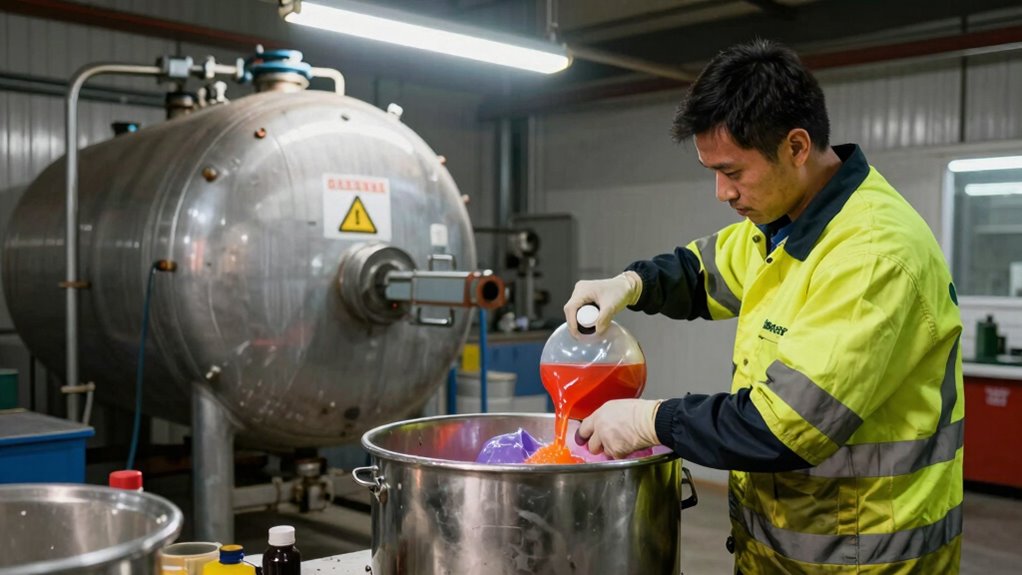
Understanding the risks associated with mixing different substances versus running low on supplies is essential for safety and decision-making. When you’re managing various chemicals or materials, it’s crucial to recognize that mixing incompatible substances can lead to dangerous chemical interactions. These interactions might cause explosions, toxic fumes, or corrosive reactions, putting you and your environment at serious risk. Conversely, running low on supplies might seem less immediate but can pose its own hazards, especially if it leads to improvisation or shortcuts that compromise safety protocols. Proper inventory management helps prevent these issues by ensuring you have adequate supplies and reducing the temptation to mix unknown or incompatible substances out of necessity.
Proper inventory management prevents dangerous chemical reactions and unsafe improvisations.
In scenarios where mixing is involved, understanding chemical interactions becomes your first line of defense. Not all chemicals behave the same way when combined, and some can react violently even in small quantities. For example, mixing acids with certain metals can produce hydrogen gas, which is highly flammable. If you’re aware of these interactions beforehand, you’ll know exactly which substances should never meet. This knowledge prevents accidental reactions that could escalate into dangerous situations. Effective inventory management supports this by keeping detailed records of what chemicals you have, their compatibility, and safe handling procedures. It allows you to plan mixtures carefully, avoiding the danger zones created by incompatible substances.
On the other hand, running low on supplies might tempt you to stretch resources or make do with what’s available. This mindset can lead to risky improvisations, such as diluting chemicals improperly, reusing containers without proper cleaning, or skipping safety checks. These shortcuts greatly increase the likelihood of accidents. Maintaining a well-organized inventory ensures you always have the right supplies in proper quantities, reducing the pressure to improvise. It also helps you identify when stocks are running low and need replenishing, so you won’t be caught in a situation where safety is compromised due to lack of proper materials. Additionally, chemical safety protocols provide essential guidance to prevent hazards during shortages.
Ultimately, knowing when mixing is safer than running low depends on your understanding of chemical interactions and your ability to manage inventory diligently. When you’re aware of the risks and keep a detailed, up-to-date inventory, you can make smarter choices. You’ll recognize situations where safe mixing procedures can be applied and avoid dangerous reactions by understanding the properties of your substances. Conversely, good inventory management prevents shortages that could lead to unsafe improvisations. In essence, balancing these factors enhances your safety and ensures you’re making well-informed decisions, minimizing hazards related to chemical handling and resource management.
chemical inventory management software
As an affiliate, we earn on qualifying purchases.
As an affiliate, we earn on qualifying purchases.
Frequently Asked Questions
How Does Mixing Affect Chemical Stability Over Time?
Mixing chemicals can impact their stability over time by promoting chemical interactions that may lead to stability degradation. When you combine substances, reactions can occur that weren’t present before, potentially making the mixture less stable. To prevent this, you should carefully consider compatibility and storage conditions. Proper mixing techniques and timely usage help maintain chemical stability, reducing the risk of degradation and ensuring safety during handling and storage.
What Industries Prioritize Mixing Safety Over Running Low?
In industries like pharmaceuticals, chemicals, and food processing, you prioritize mixing safety over running low to ensure chemical compatibility and maintain container integrity. You do this to prevent reactions that could compromise product quality or cause leaks. By carefully managing mixing processes, you reduce the risk of spills, contamination, or equipment failure, safeguarding personnel and the environment while maintaining consistent, safe production standards.
Are There Specific Chemicals That Become Safer When Mixed?
Some chemicals become safer when mixed, especially when their interactions reduce toxicity or stabilize reactive properties. For example, combining certain acids with bases neutralizes them, lowering hazards. However, you must follow strict safety protocols, because unintended chemical interactions can create dangerous byproducts. Always assess the chemical interactions carefully, use proper protective equipment, and consult safety data sheets before mixing chemicals to guarantee safety.
How Can Mixing Errors Be Minimized in High-Risk Environments?
Think of mixing errors like a tightrope walk—balance is key. You can minimize risks by implementing automated monitoring systems that provide real-time alerts and data, acting as your safety net. Equally crucial, staff training sharpens awareness and response skills, turning your team into vigilant acrobats. Together, these strategies help prevent accidents and guarantee precise, safe mixing even in high-risk environments.
What Are the Long-Term Environmental Impacts of Mixing Chemicals?
You should be aware that improper chemical mixing can lead to unintended chemical reactions, which may cause long-term environmental degradation. These reactions can release hazardous substances into soil and water, harming ecosystems and reducing biodiversity over time. By carefully managing mixing procedures and understanding chemical properties, you can minimize these impacts, ensuring safer disposal and reducing the risk of environmental damage from potentially toxic residues or unforeseen reactions.
chemical compatibility testing kit
As an affiliate, we earn on qualifying purchases.
As an affiliate, we earn on qualifying purchases.
Conclusion
In the dance of safety, mixing acts as your sturdy anchor, grounding you amid turbulent waters. Running low is like a fragile boat teetering on the edge of a storm—easily capsized by unseen waves. By choosing to mix, you weave a safety net, turning potential pitfalls into manageable steps. Remember, in the intricate choreography of risk, it’s wiser to dance with stability than stumble in the chaos of scarcity.
laboratory chemical storage cabinets
As an affiliate, we earn on qualifying purchases.
As an affiliate, we earn on qualifying purchases.
chemical safety gloves and goggles
As an affiliate, we earn on qualifying purchases.
As an affiliate, we earn on qualifying purchases.
Halloween Picks
halloween
As an affiliate, we earn on qualifying purchases.