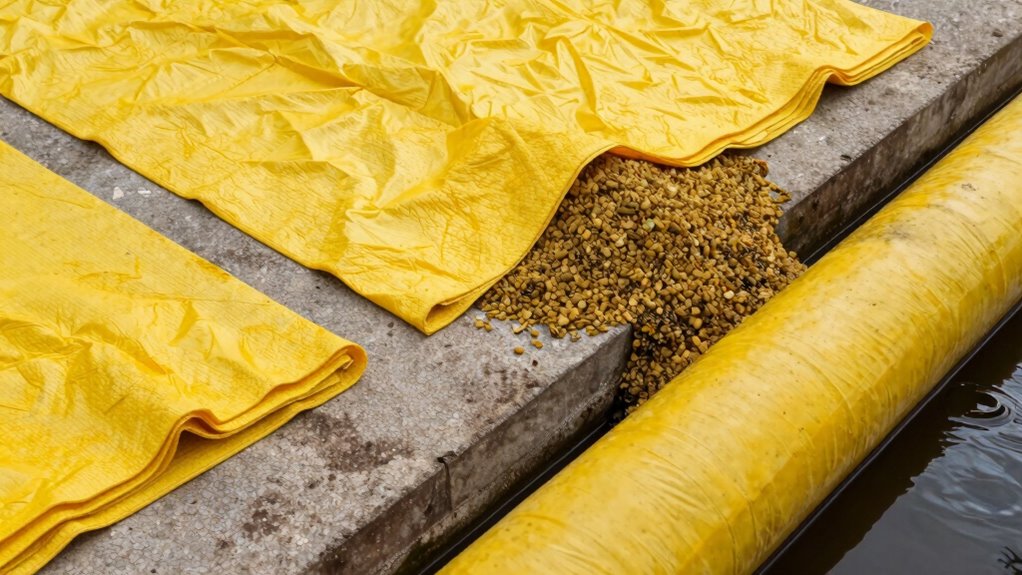

When managing spills, choosing between absorbent pads, granules, and booms depends on the spill size, type, and location. Pads work best for small leaks and surface spills, while granules are suited for larger floor spills or chemical leaks. Booms are ideal for containing spills on water or land. Selecting the right tool guarantees quick cleanup and safety. Continue exploring to master how each option can be most effective in your spill response plan.

Get business pricing on garage and car supplies
- Business-only prices and quantity discounts
- Tax-exempt purchasing
- Multiple users, one account, clear invoices
Key Takeaways
- Absorbent pads quickly target small surface leaks; granules cover larger areas, while booms contain spills on water or land.
- Pads are ideal for flat surfaces; booms are best for water containment; granules suit chemical spills on floors.
- Proper placement involves assessing spill size and surface, positioning pads directly, and deploying booms downstream or along flow paths.
- Selecting the right absorbent depends on spill type, size, and environment; improper choices can worsen contamination.
- Large or hazardous spills require professional cleanup, as pads, granules, and booms have limitations in containment and safety.
absorbent spill pads for small leaks
As an affiliate, we earn on qualifying purchases.
As an affiliate, we earn on qualifying purchases.
Why Spill Containment Matters for Safety and Compliance
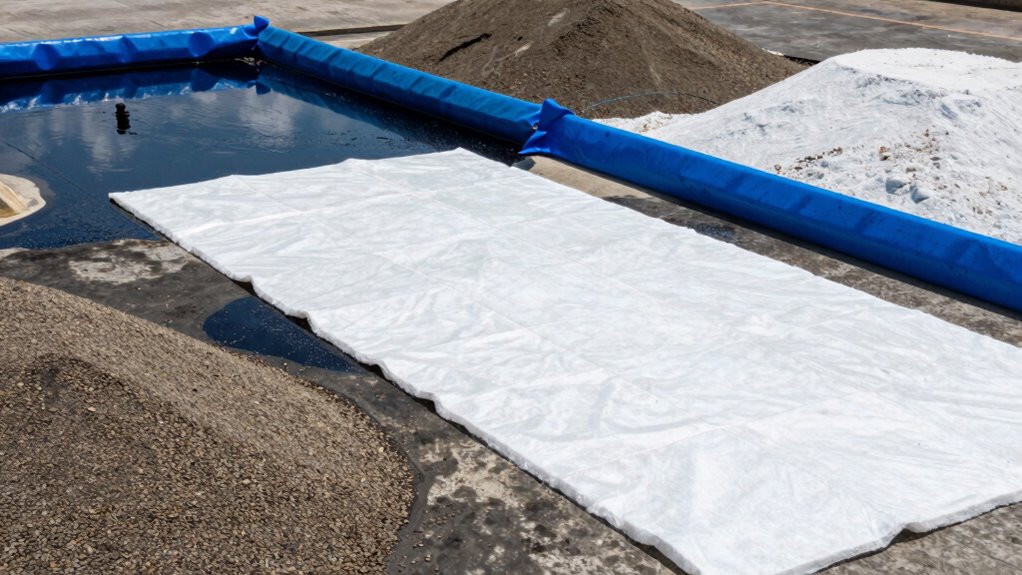
Spill containment is essential because it directly impacts safety and helps you stay compliant with regulations. When you contain spills effectively, you prevent hazardous materials from contaminating the environment, reducing your facility’s environmental impact. Regulatory standards set clear requirements for spill prevention and response, making compliance mandatory to avoid fines and legal issues. Proper containment safeguards your staff and the community by minimizing exposure to dangerous substances. It also preserves the integrity of your operations, avoiding costly cleanup and downtime. Additionally, investing in spill prevention techniques demonstrates your commitment to environmental responsibility and safety. Implementing early warning signs can help detect leaks or spills promptly before they escalate. Understanding spill response procedures ensures quick and effective action when incidents occur. Furthermore, choosing the appropriate absorbent materials for different types of spills can significantly enhance containment efforts. Staying informed about spill regulation updates helps ensure ongoing compliance as standards evolve. Ultimately, adhering to these standards protects both your business and the environment, ensuring you meet legal obligations while maintaining a safe workplace.
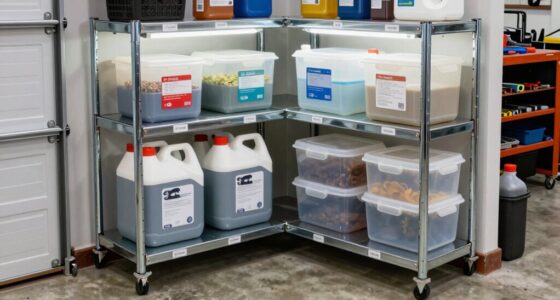
chemical spill granules for floors
As an affiliate, we earn on qualifying purchases.
As an affiliate, we earn on qualifying purchases.
What Are Absorbent Pads, Granules, and Booms? An Overview
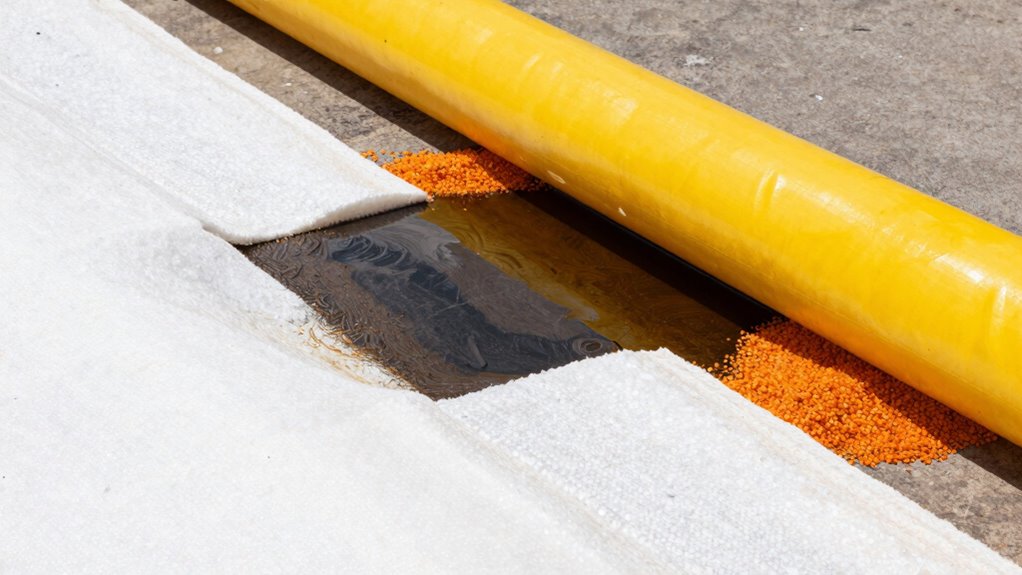
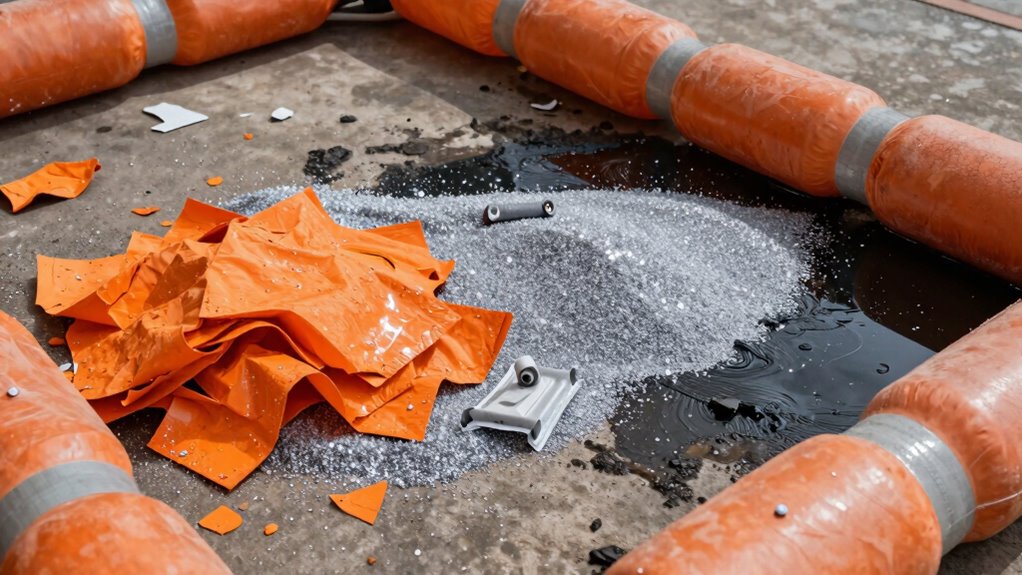
Have you ever wondered how spill responders quickly contain and clean up hazardous materials? It all comes down to effective use of absorbent materials designed for spill containment. Absorbent pads are thin sheets that soak up liquids on contact, perfect for small spills on surfaces. Granules are loose, absorbent particles that can cover larger areas, efficiently soaking up liquids from floors or containers. Booms are long, flexible barriers filled with absorbent material, used to contain and control spreading spills on water or land. Each of these tools plays a crucial role in rapid spill response, minimizing environmental impact and safety hazards. By selecting the right absorbent materials, responders can efficiently manage spills and prevent escalation.
As an affiliate, we earn on qualifying purchases.
Comparing Spill Absorbents: Features, Benefits, and Uses
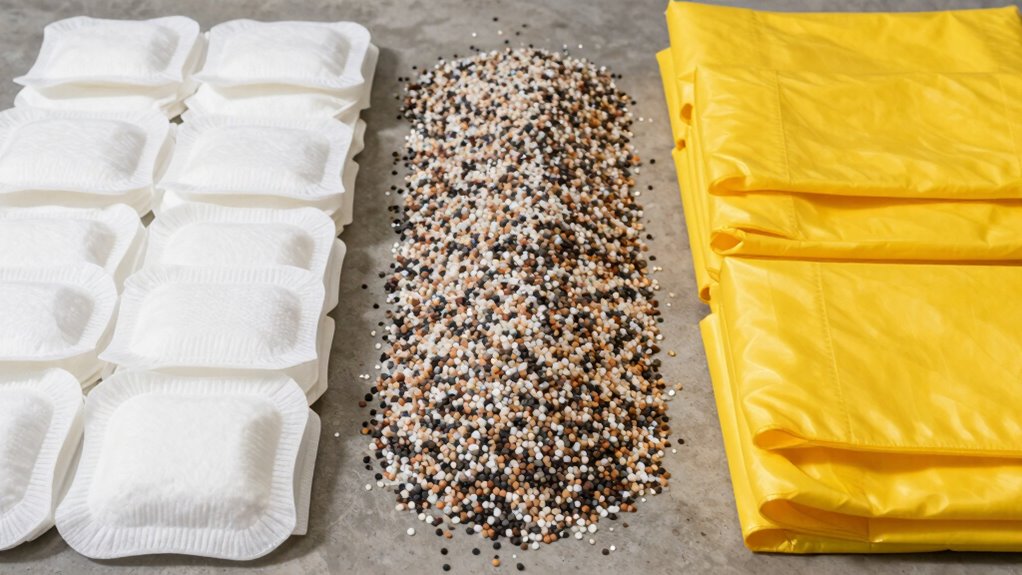
Choosing the right spill absorbent depends on its materials and how well it works. You need to contemplate which products are most efficient for different types of spills. For example, selecting an absorbent with high absorbency rates ensures quick containment of large spills, minimizing potential hazards. Additionally, understanding the material composition of absorbents can influence their effectiveness in specific environments, especially when considering chemical compatibility with different spill types. Considering environmental impact is also crucial when choosing eco-friendly absorbent options that align with sustainability goals. Evaluating the disposal and reuse options of these products can also contribute to more sustainable spill management practices.
Absorbent Materials and Efficiency
When selecting absorbent materials for spill control, understanding their features and efficiency is crucial to effectively managing different types of liquids. Key factors include absorbent capacity, material compatibility, ease of use, and cleanup. Consider these points:
- Absorbent Capacity: Higher capacity means the material can soak up more liquid, reducing the number of products needed.
- Material Compatibility: Ensure the absorbent works well with the specific liquid, whether oil, chemicals, or water.
- Type of Material: Pads, granules, or booms each have different efficiencies based on spill size and location.
- Ease of Use: Quick deployment and cleanup improve response time and safety.
Choosing the right material guarantees maximum efficiency and minimizes environmental impact.
Ideal Spill Response Scenarios
Selecting the right spill absorbent depends on the specific scenario you face. For small drips or leaks, absorbent pads are ideal—they’re quick and easy to deploy, minimizing environmental impact. When dealing with larger spills on water or uneven surfaces, booms contain and absorb efficiently, preventing spread. Granules suit dry, contained spills like chemical leaks in a controlled area, offering high absorption. Consider spill prevention techniques to reduce risks, but when accidents happen, choosing the appropriate absorbent maximizes safety and environmental protection. Proper device security measures can help prevent hacking incidents that might compromise spill response equipment. Here’s a quick comparison:
| Spill Size | Surface Type | Ideal Absorbent |
|---|---|---|
| Small leaks | Flat surfaces | Pads |
| Large spills | Water bodies | Booms |
| Chemical leaks | Indoor floors | Granules |
| Uneven terrain | Outdoors | Booms |
| Continuous spills | Equipment areas | Pads or Granules |
Choosing wisely helps prevent environmental impact and keeps your response effective. Additionally, understanding spill scenarios can enhance preparedness and ensure rapid, appropriate action when needed. Implementing spill response plans that incorporate the right absorbent types can significantly reduce response times and environmental damage.
As an affiliate, we earn on qualifying purchases.
How to Choose the Right Spill Control Product for Your Situation
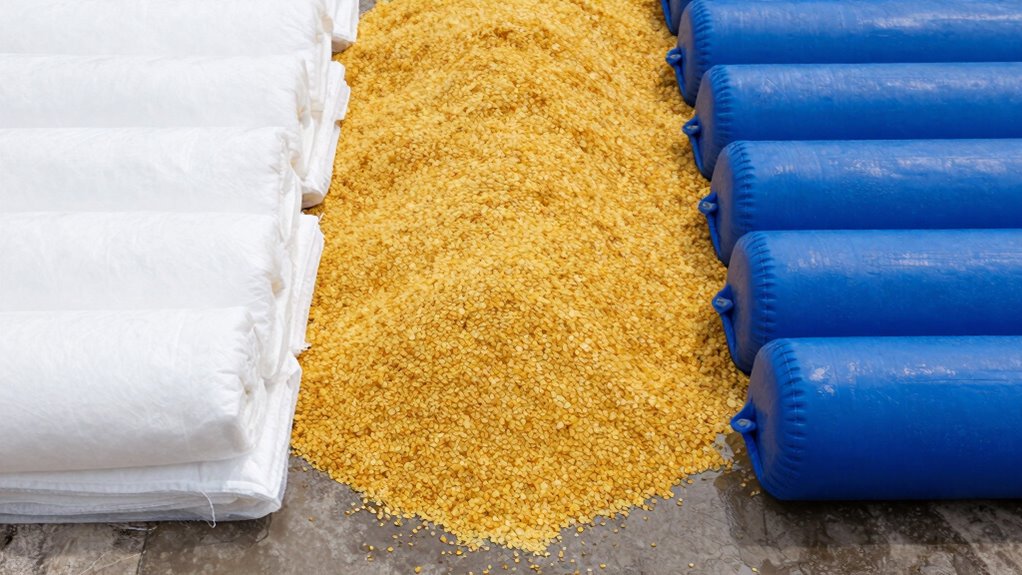
To find the right spill control product for your situation, you need to evaluate the specific type of spill, the materials involved, and the environment. This ensures effective spill prevention and minimizes environmental impact. Consider these factors:
Choosing the correct spill control product depends on spill type, materials, and environment for effective prevention.
- Spill size and volume—larger spills may require booms or heavy-duty granules.
- Material type—hydrocarbons need specific absorbents compared to acids or chemicals.
- Location—indoor spills might need pads, while outdoor spills benefit from booms.
- Environmental sensitivity—near water sources or ecosystems, opt for eco-friendly options.
- Understanding the latest AI-driven innovations can help in selecting smarter spill response solutions, especially for complex spill scenarios that demand advanced detection and containment techniques.
Tips for Using Absorbent Pads, Granules, and Booms Effectively
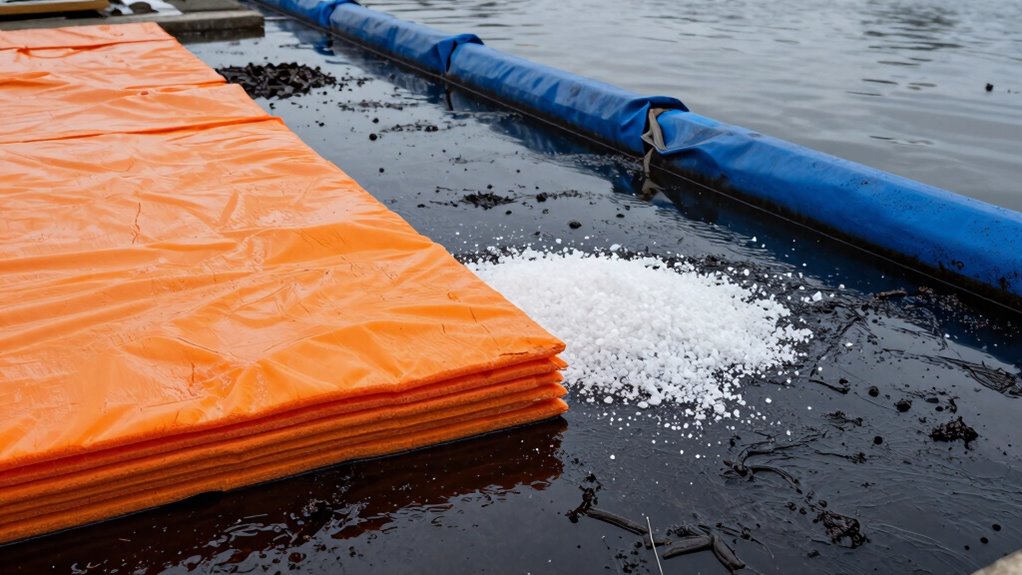
To maximize spill absorption, focus on proper placement techniques that target the source of the leak. Make sure you select the right absorbent for your specific spill type and material. Correct placement and suitable products help you control spills quickly and efficiently. Additionally, understanding the absorbent ratings can guide you in choosing the most effective product for your needs. Using products with high absorption capacity ensures that larger spills are managed effectively without frequent replacements. Being aware of spill materials can further enhance your ability to select the appropriate absorbent type. Recognizing microplastics in dust can also be relevant when cleaning up certain spills to prevent environmental contamination. Knowing how absorbent effectiveness varies with different products can help you make smarter, more environmentally friendly choices.
Proper Placement Techniques
Proper placement of absorbent materials is essential for quickly controlling spills and preventing further contamination. To maximize effectiveness, start with a spill area assessment, identifying the source and extent of the spill. Then, use these tips:
- Focus on strategic placement, covering the spill’s perimeter first to contain it.
- Place absorbent pads directly on the spill for targeted absorption.
- Distribute granules around the spill edges to prevent spreading.
- Position booms downstream or along flow paths to block movement.
Always evaluate the spill area carefully before placement. Proper positioning ensures rapid containment, reduces cleanup time, and minimizes environmental impact. Remember, deliberate strategic placement is key to effective spill control.
Choosing Suitable Absorbents
Selecting the right absorbents is key to effectively controlling spills once you’ve assessed the area. Your choice of absorbent materials influences spill prevention and cleanup efficiency. For small leaks or drips, absorbent pads are ideal—they quickly soak up liquids and help contain the spill. Granules work well on larger, spread-out spills, as they can cover extensive surface areas and absorb liquids rapidly. Booms are best for controlling spills on water or along shorelines, preventing spread and directing containment. Always consider the type of liquid, spill size, and environment when choosing your absorbents. Using the right materials guarantees you minimize hazards, reduce cleanup time, and prevent further contamination. Proper selection of absorbent materials enhances spill prevention and keeps your environment safe. Additionally, understanding absorbent material properties can improve your spill response strategy and safety measures.
Common Mistakes to Avoid When Managing Spills
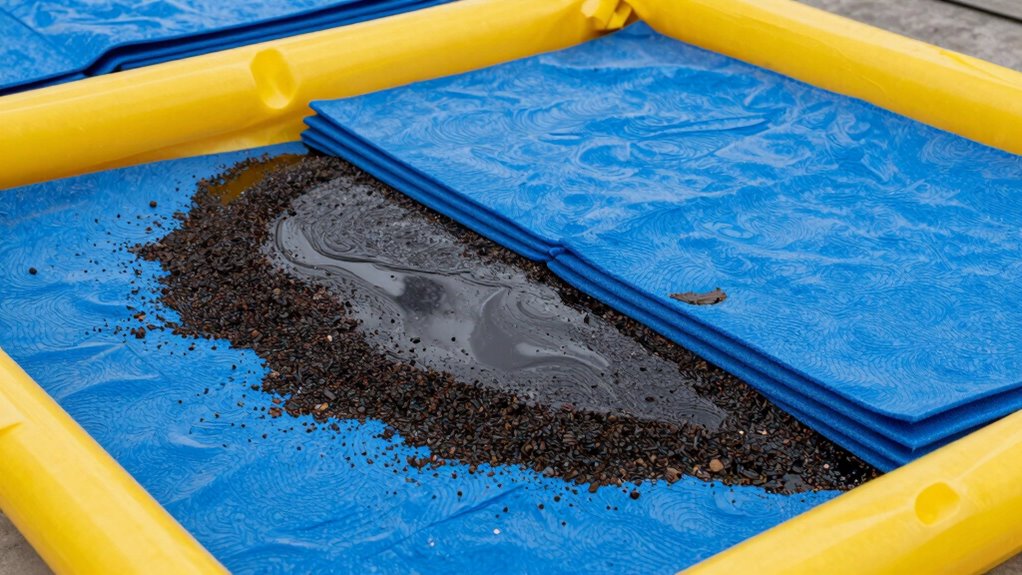
One common mistake when managing spills is failing to act quickly and decisively. Delaying response can lead to dangerous chemical reactions and increase environmental impact. To avoid this, keep these tips in mind:
Acting swiftly and decisively is crucial to prevent chemical reactions and environmental harm during spills.
- Never underestimate the spill’s severity; assess promptly.
- Use the appropriate spill control products immediately.
- Avoid spreading the spill or making it worse by improper containment.
- Don’t ignore safety protocols or personal protective equipment.
- Remember that work-life harmony includes maintaining safety standards even in urgent situations.
- Be aware that heat buildup from certain chemicals can escalate risks if not managed promptly.
- Incorporating connected safety technology can enhance your spill response efficiency and reduce hazards.
- Regular training and review of industry standards can improve your overall spill management effectiveness.
- Staying informed about chemical properties helps in selecting the most effective containment method.
Proper Maintenance, Storage, and Disposal of Spill Supplies
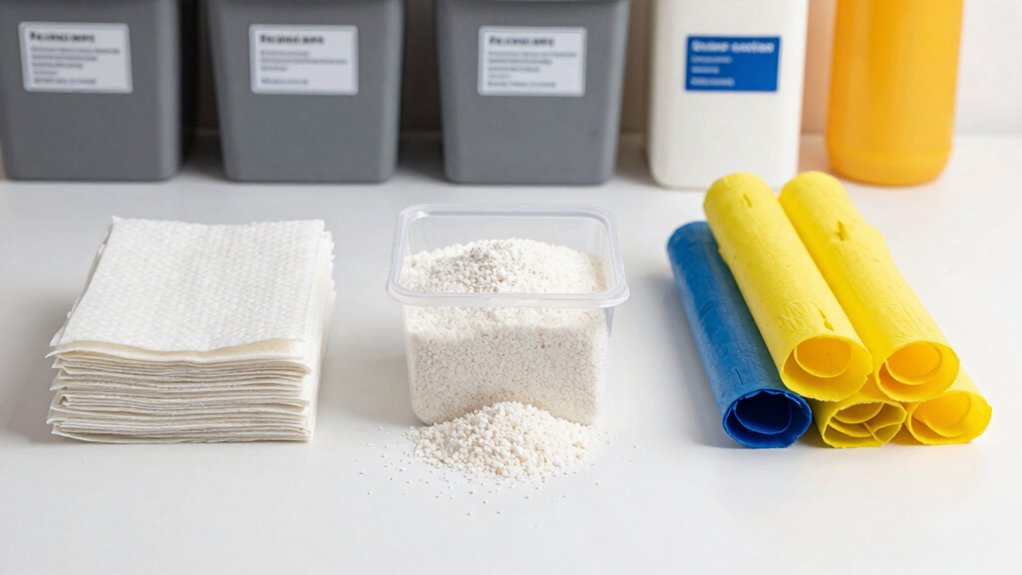
Maintaining spill control supplies is essential to guarantee they work effectively when needed. Proper storage prevents accidental chemical reactions that could compromise the supplies’ effectiveness or create hazardous conditions. Store absorbent pads, granules, and booms in a cool, dry place away from direct sunlight and incompatible chemicals. Regular inspections ensure supplies are intact and ready for use. Dispose of used materials according to local regulations to minimize environmental impacts, avoiding contamination of water sources and soil. Proper disposal prevents chemical reactions that might release toxic fumes or cause further spills. Always label storage containers clearly and keep safety data sheets accessible. By maintaining, storing, and disposing of spill supplies correctly, you ensure safety, reduce environmental risks, and extend the lifespan of your spill control resources.
When to Call Spill Cleanup Professionals
Knowing when to call spill cleanup professionals is crucial to guarantee the spill is handled safely and effectively. If a spill involves hazardous materials or exceeds your containment capacity, don’t hesitate to seek expert help. Proper spill prevention measures include timely cleanup and hazard communication to prevent accidents. Consider calling professionals if:
Knowing when to call spill cleanup professionals ensures safe and effective spill management.
- The spill is large or difficult to contain.
- Hazardous chemicals are involved.
- You lack the proper protective gear or training.
- The spill poses a risk to health or environment.
Professionals ensure proper cleanup, reducing risks and ensuring compliance with safety regulations. Relying on trained experts also supports effective hazard communication, preventing future incidents. When in doubt, prioritizing safety and calling spill cleanup professionals is always the best choice.
Frequently Asked Questions
Are Spill Absorbents Environmentally Friendly and Biodegradable?
Yes, spill absorbents can be eco-friendly and biodegradable if made from biodegradable materials. You should look for products labeled as biodegradable, which break down naturally without harming the environment. This makes disposal easier and safer, promoting eco-friendly disposal practices. Using biodegradable absorbents reduces your environmental impact, ensuring your spill control efforts align with sustainability goals. Always check product specifications to confirm they meet eco-friendly standards.
How Long Do Different Spill Control Products Typically Last?
You’ll find that spill control products typically last between a few hours to several days, depending on product saturation. Absorbent pads may need replacement after 4-8 hours of heavy use, while granules can last longer, up to 24 hours. Booms are reusable but require proper disposal methods once saturated. Regularly inspecting your products guarantees effective containment and minimizes environmental impact.
Can Absorbent Pads or Granules Be Reused After a Spill?
You can’t typically reuse absorbent pads or granules after a spill because their reuse potential is limited, and cleanup efficiency decreases once they’ve absorbed liquids. Pads often become saturated and contaminated, making them unsuitable for reuse, while granules lose their absorbent properties. For effective spill control, it’s best to replace used pads or granules promptly, ensuring safety and maintaining ideal cleanup efficiency.
What Are the Cost Differences Between Pads, Granules, and Booms?
Think of spill control options as different vehicles for a journey—each has its own cost. Pads tend to be the most affordable, offering great cost efficiency for small spills. Granules are moderately priced, ideal for larger areas, while booms are more expensive but excel in containment. Your choice depends on balancing product affordability with spill size, ensuring you select the most cost-effective solution for your specific needs.
Are Spill Control Products Effective on All Types of Liquids?
Spill control products vary in effectiveness depending on the liquid type. You’ll find that some products offer better liquid compatibility and product versatility for specific spills. For example, absorbent pads work well on oils and chemicals, while granules excel with larger spills. However, no single product is universally effective on all liquids. Always assess the spill’s nature to choose the right absorbent for ideal spill control and safety.
Conclusion
Choosing the right spill control product depends on understanding your specific needs. Absorbent pads, granules, and booms each serve unique roles, much like tools in a well-stocked toolbox. When used correctly, they can prevent accidents and guarantee compliance. Think of spill management as a rhythm—you measure, apply, and maintain consistently. Mastering these steps helps you stay prepared, proving that proper spill control isn’t just a theory; it’s an essential practice for safety and peace of mind.
Halloween Picks
halloween
As an affiliate, we earn on qualifying purchases.