
TL;DR
Renewance adopted DGeo’s reusable Obexion AG containers to ship multiple damaged, defective or recalled batteries together, according to a sponsored Charged EVs case study. The report says the packaging lets the end-of-life battery services company consolidate shipments and reduce transportation risks; it gives no measured cost savings or incident data.
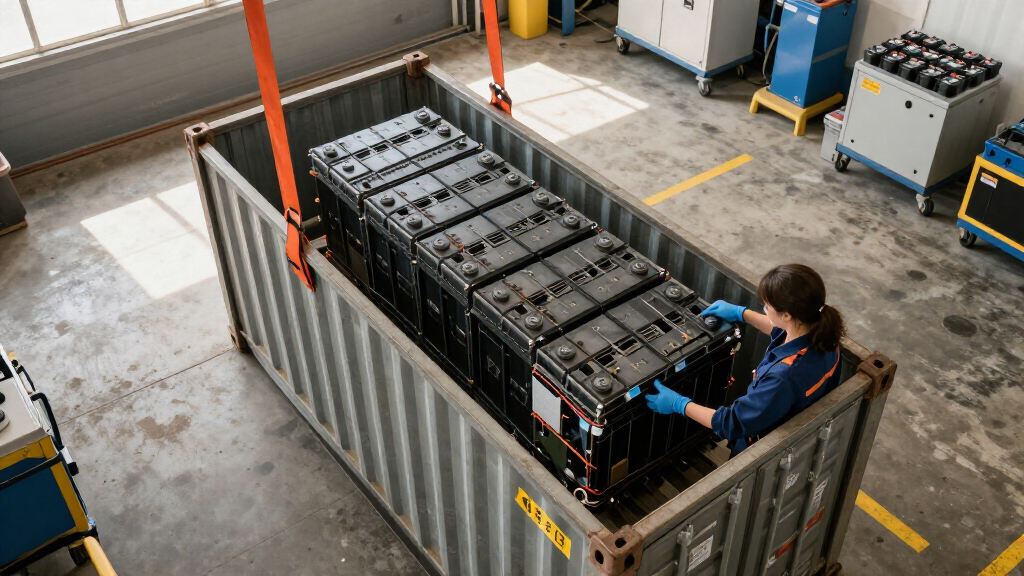
Renewance, which manages end-of-life electric vehicle and energy storage batteries, has adopted DGeo’s Obexion AG reusable containers to ship multiple damaged, defective or recalled batteries together, according to a sponsored Charged EVs case study. The company says the purpose-built packaging allows it to consolidate shipments while reducing transportation risks associated with these batteries.

Get business pricing on garage and car supplies
- Business-only prices and quantity discounts
- Tax-exempt purchasing
- Multiple users, one account, clear invoices
The report describes damaged, defective or recalled batteries as dangerous goods and says that shipping them safely usually requires one battery per container. For Renewance, which handles end-of-life batteries at scale, that approach can increase both transportation costs and the time required to manage shipments, the case study says.
Renewance turned to Obexion AG, a reusable, stackable container made by DGeo for transporting multiple batteries in this category. The case study says the design lets Renewance consolidate batteries into shipments and is intended to reduce transportation risks. It does not provide shipment volumes, cost comparisons, or measurements of risk before and after the change.
Sterling Picton, who leads solutions development for end-of-life projects at Renewance, described the container as purpose-designed for the application. The report presents the change as an operational response to the limits of single-battery packaging as the company handles larger volumes of end-of-life batteries.
Consolidating Battery Shipments
Shipping multiple batteries in one purpose-built container could change the handling and transport logistics for companies dealing with end-of-life batteries. If fewer separate containers are needed, operators may be able to manage shipments with less packaging and handling time. The case study says Renewance expects reduced costs and risks, but it gives no figures that would show the size of either effect.
The issue extends beyond transport efficiency: damaged or recalled batteries require careful handling because of the hazards associated with dangerous goods. Renewance’s account highlights how packaging designed for a particular battery use may help companies manage those shipments, though the report does not independently assess the container’s safety performance.
Products Worth Considering

Autel Level 2 Home Smart EV Charger with NACS Connector, 50 A, 240 V, 25-Foot Cable

VIOFO A229 Plus Dual-Channel 2K Dash Cam with Front and Rear HDR

NOCO Boost GB150 3000A UltraSafe Jump Starter, 12V Lithium Battery Booster
As an affiliate, we earn on qualifying purchases.
Renewance’s Packaging Challenge
Renewance works with end-of-life EV and energy storage batteries, which may need transport after damage, defects or a recall. The case study says the usual one-battery-per-container approach adds cost and handling time when a company needs to move such batteries at scale.
The report is a sponsored case study by Charged EVs, sponsored by Labelmaster. It describes Renewance’s experience with DGeo’s Obexion AG container; it is not a broader comparative study of battery shipping methods or an independent evaluation of the product.
““It’s a more advanced product, designed for this specific application.””
— Sterling Picton, Renewance’s solutions development lead for end-of-life projects
Savings and Safety Data
The case study does not state how many batteries Renewance can ship in each Obexion AG container, how often it uses the containers, or how much time or money the change saves. It also provides no incident rates or other data to quantify the claimed reduction in transportation risk.
Because the report is sponsored and describes one company’s experience, it does not establish how the packaging performs across other operators, battery types or shipping conditions. The available source also does not give the case study’s publication date or detail the specific regulatory approvals and operating procedures involved.
Further Performance Details
The source material does not announce a next milestone for Renewance or DGeo. More information about shipment capacity, operating procedures, costs and safety outcomes would be needed to assess the scale of the change and compare it with single-battery packaging. Until such figures are available, the reported benefits remain Renewance’s account of its experience with the container.
Key Questions
What packaging did Renewance adopt?
Renewance adopted DGeo’s Obexion AG, a reusable, stackable container designed to transport multiple damaged, defective or recalled batteries.
Why did Renewance change its packaging approach?
The case study says the usual approach of one battery per container increases cost and handling time for a company managing end-of-life batteries at scale.
What benefits does Renewance report?
Renewance says the containers allow it to consolidate shipments, handle higher volumes and reduce transportation risks. The source does not quantify those effects.
Does the report show how much money Renewance saved?
No. The case study describes cost and handling time as challenges, but it provides no measured savings or before-and-after comparison.
Is the case study an independent product assessment?
No. Charged EVs identifies the report as sponsored by Labelmaster; it recounts Renewance’s experience and does not provide an independent comparative assessment.
Source: rss