
TL;DR

Get business pricing on garage and car supplies
- Business-only prices and quantity discounts
- Tax-exempt purchasing
- Multiple users, one account, clear invoices
Geely has announced a new EV charger capable of delivering 2.2 megawatts of power, making it the most powerful charger on record. This development could significantly accelerate EV charging times and reshape infrastructure standards, though official details remain limited.
Chinese automaker Geely has unveiled a new electric vehicle charger rated at 2.2 megawatts, claiming it to be the most powerful EV charger ever introduced. This development could dramatically reduce charging times for electric vehicles, though official specifications and deployment plans are still under wraps.
According to Geely, the new charger surpasses existing commercial charging stations in peak power output, which typically range between 150 kilowatts and 350 kilowatts. The company has not yet released detailed technical specifications or confirmed whether the 2.2MW figure refers to continuous power output or peak capacity.
Industry experts note that such a high power level would require significant advancements in cooling, safety, and grid infrastructure. Geely has not disclosed the timeline for commercial deployment or which markets will initially see the charger installed. The company’s announcement has sparked widespread interest as it could set new standards for fast-charging networks.
Implications for EV Charging Infrastructure
This development represents a potential breakthrough in EV charging technology, with the capacity to drastically cut down charging times and support larger battery packs. If commercialized successfully, it could accelerate EV adoption by alleviating range anxiety and reducing charging downtime. However, the technical challenges and infrastructure requirements mean widespread adoption may still be some years away, and regulatory or safety considerations could influence deployment speed.Products Worth Considering

DEWALT 20V MAX XR Hammer Drill and Impact Driver Combo Kit with Two 4Ah Batteries and Charger

DEWALT 20V MAX Brushless 3-Tool Cordless Combo Kit with Drill, Impact Driver, Oscillating Multi-Tool, 3 Batteries and Charger
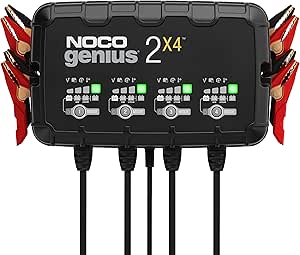
NOCO GENIUS2X4 6V/12V Four-Bank Battery Charger and Maintainer
As an affiliate, we earn on qualifying purchases.
Current EV Charger Capabilities and Industry Trends
Today’s commercial EV chargers typically operate between 150 and 350 kilowatts, enabling charging sessions of 20-30 minutes for many vehicles. High-power chargers above 1 megawatt are mostly experimental or limited to specialized applications. Geely’s announcement comes amid rising interest in ultra-fast charging, driven by automakers seeking to shorten charging times and improve user experience. The industry is also exploring new materials and cooling technologies to support higher power levels safely. The announcement’s timing suggests a possible shift in the competitive landscape of EV infrastructure, but specifics about the charger’s deployment and real-world performance remain unconfirmed.Unconfirmed Technical Details and Deployment Plans
It is not yet clear whether the 2.2 megawatts refers to peak or continuous power output, nor whether the charger will be compatible with existing infrastructure. Details about safety standards, cooling systems, and grid requirements are still undisclosed. The timeline for commercial rollout and the initial markets targeted remain uncertain, and independent verification of the claims has not yet been provided.
Next Steps for Verification and Adoption
Geely is expected to release more detailed technical specifications and deployment plans in the coming months. Industry observers will closely monitor real-world testing and regulatory approvals to assess whether this charger can be integrated into existing or future EV charging networks. The broader industry will also evaluate the safety, reliability, and scalability of such high-power solutions before widespread adoption occurs.
Key Questions
Is a 2.2MW EV charger practical for everyday use?
While technically feasible, high-power chargers like this face significant engineering, safety, and infrastructure challenges. Practical deployment will depend on overcoming these hurdles and ensuring compatibility with existing grid and vehicle systems.
How does this compare to current fast chargers?
Most current commercial fast chargers operate between 150 and 350 kilowatts. A 2.2MW charger would be substantially faster, potentially reducing charging times to minutes, but such power levels are still experimental and not yet widely available.
When might this charger be available to consumers?
There is no confirmed timeline. If successful testing and regulatory approval are achieved, commercial deployment could still be several years away, depending on infrastructure development and safety assessments.
Will this charger be compatible with all EVs?
Compatibility depends on vehicle charging standards and battery management systems. High-power chargers often require specific connectors and vehicle support, which may limit immediate universal compatibility.
What safety concerns are associated with such high power levels?
High power levels pose risks related to overheating, electrical faults, and safety during operation. Advanced cooling, safety protocols, and regulatory standards will be essential to mitigate these risks.
Source: rss